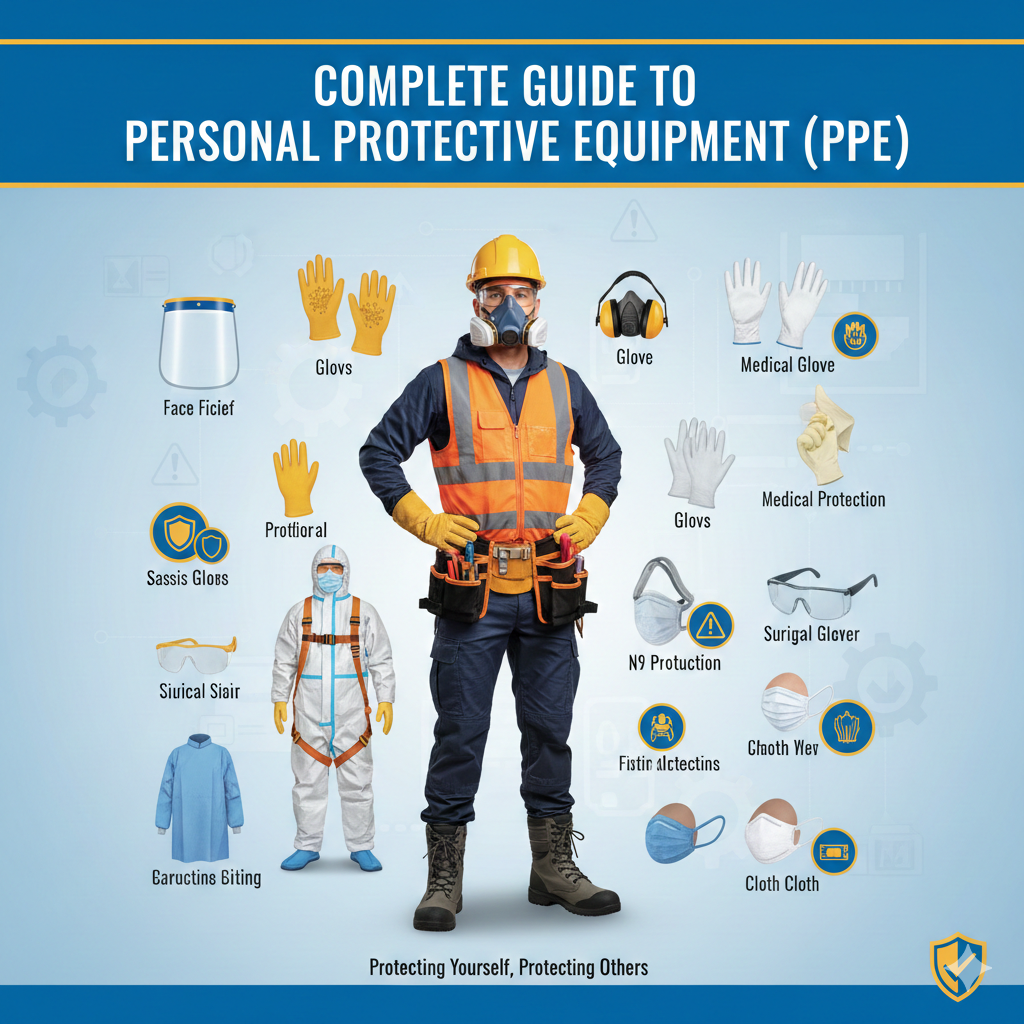
Personal Protective Equipment, commonly known as PPE, plays a very important role in protecting human life at workplaces. Whether you are working at a construction site, factory, hospital, fire safety company, warehouse, or industrial plant, PPE helps reduce the risk of injury, illness, and even death. In Pakistan, many workplace accidents happen due to lack of awareness and improper use of safety equipment. This guide will help you fully understand what PPE is, why it is important, and how it connects with Fire Safety Equipment to create a safer working environment.
Personal Protective Equipment refers to any clothing, gear, or device designed to protect workers from health and safety hazards. These hazards may include fire, heat, chemicals, falling objects, sharp tools, electrical risks, toxic gases, and biological threats. PPE acts as a final layer of protection when engineering controls and safety procedures are not enough.
Why Personal Protective Equipment Is Important
Fire Safety Trading (Pvt)
ToggleWorkplace safety is not just a legal requirement; it is a moral responsibility. PPE reduces exposure to hazards that can cause serious injuries. Many accidents occur because workers either do not wear PPE or use the wrong type of protection. In industries like fire safety, manufacturing, oil and gas, and construction, PPE works side by side with Fire Safety Equipment to prevent disasters.
Using PPE properly can save lives, reduce medical costs, improve productivity, and protect businesses from legal penalties. In Pakistan, labor laws also require employers to provide proper safety equipment to their workers.
Types of Personal Protective Equipment
There are different types of PPE designed to protect different parts of the body. Each type has a specific purpose and should be selected according to the risk involved.
Head Protection
Head injuries are very common at construction sites and industrial areas. Safety helmets or hard hats protect the head from falling objects, impact, and electrical hazards. These helmets are usually made from strong plastic material that can absorb shock.
In fire-related environments, helmets are often used together with Fire Safety Equipment such as fire-resistant suits and face shields to protect firefighters from heat and falling debris.
Eye and Face Protection
Eyes are extremely sensitive and can be damaged easily by dust, sparks, chemicals, smoke, or flying particles. Safety goggles, face shields, and protective glasses are used to protect the eyes and face.
For fire safety operations, face shields are an important part of Fire Safety Equipment as they protect firefighters from flames, heat, and smoke while allowing clear visibility.
Respiratory Protection
Respiratory PPE protects workers from inhaling harmful gases, smoke, fumes, dust, and chemicals. This includes masks, respirators, and self-contained breathing apparatus.
In fire emergencies, smoke inhalation is one of the main causes of death. That is why breathing apparatus is considered critical Fire Safety Equipment. It supplies clean air and allows firefighters to work safely in smoke-filled environments.
Hand Protection
Hands are exposed to many risks such as cuts, burns, chemicals, and electrical hazards. Safety gloves are designed using different materials like leather, rubber, cotton, or heat-resistant fabric depending on the job.
For fire safety tasks, heat-resistant gloves are used to handle hot tools and equipment safely. These gloves are often part of standard Fire Safety Equipment kits.
Foot Protection
Safety shoes protect feet from heavy objects, sharp materials, slips, and electrical risks. These shoes usually have steel toes and non-slip soles.
In industrial and fire safety environments, proper footwear is essential. Firefighters wear special boots that are heat-resistant, waterproof, and slip-proof, making them an important component of Fire Safety Equipment.
Body Protection
Body protection includes coveralls, aprons, jackets, and full-body suits. These protect workers from heat, chemicals, sparks, and flames.
Fire-resistant clothing is widely used in fire safety operations. These suits are specially designed to withstand high temperatures and are considered one of the most important Fire Safety Equipment items for firefighters.
Hearing Protection
Loud noise from machinery can cause permanent hearing loss. Earplugs and earmuffs are used to reduce noise exposure.
Although not directly related to fire hazards, hearing protection is still essential in industrial settings where Fire Safety Equipment like alarms and emergency systems are installed.
Importance of PPE in Fire Safety
Fire safety is one of the most dangerous fields where PPE is not optional but mandatory. Firefighters and fire safety staff face extreme heat, smoke, toxic gases, and collapsing structures. Without proper PPE, survival becomes impossible.
Fire Safety Equipment works best when combined with personal protective gear. Fire extinguishers, fire alarms, hoses, and suppression systems protect property, while PPE protects human life. Both must work together to create complete fire safety solutions.
How to Choose the Right PPE
Choosing the correct PPE is very important. Using the wrong equipment can be as dangerous as using none.
First, identify the hazard. Understand whether the risk is fire, chemical, electrical, or physical. Second, select PPE that meets safety standards. Third, ensure the PPE fits properly. Loose or tight equipment can reduce effectiveness. Lastly, train workers on how to wear, use, and maintain PPE properly.
In fire safety operations, PPE should always be compatible with Fire Safety Equipment. For example, breathing masks should fit well with helmets and face shields.
Proper Use and Maintenance of PPE
PPE must be used correctly to provide protection. Workers should inspect their equipment before use to check for damage. Dirty or damaged PPE should never be used.
Cleaning and maintenance are also important. Fire-resistant suits, gloves, and masks must be cleaned according to manufacturer instructions. Improper cleaning can reduce their protective quality.
Fire Safety Equipment and PPE should be stored properly in dry and clean areas. Poor storage can damage the equipment and reduce its life.
Common Mistakes in Using PPE
One common mistake is not wearing PPE due to discomfort. Many workers feel PPE is heavy or uncomfortable, especially in hot weather. However, modern PPE is designed for comfort and safety.
Another mistake is sharing PPE. Personal equipment like masks and gloves should never be shared due to hygiene reasons. In fire safety, shared PPE can lead to serious health risks.
Using expired or damaged PPE is also dangerous. Always check the manufacturing and expiry dates, especially for respiratory equipment.
Legal Requirements for PPE in Pakistan
In Pakistan, workplace safety laws require employers to provide proper PPE to their employees. Factories Act and other labor laws emphasize the importance of safety measures, especially in hazardous industries.
Fire safety regulations also require businesses to maintain proper Fire Safety Equipment and ensure that staff are trained in its use along with PPE. Failure to comply can result in fines, penalties, or closure of business.
Training and Awareness
Providing PPE is not enough. Workers must be trained on how to use it correctly. Training should include wearing techniques, limitations, and emergency procedures.
Fire safety training should always include practical sessions using Fire Safety Equipment and PPE together. This helps workers gain confidence and respond effectively during emergencies.
Role of Employers and Management
Employers have a responsibility to create a safe working environment. This includes providing quality PPE, maintaining Fire Safety Equipment, and conducting regular safety drills.
Management should also encourage a safety culture where workers feel responsible for their own safety and that of others. Regular inspections and safety audits help identify risks early.
Future of Personal Protective Equipment
Technology is improving PPE quality every year. Smart helmets, heat-resistant fabrics, and advanced breathing systems are becoming common. These innovations improve comfort and safety.
In fire safety, advanced Fire Safety Equipment integrated with smart PPE can provide real-time information such as temperature levels and oxygen supply, helping save more lives.
Conclusion
Personal Protective Equipment is a critical part of workplace safety that protects lives and prevents serious injuries. From helmets and gloves to breathing apparatus and fire-resistant suits, each type of PPE has its own importance.
When PPE is used together with Fire Safety Equipment, it creates a strong defense against workplace hazards, especially fire-related risks. In Pakistan, increasing awareness, proper training, and strict safety practices can greatly reduce workplace accidents.
Investing in quality PPE is not an expense; it is an investment in human life, business continuity, and long-term success. Every worker deserves a safe environment, and proper use of Personal Protective Equipment makes that possible.
More Articles: