Fire emergencies can develop unexpectedly in homes, offices, factories, shopping centers, hospitals, schools, and other buildings. When a fire occurs, every second matters. Early detection, clear warnings, safe evacuation, and properly maintained fire protection equipment all play important roles in protecting people.
Among the different types of fire protection equipment installed in commercial and public buildings, fire hose reels are an important part of certain fixed firefighting systems. They are designed to provide a controlled water supply for firefighting purposes and are commonly installed in suitable locations where trained and authorized personnel may need access to them.
However, fire hose reels are not a replacement for fire alarms, automatic sprinkler systems, evacuation arrangements, or professional emergency response. Their purpose and use must be understood within a complete fire safety plan.
In Pakistan, buildings of different sizes and purposes require suitable fire protection arrangements based on their design, occupancy, and applicable safety requirements. Understanding how fire hose reels work, where they are used, and why professional maintenance matters can help property owners and building managers make better safety decisions.
This article explains the importance of fire hose reels, their role in emergency preparedness, their main components, and how they contribute to a safer environment.
What Is a Fire Hose Reel?
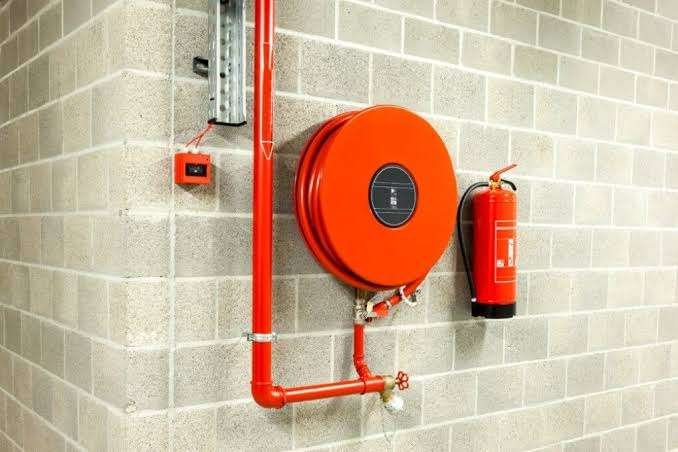
A fire hose reel is a fixed firefighting installation designed to provide access to a water supply through a hose stored on a rotating reel. It is generally installed in a designated location within a building and connected to an appropriate water supply.
Unlike portable fire extinguishers, which contain a limited amount of extinguishing material, a properly designed hose reel system can provide a continuing water supply while the system is operating under suitable conditions.
Fire hose reels are commonly found in commercial buildings, industrial facilities, educational institutions, warehouses, and other premises where their installation is appropriate.
Their purpose is to support a building’s overall fire protection arrangements. They must be selected, installed, and maintained by qualified professionals according to the building’s specific requirements.
Why Are Fire Hose Reels Important?
Fire hose reels can contribute to fire safety by providing a fixed source of water in buildings where the system is suitable.
Their importance comes from several factors:
1. Providing Access to a Water Supply
A hose reel is connected to a designated water supply. This means the building can have a fixed firefighting facility in an appropriate location rather than depending entirely on portable equipment.
The availability and reliability of the water supply depend on the system’s design, installation, and maintenance.
2. Supporting Building Fire Protection
Fire hose reels can form part of a wider fire protection strategy. When combined with suitable detection systems, alarms, sprinklers, emergency lighting, and evacuation planning, they contribute to a more organized approach to fire safety.
3. Improving Emergency Preparedness
Having clearly identified and professionally maintained firefighting equipment helps building management prepare for emergencies.
Staff awareness and appropriate training are also essential. Employees should understand the building’s emergency procedures and know that evacuation takes priority whenever conditions are unsafe.
4. Supporting Different Building Environments
Depending on the risk assessment and applicable requirements, hose reels may be suitable for different types of commercial and industrial premises.
Their location and design should reflect the building’s layout, occupancy, and fire protection needs.
Main Components of a Fire Hose Reel
Understanding the general components of a hose reel helps building owners and managers recognize why professional inspection is important.
1. Reel Drum
The reel drum stores the hose in an organized arrangement. It is designed to support the hose and keep it in its designated storage position.
The drum should remain in suitable condition and should not be obstructed by furniture, stored goods, or other objects.
2. Fire Hose
The hose is the flexible part of the system that carries water from the supply connection.
Its material, length, and specifications depend on the system’s design and applicable standards. Professional inspection helps identify visible deterioration or other defects that may affect reliability.
3. Water Supply Connection
The water supply connection links the hose reel to the building’s designated water source.
A reliable supply is essential for the system’s intended function. Its suitability depends on appropriate engineering design and regular professional assessment.
4. Nozzle
The nozzle is located at the delivery end of the hose. It is designed to control the water discharge according to the equipment’s specifications.
Nozzles must be suitable for the system and kept in their intended condition.
5. Mounting Arrangement
Fire hose reels are installed using suitable mounting arrangements that support the equipment in its designated position.
Installation should consider accessibility, building layout, and applicable fire safety requirements.
6. Identification Signage
Clear signs help occupants and trained personnel recognize the location of fire protection equipment.
Signage should be visible and should not be hidden behind decorations, advertisements, shelves, or stored materials.
How Fire Hose Reels Contribute to Saving Lives
Fire hose reels can support fire protection arrangements, but their contribution to life safety should be understood carefully. They are not intended to encourage untrained people to approach a fire or delay evacuation.
Their broader safety benefits include the following.
1. Supporting an Organized Fire Protection Plan
A building with suitable fixed firefighting equipment is better prepared when its systems are professionally designed and maintained.
Fire hose reels can complement other protective arrangements and help form part of an organized response strategy.
2. Helping Trained Personnel Access Fixed Equipment
In buildings where hose reels are provided, authorized and appropriately trained personnel may have access to the fixed equipment as part of the approved emergency plan.
However, their use should only occur when the circumstances are safe and the building’s procedures permit it. People should never be expected to fight a fire when evacuation is necessary.
3. Complementing Early Warning Systems
A fire hose reel cannot identify a fire or warn occupants by itself. That is why it must work alongside other safety systems.
A suitable Fire alarm system in Pakistan can help provide early warnings in commercial and industrial buildings. Smoke detectors, heat detectors, alarm sounders, and other approved devices may form part of a coordinated detection and warning arrangement.
When occupants receive an early warning, they can follow the building’s emergency procedures and move toward designated exits.
4. Supporting Professional Emergency Response
Fire hose reels may be part of a building’s wider firefighting infrastructure. Their suitability and availability can be considered during professional fire risk assessments and emergency planning.
The building’s emergency plan should clearly explain the responsibilities of staff and the role of professional emergency responders.
5. Encouraging Better Fire Safety Awareness
Visible and clearly identified fire protection equipment reminds occupants and employees that emergency preparedness is an important part of building management.
Regular awareness programs can help people understand the difference between equipment intended for trained personnel and the actions expected of ordinary occupants.
Where Are Fire Hose Reels Commonly Installed?
Fire hose reels may be installed in different types of buildings, depending on their design and fire safety requirements.
Commercial Buildings
Offices, shopping centers, and business complexes may contain electrical equipment, storage areas, kitchens, and large numbers of occupants.
A suitable fire protection plan should consider these different risks and determine whether hose reels are required.
Industrial Facilities
Factories and industrial premises may have machinery, production areas, storage facilities, and other activities that require specialized fire risk assessments.
The type of fire protection equipment should be selected according to the materials and processes present.
Warehouses
Warehouses often contain large quantities of stored goods and packaging materials. Their layout and storage arrangements can influence the selection and placement of fire protection systems.
Educational Institutions
Schools, colleges, and universities need fire safety arrangements that consider students, teachers, visitors, and staff.
Emergency planning should focus on clear communication, accessible escape routes, and organized evacuation.
Hospitals and Healthcare Facilities
Hospitals have patients, staff, visitors, medical equipment, and areas where evacuation may require additional planning.
Fire protection systems should be selected according to the specific needs of the building and its occupants.
In every setting, the installation of hose reels should be based on professional assessment rather than assumptions that every building requires the same equipment.
Fire Hose Reels and Other Fire Protection Systems
Fire hose reels are only one part of a complete fire safety arrangement. Different systems perform different functions, and no single device can provide complete protection.
Fire Alarm Systems
Fire alarm systems are designed to warn occupants when certain signs of fire are detected or when an alarm is manually activated.
They support early awareness and evacuation procedures. Their design should reflect the building’s layout and occupancy.
Smoke Detectors
Smoke detectors help identify smoke and can provide an early warning through an interconnected alarm arrangement.
Their type and location should be determined by qualified specialists.
Automatic Sprinkler Systems
Automatic sprinklers are designed to respond to certain fire conditions in protected areas. They form part of a building’s fixed fire protection arrangements.
Their design and maintenance require professional attention.
Portable Fire Extinguishers
Fire extinguishers are portable devices selected for specific fire risks. Different types are suitable for different classes of fire.
They should be correctly located, clearly identified, and professionally inspected.
Emergency Lighting
Emergency lighting helps occupants identify designated escape routes if normal lighting is unavailable.
It is particularly important in corridors, staircases, and other areas used during evacuation.
Fire Hose Reels
Hose reels provide access to a fixed water supply through a stored hose. Their suitability depends on the building’s fire risk assessment and applicable requirements.
Together, these systems can support a coordinated approach to fire prevention, detection, warning, and emergency response.
The Importance of Professional Installation
Fire hose reels should not be treated as ordinary building accessories. Their design and installation require technical knowledge and consideration of the building’s specific conditions.
A professional assessment may consider:
– Building size and layout.
– Type of occupancy.
– Potential fire hazards.
– Water supply availability.
– Required equipment specifications.
– Accessibility of installation locations.
– Applicable building and fire safety requirements.
– Coordination with other fire protection systems.
Incorrectly selected or poorly installed equipment may not perform as intended.
Property owners and managers should work with qualified fire safety professionals who understand the relevant standards and local requirements.
Why Regular Fire Hose Reel Maintenance Matters
Installing fire protection equipment is only the beginning. A hose reel must remain in suitable condition throughout the building’s operation.
Neglected equipment may develop defects that are not immediately obvious to ordinary occupants.
A professional maintenance program should consider the following areas.
1. General Equipment Condition
The reel, hose, mounting arrangement, and visible components should be assessed for signs of deterioration or damage.
2. Accessibility
Equipment should remain accessible and should not be blocked by furniture, stock, waste, or temporary displays.
3. Identification Signs
Safety signs should remain visible and understandable.
4. Water Supply Reliability
The system’s water supply should receive appropriate professional inspection to confirm that it meets the design requirements.
5. Documentation
Management should maintain suitable records of inspections, identified defects, repairs, and professional maintenance.
6. Scheduled Inspections
Inspection intervals should follow applicable requirements, manufacturer guidance, and professional recommendations.
Any reported fault should be referred to qualified personnel rather than addressed through unapproved adjustments or repairs.
Common Fire Hose Reel Maintenance Problems
Several issues can affect the reliability of hose reel systems if they are not identified and addressed professionally.
Blocked Access
Stored materials, furniture, or equipment may prevent access to a hose reel.
Building management should keep designated equipment areas clear.
Visible Hose Deterioration
A hose may deteriorate over time due to age, environmental conditions, or damage.
Any suspected defect should be assessed by qualified maintenance personnel.
Poor Identification
Missing or unclear signage can make equipment difficult to identify.
Suitable signs should be maintained in visible locations.
Neglected Inspection Records
Without proper documentation, management may find it difficult to confirm whether equipment has received the required professional attention.
A consistent record-keeping system helps track maintenance activities.
Unsuitable Installation
Equipment that is poorly located or does not match the building’s requirements may create problems during an emergency.
Professional assessments help determine whether the existing arrangement remains appropriate.
Fire Safety Responsibilities of Building Owners and Managers
Building owners and managers have an important responsibility to maintain a safe environment for employees, visitors, contractors, and other occupants.
Their duties may include:
1. Fire risk assessments: Identify hazards and evaluate the building’s fire protection needs.
2. Suitable equipment: Provide systems selected according to the building’s design and applicable requirements.
3. Professional installation: Use qualified specialists for technical installation work.
4. Regular maintenance: Arrange inspections and maintenance according to relevant standards.
5. Accessible equipment: Keep hose reels, extinguishers, exits, and other safety facilities unobstructed.
6. Staff awareness: Ensure employees understand emergency procedures.
7. Evacuation planning: Maintain clear escape routes and suitable assembly arrangements.
8. Emergency coordination: Establish communication arrangements with relevant emergency services.
9. Record keeping: Maintain records of inspections, maintenance, and training.
10. Periodic reviews: Reassess fire safety arrangements when building conditions or activities change.
These responsibilities help ensure that equipment is not simply installed and forgotten.
What Should People Do During a Fire Emergency?
The presence of firefighting equipment does not mean that every person should attempt to control a fire.
The priority for ordinary occupants is to protect themselves and reach a safe location.
If a fire alarm sounds or smoke is noticed:
– Follow the building’s emergency instructions.
– Leave through a designated safe escape route.
– Avoid elevators unless specifically directed by emergency responders or an approved emergency arrangement.
– Do not stop to collect personal belongings.
– Do not enter smoke-filled areas.
– Help children and anyone requiring assistance when it is safe to do so.
– Move to the designated assembly area.
– Contact emergency services from a safe location.
– Do not re-enter the building until authorized personnel confirm that it is safe.
Untrained people should not approach a fire to operate a hose reel. Firefighting should only be undertaken by appropriately trained and authorized personnel when conditions and emergency procedures permit.
Fire Hose Reels and Fire Safety in Pakistan
Fire safety is an important concern for commercial and industrial buildings throughout Pakistan.
Offices, shopping malls, factories, hospitals, educational institutions, and warehouses may have different fire protection needs. These needs depend on building size, occupancy, construction, activities, and potential hazards.
Property owners should ensure that their fire protection arrangements are consistent with applicable building codes, local authority requirements, and relevant safety standards.
Professional fire safety providers can help assess whether hose reels are suitable for a particular building and how they should be coordinated with other protective systems.
The selection of equipment should be based on quality, suitability, professional advice, and maintenance support rather than cost alone.
A reliable fire safety plan should also include suitable alarm arrangements, evacuation procedures, staff awareness, and regular reviews.
How to Improve Awareness About Fire Hose Reels
Fire protection equipment becomes more useful as part of a building’s wider safety culture.
Management can improve awareness by:
– Including fire safety information in employee induction.
– Displaying clear equipment identification signs.
– Organizing professionally supervised fire drills.
– Explaining evacuation procedures to staff.
– Keeping emergency exits and equipment areas accessible.
– Encouraging employees to report damaged or obstructed equipment.
– Reviewing fire safety arrangements periodically.
Training should make it clear that evacuation is the priority for ordinary occupants and that firefighting equipment should only be used by trained and authorized personnel under appropriate conditions.
Conclusion
Fire hose reels are an important component of certain building fire protection systems. When properly selected, professionally installed, and regularly maintained, they can provide access to a fixed water supply and support a building’s wider emergency preparedness arrangements.
However, hose reels cannot replace fire alarms, smoke detection, automatic sprinkler systems, emergency lighting, clear escape routes, or professional emergency response.
For buildings in Pakistan, effective fire safety requires careful planning based on occupancy, building design, potential hazards, and applicable requirements. Building owners and managers should arrange professional inspections, maintain clear equipment access, and ensure that employees understand their emergency responsibilities.
Most importantly, everyone should remember that personal safety comes first during a fire emergency. Ordinary occupants should follow evacuation instructions, move to a safe location, and leave firefighting to appropriately trained and authorized personnel.
A well-maintained fire protection system, supported by awareness and responsible management, can make an important contribution to safer buildings and better emergency preparedness.
Frequently Asked Questions (FAQs)
1. What is the main purpose of a fire hose reel?
The main purpose of a fire hose reel is to provide access to a fixed water supply through a stored hose. It is part of certain building fire protection systems and should be installed and maintained according to professional recommendations and applicable safety requirements.
2. Where are fire hose reels commonly installed?
Fire hose reels may be installed in suitable commercial buildings, factories, warehouses, educational institutions, hospitals, and other premises. Their location and suitability depend on the building’s design and fire risk assessment.
3. Can fire hose reels replace fire extinguishers?
No. Fire hose reels and portable fire extinguishers have different purposes and are selected according to different fire protection needs. A building’s complete fire safety plan may require several types of equipment.
4. How often should fire hose reels be inspected?
Fire hose reels should be inspected according to applicable safety standards, manufacturer guidance, and professional recommendations. Building management should maintain inspection records and arrange qualified maintenance whenever a defect is identified.
5. Should ordinary visitors use a fire hose reel during an emergency?
Ordinary visitors should prioritize evacuation rather than attempting to operate firefighting equipment. Hose reels should only be used by appropriately trained and authorized personnel when conditions are safe and the emergency plan permits their use.