A home should be a safe and comfortable place for every family member. However, unexpected emergencies such as fires can put everyone at risk if proper safety arrangements are not in place. Electrical faults, cooking accidents, heating equipment, and other household hazards can create fire risks that require immediate attention.
One of the most important ways to prepare for a fire emergency is to create a family fire escape plan. An escape plan explains how everyone can leave the home safely, which exits they should use, and where they should gather after reaching a safe location.
In Pakistan, many families live in apartments, houses, multi-storey buildings, and residential communities with different layouts. Each type of home requires an escape plan that considers its design, available exits, and the needs of its occupants.
Although families may assume they will know what to do during an emergency, confusion can make it difficult to respond effectively. Children may not understand where to go, elderly family members may require assistance, and visitors may be unfamiliar with the available exits.
Preparing in advance can make these situations easier to manage. A suitable fire alarm system in Pakistan, properly maintained smoke detection equipment, accessible exits, and regular family discussions can all contribute to a safer home.
This article explains the importance of fire escape plans and provides practical information to help families prepare for emergencies.
1. Understand What a Fire Escape Plan Is
A fire escape plan is a simple arrangement that explains how household members should leave their home if a fire occurs.
It identifies the available exits, suitable escape routes, and an outdoor meeting point where family members can gather after leaving the building.
A good plan should be easy to understand and suitable for everyone living in the house.
Important elements include:
– A basic floor plan of the home.
– Primary and alternative exit routes.
– Accessible doors and windows.
– The location of smoke alarms.
– An outdoor family meeting point.
– Emergency contact information.
– Special arrangements for family members who need assistance.
The plan should consider the actual layout of the property rather than relying on a general arrangement.
For example, a single-storey house may have different escape options from a multi-storey home or apartment. Families should identify routes that are accessible and appropriate for their particular building.
The National Disaster Management Authority (NDMA) also provides educational guidance on preparing home fire escape plans, including identifying exits and selecting an outdoor meeting place.
2. Identify All Available Exits in Your Home
Knowing how to leave the house is one of the most important parts of fire escape planning.
Families should examine every room and identify the normal exit and any suitable alternative route.
Doors are generally the main way to leave a room, but accessible windows may also provide an alternative in some ground-level situations when they can be used safely.
Consider the following:
– Identify the main entrance and other suitable exits.
– Check that doors can open properly.
– Make sure escape routes are not blocked by furniture.
– Keep stairways and corridors accessible.
– Identify alternative routes where available.
– Understand which exits are suitable for each household member.
Windows should not automatically be treated as safe exits. Their height, accessibility, security fittings, and surrounding conditions must be considered.
Families living in upper-floor apartments should follow their building’s designated emergency arrangements rather than attempting unsafe exits.
Every family member should understand which route to use and where to go after leaving the building.
3. Install Suitable Smoke Detection and Fire Alarm Equipment
Early warning is an essential part of residential fire safety. A fire may begin in a kitchen, electrical area, storage space, or another room where household members are not present.
Smoke alarms and suitable fire detection equipment can help alert occupants when smoke or other fire-related conditions are detected.
Depending on the building and its requirements, fire detection arrangements may include:
– Smoke alarms.
– Heat detectors.
– Fire alarm control equipment.
– Audible warning devices.
– Visual notification devices.
– Backup power arrangements.
A suitable fire alarm system in Pakistan can contribute to early warning in residential buildings and other properties where appropriate detection and notification arrangements are required.
Families should select equipment according to the building layout, manufacturer instructions, and applicable safety requirements. Installation should be handled by qualified professionals when necessary.
It is also important to test and maintain smoke alarms according to the manufacturer’s instructions. Batteries and equipment should be checked regularly, and faults should be addressed promptly.
An alarm is most useful when everyone knows what it sounds like and understands that it means they should follow the household emergency plan.
4. Choose a Safe Outdoor Meeting Point
An outdoor meeting point is a designated location where family members gather after leaving the home during a fire emergency.
Without an agreed location, family members may become separated or search for one another in different places.
A suitable meeting point should be:
– Outside the building.
– At a safe distance from the immediate danger.
– Easy for everyone to recognize.
– Away from emergency vehicle access.
– Accessible to household members.
Families may select a nearby open area or another safe location that is easy to identify.
Every household member should know where this meeting point is located.
Once everyone has evacuated, family members should remain there and allow emergency responders to manage the situation.
Nobody should return inside to collect personal belongings or search the building. If someone is missing, inform emergency responders and provide any relevant information.
5. Make Special Arrangements for Children
Children need clear and age-appropriate fire safety information.
They should understand that an alarm is a warning and that they must follow the household escape plan rather than investigate the source of the problem.
Parents and guardians should explain:
– What a smoke alarm sounds like.
– Which adults they should follow.
– Which exits are normally used.
– Where the family meeting point is.
– Why they should never play with matches or electrical outlets.
– Why they should immediately report smoke or fire hazards to an adult.
Children should not be expected to manage an emergency independently or attempt to control a fire.
Parents should also discuss arrangements for younger children who may need adult assistance during evacuation.
Regular family discussions can help children become familiar with safety arrangements without creating unnecessary fear.
6. Consider the Needs of Elderly Family Members
Some household members may require additional assistance when leaving a building.
Elderly family members, people with mobility limitations, and individuals with hearing or visual difficulties may need specific arrangements.
Families should consider:
– Accessible escape routes.
– Assistance from a designated responsible adult.
– Clear communication methods.
– Suitable emergency lighting.
– The accessibility of doors and corridors.
– The location of necessary mobility aids.
The plan should be realistic and should not depend on one person being available without considering alternative arrangements.
For apartment residents, building management should also be informed about any relevant assistance requirements so that appropriate emergency arrangements can be considered.
The goal is to make sure every household member is included in the safety plan.
7. Keep Hallways, Staircases, and Exits Clear
A well-designed escape plan cannot work properly if the routes are blocked.
In many homes, corridors, stairways, balconies, and entrance areas are sometimes used for temporary storage. Furniture, boxes, shoes, bicycles, and other belongings may interfere with movement.
Families should make sure that important escape routes remain accessible.
Useful precautions include:
– Keep corridors free from unnecessary objects.
– Avoid storing items near exit doors.
– Keep stairways accessible.
– Make sure doors can open properly.
– Maintain suitable lighting.
– Avoid blocking designated emergency exits.
In multi-storey buildings, residents should understand the building’s evacuation arrangements and know which staircases are designated for emergency use.
Ordinary passenger lifts should not be used during a fire unless emergency personnel specifically direct occupants to an approved evacuation lift.
8. Teach Every Family Member How to Respond to a Fire Alarm
A fire alarm is only effective when people understand how to respond.
Families should discuss what to do when a smoke alarm or building fire alarm sounds.
The basic priorities are to:
1. Treat the alarm seriously.
2. Follow the planned escape route if it is safe to do so.
3. Avoid investigating the source of the fire.
4. Leave belongings behind.
5. Move to the designated outdoor meeting point.
6. Contact emergency services from a safe location.
7. Follow instructions from emergency responders.
If a planned route is unsafe, family members should use another safe available exit according to their emergency plan.
They should not delay evacuation to collect valuables, documents, or electronic devices.
9. Understand the Importance of Apartment Fire Escape Plans
Apartment buildings require additional attention because residents may share corridors, staircases, entrances, and other common facilities.
A household escape plan should be consistent with the building’s official emergency arrangements.
Residents should know:
– The location of designated staircases.
– The nearest suitable exit.
– Where the building’s alarm systems are located.
– The designated assembly area.
– How to contact building management.
– How to report a person who may need assistance.
Apartment residents should also avoid placing furniture, storage boxes, or personal belongings in shared escape routes.
Building management has an important role in maintaining common safety arrangements, including emergency lighting, exit signage, alarm equipment, and required firefighting facilities.
Families should review the building’s instructions rather than assuming that the same escape arrangement applies to every apartment.
10. Prepare an Emergency Contact List
Every family should know how to contact emergency services during a fire emergency.
An emergency contact list can include:
– Relevant local emergency service numbers.
– Building management contact details.
– A trusted family contact.
– Important household information for emergency responders.
In areas served by Rescue 1122, the emergency number is 1122.
The contact information should be available to responsible household members, including older children who may need to seek help from a safe location.
Families should also discuss who will contact emergency services after everyone has evacuated.
Emergency calls should provide clear information about the location and nature of the incident.
11. Practice the Family Fire Escape Plan
Creating an escape plan is important, but family members also need to understand how it works.
Regular discussions and supervised practice can help identify problems with the planned routes.
During a family safety review:
– Discuss the primary and alternative exits.
– Identify the outdoor meeting point.
– Explain the sound of the alarm.
– Review assistance arrangements.
– Check that doors and corridors are accessible.
– Make sure everyone understands the plan.
Children should participate in age-appropriate practice under adult supervision.
Families should never conduct practice activities that expose anyone to real fire, smoke, dangerous heights, or other hazards.
If the household layout changes because of renovation, new furniture, or other modifications, the escape plan should be reviewed and updated.
12. Take Precautions in the Kitchen
Kitchens are important areas to consider when preparing a home fire escape plan.
Cooking appliances, electrical equipment, and other heat sources can introduce fire risks if they are not managed properly.
Families should:
– Avoid leaving cooking equipment unattended when supervision is needed.
– Keep combustible materials away from heat sources.
– Maintain cooking appliances properly.
– Keep the kitchen organized.
– Follow manufacturer instructions.
– Ensure that escape routes from the kitchen remain accessible.
If a fire develops, family members should prioritize leaving safely rather than attempting to manage the emergency.
Kitchen safety should be included in regular household fire prevention discussions.
13. Maintain Electrical and Heating Equipment
Electrical appliances and heating equipment are common parts of everyday household life, but damaged or poorly maintained equipment can create fire hazards.
Families should arrange professional inspections when necessary and avoid using damaged electrical appliances.
Important precautions include:
– Replace damaged electrical cords.
– Avoid overloading electrical outlets.
– Use appliances according to instructions.
– Keep heating equipment away from combustible materials.
– Arrange professional electrical repairs.
– Avoid unauthorized changes to household wiring.
During power interruptions, families should also follow manufacturer instructions for backup electrical equipment and avoid unsafe temporary arrangements.
A well-maintained home is easier to manage and may have fewer preventable fire hazards.
14. Understand Fire Escape Planning Requirements in Pakistan
Fire safety requirements in Pakistan may vary according to building type, occupancy, location, and applicable regulations.
The Building Code of Pakistan Fire Safety Provisions 2016 provides an important framework for building fire and life safety.
Its provisions address areas such as:
– Fire detection and alarm arrangements.
– Means of escape.
– Exit identification.
– Emergency lighting.
– Fire protection systems.
– Occupant safety.
Punjab Civil Defence also identifies fire detection and alarm systems, firefighting arrangements, fire safety plans, emergency exits, and evacuation plans among the safety measures considered during relevant premises inspections.
Families living in apartments and multi-storey buildings should understand the emergency procedures established by their building management.
For individual homes, families should follow general fire safety principles and seek qualified advice when the building’s design or safety arrangements require professional assessment.
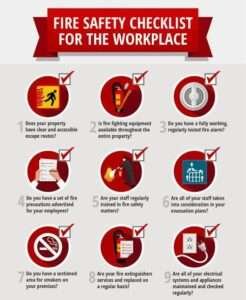
15. Create a Simple Family Fire Escape Checklist
A checklist can help families review their emergency arrangements and identify areas that need attention.
Home Safety
– [ ] Smoke alarms are installed where appropriate.
– [ ] Alarm equipment is maintained.
– [ ] Electrical equipment is in suitable condition.
– [ ] Cooking areas are managed safely.
– [ ] Combustible materials are stored appropriately.
Escape Routes
– [ ] Main exits are accessible.
– [ ] Alternative routes have been identified.
– [ ] Corridors are clear.
– [ ] Stairways are accessible.
– [ ] Doors and windows can be opened where required.
Family Preparation
– [ ] Every family member understands the plan.
– [ ] Children know which responsible adult to follow.
– [ ] Additional assistance arrangements are established.
– [ ] An outdoor meeting point has been selected.
– [ ] Emergency contact details are available.
Regular Reviews
– [ ] Family members discuss fire safety regularly.
– [ ] Escape arrangements are reviewed after home changes.
– [ ] Alarm maintenance is up to date.
– [ ] Building evacuation instructions are understood.
This checklist is a general household safety guide and does not replace professional assessment or applicable building requirements.
Conclusion
A family fire escape plan is an important part of home safety. It helps household members understand which exits to use, where to gather outside, and how to respond when an emergency occurs.
Families in Pakistan should consider the layout of their homes, the needs of children and elderly relatives, and the emergency arrangements available in their buildings.
Suitable smoke detection equipment, a reliable fire alarm system in Pakistan, clear escape routes, regular maintenance, and family awareness can all contribute to better preparedness.
The most important thing is to prepare before an emergency happens. Families should discuss their escape arrangements, select an outdoor meeting point, and make sure everyone understands the plan.
Fire safety does not require complicated household procedures. Simple planning, responsible habits, and regular reviews can make a meaningful difference.
A prepared family is better positioned to respond calmly, follow appropriate safety procedures, and prioritize everyone’s well-being during an emergency.