Fire safety is important for every household, but older adults may face additional challenges during an emergency. Reduced mobility, hearing or vision difficulties, and certain health-related limitations can make it harder to recognize a fire warning, move quickly, or navigate an unfamiliar escape route. Although these challenges differ from person to person, they highlight the importance of preparing a home for everyone’s safety.
In Pakistan, older adults may live independently, with their families, or in shared residential buildings. Regardless of the living arrangement, a safe environment should include appropriate fire detection, well-maintained electrical equipment, accessible escape routes, and a clear emergency plan.
A fire alarm system in Pakistan can play an important role in providing early warning when a fire is detected. However, an alarm alone cannot guarantee safety. Fire prevention, accessible evacuation arrangements, family awareness, and regular equipment maintenance are equally important.
By understanding the needs of older family members and making practical improvements at home, families and caregivers can reduce preventable risks and help older adults respond more confidently during a fire emergency.
Why Is Fire Safety Especially Important for Older Adults?
Fire emergencies can develop quickly, leaving occupants with limited time to recognize the danger and reach a safe location. Older adults may need additional time or assistance, particularly when they use walking aids, have difficulty hearing alarms, or live in buildings with stairs.
Several factors can affect an older person’s ability to respond.
1. Reduced Mobility
Some older adults use walking sticks, walkers, or wheelchairs. Others may find stairs, narrow doorways, or uneven floors difficult to navigate.
These obstacles can make evacuation more challenging if escape routes are cluttered or poorly designed.
Families should ensure that pathways remain clear and that doors can be opened easily. If an older adult has difficulty using stairs, the household should discuss a suitable emergency arrangement in advance rather than waiting for an emergency to occur.
2. Hearing Difficulties
A conventional audible smoke alarm may not provide an effective warning to someone with significant hearing loss, particularly during sleep.
Depending on the person’s needs, additional warning devices may be appropriate. These can include alarms with flashing lights, vibrating alerts, or other accessible notification features.
The objective is to ensure that the warning can be noticed promptly, even when the person cannot easily hear a standard alarm.
3. Vision Difficulties
Poor lighting, unfamiliar surroundings, and low visibility can make it harder to identify exits during an emergency.
Families can help by keeping walkways unobstructed, providing suitable lighting, and ensuring that doors and routes are easy to identify.
Emergency lighting and clearly visible exit signs may also be important in shared residential buildings, depending on the building’s design and applicable requirements.
4. Slower Emergency Response
Some older adults may need extra time to understand a warning, put on suitable footwear, use a mobility aid, or receive assistance.
An emergency plan should account for these needs. It should not assume that every person can leave a building at the same speed.
The most effective preparation is based on the individual’s actual abilities, preferences, and living environment.
Common Fire Hazards in Homes With Older Adults
Many household fire hazards can affect people of any age. However, older adults may face additional difficulties if an incident occurs while they are alone or asleep.
Identifying common hazards is an important first step.
Electrical Problems
Damaged wires, broken plugs, loose connections, and poorly maintained appliances can create electrical risks.
Warning signs may include unusual heating, burning smells, visible cable damage, or electrical breakers that repeatedly trip.
Electrical problems should be assessed by qualified professionals. Family members should not attempt makeshift repairs or allow an older person to continue using equipment that appears unsafe.
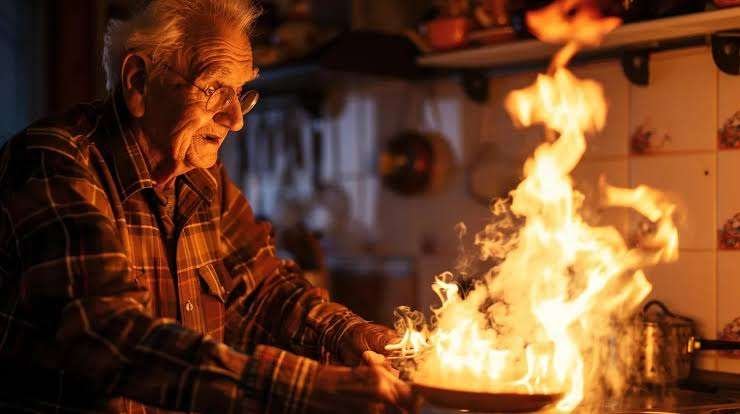
Cooking-Related Risks
Cooking requires attention, especially when heat-producing appliances are operating.
Distractions, fatigue, or difficulty reaching controls can make cooking less safe for some people.
Useful precautions include keeping cooking areas organized, maintaining appliances properly, and avoiding leaving active cooking unattended. A timer can provide an additional reminder when appropriate.
If an older adult finds cooking increasingly difficult, the family can discuss practical alternatives that preserve independence while reducing unnecessary risk.
Heating Equipment
During colder weather, people may use heaters and other heating appliances more frequently.
These devices should be used according to their manufacturer’s instructions and kept away from combustible materials. Damaged equipment should not remain in use.
Heating arrangements should also be reviewed to make sure that cables and appliances do not obstruct walking routes.
Smoking and Combustible Materials
Smoking materials and other ignition sources can create serious fire hazards when handled carelessly.
Combustible items should be stored away from heat sources. Smoking should never take place near medical oxygen equipment because oxygen can intensify combustion.
Where smoking is part of an older person’s routine, a respectful conversation about safety and suitable precautions is more helpful than relying on assumptions about their habits.
The Role of Fire Detection in Protecting Older Adults
Early warning is a central part of residential fire safety. Smoke or a developing fire may not be noticed immediately, particularly when people are sleeping or located in another room.
A suitable smoke alarm or fire detection system can alert occupants when the relevant sensor detects a potential fire condition.
This warning can provide valuable time to respond, although it does not guarantee that evacuation will always be possible.
Choosing Suitable Alarm Arrangements
The correct arrangement depends on the home’s layout, the type of building, the occupants’ needs, and the applicable safety requirements.
When evaluating a fire detection solution, consider:
– Whether alarms can be heard from bedrooms and other occupied areas.
– Whether the warning can be noticed by someone with hearing difficulties.
– Whether the equipment has a suitable power supply.
– Whether interconnected alarms would be beneficial.
– Whether the equipment is appropriate for the building.
– How testing and maintenance will be carried out.
In homes where an older person has significant hearing loss, accessible warning devices may be especially important.
Fire Alarm System in Pakistan: What Families Should Consider
When looking for a fire alarm system in Pakistan, families should focus on suitability and reliability rather than purchasing equipment based on price alone.
A simple household may need a different arrangement from a multi-storey residence, apartment building, care facility, or shared residential property.
The Pakistan Engineering Council’s Building Code of Pakistan – Fire Safety Provisions 2016 provides a national framework for building fire safety. The measures applicable to a particular property depend on its characteristics and the relevant requirements.
For more complex systems, suitably qualified professionals should assess the design, installation, commissioning, and maintenance needs.
The system should also be accessible to the people who depend on it. A warning device provides limited benefit if an occupant cannot hear, see, or otherwise recognize its signal.
Creating an Accessible Fire Escape Plan
An emergency plan should reflect the needs of every household member. For older adults, that means considering mobility, hearing, vision, and the amount of assistance that may be needed.
A plan should be discussed before an emergency occurs.
Identify Suitable Exit Routes
Walk through the home and identify routes that lead outside safely.
Check that doorways are wide enough for any mobility aid in use and that doors can be opened without unnecessary difficulty.
Keep hallways, stairs, and exits free from stored items. If the usual route involves stairs that an older adult cannot safely use, seek professional advice about appropriate arrangements for that building.
Do not assume that an elevator will be available during a fire. Follow the building’s emergency instructions and the guidance of emergency personnel.
Choose a Meeting Point
Select a safe outdoor meeting point away from the building and any immediate hazards.
All household members should know where to go after leaving. This makes it easier to account for everyone without returning inside.
Arrange Assistance in Advance
If an older adult needs help moving or responding to an alarm, identify who may provide assistance.
In a family home, this might involve coordinating with relatives or other trusted household members. In an apartment building or care facility, the plan may also need to involve building management or designated staff.
A person should not be assigned a responsibility they cannot safely perform. Any evacuation equipment or specialized assistance arrangements should be assessed by qualified professionals.
Practice the Plan
Discussing an escape plan is useful, but a practical review can reveal obstacles that are easy to overlook.
Check whether the planned route is accessible and whether the alarm can be recognized from sleeping areas. Update the plan whenever a person’s mobility, hearing, living arrangement, or other needs change.
Helping Older Adults Respond to a Fire Alarm
A clear response plan reduces confusion when an alarm sounds.
Older adults should know that an alarm must be taken seriously, even if there is no immediately visible smoke or flame.
The appropriate response is to follow the household or building’s emergency procedure and move toward safety when it is safe to do so.
Respond Promptly
Do not delay simply to investigate the source of an alarm or collect belongings.
If there are signs of fire or immediate danger, leave by a safe route and contact the appropriate emergency service according to local procedures.
Keep the Plan Simple
Emergency instructions should be easy to understand and remember.
Families can explain the plan in the language the older adult prefers and make sure the instructions are accessible. Written reminders may help some people, while verbal discussion or visual information may be more suitable for others.
Avoid Unnecessary Risks
Older adults should not be expected to fight a developing fire, repair electrical equipment, or return inside to retrieve possessions.
If a planned exit is blocked or conditions make the route unsafe, follow the building’s emergency procedures and communicate with emergency responders when possible.
The priority is personal safety, not protecting property.
How Family Members and Caregivers Can Help
Family members and caregivers play an important role in making fire safety practical and respectful.
Support should protect an older person’s safety while preserving as much independence as reasonably possible.
Review the Home Regularly
Periodically check that alarms are operational, exits remain accessible, and electrical equipment is in suitable condition.
If the older adult has difficulty carrying out these checks, a family member or appropriate professional can help.
Understand Individual Needs
Ask what assistance would be useful rather than assuming that every older person has the same limitations.
One person may need a visual alarm, while another may need a clearer walking route or help understanding the building’s evacuation procedure.
Planning should be based on the person’s circumstances.
Maintain Communication
Older adults who live alone may benefit from an agreed way to contact family members or trusted neighbours during an emergency.
However, communication arrangements should supplement, not replace, working fire alarms and a safe evacuation plan.
Coordinate With Building Management
In apartment buildings and other shared residences, discuss relevant fire-safety arrangements with the responsible management team.
Ask about alarm audibility, accessible exits, emergency lighting, evacuation procedures, and the method for requesting assistance.
Building management should address relevant safety requirements and ensure that common escape routes are not obstructed.
Maintaining Fire Alarms and Other Safety Equipment
Installing a smoke alarm is only the beginning. Equipment must remain operational to provide the intended warning.
Follow the manufacturer’s instructions for testing, cleaning, battery replacement, and replacement of equipment at the end of its service life.
If an alarm repeatedly produces unwanted alerts, identify and correct the cause rather than permanently disabling the device.
For larger or interconnected systems, inspections and maintenance should be performed by suitably qualified professionals in accordance with the system design and applicable requirements.
Pakistan’s fire-safety framework also emphasizes the importance of suitable building protection and maintenance. Property owners and managers should establish a clear process for recording inspections, testing, and repairs where required.
Fire Safety in Apartments and Shared Residential Buildings
Older adults may live in buildings where evacuation involves shared corridors, staircases, or other common areas. In these environments, personal preparation and building-wide safety measures must work together.
Important considerations include:
– Operational fire detection and alarm arrangements appropriate to the building.
– Clearly identified and accessible escape routes.
– Adequate emergency lighting where required.
– Doors and corridors that remain free from obstructions.
– An emergency plan communicated to residents.
– Appropriate inspection and maintenance of fire-safety equipment.
Building owners and managers should check the requirements applicable to their property rather than relying on a general household checklist.
Where an older resident needs additional assistance, arrangements should be agreed in advance with the relevant people and building management.
A Practical Fire-Safety Checklist for Older Adults
Families and caregivers can use the following checklist as a starting point:
– [ ] Suitable smoke alarms are installed where appropriate.
– [ ] Alarms are tested and maintained according to manufacturer instructions.
– [ ] Warning devices meet the needs of occupants with hearing or vision difficulties.
– [ ] Electrical cables, plugs, and appliances are checked for visible damage.
– [ ] Cooking and heating equipment is used according to its instructions.
– [ ] Hallways, doorways, and exits remain accessible.
– [ ] The older adult knows the emergency plan.
– [ ] A safe outdoor meeting point has been selected.
– [ ] Assistance arrangements are agreed upon where needed.
– [ ] Family members or caregivers know their responsibilities.
– [ ] Building management has been consulted when relevant.
– [ ] Fire-safety concerns are addressed by qualified professionals.
This checklist is a general guide, not a substitute for a professional assessment or applicable building requirements.
Improving Fire Safety Awareness in Pakistan
Fire safety awareness can help families identify hazards before they become emergencies.
Community organizations, caregivers, building managers, and safety professionals can support older adults by sharing accessible information and helping them understand their options.
The Building Code of Pakistan – Fire Safety Provisions 2016, developed through the Pakistan Engineering Council in collaboration with the National Disaster Management Authority, is an important national reference for building fire safety.
Its requirements should be considered alongside the property’s type, occupancy, design, and applicable local regulations.
For families, the most useful starting point is practical: ensure that alarms work, keep exits accessible, arrange assistance when needed, and make sure older household members understand what to do if a warning sounds.
Conclusion
Fire safety for older adults is about more than installing equipment. It requires an understanding of each person’s needs, prevention of common household hazards, reliable fire detection, accessible escape routes, and a clear emergency plan.
A suitable fire alarm system in Pakistan can provide an important early warning, especially when the system is properly selected, installed, and maintained. Accessible alerts may also be necessary for people who cannot reliably hear a conventional alarm.
Families and caregivers can make a meaningful difference by checking the home, discussing emergency arrangements, and involving older adults in decisions about their safety. Building owners and managers also have a role in maintaining appropriate fire protection and keeping escape routes usable.
Most importantly, older adults should not be expected to handle a dangerous fire themselves. The priority is to recognize the warning, follow the emergency plan, reach safety when possible, and contact the appropriate emergency service.
Preparation, communication, and reliable safety measures can help make homes and shared residential environments safer for older people.
Frequently Asked Questions
1. Why is fire safety especially important for older adults?
Older adults may face challenges related to mobility, hearing, vision, or the time needed to respond to an emergency. A suitable safety plan can account for these needs and improve their ability to recognize a warning and reach safety.
2. How can a fire alarm help protect an older person?
A suitable smoke alarm or fire detection system can provide an early warning when it detects a potential fire. This may give occupants valuable time to follow their emergency plan, although an alarm cannot guarantee that evacuation will be possible.
3. What type of alarm is suitable for an older adult with hearing difficulties?
Depending on the person’s needs, an alarm with flashing lights, vibrating alerts, or other accessible warning features may be appropriate. A qualified professional can help assess the most suitable arrangement for the home.
4. How can families make evacuation easier for older adults?
Families can keep exits clear, check that doors and pathways are accessible, choose a safe outdoor meeting point, and arrange assistance where necessary. The plan should reflect the older adult’s mobility and the building’s layout.
5. How often should fire alarms be maintained?
Follow the manufacturer’s instructions for testing, cleaning, battery replacement, and equipment replacement. Larger fire alarm systems may require professional inspection and maintenance according to their design and applicable requirements.
References
1. Pakistan Engineering Council, Building Code of Pakistan – Fire Safety Provisions 2016: https://www.pec.org.pk/wp-content/uploads/2021/05/Building-Code-of-Pakistan-Fire-Safety-Provisions-2016.pdf
2. U.S. Fire Administration, Fire Safety for Older Adults: https://www.usfa.fema.gov/prevention/home-fires/at-risk-audiences/older-adults/
3. U.S. Fire Administration, Smoke Alarms: https://www.usfa.fema.gov/prevention/home-fires/prepare-for-fire/smoke-alarms/index.html
4. Consumer Product Safety Commission, Older Adult Safety: https://www.cpsc.gov/Safety-Education/Safety-Education-Centers/Older-Adu