Renting a home, apartment, portion, hostel room, or shared property offers flexibility, but it also comes with important safety considerations. Unlike homeowners, renters may have limited control over electrical wiring, building design, emergency exits, and installed fire-protection equipment. Even so, understanding potential hazards and reporting problems can help make a rented property safer.
Fire safety is particularly important in shared buildings, where several households may depend on the same staircases, corridors, alarms, and emergency exits. A problem in one area can affect other occupants, making communication between tenants, landlords, and building managers essential.
In Pakistan, the Building Code of Pakistan – Fire Safety Provisions 2016 provides a framework for fire prevention and life safety in buildings. The requirements applicable to a particular rental property depend on factors such as its type, use, location, and relevant regulations. <Cite refs={[“turn922083search22″,”turn922083search5”]}/>
Whether you are moving into a small house or renting an apartment in a multi-storey building, learning the basics of fire safety can help you make informed decisions. From checking alarms to preparing an escape plan, the following ten points explain what renters should know.
1. Check Whether Smoke Alarms and Fire Alarm Systems Are Available
One of the first things to consider when moving into a rental property is how occupants will be warned about a potential fire.
A smoke alarm detects smoke and produces a warning. A larger building may have a connected fire alarm system that includes detectors, control equipment, manual alarm points, and audible or visual notification devices.
The appropriate arrangement depends on the building and its safety requirements.
When viewing a rental property, look for visible smoke alarms and ask the landlord or property manager about their condition and maintenance. In an apartment building, find out how the shared alarm operates and what residents should do when it sounds.
Renters should check whether:
– Suitable smoke alarms or other required detection equipment are provided.
– Visible alarms appear intact and unobstructed.
– The landlord or building manager has a maintenance procedure.
– Residents know how an emergency warning is communicated.
– There is a clear process for reporting an alarm fault.
Do not remove, cover, disconnect, or attempt to repair an alarm yourself. Report damaged or apparently non-functional equipment to the responsible person.
A suitable fire alarm system in Pakistan can form an important part of a property’s fire-safety arrangements. However, an alarm alone does not make a building safe. Clear exits, suitable equipment, maintenance, and a workable emergency plan are also important.
2. Look for Visible Electrical Hazards
Electrical equipment is part of everyday life, from refrigerators and fans to chargers, lighting, and cooking appliances. Damaged wiring or poorly maintained electrical equipment can create fire and electric-shock risks.
Renters do not need to conduct technical electrical inspections. Instead, they should look for obvious warning signs and report them before they become more serious problems.
Potential warning signs include:
– Frayed or visibly damaged cables.
– Broken sockets or switches.
– Loose electrical fittings.
– Burn marks or discoloration around outlets.
– Unusual buzzing sounds or burning smells.
– Electrical equipment that becomes unusually hot.
– Repeated power interruptions associated with a particular appliance or circuit.
Never touch exposed wires, open an electrical panel, or attempt an electrical repair yourself. Keep away from a suspected hazard and contact the landlord or a qualified electrician.
It is also important to avoid overloading outlets or using damaged extension leads. Household appliances should be used according to their manufacturers’ instructions.
Before signing a rental agreement, ask how electrical maintenance is arranged and who should be contacted if a fault develops. If a serious hazard remains unresolved, consider seeking advice from the relevant local authority or another appropriate professional.
3. Identify All Safe Escape Routes
Knowing how to leave a building during a fire is one of the most important parts of renter safety.
Do not wait until an alarm sounds to find the nearest exit. Familiarize yourself with the route from your room or apartment to a safe outdoor area.
In a shared or multi-storey building, also identify any designated alternative escape routes and understand the building’s evacuation instructions.
Check whether:
– Corridors and stairways are clear.
– Exit doors appear accessible and usable.
– Emergency exit signs are visible where provided.
– Staircases lead toward an appropriate exit.
– Shared routes are not being used for storage.
– The building manager has explained the evacuation procedure.
Never block a shared hallway with furniture, boxes, bicycles, or personal belongings. Even objects that seem harmless can make evacuation more difficult.
If an emergency exit is locked, damaged, or obstructed, report the issue promptly. Do not make unauthorized alterations to doors or building systems.
If a fire occurs, follow the building’s emergency instructions and leave by a safe route. Do not use an elevator during a fire unless emergency personnel specifically direct you to do so. If your planned route is unsafe, avoid entering smoke or flames and follow the established emergency guidance.
4. Understand Your Landlord’s and Your Own Responsibilities
Fire safety in a rental property involves several people. Landlords and property managers may control building systems, shared equipment, and structural maintenance, while tenants influence everyday conditions inside their living spaces.
The precise legal responsibilities vary according to the property, rental agreement, and applicable laws. Renters should not assume that every maintenance responsibility automatically belongs to one party.
Before moving in, discuss the following matters with the landlord or property manager:
– Who maintains installed smoke alarms and other fire-safety equipment?
– How should electrical faults be reported?
– Who is responsible for repairs to supplied appliances?
– How can residents report blocked exits or damaged fire doors?
– Who manages safety equipment in shared areas?
– What should residents do when the building alarm activates?
Keep a record of important maintenance requests, including the date and nature of the reported problem. Written communication can help everyone understand what needs attention.
Tenants also have a role in maintaining a safe environment. They should avoid creating unnecessary hazards, keep escape routes clear, follow building rules, and report dangerous conditions.
The Building Code of Pakistan – Fire Safety Provisions 2016 addresses responsibilities involving building occupants and the maintenance, inspection, and testing of fire-protection systems in applicable circumstances. <Cite refs={[“turn922083search22″,”turn922083search5”]}/>
5. Use Cooking Appliances Carefully
Cooking is a common household activity, but kitchens can contain several potential fire hazards, including heat sources, electrical appliances, gas equipment, oils, and combustible materials.
Renters should use cooking equipment according to its instructions and keep the cooking area reasonably organized.
Good habits include:
– Keeping paper, cloth, and other combustible materials away from heat sources.
– Avoiding unattended cooking when active supervision is needed.
– Keeping children away from hot appliances.
– Reporting damaged cooking equipment.
– Following the property’s instructions for gas appliances.
– Keeping the kitchen and nearby escape routes free of unnecessary clutter.
If you notice a gas smell, do not ignore it. Avoid flames and actions that could create sparks, leave the affected area, and contact the appropriate gas emergency service or qualified professional from a safe location. Follow the relevant local emergency guidance.
Never attempt to repair a gas connection or modify an appliance without suitable qualifications.
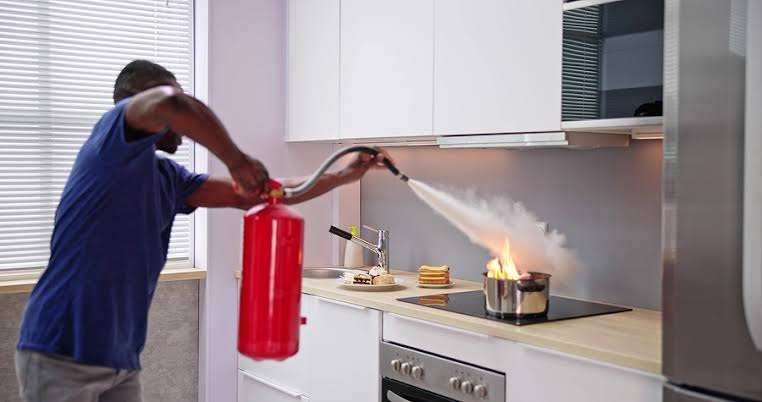
Renters should also understand that a cooking-oil fire is not something to tackle casually. Water can cause burning oil to spread, creating further danger. If a fire develops, prioritize warning others, leaving the area safely, and contacting emergency services.
6. Learn About Fire Extinguishers and Shared Safety Equipment
Some rental buildings provide fire extinguishers, hose reels, hydrants, or other equipment in common areas. The type and quantity of equipment required depend on the building’s design, occupancy, hazards, and applicable requirements.
Renters should know where shared equipment is located and how to report missing, damaged, or obstructed equipment.
Look for the following general conditions:
– Equipment is visible and accessible.
– Access is not blocked by stored belongings.
– Instructions and identification labels are present where applicable.
– The landlord or building manager can explain maintenance arrangements.
– Any apparent damage is reported promptly.
Do not remove equipment from its designated location or use it for non-emergency purposes. Technical inspection and servicing should be handled by qualified personnel.
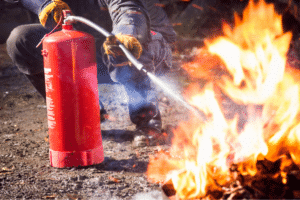
It is also important to understand the limits of an extinguisher. Different types are intended for different fire hazards, and using unsuitable equipment can make a situation more dangerous.
Renters should never feel obliged to fight a fire because an extinguisher is available. If there is immediate danger, raise the alarm, leave using a safe route, and contact emergency services.
7. Keep Shared Areas and Fire Doors Clear
Fire safety does not stop at the entrance to an individual apartment. In shared buildings, corridors, staircases, landings, and exit doors may be used by many residents.
Personal belongings left in these areas can obstruct movement during an emergency. Combustible clutter may also increase the amount of material available to burn.
Keep the following areas clear:
– Shared corridors and hallways.
– Staircases and landings.
– Doors leading to exits.
– Access to fire extinguishers and other safety equipment.
– Routes leading to designated assembly areas.
Some buildings use fire doors to help limit the spread of fire and smoke. Renters should report doors that appear damaged or do not close properly.
Do not wedge fire doors open, remove their fittings, or make unauthorized changes to them. Their purpose depends on the building’s design and the condition in which they are maintained.
If a neighbour repeatedly obstructs a shared escape route, report the issue to building management rather than creating a confrontation.
Keeping common areas clear is a straightforward way for residents to contribute to the safety of everyone in the building.
8. Understand Emergency Lighting and Exit Signs
A fire can interrupt normal lighting, making it harder for people to recognize doors, stairs, and corridors. Emergency lighting and exit signs can help occupants identify escape routes when normal lighting is unavailable or visibility is reduced.
Renters do not need to test electrical systems themselves, but they can notice visible problems and report them.
Pay attention to:
– Exit signs that appear damaged or missing.
– Emergency lights that are visibly broken.
– Stairways that are poorly illuminated.
– Doors or routes that are difficult to identify.
– Stored items that obstruct access to an exit.
Ask the property manager how faults in shared emergency lighting and exit signage should be reported.
Do not assume that a familiar route will always be easy to follow during an emergency. Smoke, darkness, noise, and confusion can make an ordinary corridor difficult to navigate.
Before an emergency happens, learn the available routes and the building’s evacuation instructions. If a route becomes unsafe, do not enter smoke or flames to reach it. Follow emergency guidance and seek assistance from emergency personnel.
9. Prepare a Household Fire Escape Plan
Knowing the exits is useful, but everyone living in the rental property should also understand what to do if a fire occurs.
A simple household escape plan can reduce uncertainty and help residents respond more promptly.
Start by answering these questions:
1. What is the normal safe route out of the property?
2. Is there another designated escape route?
3. Where should everyone meet outside?
4. How will children, older adults, or household members who need assistance receive help?
5. Who will contact emergency services?
6. What are the building’s specific alarm and evacuation instructions?
Choose an outdoor meeting point that is away from the building and does not obstruct emergency responders.
Make sure everyone knows the property’s address so that emergency services can be directed to the correct location.
Discuss the plan with all household members and review it whenever the layout or living arrangements change. If you live in an apartment block, follow the building’s established evacuation procedures.
During an actual emergency, do not stop to collect belongings. Leave promptly by a safe route, go to the agreed meeting point, and do not re-enter the building until authorized by the relevant authorities.
10. Know the Fire-Safety Rules That Apply to Your Rental Property
Fire-safety requirements are not necessarily identical for every rental home in Pakistan. A small independent house, a multi-storey apartment building, a hostel, and a mixed-use property can have different safety needs.
Applicable requirements may depend on the building’s occupancy, design, location, and the rules enforced by the relevant authority.
The Building Code of Pakistan – Fire Safety Provisions 2016 is an important national reference for building fire safety. The Pakistan Engineering Council lists the code among its building and safety standards. <Cite refs={[“turn922083search22″,”turn922083search5”]}/>
Punjab Civil Defence also identifies measures such as fire detection and alarm systems, firefighting arrangements, fire-safety plans, and emergency exits and evacuation plans as part of its fire-safety inspection mandate for relevant premises. <Cite refs={[“turn922083search0”]}/>
For renters, practical steps include asking the property manager about the building’s safety arrangements, reporting visible defects, and checking whether required equipment is maintained.
If you are considering a rental property, pay attention to whether exits are accessible, shared areas are reasonably maintained, and management can explain the emergency procedures.
A checklist is useful, but it cannot establish full legal compliance. Where there is a serious concern, seek guidance from the relevant local authority or a qualified fire-safety professional.
A Quick Fire-Safety Checklist for Renters
Before moving in, or when reviewing your current home, consider the following:
– [ ] Suitable smoke alarms or other required detection equipment are present.
– [ ] You know what the building’s alarm sounds like.
– [ ] Visible electrical hazards have been reported.
– [ ] Escape routes are accessible and unobstructed.
– [ ] Shared fire-safety equipment is accessible.
– [ ] Fire doors and exit signs appear in reasonable condition.
– [ ] You know how to report a maintenance problem.
– [ ] Cooking appliances are used according to their instructions.
– [ ] Everyone in the household knows the escape plan.
– [ ] A safe outdoor meeting point has been selected.
– [ ] The landlord or property manager has explained emergency procedures.
– [ ] Emergency contact information is available.
This checklist is intended for general awareness. It does not replace a professional inspection or the specific safety requirements applicable to a building.
Conclusion
Fire safety is an important consideration when renting a home or apartment. Although renters may not control the building’s structure or technical fire-protection systems, they can still help reduce risks by recognizing visible hazards, reporting faults, keeping shared areas clear, and understanding emergency procedures.
Checking alarms, identifying safe escape routes, using cooking equipment carefully, and discussing maintenance responsibilities with the landlord can all contribute to a safer living environment.
In Pakistan, the safety arrangements required for a rental property depend on its type and the applicable rules. Renters should therefore ask practical questions about detection equipment, exits, shared safety systems, and emergency procedures rather than assuming that every building offers the same protection.
A suitable fire alarm system, accessible exits, maintained equipment, and a clear escape plan work together to support fire safety. Just as importantly, everyone should understand that leaving an unsafe area and contacting emergency services takes priority over trying to fight a fire.
Taking these steps before an emergency occurs can help renters make more informed decisions and contribute to the safety of their household and neighbours.
Frequently Asked Questions (FAQs)
1. What should renters check for fire safety before moving in?
Renters should look for suitable smoke alarms, accessible escape routes, visible electrical hazards, shared fire-safety equipment, and clear emergency procedures. Problems should be reported to the landlord or property manager.
2. Is a fire alarm system necessary in every rental property in Pakistan?
The appropriate fire-detection and alarm arrangements depend on the building, its occupancy, and applicable regulations. Renters should ask the landlord or building manager about the systems provided and how faults are handled.
3. What should I do if the fire alarm in my rental building is not working?
Report the problem promptly to the landlord or property manager and request assessment by a competent person. Do not disconnect or attempt to repair the system yourself.
4. Who is responsible for fire safety in a rented home?
Responsibilities depend on the rental agreement, the type of property, and applicable laws. Landlords or building managers may control building systems and shared equipment, while renters should avoid creating hazards and report problems promptly.
5. What should renters do if a fire starts in the building?
Alert others when it is safe to do so, follow the emergency instructions, and leave using a safe route. Contact emergency services from a safe location and do not return inside until authorized.