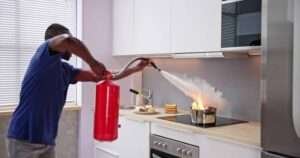
Fire safety education is an important part of creating safer homes, schools, and communities. Children regularly encounter electrical appliances, cooking areas, heating equipment, and other everyday items that may present fire hazards. Teaching them basic safety principles can help them recognize danger, understand warnings, and respond appropriately during an emergency.
One useful topic is learning about the different types of fire extinguishers. These devices are designed to control certain types of fires, but they do not all work in the same way. Choosing the wrong extinguisher can make a dangerous situation worse.
Children do not need to become experts in firefighting. Instead, they should learn what extinguishers are, why different types exist, what their labels mean, and why they must immediately seek help from a responsible adult when a fire occurs.
Fire safety education also includes recognizing alarms, understanding evacuation routes, and knowing when to leave an unsafe area. A fire alarm system in Pakistan can provide an important warning in homes, schools, offices, and other buildings when a potential fire is detected.
By introducing these concepts in an age-appropriate way, parents and teachers can help children develop safer habits that remain useful throughout their lives.
Why Should Children Learn About Fire Extinguishers?
Children are naturally curious. They may see a fire extinguisher mounted in a school corridor, near a building entrance, or inside a workplace and wonder what it does.
Explaining its purpose can turn curiosity into useful safety knowledge.
Children should understand that a fire extinguisher is emergency equipment designed for specific situations. It contains an extinguishing agent intended to control certain types of fires. Depending on the equipment, that agent may be water, foam, dry chemical powder, carbon dioxide, or another suitable substance.
However, the presence of an extinguisher does not mean that every fire can be controlled safely. Fires can spread rapidly, and smoke can make an area dangerous even when flames appear small.
The most important lessons for children are simple:
– Fire extinguishers are safety equipment, not toys.
– Different extinguishers are designed for different hazards.
– The label indicates which types of fires an extinguisher is suitable for.
– Children should never experiment with extinguishers.
– When an alarm sounds or a fire is discovered, children should follow the emergency plan and get to safety.
These lessons establish a foundation for understanding fire safety without placing children in charge of emergencies.
Understanding Fire Classes in Simple Language
Before learning about extinguisher types, it helps to understand that fires are commonly classified according to the material or hazard involved.
Fire classifications can vary between standards and countries. In systems commonly used in North American guidance, five main classes are described: A, B, C, D, and K. Other standards use different classifications, particularly for electrical and cooking-oil fires.
Children do not need to memorize every technical detail. They can begin by learning that the material burning determines which extinguishing agent may be appropriate.
Class A: Ordinary Combustible Materials
Class A fires involve ordinary solid materials such as paper, wood, cloth, and some plastics.
These materials can be found in classrooms, bedrooms, offices, and many other everyday environments.
For example, paper and wooden furniture are combustible materials. Children should understand that keeping materials away from heat sources and avoiding unsafe activities are important ways to reduce fire risks.
Class B: Flammable Liquids
Class B fires involve flammable or combustible liquids, depending on the applicable classification system.
Examples may include petrol, certain oils, solvents, and some paints.
Children should learn that these substances can be dangerous around flames, sparks, and unsuitable equipment. They should never handle flammable liquids or attempt to control a fire involving them.
Class C: Electrical Equipment in Some Standards
In North American classifications, Class C refers to fires involving energized electrical equipment.
Electrical appliances, wiring, and other powered equipment can create additional hazards during a fire. Using an unsuitable extinguishing agent may expose people to electric shock or make the incident worse.
Children should never touch damaged wiring or attempt to extinguish an electrical fire. They should alert an adult and move away from the danger.
Class D: Combustible Metals
Class D fires involve certain combustible metals, which are generally associated with specialized industrial or laboratory environments.
These fires require extinguishing agents specifically selected for the metal involved.
This is not an ordinary household firefighting task. Children should simply know that specialized fires require specialized equipment and trained professionals.
Class K: Cooking Oils and Fats
In North American guidance, Class K covers fires involving cooking oils and fats in cooking appliances, particularly commercial kitchens.
Hot cooking oil can create a serious hazard, and an unsuitable response can cause the fire to spread.
Children should never attempt to extinguish a cooking-oil fire. They should move away, warn an adult, and follow the household or school emergency plan.
For any extinguisher, the manufacturer’s label and the applicable local standard determine its approved use.
Different Types of Fire Extinguishers Children Should Recognize
Fire classes describe the hazards, while extinguisher types describe the equipment and extinguishing agents used to address them. This distinction is important when teaching children.
The following explanations are intended for recognition and general awareness, not for independent use.
1. Water Fire Extinguishers
Water extinguishers are designed primarily for suitable Class A fires involving ordinary combustible materials.
Water helps control these fires by cooling the burning material.
Children may see water extinguishers in buildings where ordinary combustible materials are a concern. However, they must understand that water is not suitable for every fire.
Water must not be used on energized electrical equipment or many flammable-liquid fires. It may create additional hazards or spread the burning liquid.
The lesson for children is to avoid assuming that water is always the correct response to a fire.
2. Foam Fire Extinguishers
Foam extinguishers are designed for certain types of fires, commonly including suitable flammable-liquid fires and some ordinary combustible fires, depending on the product.
The foam helps cover the fuel and limit the conditions needed to sustain combustion.
Foam extinguishers are used in selected environments where their approved applications match the risks present.
Children should know that foam equipment has specific limitations. They should not assume that every extinguisher containing foam is appropriate for electrical equipment or cooking-oil fires.
The label and professional guidance should determine whether a particular extinguisher is suitable.
3. Dry Chemical Powder Fire Extinguishers
Dry chemical powder extinguishers are widely recognized because many multipurpose models are designed to handle several common fire classes.
Some models are rated for Class A, B, and C hazards under North American classifications. Other products may have different ratings according to the applicable standard.
These extinguishers release a chemical powder that interferes with the combustion process.
Children may recognize them as portable safety devices found in buildings, vehicles, and workplaces. They should also understand that discharging one can create a cloud of powder that affects visibility and may irritate the eyes or respiratory system.
Children should never play with the equipment or release its contents.
4. Carbon Dioxide Fire Extinguishers
Carbon dioxide, commonly called CO₂, is used in certain extinguishers designed for flammable-liquid and electrical-equipment hazards.
The agent helps suppress combustion without leaving the same powder residue associated with dry chemical extinguishers.
These devices have limitations. Carbon dioxide can create additional risks in confined or poorly ventilated areas, and the discharge equipment can become extremely cold.
Children should not handle or operate CO₂ extinguishers. Their role is to recognize the equipment, stay away from emergencies, and follow adult instructions.
5. Wet Chemical Fire Extinguishers
Wet chemical extinguishers are designed for specific cooking-oil and fat hazards, particularly those found in commercial kitchens.
The agent helps control the fire and cool the hot cooking material.
These extinguishers are different from ordinary water extinguishers and are selected for particular kitchen risks.
Children should never attempt to put out a burning pan or fryer. Instead, they should move away from the kitchen hazard and immediately alert a responsible adult.
6. Specialist Class D Extinguishers
Class D extinguishers are intended for particular combustible-metal fires.
The appropriate extinguishing agent depends on the metal involved. An agent suitable for one metal may not be suitable for another.
These extinguishers are used in specialized environments, including certain industrial facilities and laboratories.
For children, the essential point is that unusual hazards may require specialist equipment. They should never investigate or approach a metal fire.
How Can Children Recognize an Extinguisher?
Children can learn to recognize fire extinguishers without touching or operating them.
Parents and teachers can explain the basic features of the equipment, including its container, hose or nozzle where fitted, operating instructions, and identification label.
The label is especially important because it describes the extinguisher’s approved uses and limitations.
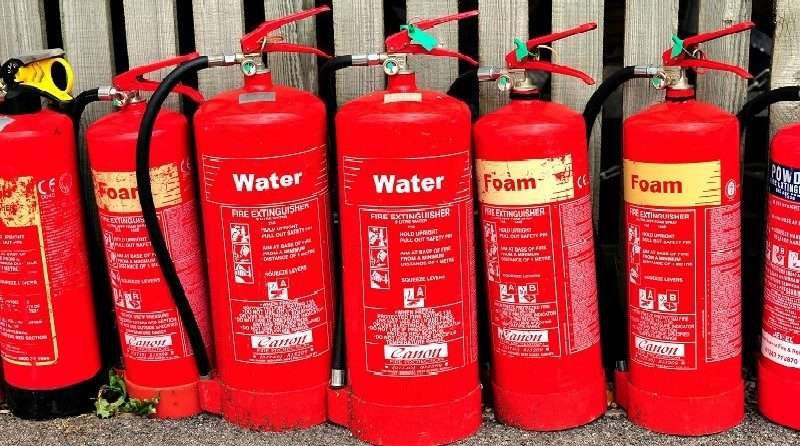
A child-friendly learning activity can involve looking at photographs or classroom illustrations of different extinguishers. An adult can explain why the labels differ and how the equipment is selected for particular hazards.
Children should also learn that extinguisher colours, shapes, and markings may vary. They should never choose an extinguisher based only on its colour or appearance.
The most reliable information comes from the label, the manufacturer’s instructions, and qualified fire-safety professionals.
Teaching Children About Fire Alarms
Fire extinguisher awareness should be part of a wider fire-safety education plan.
A fire alarm system detects signs of a potential fire and provides a warning through audible or visual signals, depending on its design.
Children should know what their school’s or home’s alarm sounds like and understand that it must be taken seriously.
When an alarm sounds, they should follow the established evacuation procedure rather than stop to identify the source or search for an extinguisher.
A properly selected and maintained fire alarm system in Pakistan can support building safety by alerting occupants when a potential fire is detected. In schools and other shared buildings, alarm arrangements should be appropriate for the building’s design, occupancy, and applicable requirements.
Teachers can help children become familiar with emergency signals through supervised safety education and authorized fire drills.
The purpose is to make the expected response clear: recognize the warning, follow instructions, and move toward safety.
What Should Children Do When They Discover a Fire?
Children should not be responsible for fighting fires. Their priority is to alert a responsible adult and get to safety.
Parents and teachers should explain the following principles in simple language:
1. Stay calm and alert an adult. Tell a teacher, parent, or other responsible adult immediately.
2. Follow the emergency plan. Leave using the designated safe route when instructed or when the situation requires immediate evacuation.
3. Do not stop for equipment. Children should never delay leaving to collect or operate a fire extinguisher.
4. Avoid dangerous areas. Stay away from smoke, flames, damaged electrical equipment, and other hazards.
5. Go to the designated meeting point. This helps adults check that everyone is accounted for.
6. Do not re-enter the building. Wait for authorization from emergency personnel or the responsible authorities.
If a child discovers a fire while alone, they should leave the dangerous area and seek help from a safe location.
These rules are more important than memorizing the names of extinguishers.
Making Fire Safety Lessons Engaging
Fire safety education is more effective when lessons are age-appropriate, clear, and repeated regularly.
Parents and teachers can use pictures, classroom discussions, story-based scenarios, and supervised demonstrations by qualified professionals.
For example, a teacher could show pictures of a water extinguisher and a dry chemical extinguisher, then explain that each has approved uses and limitations.
Another activity could involve matching illustrated fire hazards with the idea of seeking suitable adult help, rather than asking children to select equipment for an actual fire.
Useful learning activities include:
– Identifying the location of emergency exits.
– Learning what the school’s alarm sounds like.
– Practising evacuation during authorized drills.
– Recognizing fire extinguishers from pictures.
– Discussing why electrical equipment should not be touched when damaged.
– Learning the household or school meeting point.
– Explaining why emergency equipment must never be used as a toy.
Activities should not involve lighting fires, discharging extinguishers, handling hazardous materials, or creating simulated emergencies without appropriate professional oversight.
Fire Safety Education at Home
Parents and guardians can reinforce fire-safety lessons during ordinary household routines.
Children can be shown where emergency exits are located and taught to keep hallways and doorways clear. Adults can explain why cooking areas, electrical outlets, and heating equipment require care.
Families should also discuss what to do if an alarm sounds while people are sleeping or in different rooms.
The household should have a suitable emergency plan, and adults should ensure that smoke alarms and other fire-safety equipment are installed and maintained where appropriate.
Children should not be asked to inspect electrical systems, repair alarms, or handle extinguishers. Those responsibilities belong to adults and qualified professionals.
A calm, consistent approach helps children understand that fire safety is a shared responsibility, while emergency response remains the responsibility of trained adults and emergency services.
Fire Safety Education in Schools
Schools have an important role in teaching students how to recognize hazards and respond to warnings.
A school fire-safety programme may cover alarm signals, exit signs, evacuation routes, assembly points, and the location of emergency equipment.
Teachers should explain that fire extinguishers are provided for specific hazards and that students must not handle them unless a formally approved programme, applicable rules, and qualified supervision specifically permit an activity.
Routine safety education should focus on recognizing danger, following instructions, and evacuating correctly.
Schools should also ensure that escape routes remain accessible and that fire-protection equipment receives appropriate inspection and maintenance.
In Pakistan, the Building Code of Pakistan – Fire Safety Provisions 2016 provides a framework for fire protection and life-safety arrangements in buildings. Building owners and school administrators should check the requirements that apply to their premises and consult the relevant authorities when needed.
Common Mistakes to Avoid When Teaching Kids
Even well-intentioned safety lessons can become confusing if the wrong messages are emphasized.
Suggesting that every fire can be extinguished
Children should understand that some fires are too dangerous to approach and that evacuation takes priority.
Teaching equipment operation without emphasizing safety
Learning the names of extinguishers does not make a child responsible for using them.
Assuming all extinguishers are interchangeable
Different models have different approved uses. The label matters more than appearance.
Treating alarms as unimportant
Children should always take fire alarms seriously and follow the emergency plan.
Using frightening explanations
Lessons should be honest but age-appropriate. Clear instructions help children learn without creating unnecessary fear.
Forgetting regular practice
Children benefit from repeated, supervised discussions and authorized drills rather than a single lesson.
How Fire Alarm Systems and Extinguishers Work Together
Fire alarms and extinguishers serve different purposes.
An alarm system provides warning when its detectors or other initiating devices identify a condition covered by the system design. An extinguisher is portable equipment intended to control certain fires within its approved application.
Neither replaces the other, and neither guarantees that a building is safe during a fire.
A comprehensive fire-safety approach may include suitable detection and alarm arrangements, appropriate extinguishers, clear evacuation routes, emergency lighting where required, maintenance, and occupant training.
For schools, homes, offices, and commercial premises, equipment should be selected and maintained according to the hazards present and applicable requirements.
Organizations considering a fire alarm system in Pakistan should seek advice from qualified fire-safety professionals and verify relevant local requirements. The system should suit the building and its occupants rather than being selected on appearance alone.
Conclusion
Teaching kids about types of fire extinguishers is an opportunity to build practical safety awareness. Children can learn that water, foam, dry chemical powder, carbon dioxide, wet chemical, and specialist extinguishers have different purposes and limitations.
However, recognizing equipment is only one part of fire safety. Children must also understand alarm signals, evacuation procedures, emergency meeting points, and the importance of seeking adult help.
Parents and teachers can support these lessons through clear explanations, pictures, regular discussions, and authorized fire drills. They should never expect children to approach a fire, operate emergency equipment independently, or repair safety systems.
A safer home or school depends on prevention, early warning, appropriate equipment, maintenance, and a well-understood emergency plan.
When children learn to recognize danger and move toward safety, they gain knowledge that can help protect themselves and others throughout their lives.
FAQs
1. Why should children learn about different types of fire extinguishers?
Children should learn what extinguishers are, why different types exist, and why equipment must match the fire hazard. The goal is awareness, not teaching children to fight fires.
2. What are the main types of fire extinguishers?
Common types include water, foam, dry chemical powder, carbon dioxide, wet chemical, and specialist extinguishers for combustible-metal fires. Their approved uses depend on the product and applicable standards.
3. Can children use a fire extinguisher during an emergency?
Children should not be expected to oper