Fire safety is an important responsibility for building owners, facility managers, business operators, and property developers. Offices, shopping centres, warehouses, factories, educational institutions, and other commercial premises may contain electrical equipment, combustible materials, machinery, and activities that create fire hazards. Protecting these environments requires a planned approach that combines prevention, early warning, suitable firefighting equipment, and safe evacuation procedures.
One component of a building’s fire-protection arrangements is the fire hose reel. A hose reel is a fixed installation designed to provide a supply of water through a connected hose for certain firefighting applications. When correctly selected, installed, and maintained, it can form part of a broader fire-safety system.
However, a fire hose reel is not suitable for every fire, and its presence does not mean that occupants should attempt to fight a fire themselves. Its role must be understood alongside other protective measures, including fire alarms, extinguishers, emergency exits, and professional emergency response.
In Pakistan, the Building Code of Pakistan – Fire Safety Provisions 2016 provides an important reference for fire protection and life safety in buildings. The requirements applicable to a property depend on its occupancy, design, hazards, and the relevant authority’s rules.
This guide explains how fire hose reels work, why they matter, what building managers should consider before installation, and why inspection and maintenance are essential.
What Is a Fire Hose Reel?
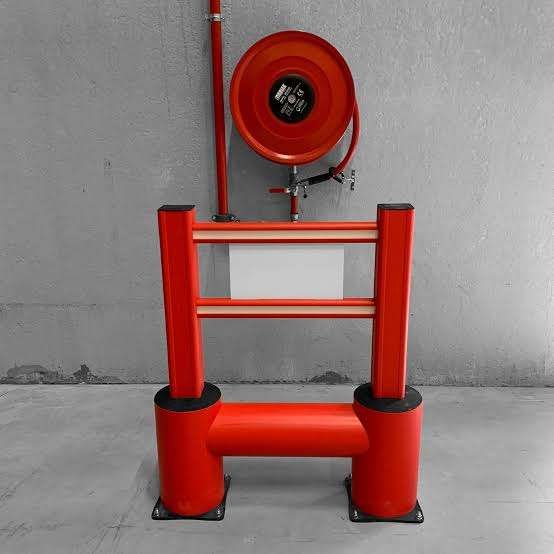
A fire hose reel is a fixed firefighting installation consisting of a hose stored on a reel or drum and connected to an appropriate water supply. Depending on its design, the assembly may include a supporting bracket or cabinet, a control valve, a hose, and a nozzle.
The arrangement allows the hose to be deployed for its intended purpose without having to retrieve a separate portable hose from storage.
Fire hose reels are commonly associated with buildings that need permanent firefighting facilities. Their suitability depends on the hazards present, the building’s layout, water-supply arrangements, and applicable fire-safety requirements.
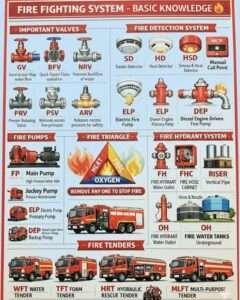
A hose reel should not be confused with every other type of firefighting hose equipment. Fire hydrants, standpipes, fire department connections, and portable extinguishers have different designs and intended applications.
Selecting the correct equipment requires an assessment of the building rather than relying on appearance alone.
Why Are Fire Hose Reels Important?
Fire hose reels may form part of a building’s fixed firefighting arrangements. Their value depends on whether they are appropriate for the identified hazards and remain in serviceable condition.
Several considerations explain their importance.
1. They provide a fixed firefighting facility
A permanently installed hose reel gives a building a designated location for the equipment. This can support an organized fire-protection plan where the installation is required and properly designed.
2. They form part of a layered safety approach
No single piece of equipment can address every fire risk. Hose reels may complement suitable extinguishers, detection and alarm systems, sprinkler systems where required, fire-resistant construction, and emergency exits.
3. They support planned building protection
A professionally designed installation considers the layout of the premises, potential hazards, water availability, and applicable coverage requirements.
4. They encourage planned maintenance
Because a hose reel is part of a fixed installation, its condition can be included in a documented inspection and maintenance programme.
These benefits depend on suitable design and upkeep. A neglected or incorrectly installed hose reel cannot be assumed to provide reliable protection.
How Does a Fire Hose Reel Work?
The operating arrangement varies by product and installation, but the basic principle is straightforward.
A hose is stored on a reel and connected to a suitable water supply. The assembly includes controls and a nozzle designed for the particular equipment. When operated according to its instructions, the system delivers water through the hose.
For a building installation to function as intended, several elements must work together:
– The water supply must be appropriate for the system.
– Pipework and connections must be suitable for the design.
– Valves and controls must remain serviceable.
– The hose must be in acceptable condition.
– The nozzle and other components must function as intended.
– The installation must be inspected and maintained.
A hose reel should not be treated as an independent product that can simply be attached to any water connection. The complete installation must be assessed by qualified professionals.
Water-based equipment also has important limitations. It may be unsuitable for fires involving energized electrical equipment, certain flammable liquids, combustible metals, or other hazards for which water is not an appropriate extinguishing agent.
For that reason, a building’s fire-protection design must identify which equipment is suitable for each hazard.
Where Might Fire Hose Reels Be Needed?
Fire hose reels may be considered for certain commercial, institutional, and industrial buildings, depending on their design and applicable requirements.
Commercial buildings
Offices, retail premises, and other commercial spaces may require fixed firefighting facilities as part of a wider fire-protection strategy.
The design should consider the number of occupants, internal layout, stored materials, and the building’s required safety provisions.
Warehouses
Warehouses may contain substantial quantities of packaging, stock, and other combustible materials. Their fire-protection needs depend on the stored products, storage height, building dimensions, and operational activities.
A professional assessment is important because water-based hose equipment may not be suitable for every stored material.
Factories and industrial facilities
Industrial premises may contain machinery, electrical installations, production processes, and specialized materials. The equipment required should be selected according to the actual hazards rather than applied uniformly to every factory.
Educational and institutional buildings
Schools, colleges, and other institutions need fire-protection arrangements appropriate to their buildings and occupants. Any fixed firefighting equipment should form part of a coordinated plan that prioritizes early warning and evacuation.
Multi-storey buildings
Multi-storey properties may require more complex fire-protection systems, including particular arrangements for water supplies, standpipes, hydrants, or other equipment.
The exact requirements should be established using the applicable code and professional design. A hose reel should never be assumed to be mandatory or sufficient for every building simply because the property has multiple floors.
Fire Hose Reels and Fire Extinguishers: Understanding the Difference
Fire hose reels and portable extinguishers serve different roles.
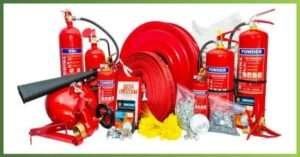
A portable extinguisher contains an extinguishing agent in a compact unit. Different extinguishers are designed for different classes of fire and have specific limitations.
A hose reel is a fixed installation connected to a water supply and designed for approved water-based firefighting applications.
The main differences include:
– Design: Extinguishers are portable units, while hose reels are fixed installations.
– Extinguishing agent: Extinguishers may use several types of agents; a conventional hose reel supplies water.
– Application: Suitability depends on the fire hazard and equipment rating.
– Maintenance: Both require appropriate inspection and servicing, but their maintenance procedures differ.
– Limitations: Neither should be used on a fire for which the equipment is unsuitable.
Buildings may need both types of equipment, along with other protective measures. The appropriate combination depends on the building’s fire-risk assessment and applicable requirements.
The Connection Between Hose Reels and Fire Alarm Systems
Fire hose reels are only one part of a building’s fire-protection arrangements. Detecting a fire and warning occupants are equally important aspects of safety.
A fire alarm system in Pakistan may be required as part of a building’s protective measures, depending on the occupancy, design, and applicable regulations.
Fire detection and alarm equipment helps identify a potential fire condition and warn people so they can follow the emergency procedure. A hose reel, by contrast, is a water-based firefighting facility intended for specified applications.
These systems have different purposes, but they can contribute to the same overall safety strategy.
An effective building plan may include:
– Suitable fire detection and alarm equipment
– Clear and accessible escape routes
– Emergency lighting where required
– Portable fire extinguishers selected for relevant hazards
– Fixed firefighting equipment where required
– Appropriate water supplies and related infrastructure
– Evacuation procedures and staff awareness
– Inspection, testing, and maintenance arrangements
Punjab Civil Defence lists fire detection and alarm systems, firefighting arrangements, fire-safety plans, and emergency exits among the measures it inspects in relevant premises.
Building owners should confirm the requirements that apply to their own location and property.
What Should Be Considered Before Installation?
Installing a hose reel requires more than selecting a product from a catalogue. The complete system must suit the building and its intended use.
Assess the building’s hazards
The first step is identifying the materials, processes, and activities that could create fire risks. A general office may have different requirements from a warehouse or industrial facility.
The assessment should also consider the building’s occupancy, layout, access arrangements, and other protective systems.
Confirm the applicable requirements
Building owners should review the relevant provisions of the Building Code of Pakistan – Fire Safety Provisions 2016 and any additional rules imposed by the responsible local authority.
Requirements can vary according to the building’s use and characteristics. A general article or checklist cannot establish compliance for every property.
Evaluate the water supply
A fixed hose reel needs a water supply suitable for the design. The required capacity, pressure, pipework, and related components should be determined through professional design.
The system should not be assumed to work correctly merely because water is available elsewhere in the building.
Consider location and accessibility
The installation’s location should be determined by the approved design and applicable requirements. Equipment must be accessible for its intended purpose, while escape routes and other safety arrangements remain unobstructed.
Cabinets, doors, signs, and surrounding fixtures should not prevent access to the installation.
Use qualified professionals
Design, installation, testing, and commissioning should be performed by appropriately qualified personnel. They can assess whether the equipment, water supply, and installation meet the applicable requirements.
This also helps establish the maintenance arrangements needed after installation.
Why Inspection and Maintenance Matter
A fire hose reel may remain unused for long periods, but that does not mean it can be neglected.
Over time, components may deteriorate, connections may develop leaks, hoses may become damaged, or valves and nozzles may develop faults. Changes to the building can also obstruct access or affect the suitability of the original arrangement.
A documented maintenance programme helps identify these problems before the equipment is needed.
Visual condition checks
Routine checks by the designated responsible person may identify visible damage, leakage, corrosion, missing identification, or obstructions around the installation.
These checks should follow the building’s maintenance procedure and should not be treated as a substitute for technical servicing.
Professional inspection and testing
Qualified service personnel should inspect and test the installation according to the manufacturer’s instructions, applicable standards, and local requirements.
The schedule should reflect the system design and relevant rules rather than relying on an arbitrary interval.
Maintenance records
Building managers should keep records of inspections, reported defects, maintenance work, and corrective actions.
Records help demonstrate that equipment is being managed systematically and make it easier to track recurring problems.
Correcting defects promptly
If a hose reel appears damaged or unreliable, the issue should be reported to the responsible manager and addressed by qualified personnel. The system should not be dismantled or repaired by untrained occupants.
Where a system is unavailable for maintenance, building management should assess whether temporary measures are needed to maintain the required level of fire protection.
Common Mistakes to Avoid
Several mistakes can reduce the value of a hose reel installation.
Assuming one system suits every building: Different properties have different hazards and requirements.
Ignoring water-supply needs: A hose reel depends on a suitable water supply and correctly designed components.
Blocking access: Stored goods, furniture, or other obstructions can make designated equipment difficult to access.
Skipping maintenance: Unused equipment still needs the inspection and servicing required for its design.
Confusing hose reels with extinguishers: The equipment has different operating principles and limitations.
Relying on firefighting equipment alone: Detection, warning, evacuation, and other protective arrangements are also essential.
Assuming installation proves compliance: The system must be suitable for the building and meet applicable requirements.
Avoiding these mistakes helps ensure that the equipment forms part of a coordinated and properly maintained safety strategy.
The Importance of Staff Awareness
Even a well-maintained fire-protection installation cannot replace a clear emergency plan.
Employees and other occupants should know how a fire alarm is communicated, which exits to use, and where to assemble after evacuation. Building managers should also ensure that visitors and contractors receive appropriate information.
Occupants should not assume they are expected to operate a hose reel during an emergency. Whether any staff may use such equipment depends on the building’s plan, their training, and the circumstances.
If a fire is spreading, smoke is present, the escape route is uncertain, or there is any immediate danger, occupants should evacuate and contact the appropriate emergency service. No one should delay leaving a hazardous area to retrieve equipment or attempt firefighting.
Children and other untrained occupants should follow the emergency plan and seek help from a responsible adult.
Fire Hose Reels in Pakistan: A Practical Approach
For property owners in Pakistan, fire protection should be planned with the relevant building code and local requirements in mind.
The Building Code of Pakistan – Fire Safety Provisions 2016 is an important national reference for fire prevention and life safety. Implementation and enforcement responsibilities can involve the relevant authority having jurisdiction, such as building-control bodies or other designated authorities.
The appropriate fire-protection arrangements depend on the building’s occupancy, size, layout, hazards, and other characteristics.
A professional assessment can help determine whether hose reels are required, what other systems are needed, and how the equipment should be installed and maintained.
Businesses should retain relevant design documents, inspection reports, servicing records, and evidence that identified defects have been addressed.
A Simple Fire Hose Reel Checklist
Building owners and managers can use the following checklist as an initial review:
– [ ] The building’s fire hazards have been assessed.
– [ ] Applicable fire-safety requirements have been reviewed.
– [ ] The need for hose reels has been determined by a suitable assessment.
– [ ] The installation has been designed and installed by qualified professionals.
– [ ] The water supply and system components are appropriate for the design.
– [ ] Hose reels are identifiable and accessible.
– [ ] Escape routes and access areas remain unobstructed.
– [ ] Visible damage or leakage is reported.
– [ ] Required inspection and maintenance are documented.
– [ ] Defects are referred to qualified service personnel.
– [ ] Fire detection, alarm, and evacuation arrangements are also reviewed.
– [ ] Occupants understand the emergency procedure.
This checklist is a general starting point. It does not replace professional inspection, testing, or the requirements applicable to a particular building.
Final Thoughts
Fire hose reels can be an important part of fixed firefighting arrangements where they are appropriate for the building and its hazards. Their effectiveness depends on correct design, a suitable water supply, accessible placement, professional installation, and ongoing maintenance.
However, no single item of equipment makes a building completely safe. Hose reels should be considered alongside fire detection and alarm systems, suitable extinguishers, clear escape routes, evacuation procedures, and other required protective measures.
For buildings in Pakistan, the relevant provisions of the Building Code of Pakistan – Fire Safety Provisions 2016 and local authority requirements should guide decisions about fire protection.
A fire alarm system in Pakistan can provide an important warning function where required, while a hose reel serves a different purpose within the wider fire-safety plan.
The most important principle is to put people’s safety first. Equipment must be professionally managed, occupants must understand how to evacuate, and nobody should be expected to fight a fire when doing so would expose them to danger.
Frequently Asked Questions
1. What is a fire hose reel used for?
A fire hose reel is a fixed installation that supplies water through a connected hose for specified firefighting applications. Its suitability depends on the fire hazards, system design, and applicable requirements.
2. Are fire hose reels required in every building in Pakistan?
Not necessarily. Requirements depend on the building’s occupancy, design, hazards, and the applicable regulations. Property owners should consult the relevant authority or a qualified fire-safety professional.
3. What is the difference between a fire hose reel and a fire extinguisher?
A hose reel is a fixed installation connected to a water supply, while a fire extinguisher is a portable unit that contains an extinguishing agent. Their applications and limitations differ, so equipment must be selected for the specific hazards.
4. How often should fire hose reels be maintained?
The inspection, testing, and maintenance schedule depends on the system, manufacturer’s instructions, applicable standards, and local requirements. Qualified service personnel should establish the appropriate programme and document the work.
5. Do fire hose reels replace a fire alarm system?
No. A hose reel provides a water-based firefighting facility, while a fire alarm system warns occupants about a potential fire. They serve different purposes and may both form part of a building’s wider fire-protection arrangements.