Fire safety is an important part of protecting people, property, and businesses. Whether you live in a house, manage a shop, operate an office, or oversee a commercial building, understanding basic fire protection can help you make better safety decisions. Fire extinguishers are a familiar part of many fire-safety arrangements, but simply keeping one nearby does not guarantee that it will be suitable or ready when needed.
Choosing the correct extinguisher, placing it appropriately, checking its condition, and arranging professional maintenance are all essential considerations. People should also understand the limitations of portable extinguishers and recognize when evacuation is the safest response.
In Pakistan, fire protection requirements depend on the building, its use, applicable regulations, and the hazards present. The Building Code of Pakistan – Fire Safety Provisions 2016 provides a framework for fire prevention and life safety in buildings. The Pakistan Engineering Council lists these provisions among its building-safety policies.
This beginner’s checklist explains the main points to consider when evaluating fire extinguishers, with practical information for homes, offices, shops, and other properties.
What Is a Fire Extinguisher?
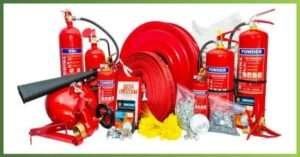
A fire extinguisher is a portable device designed to release an extinguishing agent onto a fire under suitable conditions. Depending on its design, the agent may be water, foam, dry chemical powder, carbon dioxide, or a specialized substance.
Different extinguishers are designed for different fire hazards. A product suitable for burning paper may not be appropriate for a fire involving cooking oil, combustible metals, or energized electrical equipment.
This distinction matters because choosing the wrong extinguisher can make a dangerous situation worse.
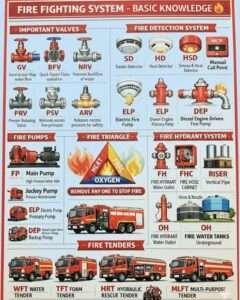
A fire extinguisher is also only one component of a wider safety plan. Fire detection, alarm systems, accessible escape routes, emergency lighting where required, evacuation planning, and suitable maintenance all contribute to building safety.
Why Is a Fire Extinguisher Checklist Important?
A checklist helps property owners and responsible staff identify important issues before an emergency occurs.
Without a planned review, an extinguisher might be difficult to access, unsuitable for the nearby hazards, damaged, or overdue for servicing. People might also assume that every extinguisher works in the same way, even though products can differ significantly.
A structured review helps answer several questions:
– Is the extinguisher suitable for the hazards in the area?
– Is it approved or certified according to applicable requirements?
– Can it be located easily?
– Is its condition satisfactory?
– Has it received the required maintenance?
– Do responsible adults or designated employees understand the emergency procedure?
– Are occupants aware that evacuation takes priority when a fire cannot be approached safely?
These checks are particularly important in workplaces, where building owners and management may have additional responsibilities under applicable fire-safety requirements.
1. Identify the Fire Hazards First
The first step is understanding what could burn in a particular area.
A home may contain furniture, curtains, paper, electrical appliances, cooking equipment, and household products. An office may have computers, electrical equipment, documents, and storage materials. Workshops and industrial facilities may contain flammable liquids, combustible metals, machinery, or other specialized hazards.
Each environment requires a different assessment.
Before selecting equipment, identify the materials present, the activities taking place, and the potential sources of ignition. Consider whether cooking operations, electrical installations, storage areas, or production processes create additional risks.
For commercial and industrial premises, a qualified fire-safety professional can help determine the appropriate protection.
The goal is not to buy an extinguisher first and decide where to use it later. The equipment should be selected according to the actual hazards and applicable requirements.
2. Understand the Main Types of Fire Extinguishers
Fire extinguishers use different agents because fires involve different materials. The following overview explains common categories.
Water extinguishers
Water-based extinguishers are generally intended for ordinary combustible materials, such as paper, wood, and certain fabrics, where the equipment is appropriately rated.
They are not suitable for every fire. Using an unsuitable water extinguisher on energized electrical equipment or burning cooking oil can create additional danger.
Foam extinguishers
Foam extinguishers are designed for certain ordinary combustible materials and flammable-liquid fires, depending on the product’s rating and instructions.
Their suitability must be confirmed from the manufacturer’s label rather than assumed from the extinguisher’s appearance.
Dry chemical powder extinguishers
Dry chemical extinguishers are available in different formulations. Some multipurpose products are rated for Class A, Class B, and Class C fires under the classification system used by the product.
They are commonly considered for environments where several types of hazards may be present. However, the exact rating and local requirements should guide selection.
Carbon dioxide extinguishers
Carbon dioxide extinguishers may be suitable for certain flammable-liquid and energized electrical-equipment fires, depending on the product’s approval and intended application.
Their limitations, including the possibility of a fire restarting after the gas disperses, should be considered during the safety assessment.
Wet chemical extinguishers
Wet chemical extinguishers are designed for particular cooking-oil and fat hazards, especially in commercial kitchens.
Kitchen fire protection should be assessed as a complete arrangement. A general-purpose extinguisher should not automatically be treated as an adequate substitute for equipment intended for cooking appliances.
Specialized extinguishers
Some environments require equipment designed for combustible metals or other unusual hazards. These applications need specialist assessment because an unsuitable extinguishing agent may react dangerously with the burning material.
Important: Always check the extinguisher’s classification label and manufacturer instructions. Product colours, appearances, and general descriptions alone are not enough to establish suitability.
3. Check the Label and Product Information
A properly labelled extinguisher provides important information about its intended use and limitations.
When reviewing a product, check for:
– The manufacturer’s or responsible supplier’s details
– The extinguisher’s type and fire classification
– Applicable approval or certification information
– The stated capacity and performance rating
– Manufacturing, service, or expiry information where applicable
– Operating instructions and safety warnings
– Maintenance and servicing information
The Building Code of Pakistan – Fire Safety Provisions 2016 addresses the labelling and identification of portable fire extinguishers. It also refers to providing an instruction manual covering relevant installation, operation, inspection, and maintenance information.
Avoid relying solely on advertising claims. Documentation should support the product’s stated capabilities.
For buildings where compliance is required, the selected equipment should meet the relevant code, standards, and approval requirements.
4. Choose Equipment Suitable for the Building
The right extinguisher depends on more than the room’s size.
Important considerations include the types of materials present, the severity of the hazards, the building’s layout, the number of occupants, and the distance people may need to travel to reach equipment.
For example, a commercial kitchen has different hazards from a small administrative office. A workshop handling combustible metals may need specialist equipment that would not ordinarily be required in a general office.
Building owners should also consider whether occupants can identify the equipment and whether its location is appropriate for the risks it is intended to address.
In Pakistan, applicable building and fire-safety requirements should be reviewed for the specific occupancy. Requirements for a commercial building may differ from those for an ordinary private dwelling.
A qualified fire-safety professional can help determine the required type, capacity, number, and placement of extinguishers.
5. Make Sure Extinguishers Are Accessible
Fire extinguishers need to be identifiable and accessible without exposing people to unnecessary danger.
A unit hidden behind stored boxes, furniture, stock, or equipment may be difficult to locate during an emergency. An extinguisher placed where people cannot easily see it may also be overlooked.
A general accessibility review should confirm that:
– The designated location is clearly identifiable.
– The extinguisher is not obstructed by stored materials.
– Relevant signs are visible where required.
– The mounting arrangement is appropriate for the equipment.
– The location is consistent with the building’s fire-safety plan.
– Access does not require moving heavy objects or entering a hazardous area.
Extinguishers should not be moved casually from their designated positions. If a layout change makes a location unsuitable, the responsible building manager should arrange a proper review.
The required number and placement of units should be determined using the applicable code and a suitable assessment, not a universal rule applied to every building.
6. Inspect the Condition Regularly
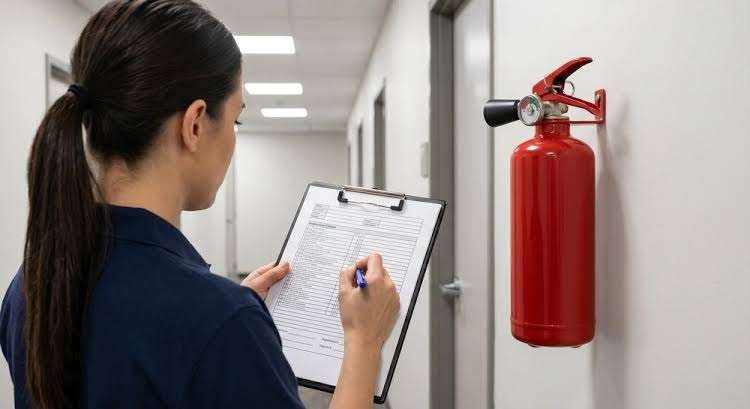
An extinguisher can appear acceptable from a distance while having a problem that needs attention. Regular visual checks help identify obvious issues.
A responsible adult or designated staff member can look for visible signs such as:
– Dents or damage to the cylinder
– Rust or corrosion
– A missing or damaged safety seal
– A missing label or unreadable instructions
– An obstructed or visibly damaged nozzle
– A pressure gauge outside the manufacturer’s indicated operating range, where a gauge is fitted
– Signs of leakage
– A missing or damaged hose
– An overdue service record
– An extinguisher that has been discharged or appears to have been tampered with
These observations are not a substitute for professional servicing.
If an extinguisher appears damaged or unreliable, it should be referred to a qualified service provider. Do not dismantle, repair, recharge, or pressure-test it yourself.
The inspection schedule should follow the manufacturer’s instructions and applicable requirements. Workplace guidance commonly includes regular visual inspections and documented maintenance.
7. Keep Maintenance Records Up to Date
Maintenance records help establish whether fire-safety equipment has received the required attention.
For workplaces and other managed properties, records can identify which units were inspected, what problems were found, and whether corrective work was completed.
A useful record may include:
– The extinguisher’s identification number or location
– The date of the inspection
– The condition observed
– Any reported defect
– The action taken
– The date of professional servicing
– The name of the responsible person or service provider
The frequency and scope of servicing depend on the extinguisher type, the manufacturer’s instructions, applicable standards, and local requirements.
Do not assume that every extinguisher follows the same servicing schedule. A qualified service provider should confirm the appropriate requirements for the specific equipment.
If a unit is removed for servicing, the responsible manager should assess whether suitable replacement protection is needed while it is unavailable.
8. Consider the Wider Fire-Safety System
Fire extinguishers are useful only within the limits of their intended purpose. They do not replace early detection, a functioning alarm, a safe escape route, or an emergency plan.
A fire alarm system in Pakistan may form part of the required fire-protection arrangements for a building, depending on its use and applicable regulations.
Detection and alarm equipment helps warn occupants about a potential emergency. Extinguishers provide a separate form of protection for specific fire hazards. Neither should be treated as a replacement for evacuation arrangements.
The Punjab Civil Defence Department identifies fire detection and alarm systems, firefighting arrangements, fire-safety plans, and emergency exits among the safety measures it inspects in relevant premises.
Property owners should therefore consider how extinguishers fit into the overall safety plan rather than evaluating them in isolation.
9. Make Emergency Procedures Clear
Even suitable equipment cannot guarantee a safe outcome during a fire. People need to know what to do when an alarm sounds or smoke is discovered.
The emergency plan should explain how occupants will be warned, which exits they should use, where they should assemble, and how emergency services will be contacted.
Only appropriately trained and authorized adults or employees should consider using an extinguisher, and only when the fire is small, the correct equipment is available, and the circumstances are safe.
People should never be expected to fight a fire if there is smoke exposure, uncertainty about the extinguisher, a blocked escape route, rapid fire growth, or another immediate danger.
Children should not attempt to operate extinguishers or investigate a fire. They should alert a responsible adult, follow the emergency plan, and move to safety.
If there is any doubt about whether an extinguisher can be used safely, evacuate and contact the appropriate emergency service.
10. Review Special Areas Separately
Some areas need additional attention because their hazards differ from those of ordinary rooms.
Kitchens
Cooking equipment, hot surfaces, and cooking oils create specific fire risks. Suitable kitchen fire protection should be selected for the equipment and cooking activities involved.
Electrical rooms
Electrical equipment can introduce ignition hazards. Fire protection should be selected according to the equipment, the electrical conditions, and applicable safety requirements.
Workshops and industrial areas
Workshops may contain flammable liquids, combustible metals, machinery, and other specialized hazards. Professional assessment is particularly important in these environments.
Storage rooms
Stored goods and packaging can increase the amount of combustible material present. Extinguisher placement and other fire-protection measures should reflect the actual storage arrangement.
Shared buildings
Apartments, offices, and commercial complexes may have shared corridors, stairways, and common areas. Building management should ensure that designated equipment remains accessible and that common escape routes are not obstructed.
A Beginner’s Fire Extinguisher Checklist
Use this checklist as a starting point for a planned review.
– [ ] Fire hazards in each area have been identified.
– [ ] Extinguishers are suitable for the hazards they are intended to protect against.
– [ ] Product labels and approval information have been checked.
– [ ] The required number and locations have been assessed against applicable requirements.
– [ ] Extinguishers are visible and accessible.
– [ ] Units show no obvious damage, leakage, or corrosion.
– [ ] Gauges and other visible indicators are within the manufacturer’s stated limits, where applicable.
– [ ] Instructions and identification labels are readable.
– [ ] Inspection and maintenance records are up to date.
– [ ] Professional servicing has been arranged when required.
– [ ] The building’s alarm and evacuation arrangements have been reviewed.
– [ ] Occupants know the emergency procedure.
– [ ] Children understand that they must leave the area and alert a responsible adult rather than operate equipment.
This checklist does not replace a professional fire-risk assessment or any inspection required by local authorities.
Common Mistakes to Avoid
Several common mistakes can reduce the value of fire extinguishers.
Choosing by price alone: A low-cost unit may not be suitable for the hazards or compliance requirements of the building.
Assuming every extinguisher handles every fire: Different agents have different applications and limitations.
Ignoring visible damage: Corrosion, leakage, damaged parts, and other defects require attention.
Blocking access: Equipment that cannot be reached easily may not be useful when needed.
Forgetting maintenance: An extinguisher should not be assumed to be operational simply because it remains in its usual location.
Relying on extinguishers alone: Detection, warning, evacuation, and emergency planning are also essential parts of fire safety.
Attempting repairs without expertise: Inspection beyond routine visual checks, internal servicing, recharging, and pressure testing should be handled by qualified personnel.
Avoiding these mistakes helps make fire protection more reliable and supports a safer environment for occupants.
Final Thoughts
The beginner’s checklist for fire extinguishers begins with understanding the hazards in a building and selecting equipment designed for those risks. Appropriate labelling, accessible placement, routine visual checks, maintenance records, and professional servicing all contribute to a more dependable fire-safety arrangement.
In Pakistan, property owners and managers should also consider the Building Code of Pakistan – Fire Safety Provisions 2016 and any additional requirements applicable to their building and location.
A fire alarm system in Pakistan may be another important part of the wider safety framework, but alarms and extinguishers serve different purposes. Early warning, suitable equipment, clear exits, and a well-understood emergency plan need to work together.
Most importantly, no checklist should encourage someone to take unnecessary risks. If a fire develops, occupants should prioritize evacuation and seek help rather than attempt to handle a dangerous situation themselves.
Frequently Asked Questions
1. How do I choose the right fire extinguisher?
Start by identifying the materials and activities that create fire hazards in the area. Check the extinguisher’s classification, manufacturer instructions, approval information, and suitability for those hazards. For workplaces or complex buildings, consult a qualified fire-safety professional.
2. How often should a fire extinguisher be inspected?
The inspection and maintenance schedule depends on the equipment and applicable requirements. Workplace guidance commonly includes regular visual inspections and periodic professional maintenance. Follow the manufacturer’s instructions and the requirements that apply to the property.
3. Can one fire extinguisher be used for every type of fire?
No. Extinguishers use different agents designed for different hazards. An unsuitable agent can create additional danger, so the classification label and manufacturer’s instructions should always guide selection.
4. Where should fire extinguishers be placed?
They should be located where they are visible, accessible, appropriately identified, and suitable for the hazards being protected against. The number and exact placement should follow the applicable building requirements and professional assessment.
5. Are fire extinguishers enough to protect a building?
No. They are only one component of fire protection. Depending on the building and applicable requirements, safety arrangements may also include fire detection and alarm systems, clear escape routes, emergency light