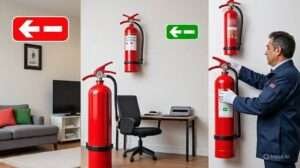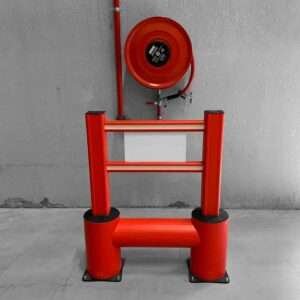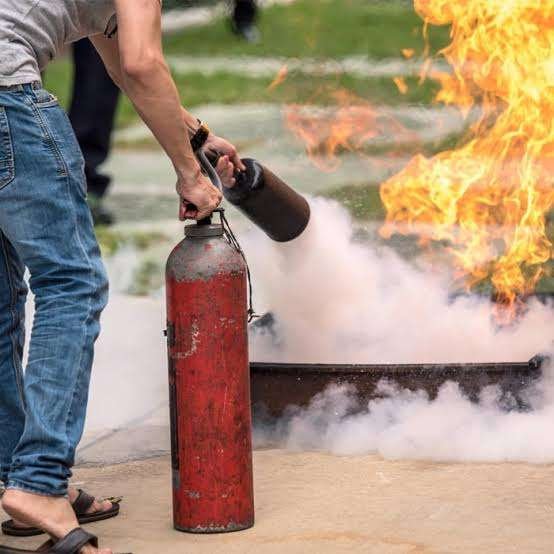
Fire can start unexpectedly in homes, offices, shops, schools, factories, and other buildings. An electrical fault, cooking accident, or flammable material near a heat source can quickly become a serious emergency. While preventing fires is always the priority, having suitable fire-safety equipment can help reduce risks and protect lives.
A fire extinguisher is one of the most recognizable pieces of firefighting equipment. It is designed to control certain types of small fires during their early stages when used appropriately. However, not every extinguisher is suitable for every fire, and using the wrong type can make a dangerous situation worse.
In Pakistan, fire safety is an important consideration for residential, commercial, and industrial buildings. The Building Code of Pakistan – Fire Safety Provisions 2016 addresses fire protection measures, including firefighting equipment and building safety arrangements.
Understanding the purpose, types, placement, and maintenance of extinguishers can help property owners make informed decisions. A suitable fire alarm system in Pakistan is another important part of fire protection because it can provide an early warning when a potential fire is detected. Together with prevention measures, clear escape routes, and emergency planning, these systems contribute to a more comprehensive approach to safety.
What Is a Fire Extinguisher?
A fire extinguisher is a portable or fixed device designed to release an extinguishing agent onto a fire. Depending on its design, the agent may cool burning materials, separate fuel from oxygen, or interrupt the chemical reaction that sustains combustion.
Portable extinguishers are commonly found in workplaces, commercial buildings, workshops, educational institutions, and other locations where fire risks need to be managed.
Their primary purpose is to address certain limited fires, not to replace professional emergency services or a building’s complete fire-protection system.
The correct extinguisher depends on several factors, including:
– The materials that could catch fire
– The electrical and equipment hazards in the area
– The size and nature of the potential fire
– The extinguisher’s approved fire classifications
– The building’s design and applicable safety requirements
Selecting equipment based only on its price, appearance, or size can leave important hazards unprotected. A qualified fire-safety professional can help determine the appropriate equipment for a particular property.
Why Are Fire Extinguishers Important?
Fire extinguishers can provide an additional layer of protection when a suitable device is available, maintained, and used by a trained person in an appropriate situation.
Their importance extends beyond simply putting out flames.
Supporting early fire response
Some fires begin on a relatively small scale but can grow rapidly. Suitable firefighting equipment may help control a limited fire before it spreads, provided conditions allow a safe response.
However, no one should attempt to tackle a fire that is growing, producing heavy smoke, blocking an escape route, or creating uncertainty about personal safety.
Protecting people and property
A fire can damage buildings, equipment, inventory, documents, and other valuable property. Appropriate fire protection can help reduce the potential impact of an incident.
Protecting people must always come first. Property should never be considered more important than safe evacuation.
Improving workplace preparedness
Businesses can include extinguishers in a broader fire-safety programme alongside alarm systems, evacuation plans, staff awareness, and scheduled inspections.
The Punjab Civil Defence Department identifies firefighting arrangements, fire detection and alarm systems, safety plans, and emergency exits among the measures considered in its inspection of relevant premises.
Supporting a wider safety strategy
An extinguisher is only one part of fire protection. Detection equipment warns occupants, alarms communicate danger, escape routes support evacuation, and trained emergency responders manage incidents.
Each measure serves a different purpose, so relying on a single piece of equipment is not a complete safety plan.
Understanding the Different Types of Fire Extinguishers
Fire extinguishers contain different agents designed for particular fire hazards. Understanding the basic differences is important when evaluating equipment for a property.
1. Water extinguishers
Water extinguishers are generally intended for Class A fires involving ordinary combustible materials such as paper, wood, and cloth.
They work mainly by cooling the burning material. However, water is not suitable for every fire.
Using a water extinguisher on energized electrical equipment or certain flammable-liquid fires can create additional danger. The extinguisher’s label and approved applications must always be checked.
2. Foam extinguishers
Foam extinguishers are designed for specified types of combustible-material and flammable-liquid fires, depending on the product’s approval and rating.
The foam can help separate fuel from the surrounding air and provide a cooling effect.
Not every foam formulation is suitable for every hazard. Selection should be based on the manufacturer’s specifications and a professional assessment of the location.
3. Dry chemical powder extinguishers
Dry chemical extinguishers use a powder-based agent to help interrupt the combustion process.
Some multipurpose models are rated for Class A, Class B, and Class C fires under commonly used classifications. These cover certain ordinary combustibles, flammable liquids, and energized electrical equipment.
However, ratings vary between products. A dry powder extinguisher should not automatically be assumed suitable for every electrical, chemical, or cooking hazard.
The label must identify the types of fire for which the specific unit is approved.
4. Carbon dioxide extinguishers
Carbon dioxide, commonly called CO₂, extinguishers are often used for certain flammable-liquid and energized electrical-equipment fires.
They release carbon dioxide, which helps suppress combustion. They are commonly considered for locations such as equipment rooms and some office environments when the hazard assessment supports their use.
Carbon dioxide can displace oxygen in enclosed spaces, and the discharge can be extremely cold. These extinguishers require appropriate selection and safe handling.
5. Wet chemical extinguishers
Wet chemical extinguishers are designed primarily for specific cooking-oil and cooking-fat fires, such as those associated with commercial kitchens.
Their extinguishing agent helps cool the burning material and form a surface layer that reduces the chance of re-ignition.
A general-purpose extinguisher should not be assumed to provide the same protection for a commercial cooking hazard. Kitchen equipment should be selected according to the actual cooking process and applicable requirements.
6. Special-purpose extinguishers
Certain industrial environments handle combustible metals or other unusual materials that require specialized extinguishing agents.
These hazards cannot safely be addressed by simply choosing a common household or office extinguisher.
Special-purpose equipment should be selected with help from qualified professionals who understand the materials, processes, and associated risks.
Understanding Fire Classes
Fire classifications help identify the types of materials involved in a fire. The precise classification system can vary by country and standard, so always follow the markings on approved equipment and applicable local requirements.
Common classifications used in many international systems include:
– Class A: Ordinary combustible materials, including paper, wood, and fabric.
– Class B: Flammable liquids, such as certain fuels, solvents, and oils.
– Class C: Energized electrical equipment in systems using this classification.
– Class D: Combustible metals that require specialized extinguishing agents.
– Class K or F: Cooking oils and fats, with the letter depending on the classification system.
These categories are not interchangeable. For example, a device intended for ordinary combustible materials may not be appropriate for a cooking-oil fire.
When selecting equipment in Pakistan, check its certified rating, instructions, and suitability for the intended application rather than relying on the colour of the cylinder alone.
Where Should Fire Extinguishers Be Located?
The correct location depends on the building’s size, layout, occupancy, and fire risks. Extinguishers should be accessible to authorized users and positioned according to the applicable code and professional assessment.
Homes
Households should assess potential hazards in areas such as kitchens, electrical installations, garages, and storage spaces. Any equipment chosen should be suitable for the identified risks and kept where it can be accessed without creating an obstacle.
Families should also prioritize working smoke alarms, clear exits, and a household evacuation plan.
Offices and shops
Offices and retail premises may contain electrical equipment, paper products, packaging, furnishings, and other combustible materials.
Extinguishers should be positioned in accordance with the building’s fire-safety plan. Furniture, deliveries, or stored goods should not block access to them.
Factories and workshops
Industrial sites may contain machinery, fuels, chemicals, combustible dust, or specialized manufacturing materials.
The appropriate equipment must reflect the hazards of each work area. A general-purpose extinguisher alone may not provide adequate protection for every industrial process.
Schools and other public buildings
Educational institutions and public facilities should consider occupant numbers, accessibility, evacuation arrangements, and the presence of children or people who may need assistance.
Equipment should be clearly identified and maintained, while emergency procedures should explain how occupants can leave safely.
Important: The number, size, type, and placement of extinguishers should not be decided using a generic online checklist alone. Building-specific requirements and applicable regulations must be considered.
The Role of Fire Alarm Systems in Fire Protection
Fire extinguishers and fire alarm systems perform different but complementary functions.
An extinguisher is intended to control certain fires. A fire alarm system is designed to detect indications of fire, communicate a warning, or support a coordinated emergency response, depending on its configuration.
A suitable fire alarm system in Pakistan may be particularly important in larger buildings where occupants are spread across multiple rooms or floors. Early warning can help people recognize danger and begin evacuation before conditions deteriorate.
A comprehensive fire-safety plan may include:
– Suitable fire detection equipment
– Audible or visual alarm notifications where required
– Accessible and clearly marked exits
– Appropriate extinguishers and other firefighting equipment
– Emergency lighting where required
– Evacuation instructions and assembly areas
– Inspection, testing, and maintenance procedures
– Staff training and emergency drills
The exact arrangement depends on the building, occupancy, hazards, and applicable requirements.
An alarm does not eliminate the need for extinguishers, and extinguishers do not replace detection or evacuation arrangements. Each component has a distinct purpose.
Fire Extinguisher Maintenance: Why It Matters
Fire extinguishers need regular inspection and appropriate servicing to remain dependable. Equipment that is damaged, discharged, obstructed, or incorrectly maintained may not perform as intended during an emergency.
The Building Code of Pakistan – Fire Safety Provisions 2016 contains provisions addressing extinguisher inspection and maintenance. NFPA 10 also provides a recognized framework for the selection, placement, inspection, maintenance, and testing of portable extinguishers.
Property owners and responsible facility managers should arrange maintenance in accordance with applicable requirements and manufacturer instructions.
Important checks include:
Accessibility
The extinguisher should remain in its designated location and be easy to identify. Furniture, stock, equipment, or locked barriers should not prevent authorized access.
Visible condition
Look for obvious damage, corrosion, leakage, or other signs that the equipment may require attention.
Instructions and labels
The operating instructions and fire-rating information should remain readable.
Pressure indication
Where a pressure gauge is fitted, its reading should be checked according to the manufacturer’s instructions. A gauge outside its approved operating range requires attention.
Inspection and service records
Buildings and workplaces should maintain appropriate records of inspections and professional servicing where required.
If an extinguisher appears damaged, has been discharged, or fails an inspection, it should be assessed by a qualified service provider and replaced or serviced as appropriate.
Do not dismantle, refill, pressurize, or attempt technical repairs on an extinguisher yourself.
Common Fire Extinguisher Mistakes to Avoid
Even when a building has firefighting equipment, several avoidable mistakes can reduce its usefulness.
Choosing the wrong type
Different extinguishing agents are designed for different hazards. Selecting an unsuitable model may leave a fire uncontrolled or introduce additional risks.
Blocking access
An extinguisher hidden behind stock or furniture may be difficult to locate during an emergency.
Ignoring maintenance
Equipment should not be assumed operational simply because it is present on a wall.
Treating an extinguisher as the complete solution
Fire prevention, detection, evacuation, and emergency response remain essential.
Failing to educate staff
Workplaces should make sure relevant personnel understand the emergency plan and receive appropriate fire-safety training.
Delaying evacuation
People may be tempted to protect equipment or property during a fire. This can expose them to smoke, heat, and rapidly changing conditions.
No possession or value of property justifies remaining in an unsafe area.
What Should People Do During a Fire Emergency?
The safest response depends on the situation, but protecting life and leaving danger should always be the priority.
If a fire alarm sounds or a fire is discovered:
1. Treat the warning seriously and alert a responsible adult or designated safety personnel.
2. Follow the building’s emergency plan and use an available safe exit.
3. Avoid smoke-filled areas and do not use a lift during a fire unless the building’s approved emergency procedures specifically direct otherwise.
4. Once outside, move to the designated assembly area and stay clear of emergency responders.
5. Contact the appropriate local emergency service and do not re-enter until authorities confirm it is safe.
Fire extinguishers should only be considered by trained, authorized people when the fire is small, the correct equipment is available, and a safe escape route remains clear. If there is any doubt, evacuate instead.
Children and teenagers should never be expected to fight a fire, investigate a dangerous situation, or operate unfamiliar firefighting equipment. Their priority is to alert a responsible adult and move to safety.
Fire Safety Requirements in Pakistan
Fire-safety requirements can vary according to the building type, location, occupancy, and applicable regulations.
The Pakistan Engineering Council publishes the Building Code of Pakistan – Fire Safety Provisions 2016. The code addresses a range of fire-protection and life-safety matters, including requirements relevant to firefighting equipment.
The Punjab Civil Defence Department also identifies firefighting arrangements among the measures considered when inspecting certain industrial, commercial, and high-rise premises.
Property owners, business operators, and facility managers should check the requirements that apply to their specific building and consult appropriately qualified professionals where necessary.
Compliance should be treated as an ongoing responsibility rather than a one-time purchase of equipment.
A Practical Fire Extinguisher Safety Checklist
Use this checklist as a starting point for reviewing fire-safety arrangements:
– [ ] Extinguishers have been selected for the identified fire hazards.
– [ ] Equipment is located according to the applicable safety plan.
– [ ] Extinguishers are visible and accessible.
– [ ] Labels and operating instructions are readable.
– [ ] Equipment is checked and maintained according to applicable requirements.
– [ ] Inspection and servicing records are maintained where required.
– [ ] Staff know how to raise the alarm and follow evacuation procedures.
– [ ] Escape routes and emergency exits remain clear.
– [ ] Suitable fire detection and alarm arrangements are provided where required.
– [ ] Emergency contacts and assembly areas are known.
– [ ] Children understand that they must alert an adult and leave an unsafe area.
This checklist does not replace a formal fire-risk assessment, professional advice, or local legal requirements.
Conclusion
Fire extinguishers are an important part of a building’s fire-protection arrangements, but their effectiveness depends on selecting the correct type, placing it appropriately, and maintaining it properly.
Understanding fire classifications can help property owners recognize why different hazards require different equipment. Regular inspections, staff awareness, accessible exits, and a clear emergency plan also contribute to a safer environment.
A suitable fire alarm system in Pakistan can provide an additional layer of protection by warning occupants when a potential fire is detected. When combined with prevention, appropriate firefighting equipment, and well-planned evacuation procedures, early warning can support a more complete approach to fire safety.
Above all, people should never risk their lives to protect property. Fire extinguishers are not a substitute for evacuation or professional emergency assistance. Preparing before an incident occurs is one of the most important steps any household or organization can take to improve fire safety.
Frequently Asked Questions (FAQs)
1. What is the main purpose of a fire extinguisher?
A fire extinguisher is designed to control certain fires during their early stages when the correct equipment is used appropriately. It is not a substitute for evacuation, a fire alarm, or professional emergency response.
2. Which type of fire extinguisher is suitable for a home?
The appropriate type depends on the hazards present in the home and the extinguisher’s approved rating. Homeowners should follow the product instructions and seek professional guidance when choosing equipment for specific risks.
3. Can one fire extinguisher be used for every type of fire?
No. Different extinguishers are designed for different fire classifications. Using an unsuitable type can be ineffective or dangerous, so the equipment label and applicable guidance should always be checked.
4. How often should fire extinguishers be inspected?
Inspection and servicing schedules depend on applicable regulations, the equipment, and the manufacturer’s instructions. Regular visual checks and professional maintenance should be arranged as required, with appropriate records kept where applicable.
5. Why is a fire alarm system important if a building already has extinguishers?
An extinguisher and a fire alarm have different functions. An extinguisher may help control a suitable small fire, while an alarm system warns occupa