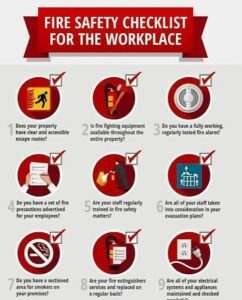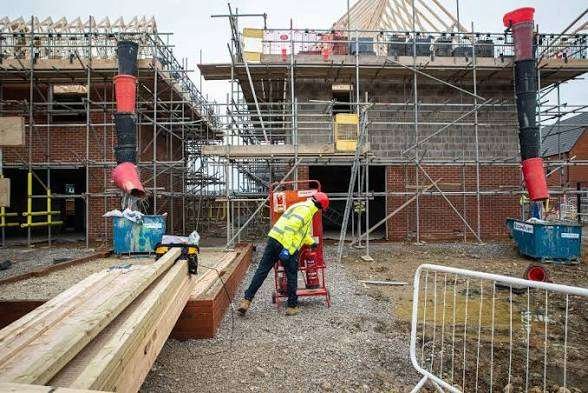
Fire safety is an essential responsibility for every business, whether it operates a small office, retail shop, warehouse, factory, school, hospital, or commercial building. A fire can put employees and visitors at risk, damage valuable equipment, interrupt business operations, and create financial difficulties. Regular fire safety audits help organisations identify potential hazards, assess existing precautions, and correct problems before they become emergencies.
However, an audit is only useful when its findings lead to action. Fire alarms that are not tested, extinguishers that are inaccessible, blocked emergency exits, neglected electrical equipment, and incomplete maintenance records can undermine an otherwise well-designed safety plan.
Businesses in Pakistan should establish a consistent maintenance programme that covers fire detection, firefighting equipment, emergency lighting, escape routes, electrical installations, and staff preparedness. A properly selected fire alarm system in Pakistan can provide an important early warning, but it must be inspected, tested, and maintained according to the manufacturer’s instructions and applicable requirements.
This guide explains the maintenance practices businesses should prioritise before, during, and after a fire safety audit. It also outlines practical ways to document findings, address defects, and build a safer workplace.
1. Understand the Purpose of a Fire Safety Audit
A fire safety audit is a structured review of a building’s fire risks, protective equipment, emergency arrangements, and maintenance practices. Its purpose is to identify weaknesses and determine whether suitable precautions are in place.
Depending on the premises, an audit may examine:
– Fire detection and alarm systems.
– Fire extinguishers and other firefighting equipment.
– Emergency exits, staircases, and escape routes.
– Emergency lighting and exit signage.
– Electrical installations and equipment.
– Storage of combustible and flammable materials.
– Fire doors and other protective building features.
– Employee training and evacuation procedures.
– Inspection, testing, and maintenance records.
The scope should reflect the building’s size, activities, occupancy, and specific hazards. A warehouse storing packaging materials may require different controls from a restaurant, office, or manufacturing facility.
Businesses should appoint competent personnel to carry out the assessment and seek specialist support when technical systems or regulatory requirements need professional evaluation.
2. Inspect Fire Alarm Systems Regularly
Fire alarm maintenance should be a central part of every relevant safety audit. A system may contain smoke detectors, heat detectors, manual call points, sounders, visual warning devices, control panels, and backup power supplies.
Each component needs to function as intended for the system to provide reliable warning.
Examine the control panel
The control panel provides information about the system’s condition. During routine checks, authorised personnel should review displayed faults, warning indicators, and other information according to the manufacturer’s instructions.
Any unexplained fault should be recorded and referred to a competent technician. Staff should not ignore warning indicators simply because the alarm has not sounded.
Check detectors and warning devices
Detectors can become dirty, damaged, obstructed, or unsuitable for their surroundings. Sounders and visual warning devices may also become damaged or disconnected.
Inspection should confirm that devices are present, accessible, appropriately positioned, and free from visible damage. Functional testing should follow the system manufacturer’s instructions and applicable standards.
Review backup power
A fire alarm system may rely on backup batteries if the normal power supply fails. Maintenance should include appropriate checks of batteries, charging arrangements, and related components.
Defective batteries or power supplies should be replaced or repaired by qualified personnel.
Keep testing records
Every inspection or test should be documented. Records should identify the equipment checked, the date, the person responsible, any faults found, and the corrective action taken.
NFPA 72 provides recognised guidance on fire alarm system design, inspection, testing, and maintenance. Businesses in Pakistan should confirm which standards and requirements apply to their particular premises. <Cite refs={[“turn511663search1″,”turn511663search3”]} />
3. Maintain Fire Extinguishers Properly
Fire extinguishers must be suitable for the hazards present and remain accessible when needed. Their condition should be checked as part of routine workplace inspections and formal maintenance.
Check location and accessibility
Extinguishers should be located in designated positions, identified clearly, and kept free from obstructions. Furniture, stored boxes, merchandise, or equipment should not prevent people from reaching them.
Staff should also know where extinguishers are located and understand that their own safety comes first during a fire emergency.
Look for visible damage
Routine visual checks should look for dents, corrosion, leakage, damaged hoses, missing components, and other signs of deterioration. Where a pressure gauge is fitted, it should be checked according to the manufacturer’s guidance.
The inspection should also confirm that identification labels and operating instructions are readable.
Arrange professional servicing
Visual checks do not replace professional servicing. Extinguishers may require scheduled maintenance, pressure testing, recharging, or replacement depending on their type, condition, and applicable requirements.
A competent service provider should carry out the work and provide suitable records.
Confirm the extinguisher is appropriate
Different extinguishers are designed for different fire types. Equipment suitable for ordinary combustible materials may not be appropriate for cooking oils, flammable liquids, or live electrical hazards.
A fire risk assessment should determine the correct equipment for each location. <Cite refs={[“turn511663search2”]} />
4. Keep Emergency Exits and Escape Routes Clear
Emergency exits are among the most important elements of a building’s fire safety arrangements. They must remain usable during normal operations and when an emergency occurs.
Blocked corridors, locked exit doors, damaged signs, and poorly maintained staircases can make evacuation more difficult.
During inspections, businesses should check that:
– Corridors and staircases are free from stored materials.
– Exit doors can be used as intended.
– Exit signs are visible and legible.
– Emergency routes are appropriately illuminated.
– Access to designated exits is not obstructed by furniture or stock.
– Doors and access-control arrangements do not prevent safe escape.
– Assembly points are identified and included in emergency instructions.
These checks should not be limited to audit day. Staff should be encouraged to report obstructions immediately, and supervisors should address them promptly.
5. Test Emergency Lighting and Exit Signs
Emergency lighting helps people navigate escape routes when normal lighting fails. It is particularly important in larger buildings, basements, stairwells, warehouses, and premises with complex layouts.
Exit signs help occupants identify the direction of travel towards a safe exit.
Maintenance should include checking the physical condition of lights and signs, confirming that they remain visible, and arranging functional tests according to the manufacturer’s instructions and applicable requirements.
Where emergency lighting has a backup battery, its condition and performance should also be assessed.
Any failed unit should be recorded and repaired promptly. Businesses should avoid assuming that a light is functional simply because its indicator appears normal.
6. Check Electrical Installations and Equipment
Electrical faults can contribute to workplace fires. Damaged wiring, overloaded circuits, poorly maintained appliances, and unsuitable temporary connections should be addressed through an appropriate electrical safety programme.
Businesses should arrange inspections and repairs by qualified electricians or other competent professionals.
During a fire safety audit, reviewers should consider:
– The condition of accessible cables and electrical equipment.
– Whether electrical panels are accessible and appropriately identified.
– Whether equipment shows signs of damage or overheating.
– Whether temporary cables create hazards or obstruct routes.
– Whether electrical rooms are used for inappropriate storage.
– Whether maintenance and inspection records are available.
Employees should report damaged equipment and avoid attempting repairs themselves. Unsafe equipment should be taken out of service by authorised personnel using suitable procedures.
Electrical safety should also be reviewed when businesses install new machinery, expand operations, or change how a room is used.
7. Maintain Fire Doors and Building Protection Features
Fire doors and other fire-resistant building features can help limit the spread of fire and smoke. Their effectiveness depends on appropriate installation, condition, and maintenance.
An audit should examine visible damage, missing components, defective closers, damaged seals, and alterations that may affect the door’s performance.
Fire doors should not be routinely wedged open or modified without approval. Any defect that could compromise their function should be assessed and corrected by competent personnel.
The inspection should also consider relevant fire-resistant walls, protected service openings, and other features identified in the building’s fire protection design.
Businesses should maintain records of inspections and repairs, particularly where work affects a building’s approved fire separation arrangements.
8. Inspect Sprinklers, Hydrants, and Other Fire Protection Systems
Some buildings require or use automatic sprinklers, fire pumps, hydrants, hose systems, or other fixed fire protection equipment. These systems need maintenance appropriate to their design and operating conditions.
Automatic sprinklers
Check for visible damage, obstructions, corrosion, or unauthorised changes to sprinkler heads and associated components. Stored goods should not obstruct the required sprinkler coverage.
Hydrants and hose systems
Equipment should remain accessible, clearly identified, and protected from damage. Inspection and functional testing should be performed according to the system’s design and applicable requirements.
Fire pumps and water supplies
Where installed, fire pumps and associated water supplies require planned inspection, testing, and maintenance by competent personnel.
Businesses should not assume that the presence of equipment means it is ready for use. A formal maintenance programme should identify who is responsible, how defects are reported, and how corrective work is verified.
9. Review Storage and Housekeeping Practices
Poor housekeeping can increase fire risk and interfere with evacuation. Packaging, paper, textiles, waste, and other combustible materials should be managed according to the risks of the premises.
A fire safety audit should review storage arrangements in offices, warehouses, workshops, kitchens, and utility areas.
Useful maintenance practices include:
– Removing waste at suitable intervals.
– Keeping combustible materials away from heat-producing equipment.
– Maintaining clear access to electrical panels and firefighting equipment.
– Following approved storage arrangements for hazardous materials.
– Preventing unnecessary accumulation of cardboard and packaging.
– Keeping designated escape routes clear.
– Ensuring storage does not obstruct detection or suppression equipment.
Businesses handling flammable substances should follow applicable storage requirements, product safety information, and professional guidance.
Housekeeping responsibilities should be assigned to specific employees or teams so that hazards do not remain unattended.
10. Maintain Kitchens, Workshops, and High-Risk Areas
Different work areas can create specific fire hazards. A general inspection may overlook these risks unless the audit considers each department separately.
Commercial kitchens
Cooking equipment, grease deposits, electrical appliances, and gas connections require appropriate cleaning and maintenance. Where relevant, extraction systems and cooking fire suppression equipment should also be maintained.
Workshops and factories
Machinery, heat-producing processes, electrical equipment, and combustible materials may require specialised precautions. Maintenance staff should follow approved procedures when working on equipment.
Warehouses
Storage height, aisle clearance, combustible stock, and access to firefighting equipment should be reviewed. Changes in stock type or storage layout may require a reassessment of fire risks.
Generator and plant rooms
Backup power equipment and mechanical systems should receive planned maintenance. Rooms should remain appropriately secured and free from unauthorised storage.
Each high-risk area should have clearly defined responsibilities, inspection procedures, and records relevant to its equipment and activities.
11. Review Staff Training and Fire Drills
Even well-maintained equipment cannot replace an effective emergency response. Employees need to know how to recognise a fire, raise the alarm, leave safely, and follow workplace procedures.
Training should be appropriate to the building and the employee’s responsibilities.
Staff should understand:
– How to report a suspected fire.
– What the alarm signals mean.
– Which escape routes and exits are designated.
– Where to assemble if evacuation is required.
– How to assist visitors within their assigned roles.
– Why lifts should not be used during a fire emergency unless emergency responders specifically direct otherwise.
– Why returning to a building before it is declared safe is dangerous.
Fire drills help test whether the arrangements work in practice. After a drill, management should review any confusion, delays, blocked routes, or communication problems.
Training records should include dates, attendance, subjects covered, and any follow-up action required.
12. Keep Accurate Fire Safety Audit Records
Documentation is an essential part of an effective maintenance programme. Without reliable records, management may struggle to identify recurring defects, verify repairs, or demonstrate that inspections have taken place.
A useful record system should include:
– Fire alarm inspection and testing reports.
– Extinguisher inspection and servicing certificates.
– Emergency lighting test results.
– Fire door inspection records.
– Sprinkler, pump, and hydrant maintenance reports where applicable.
– Electrical inspection reports.
– Fire drill reports and staff training records.
– Fire risk assessments.
– Corrective action logs.
– Records of changes to building layout or equipment.
Each identified problem should be assigned to a responsible person, given a suitable priority, and tracked until the corrective action has been completed and checked.
Digital records may make it easier to track inspection dates, maintenance schedules, and outstanding tasks. However, the format matters less than keeping the information accurate, accessible, and up to date.
13. Build a Corrective Action Plan After Every Audit
An audit should lead to measurable improvements rather than simply producing a report.
When a defect is identified, management should record what is wrong, where it was found, who is responsible, and what action is required.
Issues that could immediately affect life safety—such as blocked required exits, a disabled alarm system, or unavailable essential protection equipment—need urgent attention and appropriate temporary safety arrangements.
A corrective action plan should include:
1. Finding: Describe the issue clearly.
2. Risk assessment: Determine the potential consequences and urgency.
3. Responsibility: Assign a person or team to manage the correction.
4. Deadline: Set a reasonable completion date based on the risk.
5. Verification: Confirm that the work has been completed effectively.
6. Recordkeeping: Retain evidence of the action taken.
If a fire protection system is unavailable, management should consult competent professionals and follow the applicable impairment procedures. Staff should not disable alarms or other safety systems without authorisation and a suitable safety plan.
14. Understand Fire Safety Requirements in Pakistan
Businesses in Pakistan should review the Building Code of Pakistan – Fire Safety Provisions 2016, developed by the Pakistan Engineering Council in collaboration with the National Disaster Management Authority. It provides an important national reference for fire prevention and life safety. <Cite refs={[“turn511663search36″,”turn511663search8”]} />
The requirements applicable to a particular building may depend on its occupancy, design, location, relevant notifications, and the authority responsible for enforcement. Businesses should confirm their obligations with qualified fire-safety professionals and the relevant authorities.
When choosing or maintaining a fire alarm system in Pakistan, organisations should assess suitability, installation quality, commissioning, maintenance support, and applicable requirements.
NFPA publications, including NFPA 72 for fire alarm and signalling systems, may provide additional technical guidance where applicable. However, businesses should not assume that every international standard automatically applies to every building in Pakistan. The relevant authority and qualified professionals should determine which requirements govern the premises. <Cite refs={[“turn511663search1″,”turn511663search3”]} />
15. A Practical Fire Safety Audit Maintenance Checklist
Use this checklist as a starting point when reviewing a business’s maintenance programme:
– [ ] Fire alarm components are inspected and tested as required.
– [ ] Control panel faults are documented and corrected.
– [ ] Fire extinguishers are accessible, suitable, and maintained.
– [ ] Escape routes and exits remain clear.
– [ ] Emergency lighting and exit signs are functional.
– [ ] Electrical equipment and installations receive appropriate inspections.
– [ ] Fire doors and other protective building features are maintained.
– [ ] Sprinklers, hydrants, pumps, and other installed systems are inspected where applicable.
– [ ] Storage practices and housekeeping are reviewed.
– [ ] High-risk work areas receive suitable attention.
– [ ] Staff training and fire drills are documented.
– [ ] Maintenance certificates and inspection records are available.
– [ ] Audit findings are assigned, prioritised, and tracked to completion.
– [ ] The fire risk assessment is reviewed after significant changes.
This checklist is not a substitute for a professional audit or a detailed assessment of applicable legal requirements. It helps businesses organise routine checks and identify areas that need further review.
Conclusion
Fire safety audits are most effective when they lead to consistent maintenance and timely corrective action. Regularly checking alarms, extinguishers, electrical installations, emergency lighting, fire doors, escape routes, and other protection systems helps businesses identify weaknesses before an emergency occurs.
A reliable fire safety programme also depends on trained employees, clear responsibilities, accurate records, and a process for following up on audit f