Factories play an important role in Pakistan’s economy. From textile mills and food-processing plants to warehouses, packaging units, and manufacturing facilities, industrial workplaces support thousands of businesses and provide employment to many people. However, factories can also contain fire hazards that require careful planning, regular inspections, and effective safety procedures.
Electrical faults, overheated machinery, flammable materials, combustible dust, and unsafe storage arrangements can contribute to industrial fires. When a fire develops in a building with many workers, machinery, and stored products, the consequences may extend beyond the workplace and affect neighbouring homes and businesses.
Although the title of this guide refers to homeowners, factory fire safety is primarily the responsibility of factory owners, managers, safety professionals, and relevant authorities. Homeowners who live near industrial areas can also benefit from understanding factory fire risks and knowing how to respond to an emergency.
A suitable Fire alarm system in Pakistan can provide an important early warning in factories and other buildings. However, alarms work best when combined with fire prevention, suitable firefighting arrangements, clear escape routes, worker training, and regular maintenance.
This article explains the basics of factory fire safety, common industrial hazards, prevention measures, fire detection systems, and practical steps that support safer workplaces and nearby communities.
1. What Is Factory Fire Safety?
Factory fire safety includes the precautions, equipment, procedures, and training used to prevent fires and protect people if a fire occurs.
Factories may have different safety requirements depending on their size, activities, materials, machinery, and number of workers. A textile mill, for example, may handle large quantities of fabric and fibres, while a chemical facility may work with substances that require specialised storage and protection.
An effective fire safety programme begins by identifying hazards and assessing how a fire could start or spread. Management can then introduce appropriate preventive measures, install suitable detection and protection systems, and establish clear emergency procedures.
Important elements include:
– Identifying and assessing fire hazards.
– Maintaining safe electrical installations and machinery.
– Storing materials according to their fire risks.
– Installing suitable fire detection and alarm equipment.
– Providing appropriate firefighting equipment.
– Keeping emergency exits and access routes clear.
– Training workers in emergency procedures.
– Conducting inspections, drills, and maintenance.
These measures should be tailored to the factory’s actual risks rather than copied from another workplace without assessment.
2. Why Is Factory Fire Safety Important in Pakistan?
Industrial workplaces often combine electrical equipment, heat-producing machinery, packaging materials, production processes, and large quantities of stored goods. If these hazards are not managed properly, a fire may spread quickly and disrupt the entire facility.
Protecting workers
Workers must be able to recognise an emergency warning and leave the building safely. Appropriate alarms, clear exits, and regular training help support an organised evacuation.
Protecting nearby communities
A serious industrial fire may produce smoke, heat, and other hazards that affect neighbouring properties. Depending on the materials involved, the incident may also require emergency services to establish a safety perimeter.
Residents near industrial areas should understand local emergency announcements and follow instructions from emergency responders.
Reducing property damage
Fire can damage buildings, machinery, raw materials, finished products, and essential business records. Preventive maintenance and suitable fire protection measures can help reduce the risk of extensive damage.
Supporting business continuity
A major incident may interrupt production, affect employees, delay customer orders, and create financial losses. A practical fire prevention plan can reduce some of these risks and help management prepare for emergencies.
Supporting regulatory compliance
Factories must identify and follow the requirements that apply to their location, building type, and industrial activities. Professional advice and inspections can help management understand which fire safety measures are required.
3. Common Causes of Factory Fires
Understanding the most common hazards is an important step towards prevention.
Electrical faults
Damaged cables, overloaded circuits, loose connections, and poorly maintained electrical equipment may generate excessive heat or cause sparks.
Factories should arrange suitable inspections and repairs through qualified electrical professionals. Electrical problems should never be ignored simply because machinery continues to operate.
Overheated machinery
Industrial machines may generate heat through friction, mechanical failure, or continuous operation. Poor lubrication, defective components, and inadequate maintenance can increase the risk of overheating.
Equipment should be maintained according to manufacturer instructions, and unusual heat, noise, or burning smells should be investigated by competent personnel.
Combustible materials
Paper, cardboard, wood, textiles, packaging, and some manufacturing materials can contribute to fire growth. Large quantities of combustible stock should be stored and managed according to an appropriate fire risk assessment.
Storage should not obstruct emergency exits, firefighting equipment, or access routes.
Flammable liquids and gases
Certain factories use fuels, solvents, industrial gases, or other materials that can ignite under particular conditions. Their handling and storage require suitable procedures, compatible equipment, ventilation, and controls for ignition sources.
Only trained and authorised personnel should manage these materials.
Combustible dust
Some industrial processes generate fine particles from materials such as wood, paper, certain textiles, or metals. Under particular conditions, combustible dust can create serious fire or explosion hazards.
Facilities should assess dust-related risks, maintain appropriate collection systems, and use suitable cleaning methods. Compressed-air cleaning or other practices that create airborne dust clouds should not be used where they could increase the hazard.
Hot work
Welding, cutting, grinding, and similar activities may create sparks or hot surfaces. Factories should use an appropriate hot-work permit or authorisation process where required, control combustible materials around the work area, and provide suitable supervision and post-work checks.
Poor housekeeping
Accumulated waste, unnecessary packaging, blocked walkways, and improperly stored materials can make a fire more likely to spread and can interfere with evacuation.
Regular housekeeping is a basic but important part of industrial fire prevention.
4. How to Reduce Fire Risks in Factories
Fire prevention requires consistent attention from management and workers.
Inspect electrical installations
Electrical equipment should be selected, installed, and maintained according to its intended use and applicable requirements. Damaged wiring, exposed conductors, and repeated circuit faults need prompt professional attention.
Avoid temporary electrical arrangements that are unsuitable for industrial conditions.
Maintain machinery
Follow the manufacturer’s maintenance schedule and keep appropriate service records. Equipment showing unusual heat, vibration, noise, or damage should be assessed by competent personnel before continued operation creates additional risk.
Store materials safely
Keep combustible materials away from ignition sources and store chemicals or fuels according to their specific safety requirements.
Maintain appropriate separation between storage areas and routes used for emergency evacuation. The exact arrangement should be determined by the material hazards and building design.
Manage waste
Remove waste regularly and use suitable containers and procedures for different materials. Dust-producing operations should have appropriate collection and housekeeping arrangements.
Control smoking and ignition sources
Factories should establish clear rules for smoking, open flames, hot work, and other potential ignition sources. These rules must be communicated, supervised, and enforced.
Train employees
Workers should understand the hazards associated with their work, how to report unsafe conditions, and what to do when an alarm sounds.
Employees should not be expected to handle emergencies beyond their training or equipment.
5. The Role of Fire Alarm Systems in Factories
A fire alarm system helps detect a potential fire and warn people who may be in danger. In industrial workplaces, early warning is particularly important because a factory may have several production areas, storage rooms, offices, and other occupied spaces.
For businesses researching a Fire alarm system in Pakistan, the most appropriate solution depends on the factory’s size, layout, processes, and fire risks.
Smoke detectors
Smoke detectors identify smoke particles and can provide early warning in suitable environments. Their selection and placement should account for the conditions in each area.
For example, dusty production areas may require a different detection approach from clean offices.
Heat detectors
Heat detectors respond to specified temperature conditions or changes in temperature. They may be appropriate in locations where smoke detection could be unsuitable, but the selection should follow a professional system design.
Flame detectors
Some industrial environments may benefit from flame detection, particularly where the risk assessment identifies specific fire scenarios. These devices require suitable positioning and compatibility with the expected hazards.
Manual call points
Manual call points allow a person who discovers a suspected fire to activate the alarm. They should be clearly identified, accessible, and positioned according to the system design and applicable requirements.
Alarm sounders and visual warnings
Workers must be able to recognise an emergency warning in the areas where they work. In noisy production spaces, visual notification devices may be needed alongside audible alarms.
Control panels and monitoring
A fire alarm control panel can help indicate which detector or device has activated and whether the system has a fault. Some facilities may also require additional monitoring or connections to other safety systems.
The system should be designed and installed by competent professionals. Regular testing and maintenance are necessary to help ensure that it operates as intended.
6. Firefighting Equipment and Protection Measures
Fire detection is only one part of factory fire safety. Depending on the risk assessment and applicable requirements, a factory may also need firefighting equipment or fixed protection systems.
Fire extinguishers
Different extinguishers are designed for different types of fire. Their selection should account for the materials present and the hazards associated with electrical equipment or industrial processes.
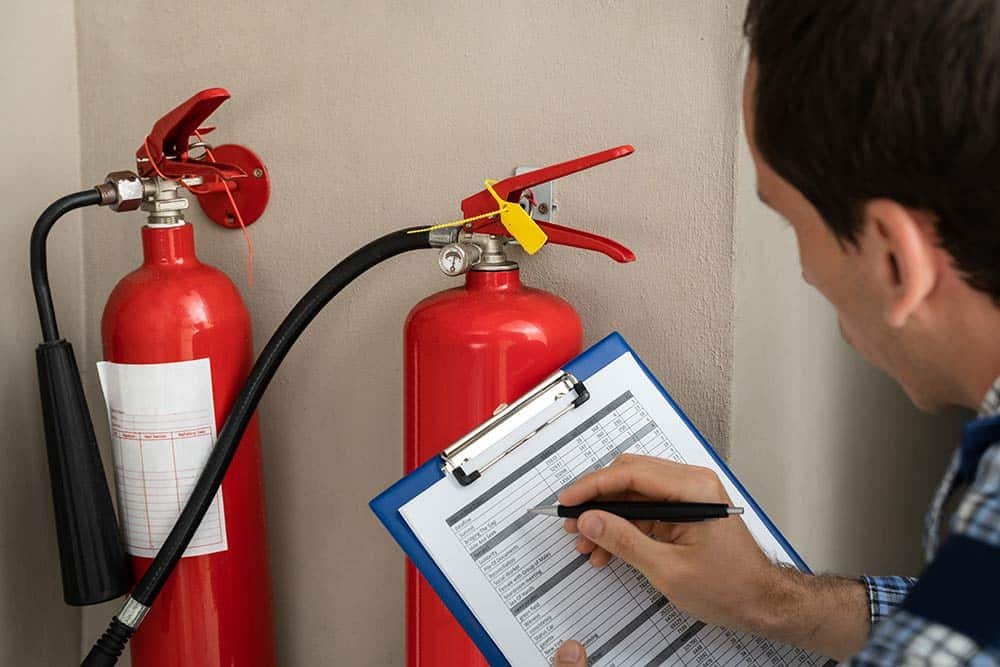
Extinguishers should be accessible, appropriately identified, inspected, and maintained. Workers should only attempt to use them when they have suitable training, the fire is small and manageable, and a safe escape route remains available.
Evacuation should take priority whenever there is uncertainty or immediate danger.
Fire hydrants and hose systems
Larger industrial premises may require hydrants or hose systems to support firefighting operations. Their design, water supply, accessibility, inspection, and maintenance should meet the applicable requirements.
Automatic sprinkler systems
Where appropriate, sprinkler systems can help control or suppress a developing fire. Their suitability depends on the building, storage arrangements, materials, and expected fire conditions.
Sprinkler systems require professional design, installation, inspection, and maintenance.
Emergency lighting and exit signage
If normal lighting fails, emergency lighting and clear exit signs can help people identify routes to safety.
These provisions should be maintained and tested according to applicable requirements and manufacturer instructions.
7. Emergency Exits and Evacuation Planning
A factory needs a practical evacuation plan that reflects its actual layout and workforce.
Emergency exits should be clearly identified, maintained, and accessible. Routes must not be obstructed by stored materials, machinery, waste, or locked doors that prevent safe escape.
An evacuation plan should explain:
– How workers will recognise an alarm.
– Which exits and escape routes they should use.
– Where people should assemble outside.
– How visitors and contractors will be accounted for.
– How assistance will be provided to people who need it.
– Who is responsible for contacting emergency services.
– How the workplace will prevent unsafe re-entry.
Factories should practise evacuation procedures at appropriate intervals and review the results. Drills can reveal problems with alarms, exit routes, worker awareness, or assembly arrangements.
No one should re-enter a building after evacuation until the responsible emergency authorities confirm it is safe.
8. Worker Training and Safety Responsibilities
Fire safety depends on more than equipment. Workers and supervisors need to understand their responsibilities and know how to respond to hazards.
Training should explain the location of alarms, evacuation routes, assembly points, and procedures for reporting dangerous conditions.
Employees should be encouraged to report damaged electrical equipment, blocked exits, unusual machinery conditions, and unsafe storage practices.
Management should appoint suitable personnel to coordinate emergency arrangements where required. Those responsibilities must be clearly defined, and staff should know who to contact when a concern arises.
Training should be appropriate to the work being performed. Employees handling hazardous materials or operating specialised equipment may need additional instruction.
9. Factory Fire Safety Requirements in Pakistan
Fire safety requirements in Pakistan can vary according to the province, local authority, building classification, factory operations, and applicable legislation.
In Punjab, Civil Defence identifies fire detection and alarm systems, firefighting arrangements, fire safety plans, emergency fire control rooms, emergency exits, evacuation plans, and ventilation among the measures inspected in relevant industrial, commercial, and high-rise premises. The department also describes the possibility of legal action for non-compliance under the rules it administers.
The Sindh Occupational Safety and Health Rules, 2019 contain provisions concerning firefighting equipment, periodic examination and testing, escape stairs in certain multi-storey workplaces, and fire alarms or fire bells in workplaces. The rules also refer to the Building Code of Pakistan—Fire Safety Provisions 2016.
These requirements should be interpreted in context. Not every provision applies identically to every factory, and additional rules or approvals may apply to particular activities or buildings.
Factory owners should consult the relevant provincial authority, building-control body, fire service, or qualified fire safety professional to confirm which requirements apply to their premises.
10. How Homeowners Can Stay Safer Near Factories
People who live near industrial premises can take reasonable precautions without attempting to manage factory operations themselves.
Understand local emergency information
Learn how local authorities communicate emergency warnings and follow official instructions during an incident.
Keep family escape routes clear
Ensure that doors and windows intended for escape can be opened safely. Agree on a meeting point outside the home and make sure everyone understands the plan.
Respond appropriately to smoke or fire
If smoke or fire from a nearby factory creates a threat to your home, move away from the danger and follow instructions from emergency responders. Do not approach the industrial site to investigate.
If authorities advise evacuation, leave promptly using the recommended route. If they advise remaining indoors, follow their instructions and avoid unnecessary exposure to outdoor smoke.
Report visible hazards safely
If you notice an apparent fire hazard or emergency, report it to the appropriate authority or emergency service. Do not enter industrial property, touch equipment, or attempt to repair a problem yourself.
Maintain household smoke alarms
Smoke alarms installed in suitable locations can provide an early warning of a fire inside the home. Test and maintain them according to the manufacturer’s instructions.
These household precautions complement factory safety measures but cannot replace the factory owner’s responsibility to control industrial risks.
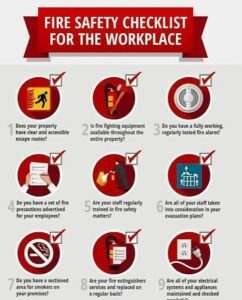
11. Developing a Factory Fire Safety Checklist
A checklist helps management review important safety arrangements consistently. It should be adapted to the facility and used alongside professional assessments where required.
A practical checklist may include:
– Fire hazards have been identified and assessed.
– Electrical installations are maintained by qualified personnel.
– Machinery inspection and maintenance schedules are followed.
– Flammable materials are stored appropriately.
– Combustible dust is managed safely where relevant.
– Waste and packaging do not accumulate dangerously.
– Fire detection and alarm equipment is suitable and maintained.
– Required firefighting equipment is accessible and serviceable.
– Exit routes remain clear and emergency doors operate correctly.
– Emergency lighting and exit signage are maintained.
– Workers understand the evacuation procedure.
– Emergency drills are conducted and reviewed.
– Visitors and contractors receive relevant safety information.
– Inspection and maintenance records are available.
– Identified defects are assigned for corrective action.
Each issue should be recorded with a responsible person and a target completion date. Serious hazards should be addressed promptly rather than postponed until the next scheduled review.
12. Choosing the Right Fire Safety Support
Factory owners should seek professional guidance when planning new fire protection arrangements or reviewing existing equipment.
A qualified fire safety professional can help assess the building’s risks, identify suitable detection and protection measures, and determine which technical and regulatory requirements need to be considered.
When evaluating a supplier, consider its experience, technical competence, product documentation, installation capability, and maintenance support.
Businesses researching a Fire alarm system in Pakistan can visit “Fire Safety Trading” (https://firesafetytrading.com.pk/) to explore relevant fire safety information and available solutions. Equipment should be chosen according to the facility’s actual requirements rather than price alone.
A well-designed system must be installed correctly, tested, maintained, and integrated
into a wider emergency plan.
Conclusion
Factory fire safety is essential for protecting workers, industrial property, nearby communities, and business operations. Electrical faults, overheated machinery, combustible materials, unsafe storage, and poor housekeeping can all contribute to industrial fire risks.