Fire safety is an important responsibility for every household and business. Although restaurants and homes serve different purposes, they share many potential fire hazards, including cooking equipment, electrical appliances, gas connections, combustible materials, and limited escape routes.
Restaurant kitchens require particular attention because cooking activities, hot surfaces, grease, ventilation systems, and electrical equipment operate together in a busy environment. Learning from restaurant fire safety practices can help homeowners understand how to prevent hazards and create safer kitchens at home.
In Pakistan, many households use gas stoves, electrical appliances, UPS systems, inverters, and generators. These systems need appropriate installation, careful use, and regular maintenance. Simple preventive measures can help reduce risks and improve preparedness.
A suitable fire alarm system in Pakistan can provide an early warning when smoke or fire is detected, but it is only one part of a broader safety plan. Safe cooking habits, properly maintained equipment, clear exits, and an emergency plan are also essential.
This article explains ten important restaurant fire safety practices and how their lessons can help homeowners build a safer living environment.
1. Understand the Main Causes of Kitchen Fires
The kitchen is one of the most important areas to consider when planning fire safety. Restaurants prepare food throughout the day, while households may cook several meals daily. In both settings, heat, cooking oils, electrical appliances, and combustible materials can create hazards.
Common causes of kitchen fires include unattended cooking, overheated cooking oil, faulty electrical equipment, gas-related problems, and grease accumulation around cooking equipment.
Restaurants may face additional risks because they use commercial fryers, grills, ovens, extraction hoods, and high-capacity cooking appliances.
Homeowners can learn from the way professional kitchens identify and manage these hazards.
Important precautions include:
– Stay attentive while cooking.
– Keep paper, cloth, plastic packaging, and other combustible items away from heat sources.
– Clean cooking areas regularly.
– Maintain appliances according to manufacturer instructions.
– Avoid using damaged electrical equipment.
– Keep children away from hot cooking surfaces.
– Ensure that kitchen exits and walkways remain clear.
If a fire develops, people should prioritise their safety, alert others, evacuate if necessary, and contact emergency services. Never use water on burning cooking oil.
The U.S. Fire Administration provides further guidance on reducing cooking-related fire risks, including the importance of remaining attentive while cooking. “Source: U.S. Fire Administration” (https://www.usfa.fema.gov/prevention/home-fires/prevent-fires/cooking/).
Understanding common hazards is the first step towards preventing avoidable incidents.
2. Install a Suitable Fire Alarm System
Restaurants need an effective way to alert employees and customers when a fire emergency occurs. Homes also benefit from suitable smoke detection because a fire may begin in an unoccupied room or while household members are asleep.
Smoke alarms detect smoke and provide an audible warning. Larger or more complex properties may require a more comprehensive fire alarm system that includes detectors, a control panel, alarm sounders, manual alarm points, visual notification devices, and backup power.
The appropriate arrangement depends on the property’s design, size, occupancy, and potential hazards.
When considering a fire alarm system in Pakistan, homeowners and business operators should assess:
– The size and layout of the building.
– The location of kitchens and sleeping areas.
– The number of floors.
– The type of cooking and electrical equipment used.
– The suitability of the detection devices.
– The availability of professional installation and maintenance.
– The need for backup power and appropriate notification.
For homes, standalone smoke alarms may provide useful protection. Larger residential buildings, apartment blocks, and commercial premises may need different arrangements according to applicable requirements.
Restaurants should also ensure that ordinary cooking activities do not lead to unsuitable detector placement or repeated nuisance alarms. Qualified professionals can recommend appropriate devices for different areas.
Punjab Civil Defence lists fire detection and alarm systems among the safety measures included in its inspection mandate for relevant commercial premises and other buildings. “Source: Punjab Civil Defence” (https://civildefence.punjab.gov.pk/inspection_of_fire_safety_measures).
An alarm system is valuable only when it is suitable, functional, and maintained. It should always support a wider emergency plan.
3. Keep Cooking Areas Clean and Well Maintained
Cleanliness is an important part of kitchen fire prevention. Grease, oil residues, packaging, and food waste can accumulate around cooking equipment and ventilation systems if cleaning is neglected.
In restaurants, grease may build up in extraction hoods, filters, and ducts. If these areas are not maintained, the accumulated material can increase the risk of a fire spreading through the ventilation system.
Household kitchens also need regular cleaning, particularly around cooking appliances and other heat-producing equipment.
A good cleaning and maintenance routine should include:
– Removing grease and food residues safely.
– Keeping cooking surfaces free from unnecessary clutter.
– Cleaning or servicing ventilation components as recommended.
– Disposing of waste regularly.
– Keeping combustible packaging away from heat.
– Arranging professional maintenance for equipment that requires it.
Restaurants should follow cleaning schedules appropriate to their cooking volume, equipment, and manufacturer guidance. Homeowners should also follow the instructions provided with their appliances.
Cleaning should take place using appropriate methods, and equipment should be handled safely. Technical servicing should be left to competent professionals.
A clean kitchen is not automatically fireproof, but good housekeeping helps remove avoidable hazards and makes it easier to identify damaged equipment or unsafe conditions.
4. Maintain Electrical and Gas Safety
Electrical and gas systems support many essential activities in restaurants and homes. However, damaged wiring, unsuitable installations, faulty appliances, and neglected maintenance can create dangerous conditions.
Restaurants may operate several ovens, refrigerators, exhaust fans, lighting systems, and other appliances simultaneously. Homes may also use multiple electrical devices, air conditioners, water heaters, inverters, and backup power systems.
Electrical installations should be suitable for the connected equipment and maintained by qualified electricians.
Homeowners and restaurant managers should:
– Check appliances and cables for visible damage.
– Avoid overloading electrical sockets.
– Keep electrical panels accessible.
– Replace damaged equipment promptly.
– Arrange professional inspections when faults recur.
– Follow manufacturer instructions for appliances.
– Ensure gas equipment is installed and maintained by qualified technicians.
Gas appliances require particular attention to connections, ventilation, and servicing. If a gas leak is suspected, people should follow the relevant emergency procedure, avoid operating electrical switches or creating ignition sources in the affected area, move away from danger, and contact the appropriate emergency service or gas provider from a safe location.
Do not attempt improvised electrical or gas repairs.
For both homes and restaurants, prevention depends on recognising unsafe conditions and arranging appropriate repairs before equipment is used again.
5. Use Suitable Fire Protection Equipment
Restaurants often require different types of fire protection equipment for kitchens, dining rooms, storage areas, and other parts of the premises.
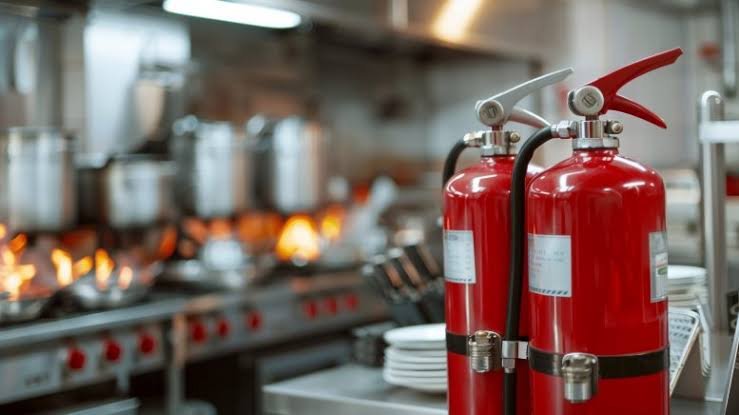
Depending on the risk assessment and applicable requirements, equipment may include suitable portable fire extinguishers, fire blankets where appropriate, fixed cooking-equipment suppression systems, sprinklers, or hydrants.
Homes may also benefit from appropriate fire protection equipment.
However, equipment must be selected according to the hazards present. A product suitable for an ordinary combustible-material fire may not be suitable for burning cooking oil or certain electrical hazards.
Before selecting equipment, homeowners and restaurant operators should seek appropriate advice and confirm that the equipment meets relevant requirements.
Safety precautions include:
– Keeping equipment visible and accessible.
– Ensuring that furniture or stored items do not block it.
– Following inspection and servicing requirements.
– Replacing damaged or defective equipment.
– Ensuring that staff understand the venue’s emergency procedures.
– Keeping children away from equipment that they might misuse.
A fire extinguisher should never be treated as a substitute for evacuation. If a fire is growing, smoke is spreading, or the escape route may become unsafe, leave immediately and contact emergency services.
Untrained household members and employees should not be expected to fight a fire.
Suitable equipment, regular maintenance, and a clear emergency plan work together to improve preparedness.
6. Keep Exits and Escape Routes Clear
Clear escape routes are essential in restaurants, homes, apartment buildings, and other occupied premises.
In a restaurant, customers may not know the layout and may struggle to find an alternative exit during an emergency. At home, family members may be asleep or located on different floors when a fire starts.
Blocked doors, cluttered corridors, stored cartons, and furniture placed in stairways can delay evacuation.
To reduce these risks:
– Keep designated exits clear.
– Avoid storing goods in corridors and stairways.
– Ensure exit signs remain visible where required.
– Maintain emergency lighting where required.
– Make sure household members know the available escape routes.
– Identify a safe outdoor meeting place.
– Review evacuation arrangements when the building layout changes.
Restaurant managers should ensure that tables, chairs, decorative displays, and supplies do not obstruct escape routes.
Homeowners should check that doors and windows intended for escape can be used safely. Families living in multi-storey homes should understand how to leave upper floors using suitable, planned routes.
People should not enter smoke-filled areas or use an unsafe route simply because it is familiar. If the usual route is affected, use another safe, designated exit when available.
Clear exits can make evacuation more straightforward and reduce confusion during an emergency.
7. Train People to Respond to Fire Emergencies
Fire safety equipment is only one part of emergency preparedness. People also need to understand what to do when a fire is detected.
Restaurant employees should receive suitable training for their responsibilities. This may include recognising hazards, reporting faults, responding to alarms, guiding customers, and following the evacuation plan.
Homeowners should also ensure that family members understand basic fire safety.
Everyone should know:
– How to recognise the alarm.
– Which exits are available.
– Where to meet outside.
– How to contact emergency services from a safe location.
– Why personal belongings should not delay evacuation.
– Why nobody should re-enter a building until it is declared safe.
Restaurants can brief new employees and arrange refresher training as appropriate. Larger establishments should assign clear emergency responsibilities and ensure that staff know the designated assembly area.
At home, adults should explain the escape plan to children in simple language. Children should understand that they must leave when an alarm sounds and follow the family plan rather than hide or search for toys.
People who may need additional assistance should be considered when preparing evacuation arrangements.
The objective of training is not to encourage everyone to fight fires. It is to help people recognise danger, communicate clearly, and reach safety without unnecessary delay.
8. Prepare an Emergency Plan
An emergency plan explains how people should respond if a fire occurs. Restaurants need procedures that account for employees, customers, and the building layout. Households need a plan that works for family members, visitors, and anyone who may require assistance.
A practical plan should identify:
– The main and alternative escape routes.
– How the alarm will be raised.
– Who will contact emergency services.
– The outdoor assembly point.
– How people who need assistance will be supported.
– Who will communicate with emergency responders.
– How household members or staff will be accounted for after evacuation.
Restaurants should ensure that staff know the plan before opening to customers. Evacuation drills can help identify problems and make responsibilities clearer.
Families should practise their escape plan periodically, particularly when children are young or the home layout changes.
The plan should also consider visitors who may be unfamiliar with the property. In a restaurant, staff may need to give clear verbal directions. At home, guests should be able to identify a safe way out.
After leaving a building, people should stay at the designated meeting point and avoid returning for belongings.
An effective plan helps turn general safety knowledge into clear actions during an emergency.
9. Inspect and Maintain Fire Safety Systems
Fire alarms, detectors, extinguishers, electrical systems, and other protective equipment require regular attention.
A restaurant may have sophisticated fire protection systems, but neglected maintenance can leave important components unable to perform as expected. Homes also need routine checks of smoke alarms and relevant equipment.
Maintenance schedules should follow manufacturer instructions, applicable standards, and local requirements.
Relevant checks may include:
– Testing smoke alarms according to the manufacturer’s guidance.
– Replacing batteries or devices when required.
– Arranging professional servicing of fire alarm systems.
– Ensuring safety equipment remains accessible.
– Inspecting electrical and gas installations.
– Checking that designated exits remain unobstructed.
– Addressing reported faults promptly.
– Keeping maintenance records where appropriate.
Restaurant operators should also arrange appropriate maintenance for kitchen extraction systems and any installed cooking-equipment suppression systems.
Homeowners should seek qualified help for technical faults rather than attempting repairs without appropriate expertise.
If an alarm repeatedly malfunctions, it should not simply be ignored or disabled. The cause should be investigated and the system restored to proper working order.
Regular inspection helps ensure that safety arrangements remain useful as a property ages or its use changes.
10. Make Fire Prevention Part of Everyday Life
Fire safety is most effective when it becomes a regular habit rather than an occasional task.
Restaurant managers can include safety checks in opening and closing procedures. Homeowners can make simple checks part of household routines.
For restaurants, everyday precautions may include keeping kitchen areas clean, maintaining clear exits, reporting equipment faults, and ensuring staff know their responsibilities.
For homes, useful habits include supervising cooking, storing combustible materials appropriately, maintaining appliances, and keeping escape routes clear.
A simple routine can include:
– Looking for damaged electrical equipment.
– Keeping heat sources clear of combustible materials.
– Checking that alarm devices are unobstructed.
– Reporting faults promptly.
– Maintaining suitable safety equipment.
– Reviewing the emergency plan when circumstances change.
Restaurants should also monitor changes in seating arrangements, cooking equipment, and storage practices because these can affect the building’s fire risks.
Homeowners should review safety arrangements after renovations or when installing new electrical appliances, generators, or gas equipment.
The key is consistency. Small, responsible actions can help identify hazards before they develop into emergencies.
Why a Fire Alarm System Matters in Pakistan
A fire alarm system in Pakistan can provide an important layer of protection in homes, restaurants, apartment buildings, and other premises where early warning is needed.
The appropriate system depends on the property type, layout, occupancy, hazards, and applicable regulations. A small residence may benefit from suitable smoke alarms, while a restaurant or larger building may require a more comprehensive system.
Professional assessment can help determine suitable equipment, placement, installation, and maintenance.
However, a fire alarm does not replace safe cooking, sound electrical installations, suitable firefighting equipment, clear exits, or emergency planning. These measures need to work together.
Punjab Civil Defence identifies fire detection and alarm systems, firefighting arrangements, fire safety plans, and emergency evacuation plans among the safety measures included in its inspection mandate for relevant premises. Requirements for a particular property should be confirmed with the competent local authority.
For homeowners and business operators, the best approach is to assess risks, maintain safety equipment, and ensure that everyone understands how to respond to an alarm.
Conclusion
Restaurant fire safety offers valuable lessons for homeowners. Clean cooking areas, safe electrical and gas installations, appropriate fire protection equipment, and clear escape routes all contribute to a safer environment.
Restaurants must also train employees, prepare evacuation plans, and maintain their protective systems. Households can apply similar principles by teaching family members about fire risks, testing smoke alarms, and practising an escape plan.
A suitable fire alarm system in Pakistan can provide early warning, but it should be part of a complete fire safety strategy.
By taking preventive measures and maintaining safety arrangements, homeowners and restaurant operators can improve preparedness and help protect the people who live in, work in, or visit their premises.
Frequently Asked Questions (FAQs)
1. Why is restaurant fire safety important for homeowners?
Restaurant fire safety highlights hazards that can also occur in homes, such as cooking fires, electrical faults, gas-related problems, and combustible materials near heat sources. Applying similar prevention and emergency-planning principles can help households reduce risks.
2. What is the purpose of a fire alarm system in Pakistan?
A fire alarm system provides a warning when a fire-related condition is detected or an alarm is activated. It can help occupants recognise an emergency and begin evacuation. The appropriate system depends on the building, its use, potential hazards, and applicable requirements.
3. How can restaurant owners reduce kitchen fire risks?
Restaurant owners can maintain cooking equipment, clean grease deposits, service ventilation systems, arrange professional electrical and gas inspections, store combustible materials safely, and train staff to report hazards. They should also maintain clear exits and follow applicable safety requirements.
4. What fire safety equipm