Fire safety is an essential part of protecting lives, buildings, businesses, and public spaces. A fire can start because of faulty electrical equipment, unsafe cooking practices, combustible materials, or poorly maintained machinery. Without suitable prevention measures and emergency arrangements, a small incident can quickly become a serious threat.
In Pakistan, fire safety requirements are intended to reduce these risks by establishing expectations for building design, fire detection, firefighting equipment, and safe evacuation. However, many property owners and business operators are unsure about how the rules work, which authorities are responsible, and what they should do to meet their obligations.
The Building Code of Pakistan — Fire Safety Provisions 2016 is an important reference for understanding fire protection and life safety in buildings. Its implementation and enforcement depend on the authority having jurisdiction over the relevant premises. Provincial departments, local development authorities, and other relevant bodies may also have responsibilities under applicable rules.
Understanding this framework helps property owners make informed decisions, arrange appropriate inspections, and maintain safer buildings. This guide explains how fire safety laws in Pakistan work and why prevention, professional assessment, and regular maintenance matter.
1. What Are Fire Safety Laws in Pakistan?
Fire safety laws and regulations establish requirements intended to protect people and property from fire-related hazards. They address matters such as building design, fire prevention, detection systems, firefighting arrangements, emergency exits, and evacuation planning.
One important national reference is the Building Code of Pakistan — Fire Safety Provisions 2016, developed through the Pakistan Engineering Council (PEC) in collaboration with the National Disaster Management Authority (NDMA). The provisions were notified in October 2016 and formally launched in February 2017. They establish a framework for fire prevention, life safety, and fire protection in buildings and structures.
The code does not mean that every building has identical requirements. The measures needed depend on the building’s purpose, design, occupancy, size, and potential hazards. Local rules and approval conditions must also be considered.
For example, a hospital may have different evacuation challenges from a small office, while a factory may need controls suited to its machinery and stored materials.
Property owners should therefore identify the requirements applicable to their premises instead of relying on general assumptions about fire safety.
2. How Does the Building Code Work?
The Building Code of Pakistan — Fire Safety Provisions 2016 provides a framework for determining appropriate fire protection and life safety measures.
It addresses areas such as fire detection and alarms, firefighting systems, safe exits, and the protection of occupants. The code also identifies the role of the relevant authority in determining and enforcing compliance within its jurisdiction.
In practice, the process generally involves several stages:
1. Identify applicable requirements: Establish which code provisions and local rules apply to the building.
2. Review the building design: Assess its occupancy, layout, size, and relevant fire hazards.
3. Plan appropriate protection: Determine the required alarm, firefighting, and evacuation arrangements.
4. Install and maintain systems: Use competent professionals to provide and maintain suitable equipment.
5. Arrange inspections: Follow the relevant authority’s inspection and approval process.
6. Correct identified deficiencies: Address problems and maintain appropriate records.
The code is an important starting point, but building owners should confirm how its provisions have been adopted and enforced for their specific property. Where requirements are unclear, the responsible authority or a qualified fire safety professional can provide clarification.
3. Which Authorities Are Responsible for Fire Safety?
Fire safety responsibilities in Pakistan are shared across relevant government departments and authorities. Their roles depend on the location, type of property, and applicable legal framework.
The Pakistan Engineering Council is associated with the development and notification of the national fire safety provisions. The National Disaster Management Authority contributed to their development and supports disaster risk reduction at the national level.
Provincial Civil Defence departments may inspect fire protection measures and support fire safety awareness and training. Local development and building control authorities may also have responsibilities relating to building approvals and compliance.
For example, Punjab Civil Defence publishes inspection guidance covering industrial premises, commercial properties, and high-rise buildings. Its guidance lists fire detection and alarm systems, firefighting arrangements, fire safety plans, emergency fire control rooms, emergency exits, and evacuation plans among the measures it inspects.
The relevant authority may differ in another province or territory. Therefore, owners should contact the department responsible for their building rather than assuming that one department handles every fire safety matter nationwide.
4. Why Are Fire Alarm Systems Important?
Early warning is a major part of effective fire protection. A fire alarm system can alert occupants when a potential fire is detected, helping them begin evacuation procedures before conditions become more dangerous.
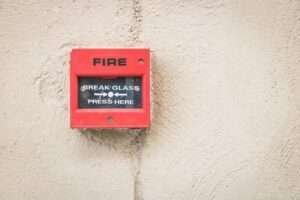
Depending on the building’s design and applicable requirements, a system may include smoke or heat detectors, manual call points, alarm sounders, visual notification devices, and a central control panel.
Some larger or more complex buildings may also require emergency communication arrangements to provide instructions to occupants.
When considering a fire alarm system in Pakistan, property owners should evaluate more than the equipment’s purchase price. They should establish whether the system is appropriate for the building, meets applicable requirements, and can be inspected and maintained.
Important considerations include:
– The building’s size, layout, and intended use.
– The type and placement of detection devices.
– Whether occupants can receive the alarm clearly.
– Compatibility with existing fire protection equipment.
– Testing, servicing, and maintenance arrangements.
– Documentation required for inspection and handover.
Installing an alarm does not automatically make a building compliant. The system must be suitable for the premises and maintained according to its design, manufacturer instructions, and applicable standards.
5. What Fire Safety Measures May Buildings Need?
The exact requirements depend on the building and applicable rules. However, fire protection can involve several connected measures.
Fire detection and alarms
Detection and warning systems help alert occupants to potential danger. Their design should reflect the building’s layout and occupancy.
Firefighting equipment
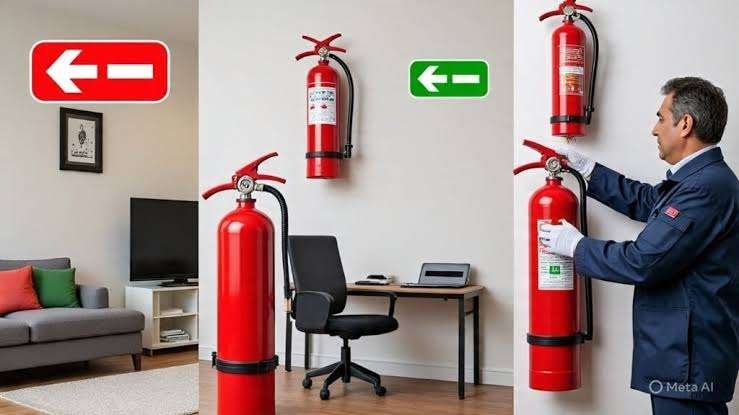
Depending on the approved design, buildings may need suitable fire extinguishers, hydrants, sprinklers, standpipes, or other approved equipment.
Emergency exits
Escape routes should be appropriately designed, clearly identified, and maintained. Corridors and stairways must not be obstructed in ways that compromise evacuation.
Emergency lighting and signage
Where required, emergency lighting and signs help occupants identify escape routes if normal lighting is unavailable.
Fire safety and evacuation plans
A suitable plan should explain the evacuation process, designated exits, assembly arrangements, and responsibilities of relevant staff.
Maintenance and training
Systems must remain functional, and occupants or employees should understand how to respond to warnings.
These measures work together. A building may have excellent alarm equipment but still face serious risks if exits are blocked or occupants do not understand the evacuation plan.
6. Do Fire Safety Requirements Apply to Existing Buildings?
Fire safety is not only a concern for new construction. The Building Code of Pakistan — Fire Safety Provisions 2016 addresses both new and existing buildings, including provisions concerning existing structures, alterations, renovations, additions, and changes in occupancy.
The precise obligations and compliance process should be checked against the applicable provisions and any relevant notifications or directions from the authority having jurisdiction.
Owners of existing buildings should not assume that an older construction date automatically exempts their property from fire safety requirements.
A useful first step is to arrange a professional assessment of the premises. This can help identify missing equipment, unsuitable escape routes, maintenance concerns, or other issues that require attention.
If a building undergoes a major renovation or changes its use, its fire safety needs may also change. For example, a space converted from an office to another type of occupancy may require a different assessment.
Property managers should consult the relevant authority before undertaking changes that could affect building safety or compliance.
7. How Do Fire Safety Inspections Work?
Inspections help determine whether required fire protection measures are present, accessible, and appropriately maintained.
The process may vary depending on the authority and type of premises. An inspection may involve reviewing installed systems, emergency exits, fire safety plans, maintenance records, and other relevant arrangements.
In Punjab, Civil Defence identifies several categories of fire safety measures in its published inspection guidance. It also states that legal action may be initiated in cases of non-compliance under Rule 9 of the Civil Defence (Special Powers) Rules, 1951.
Owners should check directly with the responsible department to understand the current inspection procedure and applicable requirements.
Before an inspection, building managers can prepare by:
– Reviewing the building’s applicable safety requirements.
– Checking the condition of required alarms and equipment.
– Ensuring escape routes remain clear.
– Reviewing emergency plans and safety signage.
– Organising relevant inspection and maintenance records.
– Addressing previously identified deficiencies.
– Ensuring staff understand emergency procedures.
A checklist can help organise these tasks, but it does not guarantee approval. The final assessment depends on the applicable requirements and the authority’s findings.
8. What Happens When a Building Does Not Comply?
Non-compliance can have serious consequences. Depending on the applicable law and the authority’s powers, a building owner or responsible party may be required to correct deficiencies and may face further legal or administrative action.
The consequences depend on the nature of the violation, the relevant legal framework, and the authority responsible for enforcement. It would be inaccurate to assume that every fire safety violation results in the same penalty throughout Pakistan.
Beyond legal consequences, inadequate fire protection can increase the risk of injury, property damage, business interruption, and loss of public confidence.
For this reason, owners should take inspection findings seriously and arrange appropriate corrective action. If the requirements are unclear, they should seek written clarification from the responsible authority or obtain advice from a qualified professional.
Compliance should be treated as an ongoing responsibility, not simply a task to complete before an inspection.
9. What Responsibilities Do Property Owners and Businesses Have?
Property owners, landlords, building managers, and business operators should understand which responsibilities apply to them under the relevant rules and agreements.
Practical fire safety responsibilities may include arranging assessments, maintaining required systems, keeping exits accessible, providing emergency information, and ensuring that staff receive suitable training.
Businesses should also consider the hazards associated with their daily operations. A restaurant may need to assess cooking-related risks, while a warehouse may need to consider the storage of combustible materials and access to firefighting equipment.
Useful management practices include:
– Scheduling required inspections and servicing.
– Reporting and correcting faults.
– Keeping safety documentation organised.
– Reviewing evacuation arrangements when building layouts change.
– Communicating emergency procedures to employees and occupants.
– Following directions issued by the responsible authority.
In rented properties, owners and tenants should clarify their respective responsibilities. However, contractual arrangements do not necessarily remove duties imposed by law. Each party should understand the obligations that apply to its role.
10. Why Are Fire Safety Audits and Maintenance Important?
A fire safety assessment or audit can help identify hazards and determine whether a building’s existing arrangements remain appropriate.
The review may consider electrical risks, combustible materials, alarms, extinguishers, escape routes, emergency lighting, and staff preparedness. Its scope should reflect the building’s needs and any applicable requirements.
Maintenance is equally important. An alarm that has been disabled, an extinguisher that has not received required servicing, or an obstructed exit can undermine a building’s safety arrangements.
Building managers should establish a documented maintenance schedule based on the equipment manufacturer’s instructions, applicable standards, and relevant regulations.
Records should identify inspections, faults, servicing, and corrective actions. This information can help demonstrate that the building’s safety arrangements are being managed systematically.
Where a critical safety system becomes unavailable, management should follow the applicable emergency procedures and seek professional advice about appropriate temporary measures and restoration.
11. How Can Businesses Prepare for Compliance?
Businesses can make fire safety more manageable by approaching compliance in a structured way.
Step 1: Identify the responsible authority. Confirm which department handles relevant approvals, inspections, and enforcement for the premises.
Step 2: Review the applicable rules. Determine which building code provisions, local regulations, and approval conditions apply.
Step 3: Arrange a professional assessment. Have a qualified person review the premises and identify areas requiring improvement.
Step 4: Establish priorities. Address urgent hazards and deficiencies identified by the assessment or authority.
Step 5: Select suitable equipment. Ensure that alarms and firefighting systems match the building’s design and requirements.
Step 6: Train staff. Explain the alarm response, evacuation routes, assembly arrangements, and relevant responsibilities.
Step 7: Maintain records. Keep appropriate documentation of inspections, testing, servicing, training, and corrective actions.
Step 8: Review regularly. Reassess arrangements when the building, its occupancy, or its operations change.
This approach helps businesses manage fire safety as part of normal operations rather than treating it as a last-minute administrative task.
12. The Long-Term Value of Fire Safety Compliance
Investing in fire protection can appear costly, especially when a building needs several upgrades. However, the potential consequences of inadequate protection can be much greater.
A fire may damage buildings, equipment, stock, and essential records. It can interrupt business operations, affect employees and customers, and create substantial repair costs.
Appropriate preventive measures may help reduce these risks. Suitable alarms, maintained equipment, clear exits, and staff training also contribute to a safer environment for people who live or work in a building.
Compliance can improve operational planning by encouraging regular inspections and documented responsibilities. It also helps property managers identify problems before they become more serious.
The most appropriate investment depends on the building’s risks and legal requirements. Rather than purchasing equipment simply because it is available, owners should establish their needs through professional assessment and consultation with the responsible authority.
Conclusion
Fire safety laws in Pakistan work through a combination of national building-code provisions, applicable local requirements, inspections, and enforcement by the relevant authorities. The Building Code of Pakistan — Fire Safety Provisions 2016 is an important reference, but building owners must establish how the applicable rules affect their particular premises.
Effective compliance involves more than installing equipment. It requires appropriate fire detection, suitable firefighting arrangements, safe escape routes, emergency planning, regular maintenance, and informed occupants.
For businesses and property managers considering a fire alarm system in Pakistan, the first step should be to understand the building’s requirements and obtain professional guidance. Equipment should be selected for its suitability, installed correctly, and maintained throughout its service life.
By making fire safety an ongoing priority, property owners can support better emergency preparedness, reduce avoidable risks, and help protect the people who use their buildings.
Frequently Asked Questions (FAQs)
1. What is the main fire safety code in Pakistan?
The Building Code of Pakistan — Fire Safety Provisions 2016 is an important national reference for fire prevention, life safety, and building fire protection. Applicable provincial and local requirements must also be considered.
2. Which department checks fire safety compliance in Pakistan?
The responsible authority depends on the property’s location and type. In Punjab, Civil Defence publishes guidance on inspecting fire safety measures in industrial, commercial, and high-rise buildings. Owners should confirm the relevant process with the authority responsible for their premises.
3. Is a fire alarm system mandatory in Pakistan?
Fire alarm and detection requirements depend on the applicable code provisions, building design, occupancy, and relevant authority’s requirements. Property owners should obtain confirmation for their specific building rather than assuming one rule applies identically to every property.
4. Do fire safety laws apply to existing buildings?
The Building Code of Pakistan — Fire Safety Provisions 2016 addresses existing buildings as well as new construction. The specific requirements and compliance process should be confirmed with the relevant authority.
5. What should a business do to improve fire safety compliance?
A business should identify applicable requirements, arrange a professional assessment, maintain required alarms and firefighting equipment, keep escape routes clear, prepare an evacuation plan, train staff, and maintain records of inspections and corrective actions.