Apartment living offers convenience, shared facilities, and access to essential services. However, living in a multi-storey building also creates fire safety challenges. A fire that starts in one apartment can affect neighbouring homes, shared corridors, staircases, and other areas if suitable precautions are not in place.
Fire safety is a shared responsibility. Residents must follow safe habits, building management must maintain common facilities, and property owners must ensure that appropriate safety measures are provided according to the building’s design and applicable requirements.
In Pakistan, apartment buildings vary from small residential blocks to large high-rise complexes. Their fire protection needs depend on factors such as building height, occupancy, layout, and available escape routes. Understanding these differences helps residents make informed decisions about household safety and emergency preparation.
A reliable fire alarm system in Pakistan can be an important part of a building’s fire protection arrangements. It provides warnings that help occupants recognise a possible emergency and begin evacuation. However, alarms alone are not enough. Clear exits, maintained firefighting equipment, emergency lighting where required, and a well-understood evacuation plan are also important.
This guide explains common apartment fire hazards, prevention practices, alarm systems, evacuation planning, and the responsibilities of residents and building management.
Why Is Apartment Fire Safety Important?
Apartment buildings bring many people together within a shared structure. Residents may use the same corridors, staircases, lifts, parking areas, electrical service spaces, and utility facilities.
If a fire occurs, smoke can spread into shared spaces and make evacuation more difficult. Residents may also be unfamiliar with alternative exits or unsure how to respond when an alarm sounds.
Apartment fire safety helps reduce these risks by encouraging prevention, early warning, proper maintenance, and coordinated emergency planning.
Key benefits include:
– Earlier warning: Suitable detection and alarm arrangements can alert occupants to a possible fire.
– Safer evacuation: Clear routes help residents move towards a place of safety.
– Reduced hazards: Good housekeeping can prevent avoidable fire risks in apartments and shared areas.
– Better coordination: Residents and management can understand their roles during an emergency.
– Improved preparedness: Regular checks and drills help identify problems before an incident occurs.
Fire safety is not simply about installing equipment. It involves making sure that the equipment works, residents understand the procedures, and the building remains suitable for safe evacuation.
Common Fire Hazards in Apartment Buildings
Identifying common hazards is the first step towards preventing apartment fires. Residents should report unsafe conditions to building management rather than attempt repairs or investigate dangerous equipment themselves.
1. Electrical Problems
Electrical faults can create fire risks in apartments. Damaged cables, faulty sockets, overloaded extension boards, and poorly maintained electrical equipment can increase the chance of overheating or ignition.
Residents should use electrical appliances according to the manufacturer’s instructions and avoid overloading outlets. Damaged electrical equipment should be taken out of use when safe to do so, and repairs should be handled by qualified electricians.
Building management should arrange professional inspections of shared electrical systems and address reported faults promptly.
2. Kitchen Fires
Cooking is a common source of household fire incidents. Unattended cooking, overheated oil, and appliances used incorrectly can create dangerous situations.
Residents should remain attentive while cooking, keep combustible items away from cooking appliances, and follow appliance instructions. Children should be supervised appropriately around cooking areas.
Never use water on burning cooking oil. If a fire develops and the situation becomes unsafe, alert others, leave the apartment, and contact emergency services.
3. Gas Appliances and Cylinders
Some apartments use gas appliances for cooking or other household needs. Poorly maintained appliances, damaged connections, or suspected gas leaks can create serious hazards.
Residents should use approved equipment and arrange inspections or repairs through qualified professionals. If a gas leak is suspected, avoid flames and electrical switching, leave the affected area, and contact the relevant emergency or gas service from a safe location.
Building management should establish clear procedures for reporting suspected gas hazards.
4. Clutter in Corridors and Staircases
Shoes, furniture, boxes, bicycles, and other stored belongings can obstruct shared escape routes. These objects may slow evacuation and create trip hazards, especially when visibility is poor.
Corridors, staircases, exit doors, and access routes should be kept clear. Residents should not store personal belongings in locations designated for evacuation.
Management should inspect common areas regularly and address obstructions promptly.
5. Improper Storage of Flammable Materials
Paints, solvents, fuels, and other flammable products can increase fire risks if stored incorrectly. Apartment balconies, utility rooms, and parking areas should not be used as casual storage spaces for hazardous materials.
Follow product labels and local rules, and ask building management about permitted storage arrangements. Keep matches and lighters away from children and ignition sources.
Understanding Fire Alarm Systems in Apartments
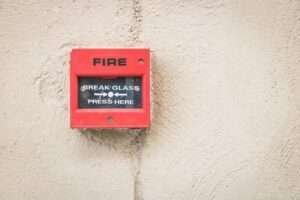
Fire detection and alarm equipment helps warn people about a possible fire. Depending on the building’s needs, a system may use smoke detectors, heat detectors, manual call points, audible alarms, visual indicators, and a control panel.
A fire alarm system in Pakistan should be selected, designed, installed, and maintained according to the building’s characteristics and applicable standards. A small apartment block may have different requirements from a high-rise residential complex.
Smoke Detectors
Smoke detectors are designed to detect smoke and provide a warning. They are important because smoke can spread before residents see flames.
The appropriate number and placement of detectors depend on the property layout, device type, manufacturer’s guidance, and applicable requirements. Residents should not disable alarms because of nuisance activations. Repeated false alarms should be investigated by a qualified professional.
Heat Detectors
Heat detectors respond to specified temperature conditions or changes in temperature. They may be appropriate in certain areas where environmental conditions make another detector type unsuitable.
They do not replace smoke detectors in every situation. The choice of detector should be part of a professionally considered fire safety design.
Manual Call Points
Manual call points allow people to activate an alarm when they discover a fire or another condition that requires a warning. In buildings equipped with these devices, residents should know their locations and understand that they must only be used for genuine emergencies or authorised testing.
Central Fire Alarm Panels
Larger buildings may use a central control panel to monitor connected detection and alarm devices. Depending on the system design, the panel may indicate the location or type of an alarm or fault.
Building management should ensure that authorised personnel understand the system and arrange appropriate maintenance. Residents should report visible fault indicators or damaged alarm equipment to management.
Why Maintenance Matters
An alarm system cannot provide reliable protection if its devices are damaged, disconnected, poorly maintained, or incorrectly configured.
Management should follow the system manufacturer’s instructions and applicable testing and maintenance requirements. Residents should report missing devices, unusual warning signals, or other concerns promptly.
Fire Prevention Tips for Apartment Residents
Every resident can contribute to a safer building by following simple precautions inside the apartment and in shared spaces.
Keep Cooking Areas Safe
Stay attentive while cooking and keep towels, paper, packaging, and other combustible materials away from heat sources. Turn appliances off when they are not needed, following the manufacturer’s guidance.
Avoid leaving cooking unattended, particularly when heating oil or preparing food that requires continuous attention.
Use Electrical Appliances Responsibly
Use appliances that are in good condition and follow their operating instructions. Do not use damaged cables, broken plugs, or faulty sockets.
Avoid overloading outlets with multiple high-power devices. If a circuit repeatedly trips or an outlet shows signs of damage, report the issue and arrange professional inspection.
Maintain Good Housekeeping
Keep exits, hallways, and doorways clear. Store everyday items inside the apartment rather than in shared escape routes.
Dispose of waste properly and avoid allowing combustible rubbish to accumulate near electrical equipment or other potential hazards.
Follow Building Rules
Apartment management may establish rules covering cooking equipment, balconies, parking, storage, smoking, and maintenance work. Residents should follow these rules and report unsafe practices.
If renovations are planned, consult management before work begins so that fire safety arrangements and shared systems are not affected.
Report Hazards Promptly
Residents should tell management about damaged exit doors, faulty alarms, blocked staircases, broken emergency lights, or other safety concerns.
Do not attempt to repair fire alarm panels, electrical systems, or firefighting equipment without appropriate qualifications.
Creating an Apartment Fire Evacuation Plan
An evacuation plan helps residents understand how to leave safely during a fire emergency. It should reflect the building’s actual layout and the instructions provided by its management or relevant authorities.
Identify the Available Exits
Learn the normal exit route from the apartment and identify alternative designated exits where available. Understand how to reach the building’s staircases without relying on a lift.
Residents should never assume that a familiar route will remain safe during a fire. If smoke or fire blocks the way, do not enter the affected area. Follow the building’s emergency instructions and contact emergency services.
Understand the Staircase Arrangements
Staircases are commonly part of the designated evacuation route in multi-storey buildings. Residents should know where the nearest appropriate staircase is located.
Do not use lifts during a fire unless emergency personnel specifically direct otherwise. A lift may stop operating or open onto an unsafe floor.
Establish a Meeting Point
Families should choose a safe meeting point outside the building, away from entrances and access routes used by emergency responders.
After evacuating, residents should remain at the meeting point and inform emergency personnel if someone may still be inside. They must not re-enter the building to search for missing people or collect belongings.
Plan for People Who Need Assistance
Children, older adults, people with disabilities, and residents with temporary mobility difficulties may need additional support.
Families should discuss assistance arrangements in advance. Building management should ensure that emergency planning considers the needs of occupants and follows applicable requirements.
Practise the Plan
Residents should familiarise themselves with evacuation procedures and participate in authorised drills when arranged. Families can review their routes and meeting points without creating a dangerous scenario.
Regular practice helps residents respond more calmly when an alarm sounds.
What Should You Do When a Fire Alarm Sounds?
An alarm should always be treated seriously unless authorised personnel have clearly communicated a planned test or drill.
The correct response depends on the situation and the building’s emergency instructions, but the following principles are important.
1. Stop and pay attention. Do not assume the alarm is false simply because there is no visible smoke.
2. Alert others when safe. Follow the building’s procedures and warn people nearby if doing so does not delay your escape.
3. Leave using a safe route. Use designated exits and staircases. Do not use lifts during a fire unless emergency personnel direct otherwise.
4. Avoid smoke and fire. Do not enter smoke-filled corridors or investigate the source of an alarm. If the normal route is unsafe, follow the building’s emergency instructions and contact emergency services.
5. Go to the meeting point. Keep access routes clear for emergency responders and tell them about anyone who may still be inside.
6. Do not return inside. Wait for emergency personnel or the responsible authority to confirm that it is safe to return.
Residents should never delay evacuation to gather valuables, take photographs, or attempt to fight a spreading fire.
Fire Safety Equipment in Apartment Buildings
Appropriate fire protection equipment depends on the building’s design, risks, and applicable requirements. Building management should obtain professional advice to determine what is needed.
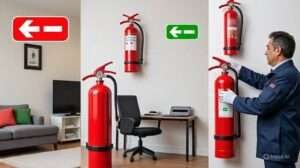
Fire Extinguishers
Suitable extinguishers may be provided in designated areas. Different extinguishers are intended for different classes of fire, so equipment must be selected according to the hazards present.
Residents should know where equipment is located and understand that attempting to use it is not a substitute for evacuation. Only appropriately trained adults should consider using an extinguisher when the fire is small, the equipment is suitable, and escape remains safe.
Fire Hydrants and Hose Systems
Some apartment buildings have firefighting water systems for use by trained personnel or emergency responders. These systems require suitable installation, access, inspection, and maintenance.
Residents should not block access to this equipment or interfere with its operation.
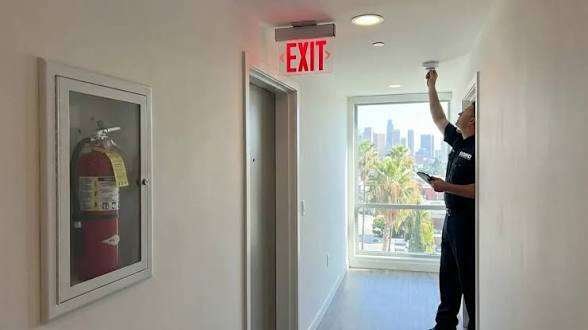
Emergency Lighting and Exit Signs
Emergency lighting and clear exit signs can help occupants find evacuation routes when normal lighting is affected.
Management should arrange inspections and maintenance according to the building’s requirements. Residents should report damaged signs, failed lights, or blocked exits.
Sprinkler Systems
Where provided or required, automatic sprinkler systems can help control or suppress certain fires. Their design and maintenance must be appropriate for the building.
Residents should not hang items from sprinkler components or obstruct them. Building management should arrange professional servicing and ensure that alterations do not compromise the system.
Responsibilities of Apartment Building Management
Building management plays a central role in keeping shared fire safety arrangements in working order.
Responsibilities may include:
– Maintaining clear and accessible exits.
– Arranging inspection and servicing of alarm and detection systems.
– Maintaining firefighting equipment where provided or required.
– Checking emergency lighting and exit signage.
– Keeping fire safety plans and emergency contact information accessible.
– Coordinating evacuation drills and resident awareness activities.
– Responding to reported hazards and maintenance concerns.
– Consulting qualified professionals and relevant authorities about compliance.
Management should also communicate what residents are expected to do during an alarm, including evacuation routes and assembly arrangements.
Fire safety responsibilities may be shared among building owners, management companies, landlords, and residents. The exact obligations depend on the property and the rules that apply to it.
Apartment Fire Safety in Pakistan: Building Codes and Local Requirements
Pakistan’s Building Code of Pakistan—Fire Safety Provisions 2016 provides a national reference for fire prevention, life safety, and fire protection in buildings and structures.
The code addresses matters such as occupant notification, means of egress, fire protection systems, and maintenance. Its provisions must be considered alongside the requirements and enforcement procedures of the relevant authority for the specific property.
Punjab Civil Defence identifies fire detection and alarm systems, firefighting arrangements, fire safety plans, emergency exits, and evacuation plans among the measures inspected in relevant premises, including high-rise buildings.
For apartment owners and residents, practical steps include:
– Asking management how fire alarms and other shared systems are maintained.
– Learning the designated evacuation routes and meeting points.
– Reporting obstructed staircases and damaged safety equipment.
– Keeping household exits clear and following safe electrical and cooking practices.
– Seeking qualified advice when planning building changes or upgrades.
Not every apartment building has identical requirements. Owners and managers should confirm the rules that apply to the building’s location, height, use, and design rather than assume that one arrangement is suitable everywhere.
Common Apartment Fire Safety Mistakes to Avoid
Some problems can make evacuation more difficult even when equipment is installed.
Ignoring alarms: Treating an unexpected alarm as a nuisance can delay evacuation.
Blocking escape routes: Personal belongings should not obstruct corridors, staircases, or exit doors.
Using lifts during a fire: Follow the designated evacuation plan and use appropriate stairs unless emergency personnel direct otherwise.
Disabling detectors: Residents should not disconnect alarms because they activate unexpectedly. Repeated activations need professional assessment.
Neglecting maintenance: Alarm systems, emergency lighting, and firefighting equipment require checks and servicing.
Returning for belongings: Residents should remain outside after evacuation and leave the building search to emergency responders.
Assuming management handles everything: Residents must also follow safety rules, report hazards, and understand the emergency plan.
Conclusion
Apartment fire safety requires cooperation between residents, property owners, and building management. Everyday habits such as safe cooking, responsible use of electrical appliances, and keeping corridors clear can reduce common risks. Properly maintained alarms, suitable firefighting equipment, clear exits, and a well-practised evacuation plan provide additional layers of protection.
A reliable fire alarm system in Pakistan can help notify occupants of a possible emergency, but it must be supported by professional installation where required, regular maintenance, and clear instructions for residents.
Every apartment household should know how to respond when an alarm sounds, where the designated exits are, and where to gather outside. Above all, residents should prioritise human safety over possessions and never re-enter a building during a fire emergency.
Taking these precautions helps create a safer living environment and makes apartment fire preparedness a shared, practical responsibility.
Frequently Asked Questions (FAQs)
1. What are the most common fire hazards in apartment buildings?
Common hazards include cooking accidents, electrical faults, damaged appliances, unsafe storage of flammable materials, and blocked escape routes. Regular maintenance and responsible household habits can help red