A garage is often used for much more than parking a vehicle. Many homeowners use it to store tools, paint containers, cleaning products, cardboard boxes, electrical equipment, and household supplies. While these items may seem harmless when stored together, poor organisation and a lack of fire prevention measures can increase the risk of a serious incident.
One of the biggest problems with garage fire safety is the number of myths people believe. Some homeowners assume that fires only happen in old garages, while others believe that keeping a fire extinguisher nearby is enough to protect the entire property. These misunderstandings can lead to unsafe habits and leave families unprepared for emergencies.
Garage fire safety does not need to be complicated, but it does require accurate information and consistent attention. Homeowners should understand common fire hazards, maintain suitable warning systems, store materials responsibly, and ensure that everyone knows what to do in an emergency.
A fire alarm system in Pakistan can be an important part of a property’s wider fire protection arrangements when selected and installed according to the building’s needs. However, no single product can replace safe storage, suitable detection, electrical maintenance, and a clear emergency plan.
This article explores the biggest myths about garage fire safety, explains the facts behind them, and shares practical ways to create a safer home environment.
Why Garage Fire Safety Deserves More Attention
Garages can contain several potential fire hazards in one relatively small space. Vehicles, electrical equipment, combustible storage, and household products may all be present in the same area.
Some garages are attached directly to homes, while others are separate buildings. In an attached garage, a fire may threaten not only the vehicle and stored belongings but also the people living in nearby rooms.
The United States Fire Administration identifies garages as areas with additional fire risks because of combustible storage, flammable liquids, gas appliances, and electrical tools. Its guidance highlights the importance of safer storage, suitable alarms, and good housekeeping. These principles can help homeowners in Pakistan assess their own garages, although local building and fire safety requirements should always be checked separately. (“US Fire Administration” (https://www.usfa.fema.gov/prevention/home-fires/prevent-fires/basement-and-garage/))
Understanding these risks is the first step towards challenging common misconceptions.
Myth 1: Garage Fires Only Happen in Old Buildings
One common belief is that garage fires mainly affect old properties with outdated wiring or poor construction.
The reality
Fire hazards can exist in both old and new buildings. A recently built garage can still become unsafe if combustible materials are stored carelessly, electrical equipment is damaged, or waste accumulates near potential ignition sources.
New construction does not automatically guarantee good fire safety. Similarly, an older garage can be safer when its electrical systems, building features, storage arrangements, and fire protection measures are properly maintained.
The most useful approach is to assess the actual conditions rather than judge safety by a building’s age.
What homeowners should do
Inspect the garage periodically and look for damaged electrical equipment, blocked access, deteriorating building features, and unsuitable storage. Any electrical concerns should be assessed by a qualified electrician.
If the garage is attached to a house, the separation between the garage and living areas should also be reviewed by a qualified professional where necessary.
Myth 2: A Clean Garage Cannot Catch Fire
Keeping a garage clean is a sensible habit, but some people assume that cleanliness alone removes every fire risk.
The reality
A tidy garage may still contain electrical hazards, combustible products, vehicle-related risks, or heat-producing equipment. Cleaning reduces some hazards, but it does not make the area completely fireproof.
For example, neatly arranged cardboard boxes can still contribute to fire spread if a fire starts nearby. Similarly, organised shelves do not make unsuitable storage of hazardous products safe.
Good housekeeping should be combined with appropriate storage, electrical safety, fire detection, and emergency planning.
What homeowners should do
Remove unnecessary packaging and waste regularly. Keep walkways clear, avoid allowing items to accumulate around electrical equipment, and store products according to their labels and safety instructions.
Do not store materials in places where they could obstruct access to exits, electrical panels, or emergency equipment.
Myth 3: A Fire Extinguisher Is All the Protection a Garage Needs
Some homeowners believe that purchasing a fire extinguisher completes their garage fire safety arrangements.
The reality
A fire extinguisher can be one part of a suitable fire protection plan, but it does not prevent every fire or guarantee that an incident can be controlled.
An extinguisher may be unsuitable for a particular type of fire, inaccessible during an emergency, or ineffective if the fire has already grown. Using firefighting equipment without appropriate training can also expose people to unnecessary danger.
Fire prevention, early warning, safe escape, and emergency communication are equally important.
What homeowners should do
Ask a qualified fire safety professional to assess the garage and recommend appropriate equipment for its hazards. Ensure that equipment is maintained according to the manufacturer’s instructions and applicable requirements.
Everyone in the household should know how to raise the alarm, leave the area safely, and contact the relevant emergency services. Do not delay evacuation to retrieve an extinguisher or protect belongings.
Myth 4: Smoke Alarms and Fire Alarms Are Unnecessary in Garages
Another widespread misconception is that garages are too small or are used too infrequently to need suitable fire detection or warning arrangements.
The reality
The need for detection equipment depends on the property’s design, the garage’s use, applicable requirements, and the hazards present. A garage can contain electrical equipment, combustible materials, and other potential ignition sources even when nobody is using it.
However, not every type of alarm is suitable for every location. Vehicle exhaust, dust, temperature changes, and other environmental conditions can affect the choice and performance of detection equipment.
Homeowners should therefore avoid selecting an alarm based only on price or convenience.
What homeowners should do
Consult a qualified fire safety professional about suitable detection and warning arrangements for the garage and the adjoining home. Follow the manufacturer’s placement, installation, and maintenance instructions.
Where appropriate, a professionally selected system may help provide an early warning. A fire alarm system in Pakistan should be chosen according to the building’s needs and relevant requirements, rather than assuming that the same product will work equally well in every property.
Regular testing and maintenance are essential. If an alarm repeatedly activates without an apparent reason, seek professional advice rather than disabling it and leaving the area without suitable protection.
Myth 5: Electrical Fires Only Happen When There Is a Power Cut
Some people associate electrical fires mainly with power outages, voltage fluctuations, or major electrical failures.
The reality
Electrical fire hazards can arise under many circumstances. Damaged cables, faulty equipment, overloaded electrical arrangements, poor-quality products, and unsuitable charging practices can all create concerns.
An electrical problem may develop even when the power supply appears normal. Warning signs such as burning smells, unusual heat, visible damage, or repeated circuit interruptions should never be ignored.
What homeowners should do
Use electrical equipment according to its instructions and have installations inspected when required by a qualified electrician. Replace damaged equipment through appropriate professional channels and avoid makeshift electrical repairs.
Keep the area around electrical panels accessible. If equipment appears unsafe, stop using it when it is safe to do so and seek professional assistance.
Do not attempt to investigate exposed wiring or repair electrical faults yourself. If there is smoke or an immediate fire risk, move away and follow the emergency plan.
Myth 6: Paint, Cleaning Products, and Other Stored Items Are Harmless
Many homeowners keep paint, adhesives, cleaning products, and similar supplies in their garages because the space seems convenient.
The reality
Different products have different storage requirements. Some may be flammable, some may react dangerously with incompatible substances, and others may release harmful vapours under unsuitable conditions.
The fact that a product is commonly used around the home does not mean it can be stored anywhere without precautions.
Storage risks can increase when containers are damaged, lids are not secure, products are exposed to unsuitable temperatures, or materials are placed near ignition sources.
What homeowners should do
Read product labels and safety instructions before storing household chemicals or other potentially hazardous materials. Keep them in suitable containers and locations, and follow any required separation or temperature guidance.
Do not store unidentified substances or transfer hazardous products into unlabelled containers. Keep products away from children and pets, and arrange disposal through suitable local services when products are no longer needed.
If a product’s storage requirements are unclear, consult the manufacturer or an appropriate professional rather than guessing.
Myth 7: A Garage Door Is Enough to Stop a Fire from Reaching the House
Homeowners may assume that a closed garage door automatically prevents a fire from spreading into an attached house.
The reality
A garage door designed for vehicle access is not necessarily the same as a fire-rated door intended to protect an opening between a garage and a home.
Fire separation depends on the property’s construction, the walls and ceilings involved, the doors and openings between spaces, and applicable building requirements.
Poorly maintained or altered building features can weaken the protection intended by the original design.
What homeowners should do
If a garage is attached to the home, ask a qualified building or fire safety professional to assess the separation between the two areas when appropriate.
Do not assume that an ordinary door, a decorative covering, or an improvised repair meets fire safety requirements. Any changes to doors, walls, ceilings, or openings should be assessed against the applicable building rules.
The relevant requirements can vary according to the building’s classification, design, and location.
Myth 8: Good Ventilation Makes Every Garage Safe
Ventilation is important in many garage environments, but it is sometimes misunderstood as a complete solution to fire and air-quality hazards.
The reality
Suitable ventilation may help manage certain air-quality concerns, depending on the garage’s use and design. However, it does not eliminate ignition sources, make hazardous storage safe, or replace suitable fire detection.
Vehicle exhaust can also contain carbon monoxide, a dangerous gas that cannot be reliably detected by smell. A garage should not be treated as a safe place to run a vehicle or fuel-powered machine simply because a door is open.
What homeowners should do
Follow vehicle and equipment manufacturers’ safety instructions, and never run a vehicle or fuel-powered engine in an enclosed or poorly ventilated garage. Ensure that ventilation arrangements are suitable for the actual use of the space.
Where fuel-burning appliances are present, seek professional advice about appropriate installation, ventilation, and carbon monoxide detection.
Remember that ventilation and fire protection address different risks. Both should be considered where relevant.
Myth 9: Garage Fires Are Easy to Control Because the Space Is Small
A small room may seem easier to manage than a large building, leading some people to underestimate the seriousness of a garage fire.
The reality
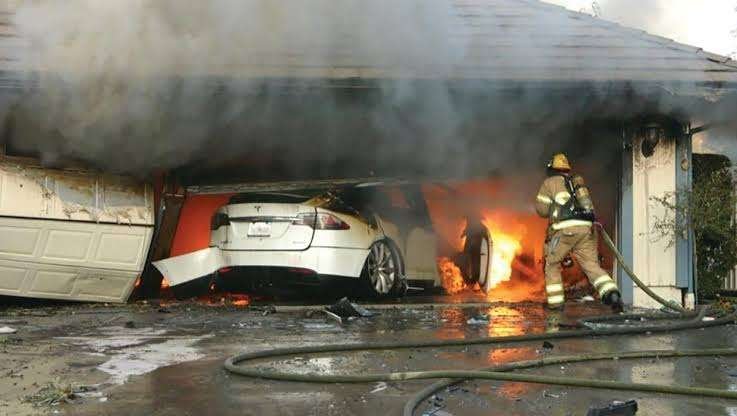
A garage can contain vehicles, packaging, furniture, tools, and other combustible materials. If a fire develops, smoke and heat can make the area dangerous quickly. In an attached garage, the incident may also threaten adjoining parts of the home.
A small space does not necessarily mean a small risk.
What homeowners should do
Prioritise prevention and early warning rather than relying on the assumption that a fire will remain small.
Keep escape routes clear and ensure that household members know how to leave the building and where to meet outside. Do not enter a smoke-filled garage or return inside to retrieve a vehicle, tools, documents, or other possessions.
If a fire occurs, warn others, evacuate, and contact the local emergency services. Only trained and appropriately equipped responders should deal with dangerous fire conditions.
Myth 10: Fire Safety Only Matters During Winter
Some homeowners pay more attention to fire prevention during colder months, when heaters and other equipment may be used more often.
The reality
Fire hazards can occur throughout the year. Electrical faults, unsuitable storage, damaged equipment, and careless handling of combustible products are not limited to one season.
The types of risks may change with weather, household activities, and the equipment being used, but regular safety checks remain important.
What homeowners should do
Review garage safety throughout the year. Check that stored materials remain suitable for the current conditions and that electrical equipment is maintained.
If seasonal equipment is introduced or removed, make sure its use and storage follow the manufacturer’s instructions. Do not allow routine tasks or busy schedules to replace regular safety checks.
Myth 11: Garage Fire Safety Is Only the Homeowner’s Responsibility
Although homeowners play an important role, some people assume that fire safety is relevant only to the person who owns the property.
The reality
Everyone who uses a garage can affect its safety. Family members, tenants, visitors, maintenance workers, and contractors may introduce new items, move stored materials, or use electrical equipment.
A safe environment depends on shared awareness and clear expectations.
What homeowners should do
Explain basic safety rules to everyone who uses the garage. Make sure children understand that hazardous products and electrical equipment are not toys.
Tenants should report safety concerns to the responsible property manager or landlord. Contractors should follow appropriate work procedures and inform the property owner about relevant hazards.
Avoid placing responsibility on people who do not have the authority or training to fix a problem. Electrical faults, building defects, and fire protection issues should be handled by suitable professionals.
Myth 12: Once a Garage Has Been Inspected, It Is Safe Permanently
An inspection can identify existing concerns, but it cannot guarantee that a garage will remain safe forever.
The reality
Storage arrangements change, equipment ages, electrical installations deteriorate, and new hazards may be introduced. A garage that was safe at the time of an inspection may require attention later.
Fire safety is an ongoing responsibility rather than a one-time purchase or inspection.
What homeowners should do
Make periodic checks part of normal household maintenance. Review the condition of electrical equipment, storage areas, exits, and installed alarms.
Follow maintenance schedules provided by equipment manufacturers and qualified professionals. Keep records of relevant inspections and servicing, especially where required by law or the applicable authority.
If renovations or changes in use affect the garage, reassess the fire protection arrangements before relying on the previous plan.
Building a Practical Garage Fire Safety Plan
After understanding the common myths, homeowners can take a more organised approach to reducing fire risk.
A useful plan should include the following elements.
1. Review the garage’s hazards
Consider the materials stored there, electrical equipment, vehicle use, nearby living spaces, and the garage’s ventilation and layout. Seek professional advice when hazards are beyond your knowledge.
2. Keep storage organised
Remove unnecessary combustible waste and follow the instructions for storing household products. Do not allow belongings to block exits or access to emergency equipment.
3. Review detection and warning arrangements
Determine whether suitable smoke or heat detection and fire alarm arrangements are needed for the garage and adjoining property. Product selection and installation should take account of the location and relevant requirements.
4. Maintain electrical safety
Have electrical installations checked by qualified professionals when needed. Avoid damaged equipment and unsuitable temporary arrangements.
5. Make an emergency plan
Household members should know how to raise the alarm, evacuate, contact emergency services, and meet at a safe location outside. Include children and visitors in age-appropriate safety discussions.
6. Review the plan regularly
Revisit the arrangements when the garage’s use changes, new equipment is introduced, or an inspection identifies a concern.
A simple written checklist can help household members remember their responsibilities and report problems promptly.
Garage Fire Safety in Pakistan
Homeowners in Pakistan should consider their garage’s design, use, and location when planning fire protection. Requirements for residential, commercial, and shared parking facilities may differ, and not every rule applies to every property.
The Building Code of Pakistan, Fire Safety Provisions 2016, provides a framework for fire prevention and life safety in buildings. The applicable provisions and any local requirements should be confirmed with the relevant authority and qualified professionals. (“Building Code of Pakistan, Fire Safety Provisions 2016” (https://hcosservices.com/downloads/BCPFSP2016.pdf))
For properties where a fire alarm system is required or recommended following a risk assessment, homeowners should consider suitability, installation quality, maintenance, and compatibility with other safety arrangements.
A fire alarm system in Pakistan should not be selected solely because it is inexpensive or easy to install. The right choice depends on the building and its risks. Professional guidance can help property owners understand which detection and warning arrangements are appropriate.
Above all, local fire safety planning should focus on protecting people, keeping escape routes accessible, reducing hazards, and ensuring that everyone knows what to do if an emergency occurs.
Conclusion
Garage fire safety is often weakened by myths that make everyday hazards seem less serious than they are. A new building is not automatically safe, a clean garage is not fireproof, and an extinguisher alone cannot replace a complete safety plan.
Homeowners can improve safety by storing materials responsibly, maintaining electrical equipment, reviewing detection and warning arrangements, and keeping escape routes clear. They should also ensure that family members understand how to respond to a fire and that profession