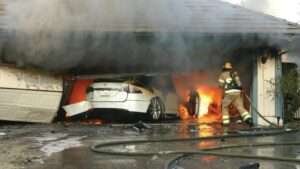

Construction sites are busy environments where workers, contractors, engineers, and visitors carry out different tasks every day. From building houses and offices to developing shopping centres, factories, and high-rise buildings, construction projects involve many activities that require careful planning. However, fire safety can sometimes receive less attention than deadlines, budgets, and material deliveries.
A fire on a construction site can put lives at risk, damage expensive equipment, destroy building materials, and delay an entire project. Even a small incident can become a serious emergency when combustible materials, temporary electrical arrangements, unfinished escape routes, and limited fire protection measures are present.
This is why every construction project needs a clear fire safety plan. The plan should identify potential hazards, explain how workers will receive emergency warnings, establish evacuation procedures, and define responsibilities before an emergency occurs.
A reliable fire alarm system in Pakistan can be an important part of a wider fire protection strategy where appropriate for the project. However, alarms alone are not enough. Construction companies must also consider housekeeping, safe material storage, accessible escape routes, worker training, suitable firefighting equipment, and regular safety inspections.
This guide explains why construction-site fire safety matters, which risks deserve attention, and how project managers can build a practical safety plan.
1. Why Is Fire Safety Important on Construction Sites?
Construction sites change constantly. A staircase that is accessible today may be temporarily blocked tomorrow. New electrical equipment may be introduced, materials may be moved, and different contractors may begin working in the same area.
These changes can create fire hazards if safety arrangements are not reviewed regularly.
Fire safety helps construction companies:
– Protect workers, contractors, visitors, and nearby members of the public.
– Reduce the likelihood of fire-related injuries and property damage.
– Identify hazards before they develop into emergencies.
– Maintain clear access for evacuation and emergency responders.
– Reduce avoidable interruptions to construction activities.
– Support compliance with applicable building and workplace safety requirements.
Fire prevention should not be treated as a task that begins after a building is completed. It is important throughout excavation, structural work, electrical installation, finishing, and final handover.
The Building Code of Pakistan, Fire Safety Provisions 2016, includes requirements relating to construction, alteration, and demolition operations. Its construction-safety chapter addresses fire protection planning and suitable escape facilities for workers in buildings under construction. Project teams should review the applicable provisions and confirm current requirements with the relevant authorities.
2. Identify Common Fire Hazards Before Work Begins
The first step in preparing a safety plan is identifying the hazards that could cause or worsen a fire.
Construction projects differ in size, design, materials, and working conditions. A small residential project may have different risks from a large industrial site, but both require a structured assessment.
Electrical hazards
Temporary electrical supplies, damaged cables, overloaded circuits, and unsuitable electrical equipment can increase fire risk. Electrical arrangements may also change as construction progresses.
A qualified electrician should inspect and maintain electrical installations. Workers should report damaged equipment and avoid using electrical items that appear unsafe.
Electrical repairs and modifications should be handled by authorised professionals rather than untrained workers.
Flammable and combustible materials
Paints, solvents, adhesives, fuel, packaging, timber, and other combustible materials may be present on construction sites. Poor storage practices can allow a small incident to spread quickly.
Materials should be stored according to their hazards and manufacturers’ instructions. Storage areas should be organised, clearly identified where necessary, and kept away from incompatible materials and sources of ignition.
Hot work
Welding, cutting, and other activities that produce heat or sparks can introduce additional fire risks. These activities need suitable controls, supervision, and authorisation based on the site’s procedures and applicable requirements.
Before such work begins, the responsible safety personnel should assess the surrounding area and confirm that the required precautions are in place.
Waste and poor housekeeping
Cardboard, timber offcuts, plastic packaging, and general construction waste can contribute to fire spread. Accumulated waste may also obstruct walkways and escape routes.
Regular housekeeping helps reduce these hazards while making the site easier to inspect and navigate.
3. Develop a Written Construction-Site Fire Safety Plan
A written plan provides workers with a common understanding of how fire risks will be managed. It should be specific to the project rather than copied from another site without review.
The plan should explain:
– The main fire hazards and the measures used to control them.
– How workers should report a suspected fire.
– How emergency warnings will be communicated.
– The available evacuation routes and alternative routes.
– The designated assembly point or points.
– Who is responsible for coordinating evacuation.
– How workers and visitors will be accounted for.
– How emergency services will be contacted.
– Where suitable fire protection equipment is provided.
– How inspections, training, and drills will be arranged.
Responsibilities should be assigned clearly. For example, a site manager may oversee the overall plan, while a designated safety officer coordinates inspections and training. Other authorised personnel may be responsible for raising the alarm, guiding evacuation, or communicating with emergency responders.
The arrangements should be suitable for the project’s size, layout, workforce, and stage of construction.
Guidance from the US Occupational Safety and Health Administration (OSHA) also highlights the importance of site-specific emergency plans, clear warning procedures, accessible escape routes, worker training, and accountability after evacuation. This can be a useful reference, although Pakistani requirements and local authority directions must take priority for projects in Pakistan.
4. Choose a Suitable Fire Alarm and Warning System
An emergency warning system helps workers recognise danger and begin the required response. The right arrangement depends on the site layout, background noise, workforce size, building stage, and available communication facilities.
On some sites, a fixed fire alarm system may be appropriate. Other sites may require temporary or supplementary warning arrangements while construction is underway. The selection should be made through a competent risk assessment and in accordance with applicable requirements.
A suitable warning arrangement should help ensure that:
– Workers can recognise the warning and understand what it means.
– The signal can be perceived across relevant work areas.
– Workers on different floors or in noisy areas can receive the warning.
– Contractors and temporary workers know how to respond.
– Warning arrangements remain effective as the site changes.
– Equipment is inspected and maintained by qualified personnel.
Where required by the design and risk assessment, audible alarms may need to be supported by visual signals or other suitable communication methods.
A fire alarm system in Pakistan should be selected according to the project’s actual requirements, not simply because a particular model is inexpensive or widely available. Compatibility, coverage, reliability, professional installation, maintenance support, and compliance with relevant standards all deserve consideration.
Importantly, an alarm is only one part of emergency preparedness. Workers must know where to go after receiving the warning, and escape routes must remain usable.
5. Keep Escape Routes Clear and Accessible
A fire safety plan is ineffective if workers cannot reach a safe area during an emergency.
Construction sites often have changing layouts, temporary barriers, unfinished staircases, open floor edges, and stored materials. These conditions make regular checks especially important.
Project managers should ensure that suitable escape routes are provided for the current stage of work. Routes should be kept clear of equipment, waste, and stored materials. Where normal routes are unavailable or unsuitable, alternative arrangements should be established by the responsible project professionals.
The site team should check that:
– Workers know the available escape routes.
– Stairs, ramps, corridors, and exits are accessible as intended.
– Temporary changes are reflected in emergency instructions.
– Signs and route markings remain visible where needed.
– Exit doors and other escape facilities are not obstructed.
– Emergency access for fire and rescue services is maintained.
Do not assume that a route shown on an old site drawing is still usable. The arrangements should be reviewed whenever the layout changes significantly.
Workers should also be told which routes to avoid during an emergency and where they should assemble after leaving the building or work area.
6. Store Materials Safely
Material storage is a major part of fire prevention. Construction sites may contain fuels, paints, solvents, insulation, timber, plastics, cylinders, and other products with different handling and storage requirements.
Poorly organised storage can increase fire risk and make evacuation more difficult.
The site team should establish designated storage areas and follow relevant product labels, safety data sheets, and applicable regulations. Flammable products should be managed by trained personnel using approved arrangements appropriate to the substances involved.
Good storage practices include:
– Keeping storage areas orderly and clearly identified.
– Separating incompatible materials as required.
– Preventing unauthorised access to hazardous storage areas.
– Keeping combustible waste under control.
– Maintaining suitable separation from ignition sources.
– Ensuring emergency routes are not used for storage.
– Reviewing material quantities and storage arrangements as work progresses.
Storage practices should be included in routine inspections. If materials are moved to a new area, the responsible team should check whether the change affects the site’s fire risk assessment.
7. Manage Hot Work Carefully
Hot work can introduce ignition sources into areas containing combustible materials. Welding, cutting, and similar activities therefore require a controlled process.
Construction management should establish an appropriate hot-work authorisation system where required. The system should identify the work area, assess surrounding hazards, specify precautions, and identify the personnel responsible for supervision.
Before work begins, authorised personnel should confirm that the necessary safeguards are in place. Any required fire watch should be assigned to a suitably trained person and maintained for the period specified by the site’s procedures and applicable requirements.
Workers should not begin hot work if the required precautions have not been approved or if conditions have changed in a way that makes the work unsafe.
The process should also include appropriate follow-up checks after work is completed, as required by the risk assessment and site procedures.
The aim is to prevent ignition rather than rely on workers to control a fire after it starts. Detailed hot-work arrangements should be developed by competent safety professionals in line with the actual work and local requirements.
8. Provide Suitable Fire Protection Equipment
Fire protection equipment should be selected according to the hazards present, the work being performed, and the applicable requirements.
Depending on the project, equipment may include suitable portable extinguishers, fire blankets, fixed systems, or other approved fire protection measures. Equipment should be accessible, clearly identified where appropriate, and maintained according to the manufacturer’s instructions and relevant standards.
Construction management should confirm that:
– Equipment is appropriate for the identified hazards.
– Workers know where equipment is located.
– Inspection and maintenance responsibilities are assigned.
– Defective or missing equipment is reported promptly.
– Access to equipment is not blocked by materials.
– Workers understand the limits of their training and responsibilities.
Only people who are appropriately trained and authorised should attempt to use firefighting equipment, and only when doing so is safe and consistent with the emergency plan. Evacuation and raising the alarm should take priority when there is danger.
Workers should never be expected to tackle a growing fire or enter a hazardous area to protect property.
9. Train Workers and Contractors
A fire safety plan is only useful when the people on site understand it. Construction projects may involve employees, subcontractors, delivery staff, engineers, inspectors, and visitors, all of whom need appropriate safety information.
Training should be provided when workers join the site and whenever significant changes affect hazards, warning systems, or evacuation arrangements.
Training should explain:
– Common fire hazards on the project.
– How to raise the alarm and report an emergency.
– What the warning signals mean.
– Which escape routes are available.
– Where assembly points are located.
– How to follow instructions from designated personnel.
– How to report blocked exits or unsafe storage.
– What to do if a planned route is unavailable.
– Why workers must not re-enter an evacuated area without authorisation.
Information should be communicated in a language and format workers can understand. Visual signs and demonstrations may support written instructions.
Contractors must also be informed about site-specific rules. A worker who has received general safety training elsewhere may still be unfamiliar with the current site’s layout and emergency procedures.
10. Conduct Fire Drills and Regular Inspections
A plan should be tested rather than left in a folder. Fire drills help the site team identify confusion, communication problems, and difficulties with evacuation arrangements.
Drills should be planned according to the project’s risk profile and applicable requirements. They should account for the site layout, workforce, shift patterns, and the changing stage of construction.
After each drill, the responsible team should review what happened. Were workers able to recognise the warning? Were escape routes accessible? Did everyone know where to assemble? Were personnel accounted for? Were any instructions unclear?
Lessons from the drill should lead to practical improvements.
Routine inspections are equally important. A site that was safe last week may have new hazards today because of material deliveries, electrical work, hot work, or structural changes.
Inspection records should identify issues, responsible persons, and corrective actions. Problems should be addressed promptly and checked again to confirm that they have been resolved.
11. Consider Fire Safety Requirements in Pakistan
Construction companies in Pakistan should review applicable building regulations, workplace safety requirements, local authority directions, and project-specific approval conditions.
The Building Code of Pakistan, Fire Safety Provisions 2016, provides a national reference for fire prevention, life safety, and fire protection in buildings and related structures. The code includes provisions concerning construction, alteration, and demolition activities. However, the precise requirements that apply to a project depend on factors such as the building type, location, stage of work, and relevant authority.
Before construction begins, project owners and managers should consult qualified fire safety professionals and the relevant authorities to determine which requirements apply. They should not assume that the same arrangements are suitable for every residential, commercial, or industrial project.
When planning a fire alarm system in Pakistan, it is also important to consider the building’s intended use and how the system will function as the structure develops. Temporary construction arrangements may need to be reviewed or changed as permanent fire protection systems are installed.
Documentation should be maintained so that the project team can demonstrate that identified safety issues are being managed and that required inspections and approvals have been addressed.
12. Common Construction-Site Fire Safety Mistakes
Even projects with written safety policies can have weaknesses in daily practice. Common mistakes include:
Treating fire safety as a final-stage task: Fire prevention and emergency arrangements should begin during project planning and continue throughout construction.
Ignoring changes to the site layout: Escape routes, warning coverage, and access for emergency services should be reviewed when work areas change.
Allowing waste to accumulate: Combustible waste can increase fire risk and obstruct movement. Regular housekeeping should be part of daily site management.
Providing alarms without training: Workers need to recognise warnings and understand what actions to take.
Neglecting inspections: Damaged equipment, blocked exits, and unsuitable storage arrangements may remain unnoticed without routine checks.
Failing to include contractors: Everyone working on the site needs appropriate information about its emergency procedures.
Assuming one plan fits every project: The plan should reflect the building design, activities, workforce, and local requirements.
Avoiding these mistakes helps make fire safety a practical part of construction management rather than a document prepared only for recordkeeping.
13. A Practical Construction-Site Fire Safety Checklist
Project managers can use the following checklist as a starting point for reviewing their arrangements:
– [ ] Fire hazards have been assessed for current construction activities.
– [ ] A site-specific fire safety and emergency plan is available.
– [ ] Warning arrangements are suitable for the site layout and workforce.
– [ ] Workers know how to report a fire or emergency.
– [ ] Escape routes and emergency access remain clear.
– [ ] Assembly points are identified and communicated.
– [ ] Hazardous materials are stored according to applicable requirements.
– [ ] Hot-work activities follow approved safety procedures.
– [ ] Suitable fire protection equipment is available and maintained.
– [ ] Workers and contractors receive site-specific safety training.
– [ ] Fire drills and inspections are carried out as required.
– [ ] Changes in the site layout trigger a review of the plan.
– [ ] Applicable Pakistani requirements and approvals have been checked.
– [ ] Inspection findings are recorded and corrective actions followed up.
This checklist should be adapted to the project’s risks and should not replace a professional assessment or any mandatory inspection.
Conclusion
Fire safety is an essential part of responsible construction management. Electrical hazards, combustible materials, hot work, poor housekeeping, and changing escape routes can all create challenges when a building is under construction. A well-prepared plan helps project teams identify the