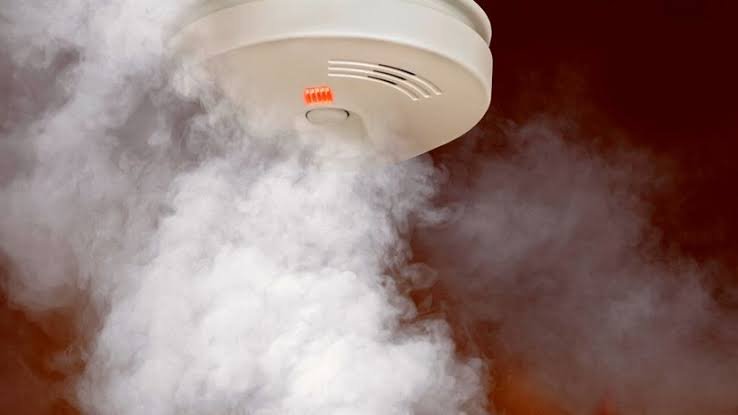
Smoke alarms are among the simplest fire-safety devices used in homes, offices, schools, and other buildings. They are designed to provide an early warning when smoke is detected, giving occupants valuable time to respond and move toward safety.
However, having a smoke alarm installed is only part of the equation. The device also needs a dependable power source. For battery-operated smoke alarms, that means the battery must be present, suitable, and maintained according to the manufacturer’s instructions.
A weak, expired, disconnected, or missing battery can leave an otherwise useful alarm unable to perform its intended function. This is why smoke alarm batteries deserve more attention than many homeowners give them.
In Pakistan, where homes can have a mixture of electrical appliances, gas cooking equipment, backup generators, and other potential fire hazards, a broader approach to fire prevention and early warning is important. Rescue 1122’s Community Safety Program specifically includes fire safety, emergency preparedness, safety education, and evacuation drills.
If you are researching a fire alarm system in Pakistan, understanding the role of batteries is an important part of making informed safety decisions.
What Is a Smoke Alarm Battery?
A smoke alarm battery is the power source used by many standalone smoke alarms. Depending on the design, the alarm may use replaceable batteries or a sealed battery that is designed to remain inside the device for its intended service life.
The battery supplies the energy required for the alarm’s electronic components and warning signal.
A smoke alarm can look perfectly normal from the outside while its battery is becoming weak. This is one reason routine testing and maintenance matter.
The exact battery type, replacement interval, and maintenance procedure depend on the alarm model. Homeowners should always follow the manufacturer’s instructions instead of assuming that every smoke alarm works in exactly the same way.
Why Smoke Alarm Batteries Matter
A smoke alarm is intended to provide an early warning. If its power source is unavailable or inadequate, the device may not perform as expected.
The importance of batteries becomes easier to understand when you consider five major reasons.
1. Batteries Help Keep the Alarm Ready
The first and most obvious reason is simple: a battery-operated alarm needs power to operate.
A smoke alarm that has been installed but has no functioning battery does not provide the protection homeowners expect from it.
This can happen for several reasons:
– The battery may have reached the end of its useful life.
– Someone may have removed it and forgotten to replace it.
– The battery may have been installed incorrectly.
– A battery may have been stored for too long.
– The alarm itself may have a technical problem.
– The device may require a specific type of battery.
Regular testing helps identify problems before an emergency occurs.
Many smoke alarms have a test function that allows the user to check whether the alarm can produce its warning signal. The correct testing method should always be based on the manufacturer’s instructions.
It is also important not to disable an alarm simply because it produces nuisance alerts. Instead, the underlying cause should be addressed safely and professionally where necessary.
The Building Code of Pakistan Fire Safety Provisions 2016 recognizes the importance of properly functioning fire alarm systems and includes provisions concerning impairment, testing, servicing, and maintenance.
Battery Maintenance Should Be Part of a Routine
Smoke alarms should not be treated as devices that can simply be installed and forgotten.
A household safety routine can include checking alarms at appropriate intervals, following manufacturer recommendations, and paying attention to warning signals.
If an alarm indicates a low battery, the warning should not simply be ignored.
For alarms using replaceable batteries, replacement should follow the manufacturer’s specifications. For alarms with sealed batteries, the manufacturer’s replacement or end-of-life instructions should be followed.
2. A Weak Battery Can Reduce Confidence in Your Safety System
The second reason smoke alarm batteries matter is reliability.
People naturally assume that an installed alarm is working. But an alarm that has not been tested or maintained may not provide the expected protection.
This is particularly important at night.
People may not notice a developing fire immediately while sleeping. An alarm’s warning signal is therefore an important part of a household emergency plan.
The purpose of early warning is not to encourage people to investigate a dangerous situation themselves. Instead, the alarm should support a broader safety plan in which occupants leave an unsafe area and seek appropriate emergency assistance.
A reliable detection system can therefore complement other safety measures such as clear exits, evacuation planning, and appropriate fire-prevention practices.
3. Batteries Support Early Warning
One of the main advantages of smoke alarms is early notification.
The sooner occupants become aware of a possible fire, the more time they may have to follow their evacuation plan.
This is particularly important in larger homes where a person in one room may not immediately notice a problem developing elsewhere.
Pakistan’s Building Code addresses fire alarm systems and recognizes automatic detection as one method through which a fire alarm system can be activated where such systems are required.
For homeowners, the lesson is straightforward: detection equipment should be maintained as carefully as other important safety equipment.
Smoke Alarms Are Only One Part of Fire Safety
It is important not to rely entirely on a smoke alarm.
A good household fire-safety approach combines:
– Fire prevention
– Smoke detection
– Reliable alarms
– Clear exits
– Emergency planning
– Regular maintenance
– Family safety education
Rescue 1122’s Community Safety Program promotes preparedness, fire safety education, and emergency evacuation drills as part of its broader effort to develop safer communities.
This demonstrates an important principle: safety works best as a system rather than as one individual device.
4. Batteries Can Be Affected by Poor Maintenance
Another reason batteries matter is that their performance can be affected by age and maintenance conditions.
Like many household components, batteries do not last indefinitely. Their useful life can depend on the type of battery, the alarm design, storage conditions, temperature, and usage.
Homeowners should therefore avoid assuming that a battery will continue working indefinitely simply because the alarm itself appears to be in good physical condition.
A regular maintenance routine can help.
Warning Signals Should Not Be Ignored
Many battery-operated smoke alarms provide an audible warning when their battery needs attention.
This warning can be inconvenient, especially during nighttime hours. However, removing the battery and leaving the alarm without power creates a safety problem.
Instead, the battery should be replaced or the alarm serviced according to its manufacturer’s instructions.
If the warning continues after the appropriate battery replacement, the device may need further inspection or replacement.
Check the Alarm After Battery Maintenance
After maintenance, the alarm should be checked according to the manufacturer’s instructions.
The objective is to make sure that the device is functioning as intended.
If an alarm is old, damaged, repeatedly malfunctioning, or unable to pass its manufacturer’s recommended checks, replacement may be more appropriate than repeatedly trying to repair it.
The Building Code of Pakistan includes provisions for fire alarm systems that cannot be properly serviced or repaired, including replacement requirements for systems that remain impaired.
5. Batteries Are a Small Part of a Much Bigger Safety System
The fifth reason smoke alarm batteries matter is that they represent a larger lesson about fire safety: small maintenance tasks can support an entire safety strategy.
A smoke alarm may be a relatively small device, and its battery may seem like an even smaller component. Yet both are connected to the larger goal of providing timely warning.
The same principle applies to other fire-safety equipment.
For example:
– Exit routes need to remain accessible.
– Fire-safety equipment needs appropriate maintenance.
– Electrical appliances should be kept in safe condition.
– Gas equipment should receive appropriate professional attention.
– Family members should understand evacuation procedures.
– Building-specific fire-protection systems should be inspected and maintained appropriately.
Pakistan Engineering Council identifies installation, commissioning, and maintenance of fire detection, alarm, and suppression systems as a specialized engineering area.
This is especially relevant for larger buildings and more complex fire-protection installations.
Choosing the Right Smoke Alarm
When buying a smoke alarm, homeowners should consider more than its price.
Look for a product that is suitable for the intended location and comes with clear installation, testing, maintenance, and battery information.
Consider:
1. Product instructions
The manufacturer’s instructions should clearly explain how the alarm is powered, tested, maintained, and replaced.
2. Battery type
Understand whether the device uses replaceable batteries or a sealed battery system.
3. Maintenance requirements
Know how frequently the alarm should be checked and what the manufacturer recommends for maintenance.
4. End-of-life information
Smoke alarms themselves do not last forever. Follow the manufacturer’s guidance regarding replacement.
5. Appropriate installation
The location of a smoke alarm can affect its effectiveness. Installation should follow the manufacturer’s instructions and applicable fire-safety requirements.
For complex buildings or integrated fire alarm systems, professional advice may be necessary.
Smoke Alarms and a Fire Alarm System in Pakistan
The terms “smoke alarm” and “fire alarm system” are sometimes used interchangeably, but they can describe different levels of protection.
A standalone smoke alarm may be a relatively simple household device.
A building-wide fire alarm system can be much more comprehensive. Depending on the building and applicable requirements, it may include automatic detection, manual alarm initiation, notification devices, monitoring, control equipment, and connections to other fire-protection systems.
The Building Code of Pakistan Fire Safety Provisions 2016 addresses fire alarm systems and provides requirements for their testing, servicing, maintenance, and operation where applicable.
Therefore, when searching for a fire alarm system in Pakistan, homeowners and property managers should first understand the needs of their particular building.
A small house, apartment building, school, hotel, office, hospital, and industrial facility may have very different fire-safety requirements.
Common Mistakes With Smoke Alarm Batteries
Several simple mistakes can reduce the reliability of smoke alarms.
Ignoring Low-Battery Warnings
A warning sound may be annoying, but it should not simply be ignored.
Removing the Battery
Removing a battery without replacing it leaves a battery-operated alarm without its intended power source.
Using an Incorrect Battery
The replacement battery should match the manufacturer’s requirements.
Forgetting About Older Alarms
A new battery cannot necessarily solve every problem. An old or damaged alarm may require replacement.
Assuming Installation Means Protection
Installing a smoke alarm is only the beginning. Testing and maintenance are also important.
Disabling the Alarm
Repeated nuisance alarms should be investigated rather than permanently disabling the device.
Smoke Alarm Safety for Families
Children can also be taught basic alarm safety.
They should understand that an alarm is a serious warning and that they should follow the family’s evacuation plan.
Children should not be expected to troubleshoot electrical equipment, replace batteries without adult supervision, investigate smoke, or deal with a fire themselves.
Instead, adults should manage maintenance and make sure children know where to go if an alarm sounds.
Rescue 1122’s safety education initiatives include fire-safety awareness and emergency evacuation training for students and communities.
Make Smoke Alarm Checks Part of Home Maintenance
A useful way to remember smoke alarm maintenance is to connect it with other routine household checks.
For example, families can periodically review:
– Smoke alarms
– Electrical appliances
– Emergency exits
– Gas appliances
– Fire-safety equipment
– Emergency contact information
– Family evacuation plans
The exact inspection frequency should follow the manufacturer’s instructions and any applicable requirements.
When Should a Smoke Alarm Be Replaced?
Replacement depends on the alarm model, manufacturer guidance, condition, and applicable standards.
A device that is damaged, repeatedly malfunctioning, unable to perform its recommended test, or beyond its specified service life should not simply be kept in use because it still looks acceptable.
When replacing an alarm, choose a suitable product and follow the installation instructions carefully.
For larger or integrated systems, qualified fire-safety professionals should handle inspection and maintenance.
The Importance of Professional Maintenance
Standalone household smoke alarms are relatively simple, but integrated fire alarm systems can be technically complex.
Commercial and institutional buildings may have multiple detectors, alarm control panels, notification appliances, monitoring arrangements, backup power systems, and other components.
These systems require appropriate inspection, testing, servicing, and maintenance.
The Pakistan Engineering Council specifically lists fire detection, alarm, and suppression systems as a specialized engineering area covering installation, commissioning, and maintenance.
Building owners should therefore use appropriately qualified professionals for specialized systems instead of relying on informal repairs.
A Simple Smoke Alarm Battery Checklist
Use the following checklist as a general reminder:
Regularly check:
– Is the smoke alarm physically intact?
– Does it have the required power source?
– Does the manufacturer’s test function work as expected?
– Is there a low-battery warning?
– Is the alarm within its recommended service life?
– Are there signs of damage?
– Are batteries being replaced according to manufacturer instructions?
– Are household members familiar with the evacuation plan?
For a larger building, the checklist should be based on the property’s fire-safety plan and applicable requirements.
Final Thoughts
Smoke alarm batteries may seem like a small detail, but they are an important part of reliable early-warning protection.
A smoke alarm cannot provide its intended benefit if its power source is missing, unsuitable, depleted, or neglected. Regular testing, proper maintenance, timely battery replacement, and replacement of outdated equipment can help keep household fire-safety measures dependable.
For anyone researching a fire alarm system in Pakistan, it is important to think beyond the alarm itself. Fire protection works best when detection, maintenance, prevention, evacuation planning, and professional support are considered together.
Rescue 1122 emphasizes emergency preparedness, prevention, fire safety education, and evacuation training as parts of building safer communities.
Ultimately, smoke alarm batteries are a small investment in a much larger safety plan. Paying attention to them today can help ensure that your warning equipment is ready when it is needed.
Frequently Asked Questions
1. Why are smoke alarm batteries important?
Smoke alarm batteries provide the power needed for many standalone smoke alarms to operate. If the battery is missing, depleted, or unsuitable, the alarm may not provide its intended warning.
2. How often should smoke alarm batteries be replaced?
The correct replacement schedule depends on the alarm and battery type. Homeowners should follow the manufacturer’s instructions rather than applying the same schedule to every device.
3. What should I do if my smoke alarm keeps making a low-battery sound?
Follow the manufacturer’s instructions for replacing or servicing the battery. Do not leave the alarm without its required power source. If the warning continues after appropriate maintenance, the alarm may require professional inspection or replacement.
4. Are smoke alarms the same as a complete fire alarm system?
Not necessarily. A standalone smoke alarm is a simple detection device, while a building-wide fire alarm system can include multiple detectors, manual activation points, notification equipment, control panels, monitoring, and other components depending on the building’s requirements. Pakistan’s Fire Safety Provisions address broader fire alarm systems and their maintenance.
5. Why is maintenance important for a fire alarm system in Pakistan?
Maintenance helps ensure that fire-detection and alarm equipment remains capable of performing its intended function. The Building Code of Pakistan includes provisions concerning testing, servicing, maintenance, impairment, and replacement of fire alarm systems where applicable.