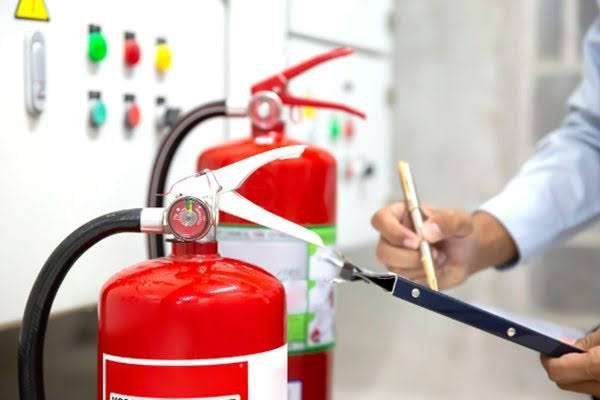
Fire safety is often treated as something that only needs attention when a problem occurs. In reality, preventing emergencies requires regular checks, maintenance, training, and preparation. A simple fire safety checklist can help building owners, managers, employees, and residents identify problems before they become serious.
Ignoring a checklist may seem harmless when everything appears normal. A fire alarm may be installed, extinguishers may be visible, and emergency exits may exist. But if an alarm has not been maintained, an exit is blocked, emergency lighting does not work, or employees do not understand evacuation procedures, the building may not be as prepared as it appears.
The real cost of ignoring fire safety is therefore much greater than the price of an inspection or maintenance visit. It can affect people, property, business operations, equipment, records, and public confidence.
In Pakistan, the Building Code of Pakistan Fire Safety Provisions 2016 provides requirements and guidance related to fire detection, alarm systems, means of egress, fire protection, inspection, testing, and maintenance. Rescue 1122 also treats fire prevention, preparedness, safety education, and emergency response as important parts of its community-safety work.
What Is a Fire Safety Checklist?
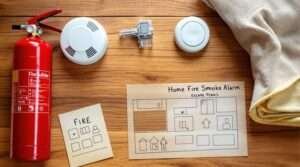
A fire safety checklist is a structured list of items that should be reviewed to identify potential hazards and confirm that important safety arrangements remain available and functional.
A checklist may cover:
– Fire alarm systems
– Smoke and heat detection
– Emergency exits
– Exit signs
– Emergency lighting
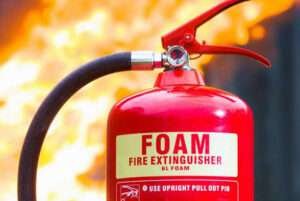
– Fire extinguishers
– Fire doors
– Hydrants and firefighting systems
– Electrical safety
– Storage practices
– Emergency plans
– Fire drills
– Staff training
– Inspection and maintenance records
The checklist should be appropriate for the building. A small office does not necessarily have the same requirements as a hospital, warehouse, factory, school, hotel, or high-rise building.
The purpose is not simply to tick boxes. The purpose is to identify conditions that could reduce the effectiveness of fire prevention, detection, evacuation, or emergency response.
Why Do Fire Safety Checklists Matter?
A checklist provides consistency.
Without a checklist, people may inspect the same building repeatedly but focus on different areas each time. Important details can be overlooked because everyone assumes that someone else has already checked them.
A structured checklist helps create a routine.
It can also make it easier to:
– Identify recurring problems
– Assign responsibility
– Record corrective actions
– Track maintenance
– Prepare for professional inspections
– Review changes to the building
– Improve emergency preparedness
Rescue 1122 operates an official Fire Safety Audit Form, demonstrating how structured assessments can be used as part of fire prevention and safety work.
The Cost of Ignoring Fire Safety
The consequences of poor fire-safety management are not limited to the cost of damaged equipment.
They can include several different types of loss.
1. Risk to Human Life
The most serious potential consequence of inadequate fire safety is harm to people.
If occupants do not receive adequate warning, cannot identify an exit, or encounter an obstructed escape route, evacuation can become more difficult.
Early warning and clear evacuation arrangements are therefore fundamental.
The Building Code of Pakistan addresses means of egress and fire alarm systems, including situations where a fire itself may not provide adequate warning to occupants.
A checklist helps organizations regularly review these basic protections.
2. Property Damage
Fire can affect buildings, machinery, furniture, electrical systems, inventory, documents, and other property.
Even a relatively contained incident can result in significant repair or replacement costs.
Regular maintenance cannot eliminate every possible fire, but it can help identify preventable hazards and improve the building’s readiness.
3. Business Interruption
A fire can disrupt normal operations.
A business may have to temporarily close an office, factory, shop, restaurant, warehouse, or other facility while damage is assessed and repairs are completed.
The effects can extend beyond the damaged area.
Employees may be unable to work normally, customers may be affected, deliveries can be delayed, and important business processes may be interrupted.
A basic checklist is therefore also a business-continuity tool.
Fire Alarm Systems Should Not Be Ignored
A fire alarm system is one of the most important areas to review.
For people researching a Fire alarm system in Pakistan, it is important to understand that installing an alarm is only the beginning. Detection and alarm equipment needs appropriate inspection, testing, servicing, and maintenance.
The Building Code includes provisions addressing impaired fire alarm systems and situations where required testing, service, or maintenance is no longer being provided.
A checklist can help responsible personnel identify whether:
– The alarm panel shows a fault.
– Detection devices appear damaged.
– Alarm notification devices are obstructed.
– Manual alarm points remain accessible.
– Backup power arrangements are maintained.
– Maintenance records are available.
– Previously identified faults have been corrected.
Technical work on complex fire detection and alarm systems should be handled by appropriately qualified professionals.
Pakistan Engineering Council lists ME02 as a specialized engineering area covering the installation, commissioning, and maintenance of fire detection, alarm, and suppression systems and related equipment.
Blocked Exits Can Create Serious Problems
One of the simplest checklist items is also one of the most important: keeping escape routes clear.
A corridor may gradually become a storage area. Boxes may be placed near a stairway. Furniture may be moved into a passage. An exit door may become difficult to access.
These changes can happen slowly, which makes regular inspection important.
A checklist should consider:
– Corridors
– Stairways
– Exit doors
– Emergency routes
– Exit signs
– Assembly arrangements
– Emergency lighting
The Building Code requires means of egress to be appropriately arranged or marked toward a place of safety and includes requirements for illumination of means of egress.
A checklist makes it easier to notice when a previously clear route has become obstructed.
Fire Extinguishers Need Attention
Fire extinguishers are often visible, which can create a false sense of security.
Simply having extinguishers on a wall does not mean the equipment is ready for use.
A checklist should consider:
– Whether extinguishers are accessible
– Whether they remain in their designated locations
– Whether they show signs of damage
– Whether required inspections have been completed
– Whether maintenance records are available
– Whether equipment is obstructed
The selection, placement, inspection, and servicing of firefighting equipment should be appropriate for the building’s hazards and applicable requirements.
Electrical Safety Should Be Part of the Checklist
Electrical systems are another important area of fire prevention.
Regular visual checks can identify conditions that deserve professional attention, such as:
– Damaged cables
– Overloaded outlets
– Poor housekeeping around electrical panels
– Improper temporary wiring
– Signs of overheating
– Unapproved electrical modifications
A checklist does not replace professional electrical inspection.
Instead, it provides a routine method for noticing concerns and reporting them to qualified personnel.
Poor Housekeeping Can Increase Risk
Fire safety and housekeeping are closely connected.
Waste materials, unnecessary combustible items, and poor storage practices can increase hazards and obstruct emergency equipment or escape routes.
A checklist can review:
– Waste disposal
– Storage arrangements
– Corridors
– Stairways
– Electrical rooms
– Plant rooms
– Fire equipment access
– Areas around heating or cooking equipment
Small housekeeping problems can be easy to correct when identified early.
Fire Doors and Building Protection
Fire doors and other protective construction features should also be included in appropriate checklists.
Look for issues such as:
– Damaged doors
– Doors that do not operate correctly
– Obstructions
– Unauthorized alterations
– Damaged hardware
– Conditions that could compromise the intended protection
The Building Code addresses protection of vertical openings and other measures intended to help limit the spread of fire, smoke, and fumes.
Because fire-rated construction is part of the building’s overall safety design, significant defects should be assessed by qualified professionals.
Emergency Lighting and Exit Signs
A fire emergency can affect normal electrical power and visibility.
Emergency lighting and exit signs can help occupants identify intended escape routes when ordinary lighting is unavailable.
A checklist should confirm that:
– Exit signs are visible.
– Emergency lighting is present where required.
– Equipment is not damaged.
– Inspection and testing records are maintained.
– Defects are reported and corrected.
These systems should be included in routine building maintenance rather than checked only immediately before an inspection.
Fire Drills Should Be Included
A fire safety checklist should not focus entirely on equipment.
People are an important part of emergency preparedness.
Organizations should review whether appropriate fire drills and training are being conducted and whether lessons from previous drills have been addressed.
Rescue 1122’s Community Safety Program includes safety education and emergency evacuation drills, including training for teachers and students.
After a drill, management can ask:
– Did everyone recognize the alarm?
– Were exits easy to identify?
– Were routes clear?
– Did staff know their responsibilities?
– Were visitors accounted for?
– Was the assembly procedure understood?
– Were any problems identified?
The answers can be added to the organization’s corrective-action process.
Maintenance Records Matter
One of the most commonly overlooked parts of fire safety is documentation.
Records can show:
– What was inspected
– When it was inspected
– Who performed the inspection
– What problems were identified
– What corrective action was taken
– Whether the problem was resolved
Without records, it can be difficult to determine whether a recurring problem has been addressed.
Good documentation also helps building management identify trends.
For example, repeated faults in the same system may indicate that a larger technical assessment is needed.
The Cost of Delaying Repairs
A small defect does not always remain small.
A damaged sign may become harder to see. A faulty alarm component may remain unresolved. A blocked route may become increasingly crowded with stored materials.
This does not mean every minor defect will lead to a fire emergency. It means that delaying corrective action can allow safety weaknesses to accumulate.
A useful checklist should therefore include a section for corrective actions.
For each issue, record:
– Problem
– Location
– Priority
– Recommended action
– Responsible person
– Target date
– Completion status
This turns inspection into continuous improvement.
Ignoring Changes to a Building
Buildings are not static.
Businesses may:
– Add new machinery
– Change room layouts
– Increase storage
– Install new electrical equipment
– Renovate offices
– Add partitions
– Change occupancy
– Expand operations
Each significant change can affect fire safety.
The Building Code includes provisions addressing existing buildings, changes of occupancy, repairs, alterations, additions, and fire-safety systems.
A checklist should therefore be reviewed whenever a building or its use changes significantly.
The Hidden Cost of Poor Training
A building can have modern fire equipment while still having a weak emergency response if occupants do not understand the procedures.
Employees should know the basic emergency arrangements applicable to their workplace.
Training can cover:
– Alarm recognition
– Emergency exits
– Assembly arrangements
– Emergency responsibilities
– Visitor management
– Reporting procedures
– Assistance for people who may require additional support
Rescue 1122’s Community Safety Training Booklet specifically includes preventive fire measures and broader safety education.
Training is therefore not an optional extra. It is part of preparedness.
Fire Safety in Different Types of Buildings
The checklist should be adapted to the building.
Offices
Focus on electrical safety, evacuation routes, alarms, emergency lighting, staff training, and visitor management.
Schools
Pay particular attention to evacuation procedures, student supervision, alarm awareness, assembly arrangements, and staff responsibilities.
Warehouses
Storage arrangements, access routes, fire protection systems, electrical equipment, and changes in stored materials deserve special attention.
Factories
Production equipment, electrical systems, combustible materials, emergency routes, fire protection systems, and worker training should be considered.
Hospitals
Emergency planning must consider patients, visitors, staff, mobility limitations, medical equipment, and complex building systems.
Shopping Centers
Large numbers of visitors make alarms, evacuation arrangements, public communication, emergency exits, and staff preparedness particularly important.
Fire Safety and Legal Responsibilities
Fire safety requirements in Pakistan can involve national building provisions as well as provincial, local, and authority-specific requirements.
The Building Code of Pakistan Fire Safety Provisions 2016 establishes important fire-safety provisions, while the applicable Authority Having Jurisdiction may have responsibilities concerning approval, inspection, and enforcement.
In Punjab, Rescue 1122’s community-safety framework operates under the Punjab Emergency Service Act 2006 and the Punjab Community Safety Act 2021 and includes fire prevention and safety activities.
Because requirements can vary according to the building and location, organizations should obtain professional advice and consult the relevant authority when formal compliance is required.
A generic online checklist should not be treated as proof that a building meets every legal requirement.
Building a Culture of Fire Safety
A checklist is most useful when fire safety becomes part of normal building management.
Instead of asking only, “Are we compliant?”, organizations should also ask:
– Are our systems maintained?
– Are our exits clear?
– Do employees understand the emergency plan?
– Are previous problems actually fixed?
– Has the building changed since the last assessment?
– Are records complete?
– Do we have appropriate professional inspections?
This approach creates a culture in which safety is monitored continuously rather than only before an official inspection.
A Simple Fire Safety Checklist
For a basic routine review, responsible personnel can consider the following:
Detection and Alarm
– Alarm system checked according to the applicable maintenance schedule
– Faults reported
– Detection devices unobstructed
– Alarm notification devices accessible
– Records maintained
Escape Routes
– Corridors clear
– Stairways clear
– Exit doors accessible
– Exit signs visible
– Emergency lighting maintained
Firefighting Equipment
– Extinguishers accessible
– Equipment visibly maintained
– Hydrant or other systems checked where applicable
– Maintenance records available
Electrical Safety
– No obvious damaged wiring
– Electrical panels accessible
– No unsafe storage around electrical equipment
– Electrical concerns referred to qualified professionals
Housekeeping
– Waste removed
– Combustible materials appropriately stored
– Fire equipment unobstructed
– Escape routes free of unnecessary items
Emergency Preparedness
– Emergency plan available
– Staff understand responsibilities
– Appropriate drills conducted
– Assembly arrangements known
– Visitor procedures considered
Documentation
– Inspection records maintained
– Maintenance certificates or reports retained
– Corrective actions tracked
– Outstanding issues reviewed
Small Investment, Big Difference
The phrase “small investment, big difference” describes an important principle in fire safety.
Keeping an exit clear costs very little. Recording maintenance takes time rather than a large budget. Training staff requires planning. Reviewing an alarm fault promptly may prevent a much larger problem later.
Not every improvement requires expensive construction or sophisticated technology.
Sometimes the biggest improvement comes from consistently doing basic things well.
Final Thoughts
The real cost of ignoring fire safety checklists is not simply the cost of replacing equipment after an incident. It includes the risks created by poor preparation, neglected maintenance, blocked exits, inadequate training, and unresolved defects.
A checklist gives building owners and managers a practical way to identify these weaknesses.
For anyone researching a Fire alarm system in Pakistan, it is important to remember that an alarm is only one part of a complete fire-safety strategy. Detection should work together with safe escape routes, firefighting equipment, emergency lighting, fire-resistant construction, training, drills, maintenance, and good housekeeping.
Fire safety should also be treated as an ongoing responsibility. Buildings change, equipment ages, employees change, and new hazards can appear.
Regular checklists help keep safety arrangements aligned with those changes.
The best time to correct a fire-safety weakness is before an emergency exposes it. A few minutes spent checking an exit, reviewing an alarm fault, updating a record, or correcting poor housekeeping can be a small investment compared with the potential consequences of being unprepared.
FAQs
1. What is the purpose of a fire safety checklist?
A fire safety checklist provides a structured way to review fire hazards, emergency equipment, escape routes, maintenance, training, and other safety arrangements. It helps organizations identify problems and track corrective actions.
2. What should be included in a fire safety checklist?
A checklist can include fire alarm systems, detection equipment, emergency exits, exit signs, emergency lighting, extinguishers, fire doors, electrical safety, housekeeping, emergency plans, drills, training, and maintenance records.
3. Why is fire alarm maintenance important?
A fire alarm system needs appropriate inspection, testing, servicing, and maintenance to remain reliable. The Building Code of Pakistan includes provisions concerning impaired alarm systems and required testing, service, and maintenance.
4. Who should conduct a professional fire safety inspection?
The appropriate person or organization depends on the building and the applicable requirements. Technical fire detection, alarm, and suppression systems should be assessed or maintained by suitably qualified professionals, while formal compliance matters should involve the relevant Authority Having Jurisdiction.
5. Can a fire safety checklist guarantee that a building is safe?
No. A checklist is a useful risk-management and inspection tool, but it cannot guarantee that a fire will never occur. It should be combined with appropriate design, professional inspections, equipment maintenance, emergency planning, training, and compliance with applicable requirements.