Fire safety signage is one of the simplest parts of a building’s safety system, yet it is often misunderstood. Many people think fire safety signs are only decorative boards placed near exits or that any red-and-green sign is enough to satisfy safety requirements. In reality, clear signage can help people understand where to go, what to avoid, and how to respond during an emergency.
In Pakistan, fire safety signage is particularly important in offices, schools, hospitals, shopping malls, factories, hotels, apartment buildings, warehouses, restaurants, and other public or commercial properties. The Building Code of Pakistan Fire Safety Provisions 2016 states that means of egress should be arranged or marked so that the route toward a place of safety is clearly indicated, and it also requires illumination of means of egress.
Despite this, several myths continue to create confusion. Some businesses focus heavily on fire extinguishers or a fire alarm system in Pakistan while overlooking the signs that help occupants understand the escape route. Others install signs but fail to consider their visibility, location, lighting, or maintenance.
This article explains some of the biggest myths about fire safety signage and provides a practical, informational overview for property owners, managers, workers, students, and families in Pakistan.
What Is Fire Safety Signage?
Fire safety signage refers to signs designed to communicate important information related to fire prevention, emergency evacuation, firefighting equipment, exits, hazards, and emergency procedures.
Common examples include:
– Emergency exit signs
– Fire exit directional signs
– Fire extinguisher location signs
– Fire hose reel signs
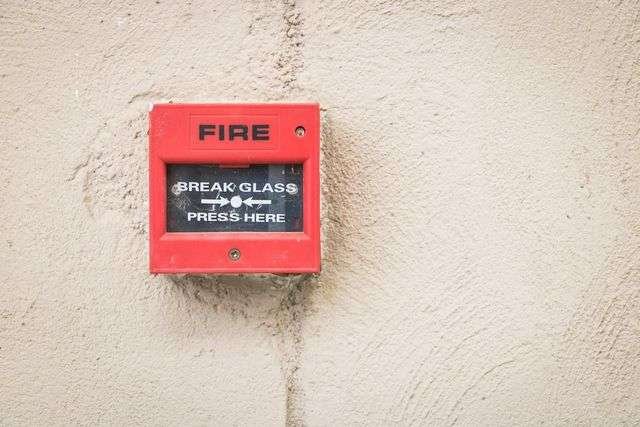
– Fire alarm point signs
– No-smoking signs
– Emergency assembly-point signs
– Fire door signs
– Stairway and evacuation signs
– Warning signs for hazardous areas
The purpose is not simply to make a building look compliant. Effective signs provide visual information that can be understood quickly, especially when people are unfamiliar with the building.
Rescue 1122’s community safety programs also emphasize fire safety education and emergency evacuation drills, showing that preparedness involves more than simply having firefighting equipment available.
Myth 1: Fire Safety Signs Are Only Decoration
This is one of the most common misconceptions.
A properly selected and positioned safety sign serves a communication purpose. During an emergency, people may not know the building layout, particularly visitors, customers, patients, students, or newly hired employees.
An exit sign can help identify an escape route. A directional sign can help indicate which way an occupant should move. An equipment sign can help people recognize the location of relevant fire-safety equipment.
The Building Code of Pakistan Fire Safety Provisions 2016 specifically states that means of egress should be arranged or marked so that the way to a place of safety is clearly indicated.
Therefore, fire safety signs should be treated as part of the building’s overall safety communication system rather than decoration.
Myth 2: Any Sign Is Good Enough
Another misconception is that simply putting a sign on a wall makes an area safe.
The quality and placement of signage matter. A sign that is hidden behind furniture, placed too high, damaged, poorly illuminated, or positioned where people cannot easily see it may not communicate useful information.
Before installing signs, property managers should consider:
– Visibility from normal walking routes
– Direction of travel
– Building layout
– Lighting conditions
– Potential obstructions
– Location of exits and stairs
– Visibility for visitors and unfamiliar occupants
– Whether the signs remain understandable during an emergency
The goal should always be clear communication.
Myth 3: Exit Signs Only Matter in Large Buildings
Fire safety signage is sometimes associated only with shopping malls, factories, hospitals, and high-rise buildings.
However, smaller buildings can also contain unfamiliar visitors, multiple rooms, corridors, staircases, or areas where an emergency exit is not immediately obvious.
The appropriate safety measures depend on the building’s design, occupancy, use, and applicable requirements. The important principle is that occupants should be able to understand how to reach a safe location.
In workplaces, schools, apartment buildings, and public facilities, clear evacuation information can support emergency preparedness.
Myth 4: Fire Safety Signage Replaces a Fire Alarm System
Signs and fire alarms perform different functions.
A sign provides visual information. A fire alarm system provides warning when a fire emergency is detected or manually initiated through the appropriate system.
The Building Code of Pakistan Fire Safety Provisions 2016 recognizes the importance of occupant notification and states that fire alarm systems should be provided where necessary when the fire itself may not provide adequate warning to occupants.
This means a building should not treat signs as a substitute for alarms, detection, evacuation planning, or other required fire-protection measures.
A strong fire-safety strategy combines multiple layers, which may include:
– Fire detection
– Alarm notification
– Emergency lighting
– Exit routes
– Fire safety signs
– Appropriate firefighting equipment
– Evacuation procedures
– Regular inspection and maintenance
– Emergency drills and training
Myth 5: More Signs Always Mean Better Safety
It may seem logical that adding more signs will automatically improve safety. In practice, excessive or poorly planned signage can make an environment confusing.
When walls are covered with too many unrelated notices, important emergency information may be harder to notice.
Good signage should be purposeful. Each sign should communicate something useful and should be positioned where people are likely to need that information.
For example, a directional sign may be more useful at a corridor junction than several identical signs placed together in one location.
The objective is clarity, not quantity.
Myth 6: Fire Safety Signs Never Need Maintenance
A sign may not have moving parts, but that does not mean it can be ignored.
Over time, signs can become:
– Faded
– Dirty
– Damaged
– Covered by advertisements
– Blocked by furniture
– Affected by building renovations
– Difficult to see because of changes in lighting
Regular safety inspections should therefore include signage.
The Building Code addresses maintenance, inspection, and testing of fire-safety provisions, reinforcing the broader principle that safety features need ongoing attention rather than one-time installation.
If a building changes its internal layout, exit route, room use, or occupancy, its safety signage should also be reviewed.
Myth 7: Emergency Exit Signs Are Only Needed Near the Door
An exit sign immediately above an exit can be useful, but occupants may need directional information before reaching the exit.
Consider a large office floor with several corridors. A person may see an exit door but still need to know which corridor leads toward it.
This is why a complete wayfinding approach may include directional signs at relevant decision points.
The Building Code’s requirement that the means of egress be clearly indicated supports the broader idea that people should be able to follow the route toward safety rather than simply discover an exit by chance.
Myth 8: Fire Safety Signs Are Only for Employees
Employees are often trained about workplace emergency procedures, but visitors may know very little about the building.
A customer entering a shopping centre, a parent visiting a school, a patient entering a hospital, or a guest staying at a hotel may not know the location of emergency exits.
Signs provide information without requiring every visitor to receive a personal safety briefing.
This makes understandable, visible signage particularly valuable in public buildings.
Myth 9: Fire Safety Signage Is Separate From Evacuation Planning
Good signage should support an evacuation plan rather than exist independently.
An evacuation plan identifies how occupants can move from occupied areas toward a safe location. Signs can help communicate that plan visually.
Rescue 1122’s community safety activities include emergency evacuation drills and safety training for schools and communities.
A building manager can therefore review signage alongside evacuation procedures and drills.
Questions worth considering include:
– Can occupants identify the nearest appropriate exit?
– Are routes clearly indicated?
– Are signs visible from relevant areas?
– Are emergency routes free from unnecessary obstructions?
– Do signs still match the current building layout?
– Do staff understand the evacuation procedure?
– Are visitors given clear safety information where appropriate?
Myth 10: Fire Safety Signage Is Only About Fires
Although these signs are designed primarily for fire and emergency situations, their usefulness can extend to broader emergency preparedness.
Clear exit information can help occupants understand building evacuation routes during other situations where evacuation is required.
Rescue 1122 describes its community safety work as covering emergency preparedness, response, and prevention, with training that includes fire safety and evacuation procedures.
This broader approach shows why emergency wayfinding should be considered part of overall building safety.
Myth 11: Fire Alarm and Fire Safety Signs Do Not Need Professional Attention
Another misconception is that any person can decide where every safety sign should go without considering the building’s design or applicable requirements.
Simple signs may appear straightforward, but a complete fire-safety strategy can involve building layout, occupancy, escape routes, alarm systems, emergency lighting, firefighting equipment, and other technical considerations.
Pakistan Engineering Council lists installation, commissioning, and maintenance of fire detection, alarm, and suppression systems as a specialized engineering area under ME02.
Where a project involves a complex building or a technical fire-protection system, qualified professionals and the relevant authority having jurisdiction should be involved.
Myth 12: Once Signs Are Installed, the Job Is Finished
Installation is only the beginning.
Buildings change over time. Offices add partitions. Shops change layouts. Warehouses reorganize storage areas. Schools renovate classrooms. Hotels modify rooms and corridors.
Any change that affects movement through a building can potentially affect the usefulness of existing emergency signage.
The Building Code of Pakistan addresses construction, repairs, alterations, additions, and changes of occupancy, emphasizing the need for required means of egress and fire-protection features to remain in place where applicable.
For this reason, fire-safety reviews should be repeated whenever significant building changes occur.
How to Improve Fire Safety Signage in Pakistani Buildings
Property owners and managers can take several general steps to improve their safety communication.
1. Review the Building Layout
Identify exits, stairways, corridors, emergency routes, and areas where people may need directional information.
2. Check Visibility
Make sure signs can be easily noticed and are not hidden by furniture, decorations, advertisements, equipment, or temporary materials.
3. Match Signs With the Current Layout
If walls, doors, rooms, or corridors have changed, review the signage rather than assuming the old arrangement remains correct.
4. Consider Lighting
Signs need to remain visible under the building’s expected conditions. The Building Code also addresses illumination of means of egress.
5. Include Signage in Safety Inspections
Do not inspect extinguishers and alarms while ignoring signs. Include emergency wayfinding in routine safety reviews.
6. Support Signs With Training
Employees, teachers, security personnel, and other responsible staff should understand evacuation procedures. Rescue 1122 provides community safety and evacuation training programs in Punjab.
7. Keep Emergency Routes Clear
A visible sign cannot compensate for a blocked or unusable escape route. Signage should always be considered alongside the physical condition of the means of egress.
Why Fire Safety Signage Matters in Pakistan
Pakistan has a wide range of buildings with different safety requirements, from small shops and homes to factories, hospitals, schools, offices, apartment complexes, and high-rise commercial properties.
The Building Code of Pakistan Fire Safety Provisions 2016 provides requirements relating to means of egress, occupant notification, fire-protection systems, maintenance, inspection, and other fire-safety matters.
Meanwhile, Rescue 1122 has developed community safety initiatives covering fire prevention, evacuation drills, and citizen training.
These measures highlight an important point: fire safety works best as a system. Signs are one part of that system, alongside alarms, emergency lighting, safe escape routes, equipment, training, maintenance, and emergency planning.
For organizations researching a fire alarm system in Pakistan, it is worth remembering that alarm technology alone does not provide complete protection. Occupants also need clear information about what to do and where to go when an emergency occurs.
Final Thoughts
Fire safety signage may look simple, but its role in emergency preparedness should not be underestimated. The biggest mistake is treating signs as decoration or as a one-time installation.
Effective signage should be visible, understandable, properly positioned, maintained, and consistent with the building’s current layout and emergency plan.
The most useful approach is to consider signage as one layer of a broader fire-safety strategy. Fire alarms, detection systems, emergency lighting, evacuation routes, training, inspections, and appropriate firefighting equipment all have different roles.
For homes, offices, schools, factories, hospitals, hotels, and commercial buildings across Pakistan, replacing myths with proper safety awareness can help create environments where people are better prepared to recognize emergency information and move toward safety.
FAQs
1. Why is fire safety signage important?
Fire safety signage helps occupants identify emergency exits, evacuation routes, fire-safety equipment, and other important information. Clear signs can be particularly helpful to visitors and people unfamiliar with a building.
2. Can fire safety signs replace a fire alarm system?
No. Fire safety signs and fire alarm systems serve different purposes. Signs provide visual information, while an alarm system is designed to provide warning when a fire emergency is detected or manually initiated through the appropriate system.
3. Where should emergency exit signs be placed?
They should be positioned where occupants can clearly identify the route toward a safe location. Depending on the building layout, this may require signs at exits and appropriate points along the route. Applicable building and fire-safety requirements should be followed.
4. Do fire safety signs need regular inspection?
Yes. Signs can become faded, damaged, blocked, or inconsistent with building changes. Including signage in routine safety inspections helps ensure that emergency information remains visible and useful.
5. Who should review fire safety signage in a commercial building?
For simple facilities, building management can include signage in routine safety checks. For larger or technically complex buildings, a qualified fire-safety professional and the relevant authority having jurisdiction may need to review the overall fire-safety arrangement. Pakistan Engineering Council recognizes fire detection, alarm, and suppression system installation and maintenance as a specialized engineering area.