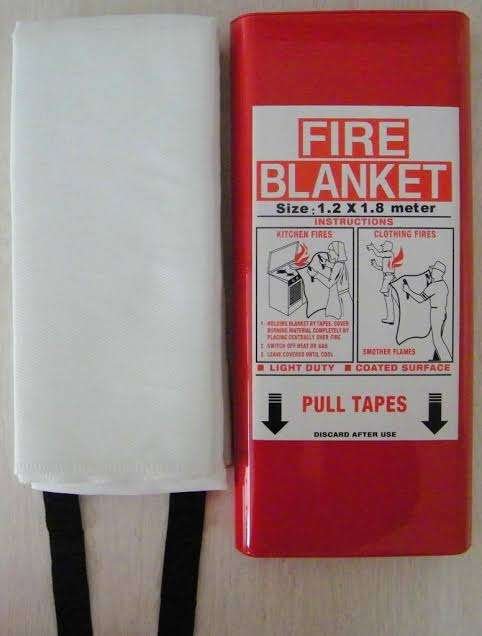
Fire safety is often associated with fire alarms, smoke detectors, extinguishers, emergency exits, and evacuation plans. However, some simple safety equipment can also play an important role in a broader fire-safety strategy. A fire blanket is one example.
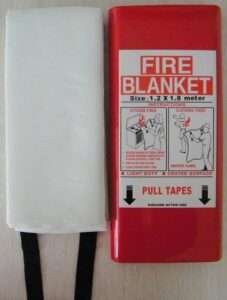
A fire blanket is a specially designed piece of fire-resistant material intended for specific small fire situations. It can also be useful for covering certain types of burning material when appropriate conditions exist. However, a fire blanket is not a replacement for a fire alarm system, fire extinguisher, sprinkler system, or emergency evacuation plan.
The main purpose of any fire-safety equipment is to reduce risk and support a safe response. Equipment should be suitable for its intended use, properly maintained, easily accessible, and used according to the manufacturer’s instructions.
In Pakistan, fire-safety requirements can vary depending on the building, occupancy, location, hazards, and applicable regulations. The Building Code of Pakistan Fire Safety Provisions 2016 states that buildings should be equipped, maintained, and operated to provide reasonable life safety and property protection from fire hazards. It also requires listed or approved equipment to be used according to its limitations and manufacturer’s instructions.
This guide explains what fire blankets are, where they can be useful, their limitations, and why they should be part of a wider safety plan.
What Is a Fire Blanket?
A fire blanket is a sheet of fire-resistant material designed for certain small fire emergencies.
Unlike a fire extinguisher, it does not discharge a chemical or other extinguishing agent. Instead, when appropriately used for a suitable situation, the blanket can help isolate a small fire from oxygen.
Fire blankets are commonly associated with certain kitchen and cooking-related fire risks. They may also be found in workplaces, laboratories, commercial kitchens, and other locations where the risk assessment identifies them as appropriate.
The important point is that a fire blanket is specialized safety equipment, not a general-purpose solution for every type of fire.
If a fire is growing, spreading, producing heavy smoke, or creating an unsafe escape route, people should prioritize getting to a safe location and following their emergency plan rather than attempting to control the fire.
Why Are Fire Blankets Important?
Fire can spread quickly, especially when combustible materials are nearby.
A fire blanket can provide an additional layer of protection for certain small, localized fire situations. Because it is simple equipment, it can also form part of a broader fire-safety arrangement without requiring complicated technology.
However, its value depends on appropriate selection, correct storage, accessibility, and proper maintenance.
A fire blanket should never create a false sense of security.
The Building Code of Pakistan emphasizes that fire-safety equipment should be selected and used according to applicable requirements and manufacturer instructions.
Fire Blankets and Fire Alarm Systems
A fire blanket and a fire alarm system perform very different functions.
A fire blanket is a passive piece of fire-safety equipment that may be useful for certain small fires.
A fire alarm system is designed to detect and communicate a fire or emergency condition, helping warn occupants.
A complete fire-safety program can include both.
For example, a commercial building may have:
– Fire detection
– Alarm notification
– Emergency lighting
– Exit signs
– Fire extinguishers
– Fire blankets where appropriate
– Sprinkler systems
– Emergency procedures
– Evacuation plans
– Staff training
For anyone researching a fire alarm system in Pakistan, it is important to understand that an alarm system is only one part of an overall fire-protection strategy.
Pakistan Engineering Council recognizes specialized engineering work for the installation, commissioning, and maintenance of fire detection, alarm, suppression systems, and related equipment.
Where Are Fire Blankets Commonly Used?
Fire blankets may be appropriate in locations where certain small fire risks exist.
Possible locations include:
Kitchens
Cooking areas can have fire risks associated with cooking equipment and combustible materials. A suitable fire blanket may form part of the safety equipment in an appropriate kitchen.
Commercial Kitchens
Restaurants, hotels, cafeterias, and institutional kitchens may have greater cooking-related fire risks than ordinary residential areas. Their safety arrangements should be based on a proper risk assessment and applicable requirements.
Workshops
Some workplaces may use fire blankets where the risk assessment identifies a suitable application.
Laboratories
Certain laboratory environments may use specialized fire-safety equipment, including blankets, depending on the hazards present.
Schools and Training Facilities
Fire-safety equipment may be included in an educational facility’s broader emergency preparedness program. Rescue 1122 provides school-safety material that includes fire safety and emergency evacuation information.
The exact equipment required should always be determined according to the building’s risks and applicable requirements.
Fire Blankets Are Not Suitable for Every Fire
This is one of the most important things to understand.
A fire blanket is not a universal replacement for other firefighting equipment.
Different fires involve different materials and hazards. A method that may be appropriate for one small fire can be inappropriate for another.
For example, situations involving energized electrical equipment, pressurized fuel sources, hazardous chemicals, or rapidly spreading flames may require different emergency measures.
People should not attempt to use a fire blanket simply because one is nearby.
The first priority in a serious fire is personal safety. If there is uncertainty about whether equipment is appropriate, evacuation and professional emergency assistance should take priority.
Fire Blankets and Kitchen Safety
Kitchens are one of the areas where fire blankets are commonly discussed.
Cooking equipment can create heat and ignition hazards. Poor housekeeping, combustible materials, unattended cooking, and unsuitable equipment placement can increase risk.
A kitchen fire-safety plan can therefore include:
– Suitable fire detection
– Appropriate alarms
– Clear escape routes
– Suitable fire-protection equipment
– Good housekeeping
– Staff awareness
– Regular equipment inspection
– Emergency procedures
A fire blanket can be one component of this arrangement where appropriate.
It should not replace proper fire detection or an evacuation plan.
Accessibility Matters
Fire equipment is only useful if people can find it when needed.
A fire blanket should be stored in an accessible and clearly identified location appropriate to the manufacturer’s instructions and the building’s fire-safety plan.
Equipment should not be hidden behind boxes, furniture, stock, or other objects.
People should also know where the equipment is located.
For workplaces, managers can include fire-equipment locations in safety orientation and emergency training.
Rescue 1122’s community-safety material emphasizes fire prevention and community awareness as part of building safer and more resilient communities.
Fire Blanket Maintenance
Buying a fire blanket is not the end of the process.
Like other fire-safety equipment, it should be kept in suitable condition.
A basic management review can consider:
– Whether the blanket is still present
– Whether its packaging or container is damaged
– Whether the equipment has been exposed to conditions that could affect it
– Whether the manufacturer’s instructions remain available
– Whether the equipment is accessible
– Whether its identification remains clear
– Whether it has been used and requires replacement
Technical maintenance requirements can vary between products, so the manufacturer’s instructions should always be followed.
The Building Code of Pakistan Fire Safety Provisions 2016 also places emphasis on maintaining records of inspections, testing, and maintenance of fire-protection and fire-alarm systems where required by the authority having jurisdiction.
Why Fire Equipment Should Be Inspected Regularly
Fire equipment can be affected by its surroundings.
Dust, moisture, physical damage, improper storage, building changes, or accidental interference can affect safety equipment.
Regular inspections help identify problems before an emergency.
A building’s safety team can maintain an inventory showing:
– Equipment type
– Location
– Installation information
– Inspection dates
– Maintenance information
– Replacement details
– Identified problems
– Corrective actions
For larger facilities, this information can become an important part of the overall fire-safety management system.
Fire Blankets and Emergency Planning
A fire blanket should never be considered separately from an emergency plan.
A good fire-safety plan should answer basic questions such as:
– How will people be warned?
– Where are the exits?
– Where should occupants go after evacuation?
– Who is responsible for emergency communication?
– Where is fire-safety equipment located?
– Who is responsible for inspections?
– How are visitors and vulnerable occupants supported?
– When should people stop attempting to deal with a fire and evacuate?
The Building Code of Pakistan Fire Safety Provisions 2016 includes requirements related to emergency evacuation and relocation drills and emergency action plans where required by the authority having jurisdiction.
This demonstrates why equipment alone cannot provide complete fire protection.
Fire Blankets for Homes
A household fire-safety plan can include different forms of protection depending on the home’s layout and risks.
Families can focus on:
– Working smoke alarms
– Clear escape routes
– Safe electrical practices
– Kitchen fire prevention
– Proper storage of combustible materials
– Emergency contacts
– A family evacuation plan
A fire blanket may be considered as an additional safety item where appropriate.
However, children should not be expected to handle a fire blanket or attempt to control a fire. Their priority should be to alert a responsible adult, leave the dangerous area, and follow the household emergency plan.
Fire Blankets in Businesses
Businesses have additional responsibilities because employees, customers, contractors, and visitors may all be present.
A business should consider fire risks associated with its actual activities.
For example, a restaurant may have significant cooking-related risks, while a warehouse may have different hazards.
A fire-safety assessment can help determine which equipment and procedures are appropriate.
The Building Code of Pakistan places responsibility on owners, operators, lessees, occupants, and persons in control of buildings for compliance with applicable fire-safety provisions.
This makes fire safety a management responsibility rather than something that should be left entirely to individual employees.
Common Fire Blanket Mistakes
Several mistakes can reduce the usefulness of fire blankets.
Treating Them as Universal Firefighting Equipment
A blanket is not suitable for every type of fire.
Keeping Them Out of Reach
Equipment hidden behind other objects may not be available when required.
Ignoring Damage
Damaged or unsuitable equipment should be assessed according to the manufacturer’s instructions.
Failing to Train Staff
Employees may not understand the purpose or limitations of a fire blanket.
Relying on a Blanket Instead of Detection
Fire blankets do not replace smoke detection or fire alarm systems.
Forgetting Evacuation
If a fire is larger than the situation that the equipment is designed to address, people should prioritize evacuation and emergency assistance.
Fire Blankets and Fire Safety Training
Training is an important part of workplace fire safety.
Employees should understand:
– Where safety equipment is located
– What the alarm means
– Where emergency exits are
– What the evacuation procedure is
– Who has responsibility for emergency communication
– The limitations of different fire-safety equipment
Training should be appropriate for the person’s role.
People should never be pressured to confront a fire simply because fire equipment is available.
For schools, Rescue 1122’s official school-safety material includes information on fire safety and emergency evacuation procedures.
Choosing a Fire Blanket
When a fire blanket is considered for a building, selection should focus on suitability rather than simply choosing the cheapest option.
Consider:
Product Quality
Choose equipment from a reputable source and check relevant product information.
Intended Application
The blanket should be suitable for the type of risk identified in the safety assessment.
Size and Location
The equipment should be appropriate for the intended location and accessible to authorized users.
Manufacturer Information
Read and retain the manufacturer’s instructions.
Inspection Requirements
Understand how the product should be stored, inspected, and replaced.
Building Requirements
Consider applicable local regulations and requirements of the authority having jurisdiction.
Fire Blankets Are Part of a Bigger Safety Picture
A fire blanket can be useful, but it should never become the center of an entire fire-safety plan.
Fire protection works best as a combination of prevention, detection, warning, evacuation, suppression, and training.
For example:
Prevention reduces the chance of fire.
Detection identifies a possible fire early.
Alarm systems warn occupants.
Escape routes provide a way out.
Fire-protection equipment provides additional protection where appropriate.
Training helps people understand emergency procedures.
Maintenance keeps safety systems ready.
Each part supports the others.
Fire Safety and Building Regulations in Pakistan
Pakistan’s fire-safety requirements are influenced by building codes, provincial or local requirements, and the authority having jurisdiction.
The Building Code of Pakistan Fire Safety Provisions 2016 states that new and existing buildings should be constructed, arranged, equipped, maintained, and operated to provide reasonable levels of life safety and property protection from fire hazards.
In Punjab, Rescue 1122 also provides building-safety resources under the Punjab Community Safety Act 2021 and Punjab Community Safety Buildings Regulations 2022. Its official website provides building-safety information and inspection resources.
Because requirements can differ according to building type and jurisdiction, owners and managers should verify the rules applicable to their particular property.
A Simple Fire Blanket Safety Checklist
A basic checklist can help building managers review their arrangements:
– Is a fire blanket appropriate for the identified fire risk?
– Is the equipment stored in a suitable location?
– Is it easy to identify?
– Is it accessible?
– Is it visibly damaged?
– Is its packaging or container in suitable condition?
– Are manufacturer’s instructions available?
– Do responsible staff know where it is?
– Is appropriate fire detection installed?
– Are emergency exits clear?
– Are evacuation procedures available?
– Are fire-safety inspections documented?
– Is professional advice obtained when required?
This checklist is only a general management guide. It does not replace applicable codes, standards, professional fire-risk assessment, or manufacturer instructions.
The Real Value of a Small Investment
Fire blankets are relatively simple pieces of equipment, but their value comes from being part of a well-planned fire-safety system.
The investment is not only in purchasing the blanket. It also includes selecting appropriate equipment, storing it correctly, maintaining it, educating responsible people, and ensuring that everyone understands that personal safety comes first.
The same principle applies to other fire-safety equipment.
A fire alarm system that is never maintained cannot provide dependable protection. An exit that is blocked cannot support evacuation. An extinguisher that is inaccessible cannot be easily reached.
Fire safety is therefore about the complete system rather than one individual product.
Conclusion
A fire blanket can be a useful addition to a fire-safety plan when it is appropriate for the identified risk and used according to its manufacturer’s instructions.
However, it should never be viewed as a replacement for smoke detection, fire alarms, evacuation planning, professional fire protection, or emergency services.
For homes and businesses in Pakistan, the strongest approach is to combine prevention with early warning, clear evacuation arrangements, suitable equipment, regular maintenance, and proper training.
If a fire becomes unsafe or starts spreading, people should not put themselves at risk trying to control it. Leaving the area safely and contacting the appropriate emergency service should take priority.
A small investment in appropriate fire-safety equipment can contribute to a safer environment—but its real value comes from being part of a complete and regularly maintained safety plan.
Frequently Asked Questions
1. What is a fire blanket used for?
A fire blanket is specialized fire-safety equipment intended for certain small, localized fire situations. Its suitability depends on the type of fire, product design, and manufacturer’s instructions.
2. Is a fire blanket better than a fire extinguisher?
They serve different purposes and are not direct replacements for one another. The appropriate fire-safety equipment depends on the building’s risks and applicable requirements.
3. Can a fire blanket replace a fire alarm system?
No. A fire blanket and an alarm system have completely different functions. A fire alarm system is intended to detect and warn, while a fire blanket is intended for specific small fire situations.
4. Where should a fire blanket be kept?
It should be stored in a suitable, accessible, clearly identifiable location according to the manufacturer’s instructions and the building’s fire-safety plan. It should not be hidden behind objects or stored where it cannot be reached safely.
5. Do fire blankets need maintenance?
They should be periodically checked for their condition, accessibility, and suitability according to the manufacturer’s instructions and the building’s maintenance program. If equipment is damaged or has been used, its condition should be professionally assessed or replaced as appropriate.