Fire safety is not only about having a fire extinguisher or knowing where the emergency exit is. One of the most important parts of a complete safety plan is early warning. Smoke detectors can help detect smoke at an early stage and alert people before a fire becomes more difficult to escape.
A fire can develop quickly, and people may not always notice smoke immediately, especially when they are sleeping or located in another part of a building. A properly selected, installed, and maintained smoke detection system can provide valuable warning and give occupants more time to respond safely.
In Pakistan, fire-safety requirements depend on the type of building, its occupancy, design, hazards, and applicable regulations. The Building Code of Pakistan Fire Safety Provisions 2016 establishes requirements intended to provide a reasonable level of life safety and property protection from fire hazards. It also addresses fire alarm systems, maintenance, testing, and responsibilities of building owners and occupants.
This guide explains why smoke detectors matter, how they fit into a wider fire-safety plan, and what building owners and families should know about them.
What Is a Smoke Detector?
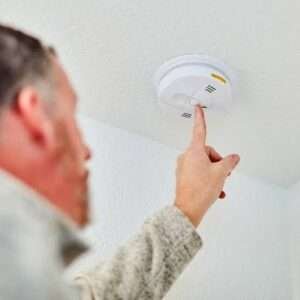
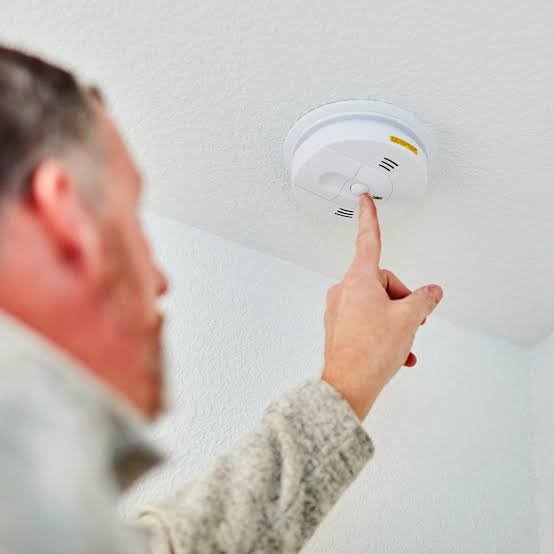
A smoke detector is a device designed to sense smoke and provide a warning.
Depending on the type of system, a detector may activate a local alarm or communicate with a larger fire alarm system. In commercial buildings, smoke detectors can be connected to a central fire alarm control panel that manages signals from different parts of the building.
The main purpose is simple: provide an early warning so people can respond to a possible fire emergency.
A smoke detector does not replace other fire-safety measures. It works as one part of a broader system that may include:
– Fire alarm systems
– Emergency lighting
– Exit signs
– Fire doors
– Fire extinguishers
– Sprinkler systems
– Hydrants
– Emergency evacuation plans
– Staff training and drills
A strong safety plan combines these measures rather than depending on only one device.
Why Early Fire Detection Matters
People often think that they will notice a fire immediately. In reality, a fire may begin in a room that nobody is occupying or while people are asleep.
Smoke can travel through parts of a building before flames are visible. This makes early detection an important part of fire safety.
A smoke detector can provide an alert that attracts attention to a possible emergency.
The Building Code of Pakistan Fire Safety Provisions 2016 recognizes the importance of fire alarm systems where necessary, including circumstances where a fire may not provide adequate warning to occupants.
This principle is especially important in larger buildings where occupants may be far from the location where a fire starts.
Smoke Detectors and Fire Alarm Systems Are Not Exactly the Same
The terms “smoke detector” and “fire alarm system” are sometimes used interchangeably, but they can describe different things.
A smoke detector is generally a sensing device. It detects smoke and sends or produces an alert.
A fire alarm system is a larger arrangement that can include:
– Smoke detectors
– Heat detectors
– Manual call points
– Alarm sounders
– Visual notification devices
– Control panels
– Backup power
– Monitoring equipment
– Connecting wiring
A complete system can receive information from several detection points and alert occupants throughout a building.
For anyone researching a fire alarm system in Pakistan, understanding this difference is useful because a detector is only one component of a complete fire-protection strategy.
Pakistan Engineering Council also identifies specialized engineering work covering the installation, commissioning, and maintenance of fire detection, alarm, and suppression systems and related equipment.
Different Types of Smoke Detection
Smoke detection technology can vary depending on the building and application.
Photoelectric Smoke Detection
Photoelectric detectors use light-based sensing technology to identify smoke particles.
They are widely used for many general fire-detection applications.
Ionization Smoke Detection
Ionization technology uses a different sensing principle to detect smoke particles.
The suitability of any detector depends on the environment, system design, applicable requirements, and manufacturer’s specifications.
Combination Detection
Some systems combine different sensing technologies or combine smoke detection with other forms of detection.
The important point is that there is no single detector that is automatically suitable for every location.
A qualified professional should consider the building’s conditions and the intended use of the space when selecting a detection system.
Where Are Smoke Detectors Important?
Smoke detection requirements vary according to the building and applicable regulations. In general, smoke detection can be particularly important in areas where people may be asleep, where occupants may be separated from the source of a fire, or where early warning is needed because of the building’s design.
In larger buildings, detectors may form part of a centralized fire alarm system.
Possible locations can include:
– Residential areas
– Offices
– Schools
– Hotels
– Hospitals
– Shopping facilities
– Warehouses
– Industrial buildings
– Commercial premises
– Common areas of larger buildings
However, the exact placement should not be decided simply by copying a generic internet diagram. Building design, occupancy, ceiling configuration, environmental conditions, applicable codes, and the manufacturer’s requirements can all affect detector placement.
Smoke Detectors Are Especially Important at Night
One of the major advantages of smoke detection is that it can provide an alert when people are not actively watching their surroundings.
During sleep, a person may not notice a developing fire as quickly as they would during normal daytime activities.
A functioning alarm can draw attention to a potential emergency and support an evacuation plan.
For families, this makes smoke detection an important part of home fire safety.
For hotels, hostels, hospitals, and other buildings where people may sleep, fire detection and alarm planning can be even more significant.
Smoke Detectors Should Be Part of a Complete Safety Plan
Installing detectors is useful, but a safety plan should go further.
A complete plan should consider:
Early Warning
People need a reliable way to know that there may be a fire.
Escape Routes
Occupants should know how to leave the building safely.
Emergency Exits
Exit routes should remain clear and appropriately marked.
Emergency Lighting
Buildings may require emergency lighting so important routes remain usable when normal lighting is unavailable.
Fire Protection Equipment
Appropriate fire-protection equipment should be available according to the building’s risks and requirements.
Emergency Planning
People should understand what to do when an alarm sounds.
Regular Drills
Organizations can use appropriate evacuation drills and training to help people understand emergency procedures.
Rescue 1122’s Community Safety Program includes fire-safety education and evacuation-drill training as part of its broader approach to emergency preparedness and prevention.
Regular Maintenance Is Essential
Installing a smoke detector does not mean that it can be forgotten.
Like other safety equipment, detection systems require appropriate inspection, testing, and maintenance.
A detector can become affected by environmental conditions, damage, power problems, or other faults. A larger fire alarm system can also develop faults in its control panel, wiring, power supply, or other components.
The Building Code of Pakistan Fire Safety Provisions 2016 states that building owners, operators, occupants, or other persons in control of a building are responsible for maintaining records of maintenance, inspections, and testing of fire-protection and fire alarm systems where required by the authority having jurisdiction.
This highlights an important lesson: fire safety is an ongoing responsibility, not a one-time installation.
What Should Building Managers Monitor?
Building managers can include several basic observations in their safety routines.
They should look for:
– Damaged detection equipment
– Visible fault indications
– Obstructed alarm equipment
– Missing equipment
– Physical damage
– Unusual system warnings
– Problems with emergency lighting
– Blocked escape routes
– Changes to building use or layout
Technical testing and repairs should be handled by appropriately qualified personnel when required.
A basic visual check cannot replace professional inspection of a complex fire alarm system.
Avoid Ignoring Alarm Faults
One common problem in fire-safety management is ignoring warning or fault indications because the system appears to be working normally.
A fault may affect part of a system even if other parts continue to operate.
When a fire alarm system indicates a technical problem, the issue should be reported and addressed according to the system’s procedures.
The Building Code of Pakistan Fire Safety Provisions 2016 includes provisions concerning fire alarm systems and situations in which required systems are impaired.
The safest approach is to treat system faults seriously and arrange appropriate professional attention.
Keep Smoke Detectors Accessible
Detection equipment should not be covered, blocked, painted over, damaged, or otherwise interfered with.
Building changes can also affect a detector’s environment.
For example, renovation, changes to room layouts, new partitions, or changes in building use can affect how a detection system performs.
When a building changes, its fire-safety arrangements should be reviewed rather than assuming that the original system remains appropriate.
Smoke Detection in Commercial Buildings
Businesses have additional reasons to take fire detection seriously.
A fire can put employees and visitors at risk while also damaging:
– Equipment
– Documents
– Inventory
– Electrical systems
– Buildings
– Business operations
An effective fire-safety plan can combine detection, warning, evacuation, fire-protection equipment, emergency planning, and staff training.
The Building Code of Pakistan Fire Safety Provisions 2016 states that buildings should be constructed, arranged, equipped, maintained, and operated to provide reasonable levels of life safety and property protection from fire hazards.
Smoke Detection in Schools
Schools have unique fire-safety considerations because many people may be present in the building at the same time.
Students and staff should know what an alarm means and how to follow the school’s evacuation procedure.
Rescue 1122 specifically reports providing fire-safety and evacuation training through its Community Safety Program, including training for students and teachers in Punjab.
Smoke detection should therefore be considered alongside:
– Clearly identified exits
– Evacuation procedures
– Staff responsibilities
– Emergency communication
– Regular drills
– Accessible escape routes
The goal is to make the entire process understandable rather than depending on a single device.
Smoke Detectors in High-Rise Buildings
High-rise buildings can present additional challenges because occupants may be located far from ground-level exits.
A fire alarm system in such buildings may involve multiple detection and notification devices, emergency power, smoke-control arrangements, and other safety systems.
The Building Code of Pakistan includes provisions addressing fire alarm systems, automatic fire detection, smoke control, emergency power, and means of egress in relevant building situations.
This is why fire protection in a high-rise should be designed and maintained as an integrated system.
Choosing the Right Smoke Detection System
Choosing detection equipment should not simply be based on price.
Important considerations can include:
Building Type
A home, office, warehouse, school, and industrial facility can have very different requirements.
Environmental Conditions
Dust, humidity, temperature, cooking activity, and other conditions can influence detector selection.
System Design
Larger buildings may need a centralized fire alarm system rather than individual standalone alarms.
Applicable Requirements
The building’s applicable code, regulations, and authority requirements should be considered.
Manufacturer Instructions
Equipment should be installed and used according to its listing, approval, and manufacturer’s instructions. The Building Code of Pakistan Fire Safety Provisions 2016 specifically addresses the use of listed, approved, and labeled equipment according to applicable limitations and manufacturer instructions.
Common Smoke Detector Mistakes
Several simple mistakes can reduce the effectiveness of smoke detection.
Installing and Forgetting
A detector needs appropriate maintenance and testing.
Blocking the Detector
Objects or building changes can interfere with detection.
Ignoring Faults
Warning indications should not simply be ignored.
Using the Wrong Equipment
Different environments may require different detection technologies.
Poor Record Keeping
Without records, it can be difficult to know when equipment was tested or when problems were identified.
Treating Detection as the Entire Safety Plan
A detector cannot replace evacuation planning, emergency exits, training, and other fire-safety measures.
Why Professional Installation Matters
Simple standalone equipment may have straightforward installation requirements, but larger fire alarm systems can be technically complex.
Professional system design and installation can help ensure that:
– Appropriate equipment is selected.
– Devices are positioned correctly.
– Components communicate properly.
– The system is tested.
– Faults can be identified.
– Maintenance requirements are documented.
Pakistan Engineering Council lists fire detection, alarm, and suppression system installation, commissioning, and maintenance under specialized ME02 engineering work.
For complex systems, qualified technical professionals should be involved.
Fire Safety in Pakistan: A Shared Responsibility
Fire prevention is not only the responsibility of emergency services.
Building owners, managers, workers, residents, students, and visitors all play a role in creating safer environments.
Rescue 1122 describes community safety as a combination of emergency preparedness, response, and prevention. Its programs include fire-safety education, evacuation training, and cooperation with businesses and other organizations.
This approach shows why smoke detectors should be viewed as one part of a wider safety culture.
A Simple Smoke Detector Safety Checklist
Building owners and managers can use the following points as a basic review:
– Are required smoke detection devices installed?
– Are detectors appropriate for the building environment?
– Are devices visibly undamaged?
– Are alarm or fault indications being addressed?
– Are required tests being completed?
– Are maintenance records available?
– Are escape routes clear?
– Are emergency exits properly identified?
– Do occupants know what an alarm means?
– Are evacuation procedures reviewed regularly?
– Have building changes been assessed for their impact on fire safety?
– Is professional servicing arranged where required?
This checklist is a general guide and should not replace applicable regulations, professional assessment, or manufacturer instructions.
Final Thoughts
A smoke detector may be a small device, but its role in a fire-safety plan can be significant.
The most important point is not simply to install a detector. It is to create a complete safety system in which detection, warning, evacuation, emergency planning, maintenance, and professional inspection work together.
For homes, offices, schools, shops, factories, hotels, and other buildings in Pakistan, fire detection should be considered as part of the building’s overall risk-management approach.
Anyone researching a fire alarm system in Pakistan should look beyond the equipment itself and consider system design, maintenance, testing, emergency planning, and applicable requirements.
A good safety plan starts before an emergency happens. Smoke detectors can provide an important early-warning layer, while proper planning helps people know what to do when that warning occurs.
Frequently Asked Questions
1. Why are smoke detectors important?
Smoke detectors can provide an early warning when smoke is detected. Early warning can help occupants recognize a possible fire emergency and follow their evacuation procedures.
2. Is a smoke detector the same as a fire alarm system?
Not exactly. A smoke detector is a detection device, while a fire alarm system can include detectors, control panels, alarms, manual call points, notification devices, power supplies, and other components.
3. Do smoke detectors require maintenance?
Yes. Detection equipment should be appropriately inspected, tested, and maintained according to the manufacturer’s instructions, applicable standards, and local requirements. Larger systems may require qualified professional servicing.
4. Where should smoke detectors be installed?
The appropriate locations depend on the building type, layout, occupancy, environmental conditions, system design, and applicable requirements. A qualified professional should determine the appropriate design for larger or more complex systems.
5. Are smoke detectors enough to protect a building?
No. Smoke detection is only one part of fire safety. A complete plan can also include appropriate exits, emergency lighting, fire-protection equipment, evacuation procedures, training, maintenance, and regular safety reviews.