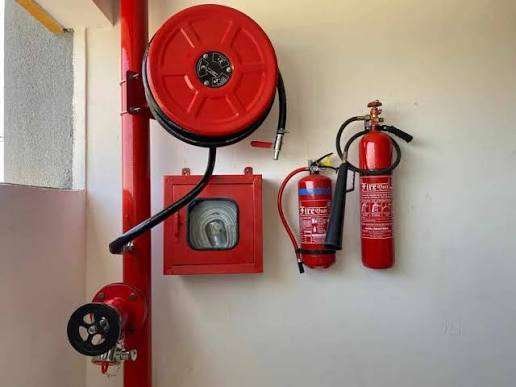
Fire safety is not only about installing fire equipment. It is also about making sure that the equipment remains ready when it is needed. Fire extinguishers, fire alarms, emergency lighting, hydrants, sprinklers, detection systems, and other safety equipment can become less reliable when they are neglected, damaged, poorly maintained, or not tested according to the applicable requirements.
Regular maintenance is therefore an important part of a complete fire-safety program. A well-maintained system can help identify problems early, support faster warning, and reduce the chance that an important safety device will fail when people depend on it.
In Pakistan, fire-safety requirements can vary according to the type of building, occupancy, location, applicable regulations, and the authority having jurisdiction (AHJ). The Building Code of Pakistan Fire Safety Provisions 2016 addresses fire protection, fire alarm systems, means of egress, maintenance, testing, and related safety matters. The Building Code of Pakistan also recognizes fire prevention and property-maintenance requirements for existing buildings and premises.
This guide explains why fire equipment maintenance matters, what should be checked, and how businesses and building owners can develop a practical maintenance approach.
What Is Fire Equipment Maintenance?
Fire equipment maintenance means keeping fire-protection and life-safety equipment in suitable working condition through appropriate inspection, testing, servicing, repair, replacement, and record keeping.
Different equipment requires different maintenance procedures. For example:
– Fire alarm systems require inspection, testing, and professional servicing.
– Fire extinguishers need regular inspection and servicing according to their type and applicable requirements.
– Emergency lights need to remain functional and available during a power failure.
– Fire pumps and hydrant systems require appropriate inspection and testing.
– Sprinkler systems need to remain accessible and free from conditions that could interfere with their operation.
– Exit signs and emergency routes should remain visible and unobstructed.
Maintenance should always follow the manufacturer’s instructions and applicable local requirements. Fire protection is not an area where guessing or improvised repairs are appropriate.
Why Regular Maintenance Matters
A fire-safety system can look perfectly normal while having a hidden problem.
A detector may be dirty. An alarm may have a power problem. Emergency lighting may have a weak battery. An extinguisher may have been damaged or moved from its designated location.
These issues may not be obvious during normal daily activities.
Regular maintenance helps organizations identify such problems before they become more serious.
The Building Code of Pakistan Fire Safety Provisions 2016 includes requirements concerning inspection, testing, servicing, and maintenance of fire alarm systems. It also addresses situations where a required alarm system becomes impaired or cannot be properly serviced or repaired.
This shows an important principle: installation is only the beginning of fire protection.
Common Fire Equipment That Needs Attention
The exact equipment found in a building depends on its size, occupancy, hazards, and design. However, many buildings use several of the following systems.
1. Fire Alarm Systems
A fire alarm system is designed to provide an early warning when a fire or other emergency condition is detected.
Maintenance may involve professional inspection and testing of components such as:
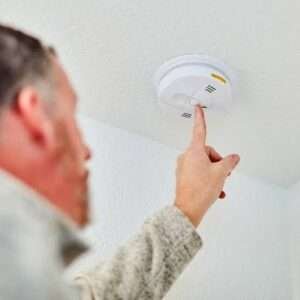
– Smoke detectors
– Heat detectors
– Manual call points
– Alarm sounders
– Visual notification devices
– Control panels
– Backup power supplies
– Monitoring connections
– Associated wiring and equipment
The system should also be checked for faults or abnormal conditions.
The Building Code of Pakistan Fire Safety Provisions 2016 specifically addresses required testing, service, and maintenance of fire alarm systems.
This is particularly important when considering a fire alarm system in Pakistan, because a system that is installed but not properly maintained may not provide the expected level of protection.
2. Fire Extinguishers
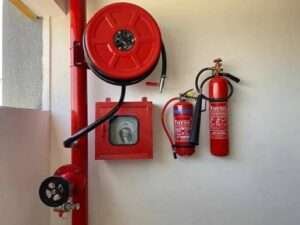
Fire extinguishers are common in homes, offices, shops, factories, schools, hotels, and other buildings.
Routine attention should include checking whether:
– The extinguisher remains in its designated location.
– It is accessible.
– It has visible signs of damage.
– Its identification information remains readable.
– It has not been improperly moved or obstructed.
– Required servicing is up to date.
Only appropriately trained and authorized personnel should carry out technical servicing or refilling.
Employees and residents should not attempt to repair damaged fire equipment themselves.
3. Emergency Lighting
Emergency lighting can help people see escape routes when normal electrical power is unavailable.
Maintenance programs should consider:
– Light operation
– Battery condition
– Physical damage
– Visibility
– Correct positioning
– Testing according to applicable requirements
Emergency lighting is especially important in buildings where corridors, stairs, exits, or other escape routes could become difficult to navigate during a power failure.
4. Exit Signs
Exit signs should remain visible and understandable.
A maintenance check can identify:
– Damaged signs
– Failed illumination
– Obstructions
– Incorrect positioning
– Signs that are difficult to see
Keeping escape routes clearly marked is an important part of overall fire safety. The Building Code of Pakistan Fire Safety Provisions 2016 includes provisions concerning the arrangement and marking of means of egress.
5. Fire Hydrant and Water-Based Systems
Larger buildings may use hydrants, hose systems, sprinkler systems, fire pumps, water storage, and related equipment.
These systems require appropriate technical inspection and testing.
Important concerns can include:
– Accessibility
– Physical condition
– Signs of leakage or damage
– Equipment obstructions
– Pump and control-system condition
– Water-supply arrangements
– Required testing records
The exact maintenance program depends on the system design and applicable standards.
Fire Alarm Maintenance Should Not Be Ignored
Among the many components of a modern fire-protection system, fire alarms deserve particular attention because they are intended to provide early warning.
A neglected alarm system can develop faults that are not immediately obvious.
For example, a system may show a fault indication, lose part of its power supply, experience a damaged component, or develop repeated unwanted alarms.
The Building Code of Pakistan Fire Safety Provisions 2016 addresses impaired fire alarm systems and requires appropriate notification and action when required systems are not fully operational.
Pakistan Engineering Council’s professional engineering classification also recognizes installation, commissioning, maintenance, and repair of fire detection, alarm, suppression systems, and allied equipment as specialized engineering work.
This is why complex fire alarm work should be handled by qualified professionals rather than treated as ordinary electrical maintenance.
A Simple Maintenance Schedule
A useful maintenance program can divide activities into different time periods.
Daily or Routine Observation
Building staff can look for obvious issues such as:
– Blocked access to safety equipment
– Damaged equipment
– Missing extinguishers
– Obstructed exits
– Visible alarm-panel fault indications
– Damaged exit signs
– Emergency equipment being used for storage
These basic observations do not replace professional testing.
Periodic Inspection
More detailed inspections should be carried out according to the equipment manufacturer’s instructions, applicable standards, and local requirements.
The frequency can differ depending on:
– Equipment type
– Building occupancy
– Risk level
– Manufacturer recommendations
– Applicable regulations
– AHJ requirements
There should not be one universal schedule for every building.
Professional Servicing
Technical systems should be serviced by suitably qualified personnel.
Professional servicing can identify problems that are not obvious during a visual inspection.
For complex systems, technicians may inspect components, perform required tests, identify faults, and document the condition of the equipment.
Keep Maintenance Records
Record keeping is sometimes overlooked, but it is an important part of fire-safety management.
A maintenance record can include:
– Equipment name
– Equipment location
– Inspection date
– Testing date
– Identified problems
– Corrective action
– Replacement information
– Technician or service provider
– Next scheduled maintenance
– Relevant test results
The Building Code of Pakistan Fire Safety Provisions 2016 includes requirements concerning records for maintenance, inspections, testing of fire-protection systems, fire alarms, evacuation drills, emergency plans, and related safety equipment where required by the AHJ.
Good records also make it easier to identify repeated problems.
Common Fire Equipment Maintenance Mistakes
Several simple mistakes can reduce the effectiveness of a fire-safety program.
Ignoring Small Faults
A warning light or fault indication may seem minor, but it can indicate a problem that requires professional attention.
Blocking Equipment
Fire extinguishers, alarm controls, exits, hydrants, and other equipment should not be hidden behind furniture, stock, boxes, or other materials.
Moving Equipment Without Updating Records
When equipment is moved, staff may later be unable to find it. Equipment locations should remain clear and properly managed.
Forgetting Backup Power
Many alarm and emergency systems depend on backup power. Battery condition and associated components should be included in the maintenance program.
Relying Only on Visual Inspection
A system can look fine and still have an internal fault. Professional testing is therefore important for equipment that requires technical inspection.
Using Unqualified Repair Services
Fire-protection systems are safety-critical. Poor repairs can create additional problems or leave a system partially operational.
Failing to Document Repairs
If a fault is repaired but there is no record, future maintenance staff may not know what happened or when the issue was resolved.
Maintenance and Fire Safety in Pakistani Buildings
Pakistan has a wide range of buildings, including homes, offices, factories, shopping centers, hospitals, schools, hotels, warehouses, and high-rise structures.
Each type of building can have different fire risks.
For example, an industrial facility may have different hazards from an office building. A hospital may have different evacuation considerations from a shopping center. A high-rise building may require additional fire-protection features because evacuation and emergency access can be more complex.
The Building Code of Pakistan Fire Safety Provisions 2016 provides fire-safety requirements covering areas such as fire alarm systems, means of egress, emergency lighting, high-rise buildings, and other fire-protection measures.
Therefore, maintenance programs should be based on the actual building and its risks rather than simply copying a checklist from another property.
The Role of Building Owners and Managers
Fire equipment maintenance is not only a technician’s responsibility.
Building owners, operators, managers, and occupants all have roles in maintaining a safe environment.
Management should:
– Establish a documented fire-safety program.
– Know what fire equipment is installed.
– Keep maintenance records.
– Arrange professional servicing when required.
– Ensure equipment remains accessible.
– Address reported faults promptly.
– Provide appropriate staff awareness and training.
– Keep emergency exits clear.
– Review fire-safety arrangements when the building or its use changes.
The Building Code of Pakistan recognizes responsibilities related to owners, operators, occupants, existing premises, and fire-safety hazards.
How Maintenance Can Save Money
Maintenance is often viewed as an expense, but prevention can be less costly than dealing with a major equipment failure or fire-related loss.
Regular maintenance can help organizations:
– Detect equipment problems earlier.
– Reduce avoidable replacements.
– Improve system reliability.
– Maintain required safety arrangements.
– Reduce operational disruption.
– Protect buildings and valuable assets.
– Support employee and visitor safety.
The goal is not simply to spend more money on equipment. The goal is to make sure the equipment already installed continues to serve its intended purpose.
Fire Equipment Maintenance Checklist
A basic management checklist can include:
– Fire alarm system condition reviewed
– Alarm faults addressed
– Detectors and notification devices professionally checked as required
– Fire extinguishers accessible
– Extinguishers inspected and serviced according to requirements
– Emergency lighting checked
– Exit signs visible
– Escape routes unobstructed
– Hydrant and water-based systems maintained where installed
– Fire doors and related safety features checked
– Backup power arrangements reviewed
– Maintenance records updated
– Defects documented
– Corrective work completed
– Staff awareness and evacuation arrangements reviewed
This checklist is a management aid, not a replacement for the applicable code, standard, manufacturer’s instructions, or professional inspection.
Choosing a Fire Equipment Maintenance Provider
When professional maintenance is needed, organizations should consider whether the service provider has suitable technical experience and qualifications for the equipment involved.
For specialized fire detection, alarm, and suppression work, Pakistan Engineering Council recognizes ME02 as covering installation, commissioning, maintenance, and repair of fire detection, alarm and suppression systems and allied equipment.
Before engaging a provider, a building owner or manager can ask about:
– Relevant technical experience
– Qualified personnel
– Equipment-specific knowledge
– Testing procedures
– Maintenance documentation
– Replacement-part availability
– Emergency support arrangements
– Compliance with applicable requirements
The right provider should be able to explain what is being inspected and why.
Why Small Maintenance Actions Make a Big Difference
Fire safety depends on many connected elements.
An alarm must be able to detect and warn. Escape routes must remain usable. Emergency lighting must work when needed. Fire equipment must be accessible. Water-based systems must remain ready where installed. Staff should understand emergency procedures.
If one part is neglected, the overall safety arrangement can become weaker.
That is why regular maintenance should be viewed as an ongoing safety responsibility rather than a one-time project.
For organizations searching for information about a fire alarm system in Pakistan, maintenance should be considered alongside installation, system design, testing, emergency planning, and staff awareness.
Conclusion
Fire equipment maintenance is one of the simplest ways to strengthen a building’s overall fire-safety program.
The purpose is not only to keep equipment looking clean or organized. The real objective is to ensure that important safety systems remain available, accessible, and functional according to their intended purpose.
Regular inspections, professional servicing, proper records, timely repairs, and staff awareness can all contribute to a stronger fire-safety environment.
Whether a building contains a fire alarm system, extinguishers, emergency lighting, hydrants, sprinklers, or several types of equipment, maintenance should never be treated as an optional extra.
A small investment in regular maintenance can help identify problems before an emergency occurs—and that is where the real difference can be made.
Frequently Asked Questions
1. Why is fire equipment maintenance important?
Fire equipment can develop faults, damage, or other problems over time. Regular maintenance helps identify these issues and keeps safety equipment in suitable working condition.
2. How often should fire equipment be maintained?
There is no single schedule that applies to every type of equipment or every building. Maintenance frequency depends on the equipment, manufacturer instructions, applicable standards, building risks, and local requirements.
3. Does a fire alarm system need professional maintenance?
Complex fire alarm systems should be inspected, tested, serviced, and repaired by suitably qualified personnel according to applicable requirements and manufacturer instructions. Pakistan Engineering Council recognizes specialized professional work covering installation, commissioning, maintenance, and repair of fire detection and alarm systems.
4. Should fire equipment maintenance be recorded?
Yes. Maintaining clear records of inspections, tests, servicing, faults, repairs, and other relevant activities helps organizations manage their fire-safety program and demonstrate that maintenance activities have been addressed where required.
5. Who is responsible for fire equipment maintenance?
Responsibility can involve building owners, operators, managers, occupants, and qualified maintenance providers, depending on the building and applicable requirements. Management should ensure that required equipment is maintained and that identified problems are addressed promptly.