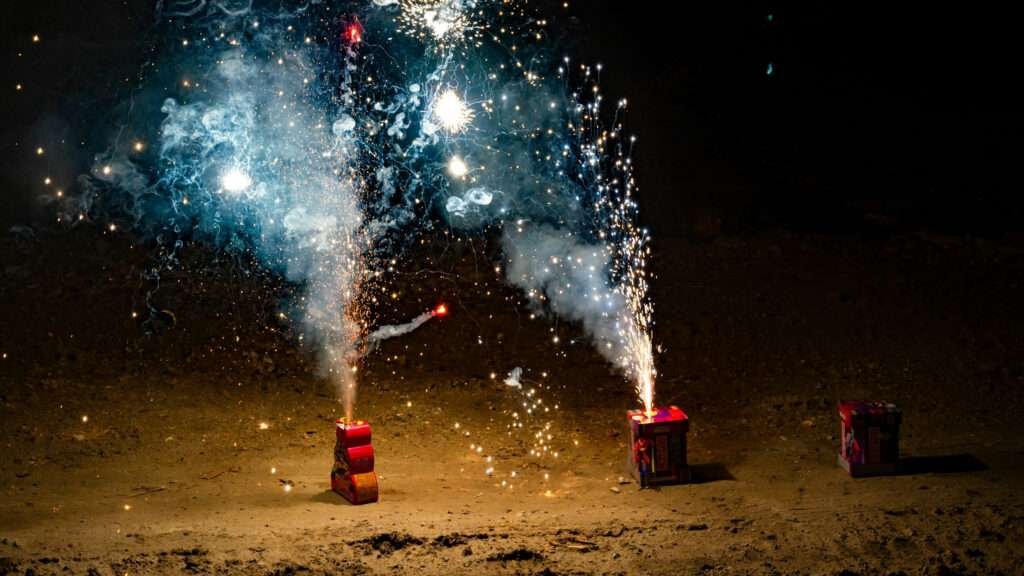
Fireworks are often associated with celebrations, weddings, festivals, national events, and other special occasions. Their bright colors and loud sounds can make an event memorable, but fireworks also introduce significant fire and safety risks when they are not properly controlled.
In Pakistan, fireworks may be seen at weddings, public celebrations, festivals, private functions, and organized events. Their use can involve fire, heat, sparks, smoke, temporary electrical arrangements, crowds, combustible decorations, and nearby buildings. Because of these factors, fireworks should never be treated as ordinary decorations.
Safe event planning starts with understanding the risks. Fire safety is not only about having firefighting equipment available after something goes wrong. It also involves prevention, suitable event locations, professional supervision, emergency access, crowd management, early warning systems, and clear evacuation arrangements.
The Pakistan Engineering Council’s Building Code of Pakistan Fire Safety Provisions 2016 allows authorities having jurisdiction to regulate outdoor events in relation to emergency-vehicle access, fire-protection equipment, temporary structures, hazardous conditions, crowd movement, and other life-safety considerations. The provisions also identify fire alarms, emergency lighting, public-address systems, and fire-department access as important elements of event safety planning.
This article explains the important principles of fireworks and event fire safety in simple English, with a focus on prevention and responsible planning.
1. Fireworks Are a Fire Hazard
Fireworks involve combustion and high temperatures. That means they can create a fire risk even when an event appears to be under control.
Potential hazards can include:
– Ignition of dry vegetation
– Fires involving decorations
– Damage to temporary structures
– Smoke affecting visibility
– Sparks reaching unsuitable areas
– Crowd panic
– Fire spreading to nearby property
– Electrical hazards at event locations
The level of risk depends on the environment, event size, surrounding materials, weather, crowd density, and other factors.
For this reason, fireworks should be treated as a specialized event-safety issue rather than simply another form of entertainment.
2. Professional Planning Is Important
Fireworks displays should be planned and managed by appropriately qualified and responsible adults or professional event personnel.
Young people should not be responsible for handling fireworks or attempting to organize their use.
Professional planning can consider the event location, surrounding structures, audience position, emergency access, weather conditions, fire-protection arrangements, and applicable local requirements.
The purpose is to reduce the possibility of an incident and make sure that emergency arrangements are available if something goes wrong.
3. Check Local Requirements
Fireworks and public events may be subject to local rules, permissions, restrictions, or requirements.
Requirements can differ depending on the city, province, venue, type of event, and circumstances.
Event organizers should therefore check with the appropriate local authorities and venue management before planning a fireworks-related event.
The Pakistan Fire Safety Provisions recognize the authority of the relevant authority having jurisdiction to regulate outdoor events and address conditions that could endanger life or property.
Following applicable requirements is an important part of responsible event planning.
4. Choose the Event Location Carefully
The surrounding environment can strongly affect fire risk.
A suitable event location should be evaluated for nearby:
– Buildings
– Trees and vegetation
– Electrical infrastructure
– Fuel or combustible materials
– Temporary structures
– Parking areas
– Crowded spaces
– Emergency access routes
The location should also allow emergency responders to reach the event if necessary.
A location that appears spacious may still contain hazards that are not obvious to ordinary visitors.
5. Keep Crowds Away From Fire Hazards
Crowd management is an important part of event safety.
Guests should have clearly defined areas where they can safely watch an organized display without entering restricted areas.
The Pakistan Fire Safety Provisions specifically identify access and egress movement, crowd management, fire hazards, temporary structures, and emergency-response relationships as factors in event life-safety evaluations.
Event staff should be responsible for managing restricted areas rather than expecting guests to understand technical safety boundaries themselves.
6. Never Treat Fireworks as Toys
Fireworks should never be treated as toys or ordinary party decorations.
Their ability to produce heat, flames, sparks, and smoke means that inappropriate handling can create serious hazards.
Children and teenagers should not handle fireworks. Adults responsible for an event should follow applicable laws, venue rules, and professional safety requirements.
For younger guests, the safest approach is to watch organized displays from an appropriate location under responsible adult supervision.
7. Keep Combustible Materials Away From Fire Hazards
Wedding and event venues often contain materials that can burn.
These may include:
– Fabric decorations
– Paper decorations
– Artificial flowers
– Wooden structures
– Packaging materials
– Dry vegetation
– Temporary stage materials
– Furniture
Event organizers should assess the surroundings and ensure that combustible materials are not unnecessarily exposed to sources of heat, sparks, or flame.
Decorations should also never block emergency exits or fire-safety equipment.
8. Dry Conditions Increase Fire Concerns
Dry vegetation and other easily ignited materials can increase the consequences of an accidental fire.
Outdoor event organizers should consider the condition of the surrounding area, particularly during hot or dry weather.
Weather conditions can also change during an event. Wind may influence the movement of smoke or sparks and can make a fire more difficult to control.
The Pakistan Fire Safety Provisions include severe weather conditions among the factors that may be considered in an event life-safety evaluation.
9. Weather Should Be Considered Before an Event
Weather is an important part of outdoor event planning.
Strong winds, extreme heat, dry conditions, rain, or other weather changes can affect event safety.
A responsible event plan should include a process for reviewing weather conditions and deciding whether the planned activity remains appropriate.
This decision should be made by responsible adults and event professionals rather than by guests.
10. Keep Emergency Access Clear
Emergency vehicles need suitable access to an incident.
Large events can create obstacles through:
– Parked vehicles
– Temporary stalls
– Stages
– Decorations
– Tents
– Crowds
– Equipment
Event organizers should ensure that designated emergency access routes are not unnecessarily blocked.
The Pakistan Fire Safety Provisions specifically identify fire-department access and emergency-vehicle access as important considerations for applicable events.
11. A Fire Alarm System Adds an Important Safety Layer
Fire detection and alarm systems can provide early warning when a fire develops in or around a building.
A Fire alarm system in Pakistan can include smoke detectors, heat detectors, manual alarm devices, control panels, audible alarms, visual notification devices, backup power, and related equipment depending on the building’s requirements.
The appropriate system depends on the type of property, occupancy, layout, fire risks, and applicable safety requirements.
For an event taking place inside a building, the existing fire alarm system should remain operational and accessible.
12. Never Disable a Fire Alarm for an Event
Event decorations, lighting, smoke effects, or temporary arrangements should not be allowed to compromise life-safety systems.
Fire alarm equipment should not be covered, disconnected, blocked, or deliberately disabled simply because it may be inconvenient during an event.
If an event setup could affect a detector or other fire-safety equipment, the matter should be reviewed by qualified professionals.
A fire alarm is designed to provide warning when people may have little or no other indication that a fire has started.
13. Understand the Role of Emergency Lighting
An event may continue into the evening or take place in a location where lighting is important for safe movement.
If normal power is interrupted, people may have difficulty identifying exits and moving through crowded areas.
Emergency lighting can help people identify escape routes during an emergency.
The Pakistan Fire Safety Provisions identify emergency power and lighting as part of life-safety planning for applicable event facilities.
14. Keep Emergency Exits Clear
A crowded event can quickly become difficult to manage if exits are blocked.
Event organizers should ensure that designated exits, corridors, stairs, and other escape routes remain accessible.
Items such as chairs, boxes, decorations, equipment, or temporary displays should not unnecessarily obstruct emergency routes.
Exit signs should remain visible, and staff should know the designated evacuation routes.
15. Plan for an Emergency Before the Event
A good event plan should consider what happens if a fire or other emergency occurs.
The plan can identify:
– Emergency contacts
– Evacuation routes
– Assembly arrangements
– Staff responsibilities
– Emergency access
– Communication procedures
– Assistance for people who need additional support
– Coordination with emergency responders
The Pakistan Fire Safety Provisions require applicable event-management and operational plans to address emergency planning and recognized safety practices.
16. Staff Should Know Their Responsibilities
Event staff are often the first people guests look to when something unexpected happens.
Staff should understand the venue’s emergency procedures and know who is responsible for contacting emergency services, guiding guests, communicating information, and coordinating with responders.
Training should be appropriate to the person’s role.
Young guests should not be given responsibility for managing a fire emergency.
17. Do Not Attempt to Handle a Firework Accident
If a firework fails to behave as expected or an accident occurs, people should not approach or attempt to manipulate the item.
The safest response is to move away, keep other people away from the hazard, notify responsible adults or event personnel, and seek professional assistance when necessary.
Attempting to investigate or modify a potentially hazardous firework can create additional risk.
18. Keep Children Away From Firework Areas
Children are naturally curious and may want to get closer to fireworks.
Event organizers and parents should ensure that children remain in appropriate spectator areas and do not enter restricted zones.
Children should never be asked to carry, inspect, modify, or manage fireworks.
A safe event should make the boundaries clear and have responsible adults supervising the crowd.
19. Consider Nearby Buildings
Fireworks do not exist in isolation.
A display near a building should be planned with the surrounding environment in mind.
Nearby buildings may contain:
– Windows
– Balconies
– Roof structures
– Decorative materials
– Air-conditioning equipment
– Electrical equipment
– Combustible materials
Event professionals should consider these surroundings when assessing whether a proposed display is appropriate.
20. Be Careful With Temporary Structures
Weddings and outdoor events often use marquees, tents, stages, booths, temporary seating, and decorative structures.
These structures can influence crowd movement and emergency evacuation.
The Pakistan Fire Safety Provisions specifically identify permanent and temporary structural systems as part of event life-safety evaluation.
Temporary structures should therefore be included in the overall safety assessment rather than treated as separate from the event.
21. Electrical Safety Still Matters
Fireworks events may also involve extensive electrical equipment.
Lighting, speakers, displays, generators, decorative installations, and other equipment can create additional electrical hazards if poorly installed or maintained.
Electrical work should be handled by qualified professionals.
Damaged cables, unusual smells, sparks, overheating equipment, or other warning signs should be reported immediately to responsible adults or event management.
22. Do Not Mix Fire Hazards With Poor Event Management
A fireworks display should not be combined with careless crowd management.
Event organizers should maintain clear communication between the people responsible for the display, venue management, security personnel, and emergency staff.
The Pakistan Fire Safety Provisions specifically recognize the relationship among facility management, event participants, and emergency-response agencies as part of event life-safety planning.
Good coordination can help prevent confusion during an emergency.
23. Have Fire-Protection Equipment Available
Appropriate fire-protection equipment may be required depending on the event, venue, and applicable requirements.
Equipment can include fire extinguishers, alarm systems, emergency lighting, sprinkler protection, or other systems.
The exact equipment should be determined through professional assessment rather than simply choosing equipment based on appearance or price.
Equipment should also be inspected and maintained.
24. Emergency Services Should Be Part of Planning
Emergency responders need to be able to reach an event quickly if an incident occurs.
Event organizers should know the appropriate local emergency contact arrangements and make sure staff understand how an emergency will be reported.
In Punjab, Rescue 1122 provides fire and rescue services and lists 1122 as its emergency number. Its official community-safety program also focuses on emergency preparedness, prevention, and safer communities.
Emergency arrangements may differ across Pakistan, so organizers should follow the procedures applicable to their location.
25. Have a Clear Evacuation Plan
If a fire occurs, guests need to know where to go.
An evacuation plan should consider the venue’s exits, crowd capacity, assembly area, accessibility requirements, staff responsibilities, and emergency communication.
Guests should be directed away from danger and toward designated safe areas.
People should not return to an affected area until responsible authorities or emergency personnel indicate that it is safe.
26. Fire Drills Can Improve Preparedness
Fire drills are useful for helping staff understand emergency procedures.
For large venues and organizations, appropriate exercises can help identify problems such as unclear responsibilities, blocked routes, poor communication, or inadequate signage.
Rescue 1122’s community-safety program includes training and preparedness activities designed to improve community safety and emergency response.
Any exercise should be professionally planned so that it does not create unnecessary danger.
27. Do Not Rely on a Single Safety Measure
Fire safety works best as a layered approach.
For an event, layers can include:
– Prevention
– Professional event planning
– Fire detection
– Alarm notification
– Emergency lighting
– Clear exits
– Crowd management
– Fire-protection equipment
– Trained staff
– Emergency access
– Communication with responders
If one layer does not perform as expected, other layers can still help reduce the consequences of an emergency.
28. Fire Alarm Maintenance Is Important
For indoor venues, an alarm system should be professionally inspected and maintained.
Maintenance may include appropriate checks of detectors, alarm devices, control panels, backup power, wiring, and fault indicators.
A system that has not been maintained should not automatically be assumed to provide reliable protection.
A Fire alarm system in Pakistan should be considered part of an ongoing fire-safety program rather than a one-time installation.
29. Prepare for More Than Fireworks
A well-planned event should consider other emergencies too.
The Pakistan Fire Safety Provisions identify medical emergencies, severe weather, hazardous materials incidents, crowd movement, and other conditions among factors that can be considered in event life-safety planning.
This broader approach is important because a large event can face several types of emergencies.
Good planning therefore considers the entire event environment rather than focusing only on the fireworks display.
30. Fireworks Safety Checklist
A general safety review for an organized event can include:
Before the Event
– Check applicable local requirements.
– Use responsible adult or professional event management.
– Assess the event location.
– Review weather conditions.
– Identify nearby buildings and hazards.
– Confirm emergency access.
– Check evacuation arrangements.
Venue Safety
– Keep exits clear.
– Check emergency lighting.
– Ensure alarm systems are operational.
– Keep fire-protection equipment accessible.
– Review temporary structures.
– Check electrical installations.
Crowd Safety
– Establish suitable spectator areas.
– Keep restricted areas controlled.
– Ensure staff understand their responsibilities.
– Consider children and people requiring additional assistance.
– Maintain clear communication.
Emergency Preparedness
– Keep emergency contacts available.
– Establish an evacuation procedure.
– Identify an assembly area.
– Coordinate with venue management.
– Make sure staff know how to report an emergency.
This checklist is a general guide and does not replace professional fire-safety assessment or applicable local requirements.
31. The Importance of Responsible Event Planning
Fireworks can be part of a celebration, but safety should always come first.
The safest event is one where potential hazards have been considered before guests arrive. Professional supervision, suitable locations, crowd management, emergency planning, fire detection, and clear escape routes can all contribute to safer celebrations.
Organizers should also remember that safety decisions may depend on local conditions and regulations.
Final Thoughts
Fireworks can add excitement to celebrations, but they involve genuine fire and safety risks. Responsible planning is therefore essential.
The safest approach is not to focus only on the fireworks themselves. Event organizers should consider the entire environment, including the venue, crowd, temporary structures, decorations, electrical systems, weather, emergency access, fire alarms, emergency lighting, evacuation routes, and communication with emergency services.
A Fire alarm system in Pakistan can provide an important early-warning layer for buildings and event venues, but an alarm system alone cannot make an event safe. It needs to work together with prevention, professional planning, appropriate fire-protection equipment, clear evacuation arrangements, and trained responsible personnel.
Pakistan’s Building Code of Pakistan Fire Safety Provisions 2016 recognizes the importance of fire hazards, crowd movement, emergency access, temporary structures, fire alarms, emergency lighting, and coordination with emergency-response agencies when evaluating applicable outdoor events.
Rescue 1122 also emphasizes prevention, preparedness, and community safety as important parts of reducing emergency risks.
The key lesson is simple: fireworks should be treated as a professional event-safety issue, not as a casual activity. Keeping spectators away from hazardous areas, maintai