Children are naturally curious about the world around them. They may be interested in candles, cooking, heaters, electrical appliances, fireplaces, fireworks, or other sources of heat. This curiosity is normal, but it also means that parents, teachers, and caregivers should teach children basic fire and burn safety from an early age.
Burns can happen quickly. Hot liquids, steam, flames, hot surfaces, electrical equipment, and chemicals can all cause injuries. Scalds from hot liquids are particularly important to consider because they are a common cause of burns in children.
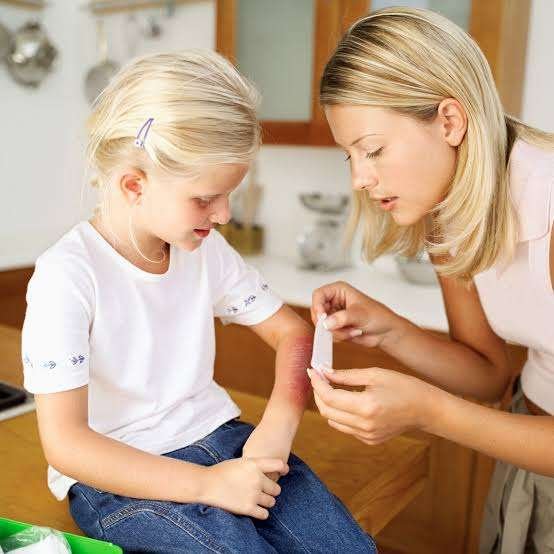
Teaching children about burn first aid does not mean expecting them to treat serious injuries themselves. Children should learn simple safety principles, recognize when an adult is needed, and understand how to get help quickly.
Adults should remain responsible for emergency first aid and medical decisions. Children should never be encouraged to approach a fire, handle dangerous equipment, or investigate an unknown hazard.
A complete fire-safety plan also includes prevention and early warning. A properly designed Fire alarm system in Pakistan can help warn building occupants when a fire is detected, giving families and other occupants an opportunity to follow their emergency plan.
This guide explains the basics of teaching children about burn first aid in simple language.
1. Start With Prevention
The best burn injury is one that never happens.
Children should learn to recognize that things such as hot water, cooking appliances, flames, irons, heaters, and electrical equipment can be dangerous.
Parents and caregivers can teach simple rules such as:
– Do not touch hot objects.
– Stay away from open flames.
– Never play with matches or lighters.
– Do not touch electrical equipment with wet hands.
– Ask an adult for help around hot appliances.
– Never approach an unknown fire.
– Tell an adult immediately if something catches fire.
These simple lessons can help children understand that fire and heat require respect and caution.
2. Explain Burns in Simple Language
Children do not need complicated medical terminology.
A simple explanation is enough: a burn happens when heat, electricity, chemicals, or another harmful source damages the skin or body.
Burns can range from minor injuries to serious medical emergencies.
Children should understand that the appearance of a burn does not always tell the full story. A burn that looks small can sometimes require medical attention depending on its location, depth, cause, or symptoms.
3. Teach Children to Get an Adult Immediately
One of the most important lessons is knowing when to ask for help.
If a child gets burned, the child should immediately tell a parent, teacher, caregiver, or another responsible adult.
Children should not try to decide on their own whether an injury is serious.
A simple message for children is:
“If you get burned, stop and tell an adult.”
This is especially important for younger children who may not understand the seriousness of an injury.
4. Teach Children to Move Away From Danger
If a burn happens because of a fire, hot object, or other hazard, the first priority is getting away from the source of danger without putting themselves or others at risk.
Children should never be told to go back toward a fire to investigate what happened.
If there is an active fire, the child should follow the building’s emergency procedure, move away from danger, and seek help from responsible adults.
If a fire alarm sounds, children should follow instructions from teachers, parents, caregivers, or trained staff.
5. Cool Running Water Is an Important First-Aid Principle
For many minor thermal burns, recognized burn-care guidance recommends cooling the affected area with clean, cool running water rather than ice.
The NHS advises cooling a burn or scald under cool running water for 20 minutes. The American Burn Association similarly recommends cool, not cold or icy, running water for minor burns.
For children, an adult should supervise this process.
The goal is to cool the injured area while avoiding making the child excessively cold.
6. Do Not Use Ice on a Burn
One common mistake is putting ice directly on a burn.
This should be avoided. The American Burn Association advises against ice because it can cause additional damage to injured skin.
Children may hear advice from friends or see home remedies online, so it is useful to teach them that not every traditional remedy is safe.
The safest lesson is simple:
“For a burn, tell an adult and use cool running water rather than ice.”
7. Avoid Butter, Oil, Toothpaste, and Home Remedies
Many families have heard traditional suggestions for treating burns with household substances.
However, recognized burn-care guidance advises against using substances such as butter, oil, or similar home remedies on burns. The NHS also specifically advises against applying ice, butter, toothpaste, creams, gels, oils, or ointments to a fresh burn.
Children should therefore be taught not to experiment with household products on an injury.
An adult should provide appropriate first aid and decide whether professional medical attention is needed.
8. Do Not Break Blisters
Some burns can produce blisters.
Children may naturally want to touch or break them because they look unusual.
They should be taught not to break burn blisters themselves.
The American Burn Association advises leaving blisters intact because breaking them can increase the risk of complications.
If a blistered burn is significant or concerning, an adult should seek appropriate medical advice.
9. Be Careful With Clothing
Clothing or jewelry near a burn may become uncomfortable as swelling develops.
An adult may carefully remove loose clothing or jewelry near the injured area, but anything stuck to burned skin should not be forcibly removed.
The NHS advises removing nearby clothing or jewelry while leaving anything stuck to the affected skin in place.
Children should not attempt to pull stuck material away from a serious burn.
10. Covering a Burn Can Protect It
After appropriate cooling, a minor burn may be covered loosely with a clean, non-fluffy covering or appropriate dressing.
The purpose is to protect the injured area from contamination and further irritation.
An adult should handle this step, particularly with children.
For larger or more serious burns, professional medical assessment is more important than attempting extensive home treatment.
11. Know When a Burn Needs Medical Attention
Children and parents should understand that some burns require professional medical care.
The American Burn Association recommends medical attention for burns that are large or deep, involve areas such as the face, hands, feet, or major joints, or are associated with breathing problems, numbness, or severely damaged-looking skin.
Medical evaluation is also important when an adult is unsure about the severity of a child’s injury.
When in doubt, it is safer to seek professional medical advice rather than relying on guesswork.
12. Burns to the Face Need Extra Attention
A burn involving the face deserves particular attention.
Facial burns can involve sensitive areas and may sometimes be associated with smoke or heat exposure.
Children should not be expected to assess such injuries themselves.
An adult should seek professional medical advice promptly when a child has a significant facial burn or other concerning symptoms.
13. Breathing Problems Are an Emergency Concern
Fire emergencies can involve smoke as well as flames.
Difficulty breathing, coughing after smoke exposure, or other breathing problems should be treated seriously.
The American Burn Association lists trouble breathing and signs of smoke inhalation among situations requiring medical attention.
Children should know that if they have difficulty breathing after a fire or smoke exposure, they need immediate adult help.
14. Teach Children About Hot Drinks
Hot drinks are a common source of scald injuries.
Tea, coffee, soup, boiling water, and other hot liquids can cause serious burns.
Children should learn:
– Do not pull cups from tables.
– Do not carry containers of very hot liquid without adult help.
– Stay away from kettles and pots.
– Do not touch hot cooking surfaces.
– Tell an adult if a hot liquid spills.
Young children are particularly vulnerable to scald injuries because their skin can be damaged by hot liquids relatively quickly.
15. Kitchen Safety Should Be Part of Burn Education
The kitchen contains many potential burn hazards.
Children should understand that ovens, stoves, pans, kettles, hot liquids, and steam can cause injuries.
Younger children should not be responsible for operating cooking equipment.
Adults should supervise children around cooking areas and keep hazardous hot objects out of children’s reach whenever practical.
Teaching children these boundaries is more useful than simply telling them that the kitchen is “dangerous.”
16. Teach Children About Electrical Burns
Electrical injuries can be serious.
Children should never put objects into electrical outlets or touch damaged electrical equipment.
They should also avoid electrical appliances when their hands are wet.
If a child sees exposed wiring, damaged plugs, sparks, or unusual electrical behavior, the correct response is to move away and tell an adult.
Electrical repairs should be handled by qualified professionals.
17. Teach Children About Chemical Burns
Some household and industrial chemicals can damage skin or eyes.
Children should never experiment with cleaning products, chemicals, batteries, or unknown substances.
Chemical burns can require specialized medical attention. The American Burn Association advises immediate rinsing with running water for chemical exposures and recommends medical help for serious or uncertain exposures.
Chemical products should be stored securely and handled by responsible adults.
18. Fire Safety and Burn First Aid Work Together
Burn first aid is important, but prevention is even better.
A complete fire-safety approach combines:
– Safe behavior
– Adult supervision
– Fire prevention
– Smoke detection
– Fire alarms
– Emergency planning
– Clear escape routes
– Appropriate first aid
– Professional medical care when needed
Children should understand that first aid is what happens after an injury. Fire prevention and emergency preparedness aim to prevent the injury from happening in the first place.
19. The Role of a Fire Alarm System
A Fire alarm system in Pakistan can provide an important early-warning layer in homes, schools, offices, apartments, and other buildings where a fire alarm is appropriate or required.
A system can include devices such as:
– Smoke detectors
– Heat detectors
– Manual alarm devices
– Control panels
– Audible alarms
– Visual notification devices
– Backup power
The exact system depends on the building’s design, occupancy, hazards, and applicable requirements.
Pakistan’s Building Code of Pakistan Fire Safety Provisions 2016 states that fire alarm systems should be provided where necessary to warn occupants in buildings where the fire itself may not provide adequate warning.
20. Teach Children What a Fire Alarm Sounds Like
Children should know that a fire alarm is a serious warning.
At school, parents and teachers can explain that an alarm means they should follow the established emergency procedure.
Children should not:
– Ignore the alarm
– Hide because they are frightened
– Return for belongings
– Use the alarm as a joke
– Tamper with alarm equipment
Instead, they should listen to responsible adults and follow the building’s evacuation procedure.
21. Practice Emergency Evacuation
Children often respond better to emergencies when they have practiced what to do beforehand.
Schools and families can teach children:
– Where the nearest safe exit is
– Who they should stay with
– Where the assembly area is
– Who they should listen to
– Why they should not go back inside
Practice should be calm and age-appropriate.
The objective is to build familiarity, not fear.
22. Never Ask a Child to Fight a Fire
Children should not be responsible for extinguishing fires.
Even if a child knows that a fire extinguisher exists, an active fire can change rapidly.
The safer lesson is:
Alert an adult, move away from danger, and follow the emergency plan.
Firefighting should be left to appropriately trained adults and emergency responders.
23. Make First Aid Lessons Age-Appropriate
A five-year-old and a teenager do not need exactly the same lesson.
For younger children, basic messages may be enough:
– Fire is hot.
– Do not touch hot objects.
– Tell an adult if you are hurt.
– Move away from danger.
– Listen when the fire alarm sounds.
Older children can learn more about burn prevention, emergency communication, evacuation, and why certain first-aid steps are recommended.
The goal is useful knowledge without giving children responsibilities that belong to adults.
24. Teach Children What Not to Do
Sometimes knowing what not to do is just as important.
Children should learn not to:
– Put ice directly on burns
– Apply household remedies without adult guidance
– Break blisters
– Pull stuck clothing from burned skin
– Approach an active fire
– Touch damaged electrical equipment
– Handle chemicals
– Return to a building during a fire
– Hide an injury from adults
These rules can help reduce additional harm.
25. Parents Should Keep Emergency Information Available
Parents and caregivers should know how to obtain medical assistance in their area.
Emergency contacts should be easily available, particularly in homes, schools, childcare settings, and community facilities.
If a child suffers a serious burn, adults should seek appropriate emergency medical assistance rather than relying solely on internet advice.
The severity and location of the burn can affect the level of care required.
26. Teachers Have an Important Role
Schools are important places for teaching children about fire and burn safety.
Teachers can explain:
– What a fire alarm means
– How to evacuate
– Why children should not play with fire
– How to identify common burn hazards
– Why adults should be told immediately after an injury
School fire drills should be conducted according to the school’s emergency procedures and appropriate safety requirements.
27. Do Not Scare Children to Teach Them Safety
Fire safety education should be serious without being frightening.
Children can learn safety rules through simple explanations, demonstrations by responsible adults, classroom discussions, and age-appropriate drills.
The message should be:
“Fire can hurt you, but knowing what to do can help keep you safe.”
This encourages children to seek help rather than panic.
28. Burn Prevention at Home
Families can reduce common risks by taking practical precautions.
Examples include:
– Keeping hot liquids away from children’s reach
– Supervising children in kitchens
– Keeping matches and lighters inaccessible
– Maintaining electrical equipment
– Keeping heaters away from combustible materials
– Storing chemicals safely
– Using functioning smoke alarms where appropriate
– Keeping escape routes clear
Prevention reduces the need for emergency first aid in the first place.
29. Fire Alarms Need Maintenance
Installing a fire alarm is only one part of fire protection.
The system needs appropriate inspection, testing, and maintenance so that faults can be identified and corrected.
A Fire alarm system in Pakistan should be selected and maintained according to the building’s requirements and applicable safety provisions.
Building owners and managers should use appropriately qualified professionals for technical installation and maintenance.
30. Create a Family Fire-Safety Plan
Families can make fire safety easier for children by having a simple emergency plan.
The plan can include:
– A safe way to leave the home
– A family meeting point
– Important emergency contacts
– Rules about smoke alarms
– Instructions for children
– A clear rule not to return inside
The plan should be reviewed periodically, especially when children grow older or the household changes.
31. Teach Children to Report Hazards
Children can contribute to prevention without being responsible for fixing dangerous problems.
For example, if they notice:
– Smoke
– Burning smells
– Damaged electrical equipment
– Matches or lighters left where children can reach them
– A blocked exit
– A damaged alarm
they should tell a responsible adult.
They should never attempt repairs themselves.
32. Common Burn-First-Aid Mistakes
Some common mistakes include putting ice on burns, applying household substances, breaking blisters, or delaying medical attention for a serious injury.
Recognized burn-care guidance specifically advises against ice and against breaking blisters.
Teaching children and caregivers about these mistakes can help them respond more appropriately.
33. When Professional Medical Care Is Especially Important
Professional medical assessment is particularly important for burns that are:
– Large
– Deep
– On the face
– On the hands
– On the feet
– Over major joints
– Associated with breathing problems
– Caused by electricity
– Caused by chemicals
– Associated with severe pain or concerning symptoms
The American Burn Association identifies these kinds of circumstances as reasons to seek medical attention.
An adult should make the decision about obtaining medical care.
34. Burn First Aid Is Not a Replacement for Prevention
First aid can reduce further injury after a burn, but prevention remains the strongest approach.
Families, schools, and community organizations can reduce risk by combining:
– Fire-safety education
– Safe supervision
– Appropriate alarms
– Safe electrical practices
– Kitchen safety
– Emergency planning
– Clear evacuation procedures
Children should understand that first aid is important, but avoiding the hazard is even better.
35. Simple Burn-Safety Lessons for Kids
Parents and teachers can repeat a few simple messages regularly:
Stop: Move away from the source of danger.
Tell: Immediately tell a responsible adult about the injury.
Cool: For an appropriate minor thermal burn, an adult can cool the area with cool running water rather than ice.
Protect: Keep the injured area clean and protected according to appropriate first-aid guidance.
Get Help: Serious, large, deep, or concerning burns need professional medical attention.
These simple concepts are easier for children to remember than complicated medical instructions.
36. Fire Safety Education Should Continue as Children Grow
Fire-safety education should not be a one-time conversation.
As children grow, they encounter new environments and responsibilities.
Younger children may need to learn about hot objects and smoke alarms. Older children can learn more about emergency planning, safe evacuation, electrical hazards, and how to contact responsible adults during an emergency.
Repeated education helps make safe behavior familiar.
Final Thoughts
Teaching kids about burn first aid is primarily about giving them simple, safe knowledge and helping them understand when to seek adult assistance.
Children should learn that burns can happen from hot liquids, flames, steam, hot surfaces, electricity, and chemicals. They should also understand that an injury should be reported immediately to a responsible adult.
For appropriate minor thermal burns, recognized guidance recommends cooling the affected area with cool running water rather than ice. Household remedies such as butter or toothpaste should not be applied, and blisters should not be deliberately broken.
Serious or concerning burns require professional medical assessment, particularly when they are large, deep, involve important areas such as t