
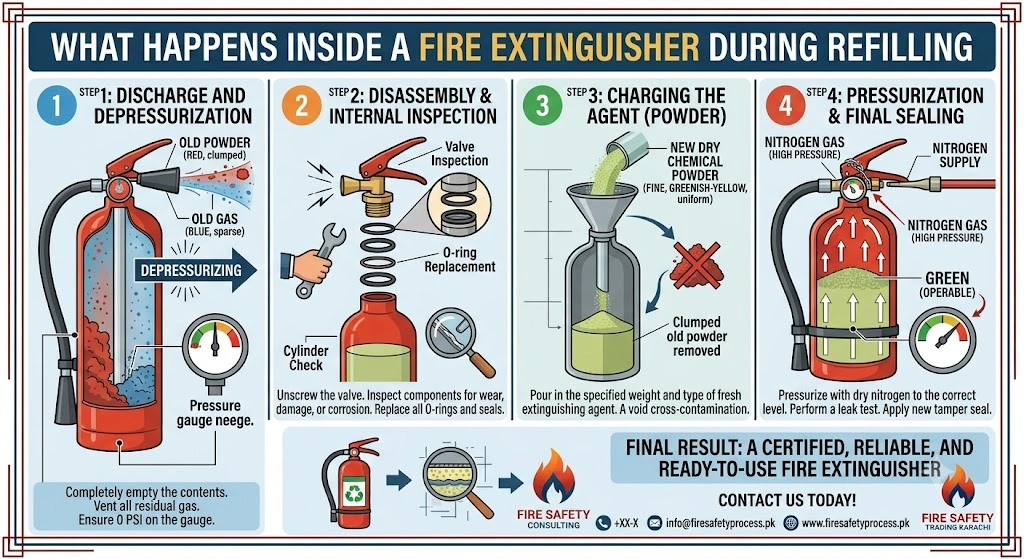
If you run a shop, office, factory, or home in Karachi, you already know that fire extinguishers are not a “buy once and forget” item. They need regular refilling to stay ready for an emergency. But most people have never seen what actually happens inside the cylinder once it goes into a technician’s hands. This guide walks you through the entire refilling process step by step, in simple language, so you know exactly what you are paying for and why it matters.
Whether you own a single extinguisher at home or manage dozens across a commercial building, understanding this process helps you make smarter safety decisions and avoid the risks of using an expired or poorly serviced unit.
Why Fire Extinguishers Need Refilling in the First Place
Fire Safety Trading (Pvt)
ToggleA fire extinguisher is a pressurized device. Over time, the pressure inside can drop, the extinguishing agent (powder, foam, or gas) can settle or lose effectiveness, and internal seals can wear out. None of this is visible from the outside, which is exactly why refilling and inspection are so important.
In a city like Karachi, where extinguishers are often kept in warehouses, workshops, retail stores, and vehicles exposed to heat and dust, wear and tear happens faster than in a controlled, air-conditioned environment. This makes routine servicing even more critical for local businesses.
Step 1: Inspection Before Anything Is Touched
Before a technician opens the cylinder, they check the outer body for dents, rust, corrosion, or damage to the valve and hose. They also check the pressure gauge, if the extinguisher has one, to see whether it has actually dropped below the operating range.
This first inspection decides whether the unit is safe to refill or whether it needs to be condemned and replaced. A cylinder with severe corrosion or a cracked body is not refilled; it is retired for safety reasons.
Step 2: Depressurizing and Opening the Cylinder
The remaining pressure inside the cylinder is safely released. This is a controlled process, not something that should ever be done by an untrained person, since sudden pressure release can be dangerous. Once depressurized, the valve assembly is removed from the cylinder body.
Step 3: Removing the Old Extinguishing Agent
Depending on the type of extinguisher, the old agent is removed differently:
- ABC Dry Powder: The old powder is emptied out completely, since powder can clump or absorb moisture over time, reducing its effectiveness.
- CO2 extinguishers: The gas is released and the cylinder is weighed to confirm it is fully empty before refilling.
- Foam or water-based units: The old liquid or foam concentrate is drained out.
This step matters because mixing old, degraded agent with new agent can weaken the extinguisher’s performance during an actual fire.
Step 4: Internal Cleaning and Inspection
Once empty, the inside of the cylinder is cleaned and inspected for internal rust, cracks, or blockages in the discharge tube. Any worn-out O-rings, seals, or gaskets are noted for replacement. A clean, undamaged interior ensures the new agent can be discharged smoothly and fully when needed.
Step 5: Replacing Worn Parts
Extinguishers have small components that wear out with use and age: the valve seal, the safety pin, the hose, and the pressure gauge. During refilling, technicians replace any part that shows wear. This is a key reason why refilling should always be done by a trained, professional service and not attempted casually, since a faulty seal can cause the extinguisher to fail exactly when it’s needed most.
Step 6: Refilling with the Correct Agent
The cylinder is refilled with the correct type and exact quantity of extinguishing agent, matching the extinguisher’s original rating. Overfilling or underfilling both create problems: too much agent can overpressurize the cylinder, while too little reduces the discharge time during a fire.
For CO2 extinguishers, the cylinder is refilled by weight, using calibrated equipment to make sure the exact amount specified by the manufacturer goes back in.
Step 7: Repressurizing
Once refilled, the cylinder is pressurized using dry nitrogen (for powder and foam types) to push the agent out effectively when the trigger is pulled. The pressure is set to match the manufacturer’s specified range, checked against the gauge.
Step 8: Leak Testing
Before the extinguisher leaves the workshop, it goes through a leak test to confirm the valve and seals are holding pressure properly. Any drop in pressure during this test means the unit goes back for rework rather than being handed back to the customer.
Step 9: Reassembly, Labeling, and Tagging
The valve assembly is reattached, the safety pin and tamper seal are fitted, and a new service tag is added showing the refill date and the next due date. This tag is important for compliance checks, insurance audits, and fire safety inspections in commercial buildings across Karachi.
How Often Should You Get Refilling Done in Karachi?
As a general rule, extinguishers should be refilled at least once a year, or immediately after any use, even partial use. In Karachi’s climate, with high humidity near the coast and dust in industrial areas, some businesses choose more frequent checks for extinguishers stored in harsh conditions such as warehouses, generator rooms, or vehicles.
Regular servicing is not just about performance, it is also a legal and safety requirement for many commercial premises, and it is checked during fire safety audits.
Signs Your Extinguisher Needs Refilling Now
- The pressure gauge needle is in the red zone, not green.
- The extinguisher was used, even partially.
- You can see rust, dents, or damage on the cylinder body.
- The service tag shows the due date has already passed.
- The hose or nozzle looks cracked or blocked.
Common Extinguisher Types Refilled Across Karachi
Karachi’s businesses use a wide mix of extinguisher types depending on the risk they face, and each one needs a slightly different refilling approach:
- ABC Dry Powder Extinguishers: Common in shops, offices, and homes, suitable for ordinary combustibles, flammable liquids, and electrical fires.
- CO2 Extinguishers: Often used in server rooms, labs, and areas with sensitive electrical equipment, since CO2 leaves no residue.
- Foam Extinguishers: Frequently found where flammable liquids are stored, such as fuel stations and warehouses.
- Water-Based Extinguishers: Used mainly for ordinary combustible materials like paper, wood, and textiles.
Knowing your extinguisher type helps the technician prepare the right agent, equipment, and safety checks before starting the refill.
Why Choose Professional Refilling Services in Karachi
Handling pressurized cylinders and extinguishing agents requires proper training, calibrated equipment, and safety protocols. A professional refilling service ensures your extinguisher is not only refilled but also inspected, tested, and certified as ready for real emergency use, giving you peace of mind whether it’s for your home, shop, or office.
If you are based in Karachi and need reliable, professional fire extinguisher refilling, it’s worth working with a service that follows every one of these steps correctly rather than a shortcut refill.
Get your fire extinguisher refilled professionally in Karachi
Frequently Asked Questions
1. How often should a fire extinguisher be refilled in Karachi?
Most extinguishers should be refilled once every 12 months, or immediately after any use, even a partial discharge.
2. Can I refill a fire extinguisher myself?
No. Refilling involves pressurized equipment and specific extinguishing agents that require trained technicians and proper safety measures.
3. How do I know if my fire extinguisher needs refilling?
Check the pressure gauge. If the needle is outside the green zone, or the service tag date has expired, it needs refilling.
4. How much does fire extinguisher refilling cost in Karachi?
Cost depends on the extinguisher type and size, such as ABC powder, CO2, or foam. It’s best to get a quote directly based on your specific units.
5. What happens if I don’t refill my fire extinguisher on time?
An overdue extinguisher may have reduced pressure or degraded agent, meaning it could fail or underperform during an actual fire emergency.
6. Do CO2 extinguishers need refilling the same way as powder ones?
No. CO2 extinguishers are refilled by weight using calibrated equipment, while powder extinguishers are refilled by volume and agent type.
7. Is refilling the same as replacing the extinguisher?
No. Refilling reuses the existing cylinder if it passes inspection. Replacement is only needed if the cylinder is damaged, corroded, or fails a safety test.
8. How long does the refilling process take?
A standard refill, including inspection, cleaning, refilling, and leak testing, usually takes a short turnaround, often same-day depending on the service provider and quantity of units.
9. Is refilling required by law for businesses in Karachi?
Yes, most commercial premises are required to maintain serviced, in-date fire extinguishers as part of fire safety compliance and insurance requirements.
10. Can old or rusted extinguishers still be refilled?
If the cylinder shows significant rust, dents, or damage, it will not be refilled and should be replaced instead, since a compromised cylinder is not safe under pressure.