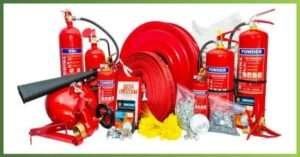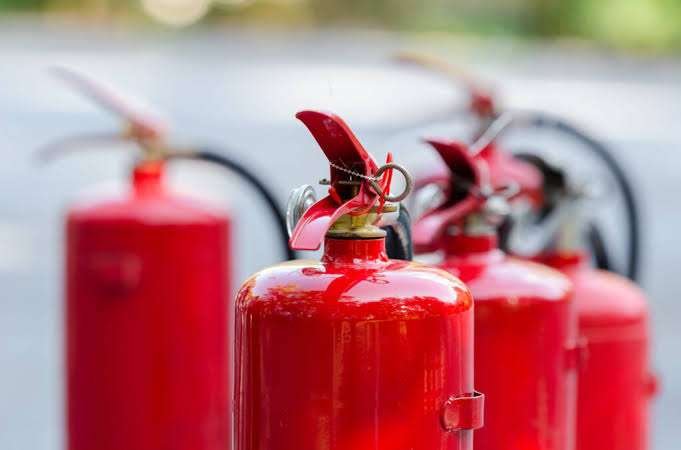
Fire extinguishers are important safety devices used in homes, offices, schools, factories, warehouses, and commercial buildings. They are designed to help control certain small fires when the correct extinguisher is available and the situation is safe for trained adults to respond.
However, simply keeping a fire extinguisher on the premises does not guarantee effective fire protection. People may choose the wrong type, misunderstand the label, neglect maintenance, or assume that every extinguisher can be used on every fire.
These mistakes can reduce the effectiveness of fire protection and create additional danger during an emergency. Understanding the different types of fire extinguishers, their intended applications, and their limitations can help property owners make better-informed safety decisions.
In Pakistan, portable extinguishers are part of a broader fire protection approach that may also include detection and alarm systems, sprinklers, hydrants, emergency exits, and evacuation planning. A suitable fire alarm system in Pakistan can provide an early warning, while correctly selected and maintained extinguishers offer another layer of protection.
This guide explains seven common mistakes and the practical lessons that households and organizations can learn from them.
Understanding the Main Types of Fire Extinguishers
Before exploring common mistakes, it helps to understand why different extinguishers exist.
A fire extinguisher contains an agent designed to control particular types of fire. The correct choice depends on the materials involved, the surrounding hazards, and the extinguisher’s approved classification.
Common types include:
1. Water Fire Extinguishers
Water extinguishers are generally intended for fires involving ordinary combustible materials, such as paper, wood, and textiles.
Water cools burning materials, helping reduce their temperature. However, ordinary water extinguishers are not suitable for every fire. They can be dangerous around energized electrical equipment and may spread burning flammable liquids.
2. Foam Fire Extinguishers
Foam extinguishers are designed for specific fire hazards, commonly including certain ordinary combustible materials and flammable liquids.
The foam helps separate the fuel from the surrounding air and can reduce the release of flammable vapours. The product label must be checked to establish which fire classes the particular extinguisher is approved for.
3. Dry Chemical Powder Extinguishers
Dry chemical powder extinguishers are available in different formulations.
Multipurpose ABC models are designed for certain fires involving ordinary combustible materials, flammable liquids, and energized electrical equipment. Other powder formulations may have different applications.
It is important not to assume that every powder extinguisher is suitable for all fire types.
4. Carbon Dioxide (CO₂) Extinguishers
Carbon dioxide extinguishers discharge CO₂ to help suppress suitable fires, including certain flammable-liquid fires and fires involving energized electrical equipment.
They do not leave the same powder residue as dry chemical models, which can be useful in some equipment environments. However, CO₂ presents additional considerations in enclosed spaces, and its effectiveness depends on the fire and surrounding conditions.
5. Wet Chemical Extinguishers
Wet chemical extinguishers are designed for particular cooking-oil and fat fire hazards, especially in commercial kitchens.
Their agent helps cool the burning material and create a layer that reduces the chance of reignition.
The exact classification and permitted use should always be confirmed on the extinguisher label.
6. Special Extinguishers for Combustible Metals
Some industrial processes involve combustible metals that require specially designed extinguishing agents.
These fires need specific professional assessment because an unsuitable extinguishing agent can make the situation more dangerous. General-purpose extinguishers should not be assumed to be appropriate.
The main lesson is straightforward: the correct extinguisher depends on the fire hazard, not simply on the size or appearance of the cylinder.
Mistake 1: Assuming Every Fire Extinguisher Works on Every Fire
One of the most common misunderstandings is believing that any extinguisher can safely control any fire.
Different extinguishing agents work in different ways. Water, for example, can cool ordinary burning materials, but it is not suitable for energized electrical equipment or many flammable-liquid fires.
Similarly, a multipurpose dry chemical extinguisher is not automatically appropriate for every specialized industrial or cooking-related hazard.
Choosing unsuitable equipment can delay an effective response and expose people to additional danger.
How to Avoid This Mistake
Property owners should arrange a fire risk assessment to identify the types of fire that could reasonably occur in each area.
The assessment should consider the materials present, electrical equipment, cooking operations, machinery, storage arrangements, and other relevant hazards.
Extinguishers should then be selected according to their labels, approved classifications, and applicable safety requirements.
Employees and household members should receive appropriate fire-safety information. Children should never be expected to select or operate extinguishers during an emergency.
Mistake 2: Ignoring Fire Classifications and Product Labels
An extinguisher’s label provides essential information about its intended applications and limitations.
People may overlook this information because extinguishers appear similar or because they recognize a product by its colour or general shape.
However, the appearance of a cylinder alone does not establish which fire classes it can handle.
Fire classifications can also vary between standards and regions. For example, cooking-oil fires are commonly identified as Class K in the United States and Class F in several other classification systems.
This difference illustrates why buyers should not rely on assumptions based on terminology alone.
How to Avoid This Mistake
Read the manufacturer’s label and technical documentation before purchasing equipment.
Confirm that the extinguisher is appropriate for the identified hazards and complies with the relevant requirements for the building.
Labels should remain readable, and instructions should be accessible to responsible personnel.
Where the application is unclear, seek advice from a qualified fire-safety professional instead of guessing.
Mistake 3: Choosing an Extinguisher Based Only on Price
Budget is an important consideration when planning fire protection, but selecting equipment solely because it is inexpensive can create problems.
A low-cost extinguisher may not have the required classification, capacity, documentation, or suitability for the intended location.
Buyers may also overlook installation, inspection, servicing, replacement parts, and ongoing maintenance when comparing initial prices.
An extinguisher that does not meet the building’s requirements may provide little value, regardless of how affordable it was.
How to Avoid This Mistake
Compare products according to their intended application, technical specifications, manufacturer information, warranty conditions, and service requirements.
Ask suppliers for documentation supporting relevant certification or approval claims. Confirm that the equipment is suitable for the hazards identified in the building’s fire risk assessment.
The purchase should also account for the number and placement of extinguishers required under the applicable design and regulations.
The goal is not necessarily to purchase the most expensive product. It is to obtain appropriate equipment that meets the actual safety requirements.
Mistake 4: Forgetting Inspection and Maintenance
Fire extinguishers are sometimes installed and then forgotten.
Over time, equipment can become damaged, corroded, obstructed, or otherwise unsuitable for service. Pressure indicators may show a problem, labels may deteriorate, and access to the extinguisher may become blocked.
Different extinguisher types also have different inspection and servicing requirements.
Neglecting maintenance can undermine the reliability of a fire protection arrangement when it is needed.
How to Avoid This Mistake
Follow the manufacturer’s instructions and the inspection, testing, and maintenance requirements that apply to the equipment.
Responsible building personnel should ensure that extinguishers remain visible, accessible, correctly located, and in suitable condition.
Qualified service providers should handle servicing, recharging, repairs, and other work that requires technical expertise.
An extinguisher that is damaged or cannot be properly maintained should be assessed and removed from service when required. It should be replaced with suitable equipment so the building’s protection is not unnecessarily compromised.
Mistake 5: Placing Extinguishers in Inaccessible Locations
Even a suitable extinguisher may be difficult to use if it is hidden behind furniture, stored in a locked room, blocked by stock, or placed where people cannot readily locate it.
Poor placement can also create problems during inspections and routine maintenance.
In workplaces, changes to furniture, shelving, machinery, and storage arrangements can gradually obstruct previously accessible equipment.
How to Avoid This Mistake
Extinguisher placement should be determined by a suitable fire-safety assessment and the applicable requirements.
Equipment should be clearly identifiable and accessible without creating an obstruction to normal movement or evacuation.
Building managers should include extinguisher locations in routine safety checks. Changes to the building layout should prompt a review of whether the equipment remains appropriately positioned.
Staff should know where fire protection equipment is located, but they should never be encouraged to delay evacuation to retrieve it.
Mistake 6: Believing Extinguishers Replace Fire Alarms and Other Protection
Another important mistake is treating portable extinguishers as a complete fire safety solution.
An extinguisher may be useful for certain limited fires, but it cannot provide the same function as a fire alarm, automatic sprinkler system, emergency lighting, or safe escape route.
People may not immediately notice a fire, particularly in large buildings, separate rooms, storage areas, or locations where occupants are asleep.
An alarm can provide a warning that helps people recognize an emergency and follow their evacuation plan.
How to Avoid This Mistake
Use a coordinated fire protection strategy that addresses prevention, detection, warning, suppression, and evacuation.
Depending on the building, this may include:
– Suitable fire detection and alarm equipment
– Portable extinguishers selected for identified hazards
– Automatic sprinkler systems where required
– Accessible emergency exits
– Clear evacuation routes and signs
– Emergency procedures and appropriate staff training
– Regular inspection and maintenance
A fire alarm system in Pakistan should be selected according to the building’s design, use, and applicable requirements. It should not be viewed as a substitute for suitable extinguishers, and extinguishers should not be treated as a substitute for alarms.
The purpose of these measures is to provide several layers of protection rather than relying on one device.
Mistake 7: Assuming Anyone Can Safely Fight a Fire
Having a fire extinguisher available does not mean that everyone should attempt to use it during an emergency.
Fire conditions can change quickly. Smoke can reduce visibility, flames can spread, and a seemingly small incident can become dangerous.
Untrained people may also choose an unsuitable extinguisher or approach a fire without understanding the risks.
Personal safety must take priority over protecting property.
How to Avoid This Mistake
Households and organizations should establish clear emergency procedures.
If a fire or alarm indicates a possible emergency, occupants should follow the evacuation plan and move towards safety. They should alert others as appropriate and contact emergency services according to local procedures.
Any decision to use an extinguisher should be limited to appropriately trained adults, only when the fire is within the scope of their training, the correct equipment is available, and a safe escape route remains accessible. Evacuation should never be delayed to attempt firefighting.
Children should immediately alert a responsible adult and follow the emergency plan. They should never be expected to operate firefighting equipment or deal with an active fire.
Training should emphasize when to evacuate, how to raise the alarm, and how to avoid unnecessary exposure to danger.
Fire Extinguisher Selection in Pakistan
The Building Code of Pakistan – Fire Safety Provisions 2016 includes requirements for selecting portable extinguishers according to the likely fire type, potential fire size, hazards in the area, electrical equipment, environmental conditions, and other relevant factors.
It also addresses extinguisher classification, installation, inspection, and maintenance.
The Pakistan Engineering Council lists the code among its published building-safety instruments. Punjab Civil Defence also identifies firefighting arrangements, including portable extinguishers, hydrants, and sprinkler systems, among the fire-safety measures considered during relevant inspections.
These provisions demonstrate why fire extinguisher selection should be based on the actual risks and applicable requirements rather than a one-size-fits-all approach.
Property owners should confirm current requirements with the relevant authority and seek professional advice for complex buildings, industrial facilities, and other higher-risk environments.
Building a More Complete Fire Safety Plan
A practical fire-safety plan should address the hazards present in the building and explain how people should respond if an emergency occurs.
The following measures provide a useful starting point:
Identify fire hazards. Review electrical equipment, cooking areas, combustible storage, machinery, and other potential sources of fire.
Choose suitable equipment. Ensure that extinguishers and other fire protection systems are appropriate for the identified risks.
Maintain access. Keep emergency exits and fire protection equipment clear of obstructions.
Inspect equipment. Follow the applicable inspection, testing, and maintenance requirements.
Explain emergency procedures. Make sure occupants know how to recognize an alarm, leave the building, and contact emergency services.
Arrange appropriate training. Provide relevant instruction to responsible adults and workplace personnel, including the limits of portable extinguishers.
Review the plan regularly. Reassess the arrangements when the building, equipment, occupancy, or hazards change.
These measures can help improve preparedness without encouraging people to take unnecessary risks during a fire.
Conclusion
Fire extinguishers are an important part of building fire protection, but their effectiveness depends on selecting the correct type, understanding the product label, maintaining the equipment, and ensuring that it remains accessible.
The seven mistakes discussed in this article highlight why extinguishers should not be purchased or managed through assumptions alone. Different fire hazards require different equipment, and the needs of a home may differ substantially from those of a factory, warehouse, commercial kitchen, or office building.
A complete safety strategy should also include suitable detection and alarm arrangements, clear evacuation routes, emergency planning, and professional inspection where necessary.
For anyone researching fire protection in Pakistan, understanding the role of extinguishers alongside a suitable fire alarm system can help support better-informed decisions. Most importantly, everyone should understand that life safety comes before property protection. When a fire occurs, people should follow their emergency plan, evacuate when necessary, and seek help from the appropriate emergency services.
FAQs
1. What are the main types of fire extinguishers?
Common types include water, foam, dry chemical powder, carbon dioxide, wet chemical, and specialized extinguishers for combustible metals. Each type has specific applications and limitations, so the label and approved classification should always be checked.
2. Why is choosing the correct fire extinguisher important?
Different extinguishing agents are designed for different fire hazards. An unsuitable extinguisher may be ineffective or create additional danger. Selection should be based on the building’s fire risks and applicable safety requirements.
3. How often should fire extinguishers be inspected?
Inspection and maintenance schedules depend on the extinguisher type, manufacturer instructions, applicable standards, and local requirements. Building owners should establish an appropriate maintenance programme and use qualified service providers when necessary.
4. Can fire extinguishers replace a fire alarm system?
No. Extinguishers help control certain fires, while fire alarm systems provide warning. Both may be needed alongside suitable escape routes, emergency planning, and other fire protection measures.
5. What should people do if a fire breaks out?
People should follow the emergency plan, raise the alarm where appropriate, and move towards safety. They should contact emergency services according to local procedures and should not delay evacuation to protect property or attempt to fight a dangerous fire.