Office fire safety is an essential part of creating a secure and responsible working environment. Offices may appear safer than factories, warehouses, or industrial facilities, but they can still contain several potential fire hazards. Electrical equipment, computers, printers, kitchen appliances, heating devices, and everyday workplace activities can contribute to fire risks if they are not managed properly.
In Pakistan, businesses of different sizes operate from small offices, commercial buildings, shared workplaces, and high-rise towers. Each environment has its own safety requirements. A small office may have limited employees, while a large commercial building may accommodate hundreds of workers, visitors, and contractors. Regardless of size, every workplace needs suitable fire prevention measures and a clear emergency response plan.
Office fire safety is not simply about keeping a fire extinguisher somewhere in the building. It involves identifying hazards, maintaining suitable fire protection equipment, installing appropriate detection systems, keeping emergency exits accessible, and educating employees about what to do during an emergency.
A well-planned office safety programme protects people, supports business continuity, and helps organisations meet their responsibilities. This article explains the importance of office fire safety, common workplace hazards, essential preventive measures, and the role of a fire alarm system in Pakistan.
Why Is Office Fire Safety Important?
Offices contain people, electronic equipment, furniture, documents, and other materials that may be affected by fire. An incident can interrupt business operations, damage property, and put employees and visitors at risk.
Many office fires are associated with preventable hazards. Poor electrical practices, unattended appliances, unsuitable storage, and inadequate maintenance can increase workplace risks.
A proper fire safety plan helps organisations identify these concerns and establish suitable preventive arrangements.
The main reasons office fire safety matters include:
– Protecting employees, visitors, and contractors.
– Reducing the likelihood of workplace fire incidents.
– Supporting early detection and emergency notification.
– Keeping evacuation routes accessible.
– Protecting office equipment and business records.
– Improving employee awareness.
– Supporting business continuity.
– Demonstrating responsible workplace management.
Fire safety should be considered during everyday office operations rather than only when an inspection or emergency occurs.
Common Fire Hazards in Office Buildings
Understanding workplace hazards is the first step towards developing an effective safety plan. Different offices have different layouts and equipment, but several risks are commonly found in commercial environments.
1. Electrical Equipment and Connections
Offices depend heavily on electricity. Computers, monitors, printers, photocopiers, chargers, networking equipment, and other devices are used throughout the working day.
Damaged electrical equipment, unsuitable connections, overloaded circuits, and poor maintenance can increase fire risks.
Organisations should ensure that electrical installations and equipment receive attention from qualified professionals. Employees should report damaged cables, unusual equipment behaviour, or other electrical concerns rather than attempting repairs themselves.
2. Kitchen and Breakroom Appliances
Many offices have small kitchens or break areas containing kettles, microwaves, refrigerators, and other appliances.
These spaces may become overlooked when employees are busy. Poor housekeeping, unattended appliances, and unsuitable storage can create avoidable hazards.
Office management should establish clear rules for shared kitchen facilities and ensure that appliances are suitable for their intended use.
3. Paper and Cardboard Storage
Documents, packaging, cardboard boxes, and other office supplies are common in workplaces. Excessive or poorly organised storage can increase the amount of combustible material in an area.
Storage should be organised so that emergency exits, corridors, electrical equipment, and safety devices remain accessible.
Important business records should also be protected through suitable digital backups and document management arrangements.
4. Heating and Cooling Equipment
Offices may use heating devices, air-conditioning systems, and other electrical equipment to maintain comfortable indoor conditions.
Poorly maintained equipment or unsuitable installation can create safety concerns.
Businesses should arrange professional inspection and servicing according to manufacturer recommendations and relevant requirements.
5. Poor Housekeeping
Cluttered workspaces can make it more difficult to identify hazards and maintain clear evacuation routes.
Boxes, unused furniture, packaging, and other materials should not be allowed to accumulate in corridors or near emergency exits.
Good housekeeping supports a safer and more organised working environment.
Essential Elements of an Office Fire Safety Plan
An office fire safety plan should explain how the organisation prevents hazards, detects potential emergencies, informs occupants, and supports safe evacuation.
It should be suitable for the building’s size, layout, occupancy, and activities.
1. Fire Risk Assessment
A fire risk assessment helps organisations identify potential hazards and evaluate how they may affect employees and other occupants.
The assessment should consider:
– Electrical installations and equipment.
– Kitchen and breakroom facilities.
– Storage areas.
– Building layout and occupancy.
– Emergency exits and escape routes.
– Fire detection and alarm arrangements.
– People who may need additional evacuation assistance.
– Existing fire protection equipment.
A competent professional should be involved when the building’s complexity or applicable requirements call for specialist assessment.
The findings should guide improvements and help management prioritise safety measures.
2. Fire Detection and Alarm Systems
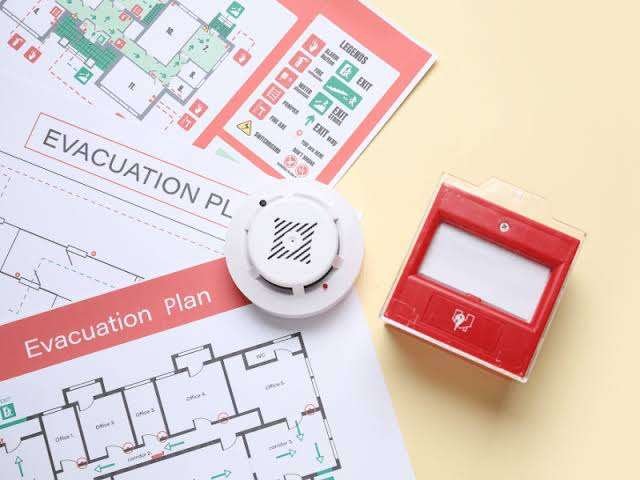
Early warning is a critical part of office fire safety. A suitable detection and alarm system can alert occupants when smoke, heat, or another recognised fire-related condition is detected.
A fire alarm system in Pakistan should be selected according to the building’s requirements rather than simply choosing the cheapest available option.
Depending on the design, a system may include:
– Smoke detectors.
– Heat detectors.
– Manual call points.
– Alarm sounders.
– Visual notification devices.
– A fire alarm control panel.
– Appropriate power arrangements.
– Monitoring facilities where required.
The correct combination depends on the building’s layout, occupancy, and professional risk assessment.
A properly designed system helps provide warning, but it must be supported by clear evacuation procedures and suitable maintenance.
3. Accessible Emergency Exits
Every office should have suitable escape arrangements that allow occupants to leave safely during an emergency.
Emergency exits should be clearly identified and kept accessible. Corridors and designated escape routes should not be used for storing boxes, furniture, or office supplies.
Employees should know the locations of the exits relevant to their work areas.
Office management should also consider visitors and people who may require additional assistance during evacuation.
4. Emergency Lighting and Safety Signs
Normal lighting may not always be available during an emergency. Suitable emergency lighting can help occupants identify escape routes and important safety information.
Fire safety signs should be clear, visible, and appropriate for the building.
They may identify:
– Emergency exits.
– Escape routes.
– Assembly points.
– Fire alarm call points.
– Fire protection equipment.
– Relevant safety instructions.
Signs and lighting should be selected, installed, and maintained according to applicable requirements.
5. Fire Protection Equipment
Depending on the building’s risk assessment, an office may require suitable fire extinguishers and other protective equipment.
Different extinguishers are designed for different categories of fire. Therefore, organisations should not assume that one type is suitable for every hazard.
Equipment should be selected by competent professionals, positioned appropriately, and maintained according to manufacturer guidance and relevant requirements.
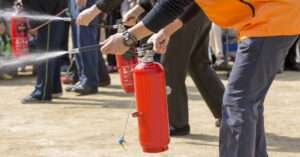
Employees should receive suitable awareness training. People without appropriate training should prioritise raising the alarm, evacuating, and contacting emergency services rather than attempting to manage a fire.
The Role of Employees in Office Fire Safety
Fire safety is not only the responsibility of building owners or management. Employees also play an important role in maintaining a safe workplace.
Every employee should understand basic safety expectations and know how to report potential hazards.
Report Hazards Promptly
Employees should inform the appropriate manager or safety representative about damaged electrical equipment, blocked exits, missing signs, or other concerns.
Early reporting allows organisations to arrange suitable corrective action.
Keep Workspaces Organised
Employees can support fire prevention by maintaining clean work areas and avoiding unnecessary accumulation of paper, packaging, and other materials.
Shared areas should be left in a condition that does not create hazards for other occupants.
Understand Alarm Signals
Staff should know what the building’s alarm sounds or visual warnings mean.
They should also understand the organisation’s evacuation instructions and follow them whenever an emergency warning is issued.
Participate in Fire Drills
Fire drills help employees become familiar with emergency procedures.
Taking part seriously allows staff and management to identify weaknesses and improve workplace preparedness.
Follow Emergency Instructions
During an emergency, employees should follow the established evacuation plan and instructions from responsible personnel.
They should not return to the building until authorised by the appropriate emergency personnel.
Why Office Fire Drills Are Necessary
A written emergency plan is useful, but employees also need to understand how it works in practice.
Fire drills provide an opportunity to practise evacuation procedures in a controlled and organised way.
They can help office management determine whether employees:
– Recognise the alarm signal.
– Understand where to go.
– Know the designated assembly point.
– Can identify suitable escape routes.
– Understand their assigned responsibilities.
– Know how to report an emergency.
– Can follow procedures for visitors and contractors.
Drills may also reveal problems such as unclear signs, inaccessible routes, or gaps in employee awareness.
The frequency of drills should be based on applicable requirements, the building’s risk assessment, and professional advice.
After each exercise, management should review the results and address any weaknesses.
Office Fire Safety in High-Rise Buildings
Many Pakistani businesses operate from multi-storey commercial buildings and high-rise offices. These environments may have complex layouts, shared facilities, and large numbers of occupants.
Fire safety planning in such buildings requires coordination between individual businesses and building management.
Important considerations include:
Building-wide emergency arrangements: Individual offices should understand the building’s evacuation procedures and follow the instructions provided by management.
Shared escape routes: Corridors, stairways, and designated exits should remain accessible.
Alarm communication: Occupants should understand how building-wide alarm notifications work.
Visitor awareness: Reception staff and employees should know how visitors receive emergency instructions.
Assistance arrangements: The evacuation plan should consider people who may need additional support.
Regular coordination: Tenants and building management should communicate about changes that may affect emergency arrangements.
Businesses should never assume that another organisation is responsible for every aspect of their workplace safety. Each employer should understand its own responsibilities and coordinate with the building’s management.
Office Fire Safety Checklist
A checklist can help managers review important safety arrangements. It should be adapted to the actual building and should not replace a professional fire risk assessment.
<escape> </escape>
General workplace arrangements
– Keep corridors and emergency exits accessible.
– Maintain good housekeeping.
– Organise storage areas responsibly.
– Display appropriate emergency information.
– Make evacuation instructions available to employees.
Electrical and equipment safety
– Arrange professional attention for electrical installations.
– Report damaged equipment.
– Follow manufacturer guidance for office appliances.
– Keep equipment inspection records where appropriate.
– Avoid unauthorised electrical repairs.
Fire detection and protection
– Ensure suitable alarm arrangements are installed.
– Arrange professional inspection and maintenance.
– Keep detection devices unobstructed.
– Ensure relevant safety equipment is accessible.
– Review whether equipment remains suitable after office changes.
Employee awareness
– Provide suitable fire safety information.
– Explain alarm signals and evacuation procedures.
– Include new employees in safety induction.
– Organise appropriate fire drills.
– Communicate important changes to emergency arrangements.
Emergency planning
– Identify suitable assembly arrangements.
– Consider visitors and contractors.
– Plan for people who may need additional assistance.
– Review procedures after significant building changes.
– Record and address problems identified during drills.
Common Office Fire Safety Mistakes to Avoid
Even organisations that understand the importance of fire safety may overlook important details.
1. Blocking Emergency Exits
Using corridors or exits for temporary storage can make evacuation more difficult.
Management should ensure that escape routes remain accessible throughout working hours.
2. Ignoring Alarm Maintenance
Installing an alarm system is not enough. Equipment requires appropriate inspection, testing, and maintenance.
A qualified service provider should follow manufacturer recommendations and applicable requirements.
3. Assuming Employees Already Know What to Do
New employees, temporary workers, and visitors may be unfamiliar with emergency arrangements.
Organisations should communicate relevant procedures instead of assuming everyone understands them.
4. Choosing Equipment Without Professional Advice
Not every building requires the same type of fire protection equipment.
Choosing equipment based only on price can result in unsuitable arrangements. Professional guidance helps match equipment to actual hazards and building requirements.
5. Neglecting Fire Drills
If employees never practise evacuation procedures, they may be uncertain about what to do when an alarm sounds.
Regularly planned exercises help reinforce awareness and identify weaknesses.
6. Failing to Update the Safety Plan
Office layouts, employee numbers, equipment, and business activities can change.
Safety plans should be reviewed whenever significant changes occur and whenever an assessment identifies a need for improvement.
The Importance of Professional Fire Safety Inspections
Professional inspections help organisations understand whether their safety arrangements remain appropriate.
An assessment may consider the building’s layout, electrical safety arrangements, fire detection systems, emergency exits, signage, and other relevant protective measures.
Qualified professionals can also advise whether changes in occupancy or office activities affect existing arrangements.
For example, expanding an office, adding new equipment, changing storage areas, or renovating a floor may influence its fire safety requirements.
Professional guidance is particularly important when selecting, installing, or upgrading a fire alarm system in Pakistan.
Businesses should keep relevant inspection and maintenance records and address identified concerns within an appropriate timeframe.
How Technology Supports Modern Office Fire Safety
Technology has improved the way organisations detect and manage potential fire emergencies.
Modern fire detection and alarm systems can include different types of sensors, notification devices, and control equipment. Some systems may also support central monitoring or integration with other building safety arrangements, depending on their design.
Technology can provide several benefits:
Earlier warning: Suitable detectors can recognise certain fire-related conditions and activate an alarm.
Clear communication: Audible and visual notifications can help alert different groups of occupants.
Centralised monitoring: Some systems allow designated personnel to monitor system status.
Improved coordination: Properly designed building systems may work alongside other safety arrangements.
However, technology should not replace professional assessment, maintenance, staff awareness, or evacuation planning.
A modern system is only one part of a complete fire safety programme.
Office Fire Safety and Business Continuity
Fire safety is also closely connected to business continuity.
An office fire can affect more than the physical building. It may interrupt customer services, damage important records, affect employee availability, and create financial difficulties.
Businesses should consider how fire prevention and emergency preparedness fit into their wider continuity plans.
Useful measures include:
– Maintaining suitable digital backups.
– Keeping important business information organised.
– Establishing communication arrangements for employees.
– Understanding alternative working arrangements.
– Maintaining appropriate insurance.
– Reviewing emergency contacts.
– Planning how essential business activities could continue after disruption.
These measures do not replace fire prevention, but they can help businesses prepare for unexpected interruptions.
Creating a Long-Term Office Fire Safety Culture
A safe office environment requires consistent attention rather than a one-time installation of equipment.
Management should encourage employees to take safety seriously and make it easy to report concerns.
Regular communication, suitable training, professional inspections, and updated emergency plans can help establish responsible workplace habits.
New employees should receive safety information during induction. Existing staff should be informed when procedures change. Contractors and visitors should receive relevant instructions whenever necessary.
Organisations should also review feedback from fire drills and inspections to identify opportunities for improvement.
When employees and management work together, fire safety becomes part of everyday office operations.
Conclusion
Office fire safety is an essential part of protecting employees, visitors, business property, and workplace operations. Although offices may appear less hazardous than industrial environments, electrical equipment, kitchen appliances, storage materials, and other everyday activities can create fire risks.
A complete office safety plan should include hazard identification, suitable detection and alarm systems, accessible emergency exits, appropriate fire protection equipment, employee awareness, and well-organised evacuation procedures.
For businesses in Pakistan, investing in a suitable fire alarm system in Pakistan is an important part of supporting early warning and work