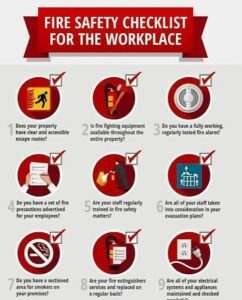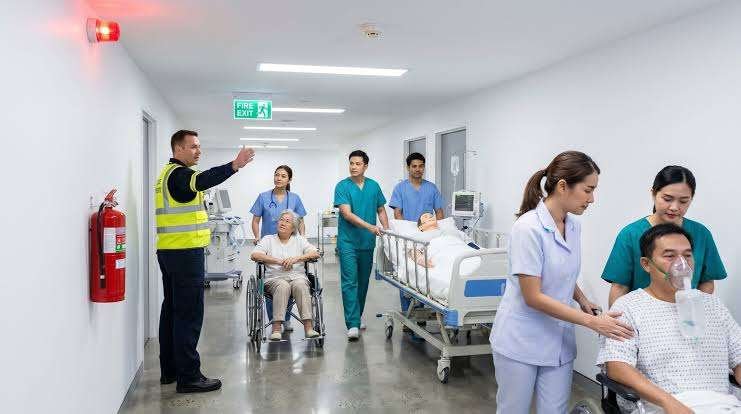
Hospitals are among the most important facilities in any community. They provide emergency treatment, surgery, maternity care, diagnostic services, and long-term support for patients. Because hospitals operate around the clock and accommodate people with different medical needs, fire safety must be a major priority for hospital management.
A fire in a healthcare facility can create challenges that are not usually found in an ordinary office or commercial building. Some patients may be unable to walk without assistance, while others may depend on oxygen supplies, medical equipment, or continuous monitoring. Visitors might also be unfamiliar with the building layout. These circumstances make early fire detection, clear communication, and well-organised emergency procedures essential.
Although hospital fire safety primarily protects patients and healthcare workers, it also matters to the wider business community. Private hospitals, medical laboratories, clinics, pharmacies, and healthcare organisations have responsibilities to protect their employees, visitors, equipment, and premises.
A properly designed **fire alarm system in Pakistan** can help healthcare facilities identify a developing fire and alert people who need to respond. However, alarms are only one part of an effective safety strategy. Staff training, suitable firefighting equipment, electrical maintenance, emergency planning, and clear escape routes must work together.
This guide explains why hospital fire safety deserves attention, which hazards healthcare facilities should consider, and how organisations can develop a practical fire prevention plan.
## 1. Why Hospital Fire Safety Is Different
Hospitals have a combination of risks that makes fire prevention especially important. Unlike many commercial buildings, they may contain patients who cannot evacuate independently.
Several factors make healthcare fire safety particularly challenging:
– **Patients with limited mobility:** People recovering from surgery or dealing with serious illnesses may require assistance to move.
– **Continuous medical services:** Interruptions to electricity, ventilation, or medical equipment can affect patient care.
– **Oxygen and medical gases:** Some clinical areas use medical gases that require specialised handling and appropriate fire precautions.
– **Electrical equipment:** Diagnostic machines, monitors, computers, and other devices depend on electrical systems.
– **Large and complex buildings:** Hospitals may include several floors, treatment departments, laboratories, storage rooms, and underground areas.
– **Unfamiliar visitors:** Patients’ relatives and visitors may not know the nearest safe exits.
These factors mean that a hospital cannot rely on a basic evacuation plan designed for an ordinary office. Its emergency arrangements must reflect the building’s layout, patient needs, staffing levels, and clinical operations.
## 2. Common Fire Hazards in Healthcare Facilities
Identifying hazards is the first step towards reducing fire risk. Hospital administrators should arrange regular inspections to identify unsafe conditions before they lead to an emergency.
### Electrical faults
Hospitals use electrical equipment throughout the day and night. Damaged cables, overloaded sockets, poorly maintained distribution boards, and unsuitable extension leads can increase the risk of electrical fires.
Electrical inspections should be carried out by qualified personnel. Staff should report damaged equipment promptly, and repairs should follow approved procedures. Electrical panels must remain accessible, and combustible materials should not be stored nearby.
### Medical gas systems
Medical oxygen supports patient treatment, but oxygen itself is not a fuel. It can make other materials ignite more easily and burn more intensely. Medical gas systems therefore require suitable installation, storage, maintenance, and operating procedures.
Only trained personnel should manage medical gas equipment. Staff must follow the facility’s procedures for oxygen-related emergencies and avoid introducing ignition sources into designated areas.
### Kitchens and food preparation areas
Hospital kitchens may contain cooking equipment, electrical appliances, gas connections, and combustible materials. Grease accumulation and neglected equipment can contribute to fire hazards.
Kitchen staff should follow cleaning schedules, inspect equipment, and understand the correct response to a cooking-related fire. Appropriate suppression equipment should be selected for the specific hazards present.
### Laboratories and chemical storage
Certain laboratories use flammable liquids, chemicals, heating equipment, and specialised instruments. Unsafe storage or handling can increase the likelihood of a fire.
Each laboratory should follow its risk assessment, chemical safety procedures, and storage requirements. Staff must receive training relevant to the materials and equipment they use.
### Laundry and storage rooms
Laundry facilities may contain heat-producing machines, lint, fabrics, and cleaning supplies. Storage rooms can also become hazardous when cardboard, paper, textiles, or other combustible materials accumulate.
Regular cleaning, safe storage, equipment maintenance, and suitable separation of hazardous materials help reduce these risks.
## 3. The Importance of a Reliable Fire Alarm System
A fire alarm system is a central part of hospital fire protection because it helps identify and communicate a potential emergency. Early warning gives staff an opportunity to begin the correct response before conditions deteriorate.
A hospital’s system may include smoke detectors, heat detectors, manual call points, alarm sounders, visual warning devices, a control panel, and connections to other safety systems where appropriate.
The design should reflect the building’s size, occupancy, clinical activities, and fire risk. Different departments may need different detection arrangements because a kitchen, laboratory, patient ward, and electrical room do not present identical conditions.
### Early detection and warning
Smoke or heat detection can alert staff to a possible fire. Manual call points allow people to raise an alarm when they discover an emergency.
The system must be designed so that warnings reach the people responsible for responding. Visual alerts may be important in areas where noise, hearing difficulties, or clinical conditions affect how an alarm is noticed.
### Supporting coordinated action
A well-planned alarm arrangement helps staff follow established procedures. Depending on the building’s design, it may also interact with systems such as fire doors, smoke control, or other protective equipment.
Healthcare teams should understand the meaning of different alarm signals and know who is responsible for checking information, contacting emergency responders, and coordinating patient movement.
### Why maintenance matters
Installing equipment is not enough. Detectors can become dirty or damaged, batteries can fail, and faults may go unnoticed without a planned maintenance programme.
Hospitals should keep inspection and service records, arrange testing according to the manufacturer’s instructions and applicable requirements, and correct faults promptly. Fire protection systems should never be disabled or left out of service without an approved safety procedure.
For healthcare organisations comparing a **fire alarm system in Pakistan**, the decision should consider suitability, installation quality, technical support, maintenance arrangements, and compliance with applicable requirements—not simply the initial purchase price.
## 4. Fire Extinguishers and Other Protection Equipment
Fire extinguishers, hose systems, hydrants, and automatic sprinklers can form part of a hospital’s wider fire protection arrangements. The required equipment depends on the building’s design, risks, and applicable codes.
### Choosing suitable extinguishers
Different extinguishers are intended for different types of fires. For example, equipment suitable for an ordinary combustible-material fire may not be appropriate for a live electrical hazard.
Hospital management should obtain a professional assessment to determine which equipment is required in each area. Extinguishers should be visible, accessible, clearly identified, and maintained by competent service providers.
Staff should receive training appropriate to their responsibilities. Untrained people should not attempt to fight a fire when doing so could delay evacuation or expose them to smoke and danger.
### Automatic sprinkler systems
Where required or selected through the fire risk assessment, automatic sprinklers can help control a developing fire. Their design and coverage should be determined by qualified professionals according to the building’s use and applicable standards.
Sprinkler heads must not be blocked by stored items or unauthorised decorations. Valves and associated equipment should be inspected and maintained under an approved programme.
### Emergency lighting and exit signs
A fire can interrupt normal lighting or make familiar routes difficult to see. Emergency lighting and clear exit signs help people identify safe routes when visibility or electrical power is affected.
These systems need regular inspection and testing. Corridors, staircases, exit doors, and access routes should remain free from stored items and equipment that could obstruct movement.
## 5. Create a Hospital-Specific Emergency Plan
Every hospital should maintain a written fire emergency plan based on its actual layout and the people who use it. The plan should explain how an alarm is reported, who coordinates the response, how patients are moved, and how emergency services are contacted.
The Building Code of Pakistan’s Fire Safety Provisions 2016 includes requirements relating to emergency action planning for healthcare occupancies. Hospitals should consult the applicable code, relevant local authorities, and qualified fire-safety professionals to establish what applies to their premises.
A practical plan should cover the following areas:
– **Emergency responsibilities:** Identify who leads the response and who supports each department.
– **Alarm procedures:** Explain how staff report a fire and respond to alarm signals.
– **Patient movement:** Establish procedures for people who can walk independently and those who need assistance.
– **Alternative routes:** Identify suitable routes and backup arrangements if a corridor or exit becomes unsafe.
– **Communication:** Provide ways to inform staff, patients, visitors, and emergency responders.
– **Assembly and accountability:** Explain where people should go when required and how staff confirm who is safe.
– **Emergency services:** Set out how firefighters and other responders receive information about the incident.
Plans should be updated when departments move, renovations take place, equipment changes, or the patient population creates new needs.
## 6. Protect Patients Who Need Assistance
Patient safety is one of the most important considerations in hospital fire planning. Some people can leave a building independently, while others may need wheelchairs, stretchers, staff support, or specialised medical assistance.
Hospitals should assess these needs before an emergency occurs.
### Plan for different levels of mobility
Staff should know which patients may require additional help and how to arrange that assistance. Plans must also consider night shifts, when fewer employees may be available in some departments.
Patient movement procedures should be developed by hospital management and appropriate clinical, facilities, and fire-safety professionals. They must account for the building’s approved evacuation arrangements.
### Consider progressive horizontal evacuation
In some healthcare facilities, the approved strategy may involve moving patients horizontally into a safer, separated area on the same floor before considering movement to another level or outside the building.
This approach may help protect patients who cannot be moved quickly. However, it depends on suitable building design, fire and smoke separation, available staff, and the facility’s emergency plan. It must not be assumed appropriate for every hospital or incident.
### Keep patient information accessible
During an emergency, staff may need to know which patients require mobility support, essential monitoring, or other assistance. Hospitals should establish suitable procedures for communicating necessary information while protecting patient privacy.
The goal is to make patient movement organised, timely, and consistent with clinical and fire-safety guidance.
## 7. Train Employees and Conduct Fire Drills
Fire protection equipment is most effective when employees understand how to respond. Training should be provided to clinical staff, administrators, cleaners, kitchen workers, security teams, maintenance personnel, and other relevant employees.
Training topics may include:
– Recognising fire hazards and reporting unsafe conditions.
– Raising the alarm and contacting the designated response team.
– Understanding warning signals and departmental procedures.
– Identifying safe routes and alternative arrangements.
– Assisting patients and visitors within the employee’s assigned role.
– Knowing when to leave an area and avoid unnecessary risk.
– Reporting damaged or unavailable safety equipment.
Fire drills allow staff to practise procedures and reveal weaknesses in communication, staffing, access routes, and coordination. Drills should be planned so that patient care is protected, and exercises involving clinical areas must follow appropriate safety controls.
After each drill, management should record findings, assign corrective actions, and check that identified issues have been resolved.
## 8. Reduce Electrical and Equipment-Related Risks
Electrical safety deserves regular attention because healthcare facilities depend on many powered systems.
A suitable prevention programme should include professional inspection of electrical installations, timely repairs, approved equipment use, and clear procedures for reporting faults.
Staff should not overload sockets or use damaged cables. Electrical equipment should be operated according to manufacturer instructions, and only authorised personnel should undertake repairs.
Hospitals should also review backup generators, uninterruptible power supplies, battery-charging areas, and other equipment that may create heat or electrical hazards. These systems need suitable ventilation, maintenance, and protection based on their design.
Medical devices should not be disconnected or moved during an emergency without following clinical and emergency procedures. Patient safety and fire response must be coordinated by trained staff.
## 9. Maintain Clear Escape Routes and Fire Doors
An emergency exit is useful only if people can reach and use it. Hospital corridors may become crowded with beds, wheelchairs, trolleys, supply carts, or temporary equipment. These items should not obstruct required routes or exit doors.
Management should ensure that:
– Escape routes remain clear and appropriately illuminated.
– Exit signs are visible and understandable.
– Fire doors are maintained and not improperly wedged open.
– Door closers and other protective components remain functional.
– Fire-rated walls and doors are not compromised by unapproved alterations.
– Staircases and designated exits are accessible according to the emergency plan.
Routine inspections can identify issues before an emergency. Staff should report obstructions immediately rather than assuming that someone else will remove them.
## 10. Conduct Regular Fire Risk Assessments
A fire risk assessment helps management identify hazards, evaluate who may be affected, and decide which precautions are necessary.
For hospitals, the assessment should consider patient wards, operating areas, laboratories, kitchens, laundry facilities, electrical rooms, stores, plant rooms, and other relevant spaces.
The review should consider the condition of fire alarms, detection equipment, extinguishers, sprinklers where installed, emergency lighting, fire doors, and escape routes. It should also examine staff training, contractor activities, storage practices, maintenance records, and emergency arrangements.
Assessments should be reviewed periodically and whenever a significant change occurs, such as building work, a new department, changes in medical equipment, or altered patient-care arrangements.
A qualified fire-safety professional can help hospital management understand technical requirements and prioritise corrective work.
## 11. Hospital Fire Safety in Pakistan
Healthcare facilities in Pakistan should take local building requirements and applicable fire-safety provisions seriously. The **Building Code of Pakistan – Fire Safety Provisions 2016**, developed by the Pakistan Engineering Council in collaboration with the National Disaster Management Authority, provides a key national reference for fire prevention and life safety.
The exact requirements that apply to a hospital depend on the building, occupancy, relevant notifications, and the authority responsible for enforcement. Hospital administrators should confirm the applicable requirements with qualified professionals and relevant authorities rather than relying on general online guidance alone.
Hospitals should pay particular attention to:
– Suitable fire detection and alarm arrangements.
– Required firefighting and suppression equipment.
– Emergency exits and evacuation provisions.
– Electrical installation and equipment maintenance.
– Staff training and emergency drills.
– Inspection records and timely corrective action.
When choosing a **fire alarm system in Pakistan**, healthcare facilities should assess whether the proposed system is appropriate for the site’s risk profile and technical requirements. Installation should be handled by competent professionals, with commissioning, documentation, and ongoing maintenance included in the plan.
A low initial price should not outweigh reliability, suitability, service support, and compliance.
## 12. The Business Benefits of Strong Fire Safety
Hospital fire safety is first and foremost about protecting lives. It also supports responsible business management.
### Protecting people and property
A comprehensive fire prevention programme can reduce avoidable risks to patients, employees, visitors, medical equipment, records, and buildings. Prevention and early warning may also limit disruption when an incident occurs.
### Supporting continuity of care
Hospitals provide essential services that communities depend on. A well-maintained safety programme helps the organisation prepare for emergencies and manage disruption more effectively.
Continuity planning should address how critical services will be supported if a department or part of a building becomes unavailable.
### Strengthening accountability
Documented inspections, training records, maintenance schedules, and updated emergency plans help managers monitor performance and identify outstanding problems.
They also make it easier to assign responsibilities and demonstrate that fire safety is being managed systematically.
### Building public confidence
Patients and families need confidence that a healthcare facility takes their safety seriously. Clear procedures, ma