Fire safety is an important responsibility for every business, regardless of its size or industry. Offices, retail shops, restaurants, warehouses, factories, hotels, and other commercial premises all face potential fire hazards. Electrical faults, cooking equipment, heating devices, flammable materials, and poor housekeeping can create conditions that allow a fire to start or spread.
A fire can put employees, customers, contractors, and visitors at risk. It can also damage buildings, destroy stock, interrupt operations, and create unexpected financial pressure. For smaller businesses, even a short closure can affect customer relationships and daily income.
The good news is that many fire risks can be reduced through sensible prevention, regular maintenance, staff awareness, and appropriate emergency planning.
In Pakistan, businesses should consider the fire-safety requirements that apply to their premises, including relevant provisions of the Building Code of Pakistan – Fire Safety Provisions 2016. The Pakistan Engineering Council lists these provisions among the country’s building codes and standards. <Cite refs={[“turn905452search6″,”turn905452search35”]}/>
A fire alarm system in Pakistan can be an important component of a business’s fire-protection arrangements where appropriate or required. However, installing an alarm is only one part of a wider approach that includes preventing fires, maintaining equipment, and ensuring that everyone knows how to respond safely.
What Is Fire Prevention in a Business?
Fire prevention means identifying and controlling hazards that could cause a fire.
It involves looking at the workplace, understanding how equipment and materials are used, and establishing procedures that reduce avoidable risks.
For example, an office may need to pay attention to electrical equipment and paper storage, while a restaurant may need additional controls for cooking equipment and grease. A warehouse may require careful management of combustible stock, packaging, and storage areas.
An effective fire-prevention programme generally includes:
– Identifying potential ignition sources and combustible materials.
– Maintaining electrical installations and workplace equipment.
– Storing flammable materials appropriately.
– Keeping workspaces and exits clear.
– Providing suitable fire detection and warning arrangements.
– Maintaining appropriate firefighting equipment.
– Training employees in emergency procedures.
– Reviewing the safety plan when workplace conditions change.
These measures should reflect the actual activities and risks of the business rather than relying on a generic checklist alone.
1. Identify Fire Hazards Before They Become Problems
Every business should understand what could start a fire and what might allow it to spread.
A regular workplace review can help managers identify unsafe conditions before they lead to an emergency.
Common hazards include damaged electrical cables, overloaded power connections, poorly maintained machinery, combustible waste, unsafe storage, and equipment that produces heat.
Businesses should also consider less obvious risks, such as temporary electrical installations, contractors carrying out maintenance, and changes to storage arrangements.
During a workplace review, ask:
– Are electrical appliances and cables in suitable condition?
– Are combustible materials stored near heat sources?
– Are hazardous materials stored according to their instructions?
– Are fire exits and access routes clear?
– Is the available fire-safety equipment appropriate for the hazards?
– Do employees know how to report a potential fire hazard?
Record significant findings and assign responsibility for corrective action. If a serious problem is identified, it should be addressed promptly.
2. Maintain Electrical Equipment
Electrical equipment is essential in most workplaces, but faults can create fire hazards.
Damaged cables, loose connections, unsuitable extension leads, overheating equipment, and poorly maintained machinery can all contribute to unsafe conditions.
Businesses should arrange electrical installation, inspection, and repairs through appropriately qualified professionals.
Employees should report warning signs such as burning smells, unusual heating, damaged plugs, visible cable damage, or repeated interruptions to electrical equipment.
Management should ensure that faulty equipment is taken out of service until it has been assessed and made safe.
Additional precautions include:
– Using equipment according to manufacturer instructions.
– Avoiding makeshift electrical connections.
– Keeping ventilation openings clear on equipment that requires airflow.
– Preventing cables from being damaged by vehicles or heavy objects.
– Keeping electrical equipment away from water unless it is designed for the environment.
– Ensuring electrical panels remain accessible to authorized personnel.
Employees should never attempt technical repairs beyond their training and authorization.
3. Keep Workplaces Clean and Organized
Good housekeeping is a simple but important part of fire prevention.
Cardboard, paper, packaging, discarded materials, and other combustible waste can accumulate in workplaces. If these materials are placed near ignition sources, they may increase the risk of a fire spreading.
A cleaning and waste-management routine can help control this problem.
Businesses should arrange regular waste removal, maintain appropriate storage areas, and prevent materials from accumulating around machinery, electrical equipment, and heating appliances.
Keep corridors, stairways, doors, and designated escape routes free from unnecessary objects.
In warehouses and retail environments, storage arrangements should also preserve access to fire-safety equipment and emergency exits.
Housekeeping is most effective when it forms part of daily operations rather than being performed only before inspections.
4. Store Flammable Materials Safely
Some businesses use paints, cleaning products, solvents, fuels, gases, or other materials that require special handling.
These materials should be stored and used according to their labels, safety information, manufacturer instructions, and applicable requirements.
Keep combustible materials away from sources of heat or ignition, and avoid storing hazardous substances in unsuitable locations.
Businesses should also ensure that staff understand the relevant storage procedures and know whom to contact if a container is damaged or a leak is suspected.
Only appropriately trained and authorized personnel should manage specialist storage arrangements.
Restaurants, factories, workshops, laboratories, and warehouses may need different controls depending on their operations. A qualified professional can help determine which measures are suitable for a particular workplace.
5. Use Cooking and Heating Equipment Carefully
Businesses that prepare food or use heating equipment need procedures that reflect the hazards involved.
Restaurants, cafés, hotel kitchens, staff cafeterias, and similar workplaces should ensure that cooking equipment is used according to instructions and maintained appropriately.
Grease deposits should be managed through a suitable cleaning programme, and combustible materials should be kept away from hot surfaces.
In offices, workshops, and other workplaces, heating devices should be used only where permitted and according to the manufacturer’s guidance.
Do not ignore unusual smells, damaged equipment, or excessive heating. Report the problem and arrange professional assessment where necessary.
Employees should not leave equipment operating unattended when the operating instructions or workplace procedures require supervision.
6. Install Suitable Fire Detection and Alarm Arrangements
Early warning can help people recognize an emergency and begin evacuation.
Depending on the premises and applicable requirements, fire detection may involve smoke detectors, heat detectors, manual call points, audible alarms, visual warning devices, or a coordinated alarm system.
The appropriate arrangement depends on the building’s layout, occupancy, activities, and fire risks.
A fire alarm system in Pakistan may form part of the required fire-protection arrangements for commercial and industrial premises. Punjab Civil Defence identifies fire detection and alarm systems among the measures considered during relevant premises inspections, alongside firefighting arrangements, fire-safety plans, and evacuation provisions. <Cite refs={[“turn905452search0”]}/>
Businesses should obtain professional advice when determining the appropriate equipment and installation arrangements.
Important considerations include:
– Whether the system is suitable for the building and its activities.
– Whether occupants can hear or otherwise receive the warning.
– Whether all relevant areas have appropriate coverage.
– Whether the system has suitable power arrangements.
– Whether staff understand the alarm signal.
– Whether testing and maintenance are planned.
An alarm provides warning; it does not guarantee that a fire will be prevented or extinguished. It must be supported by effective prevention measures and a clear emergency plan.
7. Maintain Fire-Safety Equipment
Fire-safety equipment should remain accessible and in suitable working condition.
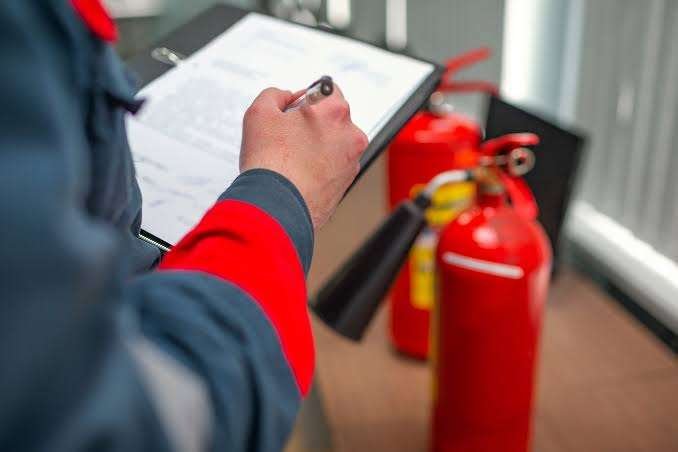
Depending on the business and its risks, this may include fire extinguishers, alarm systems, emergency lighting, fire doors, hydrants, hose reels, sprinklers, or specialized suppression equipment.
Equipment should be selected for the hazards present and maintained according to manufacturer instructions and applicable requirements.
Employees should not block equipment with stock, furniture, waste, or temporary displays.
Businesses should also keep records of inspections, maintenance, identified faults, and completed repairs where required.
If a critical system develops a fault, management should seek prompt professional advice and follow the building’s safety procedures while the issue is addressed.
Do not assume that equipment is operational simply because it looks undamaged from the outside.
8. Keep Emergency Exits Accessible
A workplace fire-safety plan must allow people to reach safety.
Doors, corridors, stairways, and designated escape routes should remain accessible. Stored goods, office furniture, deliveries, and temporary equipment should not obstruct them.
Exit signs and emergency lighting should be provided and maintained where required.
Managers should review evacuation arrangements when the workplace layout changes, additional staff are employed, or storage areas are reorganized.
Businesses should also consider the needs of visitors and people who may require additional assistance during an evacuation.
An exit that is normally accessible but blocked during deliveries or maintenance may create a serious problem during an emergency. Routine checks help identify such issues before they become dangerous.
9. Train Employees in Fire Safety
Employees play an important role in recognizing hazards and following workplace safety procedures.
Training should explain how to report hazards, respond to alarms, use designated escape routes, and reach the assembly point.
Workers should also understand that they must not delay evacuation to collect personal belongings or investigate the source of an alarm.
New employees should receive suitable safety information, and refresher training should be arranged when procedures or workplace risks change.
Where appropriate, businesses should conduct fire drills and review the results to identify problems with communication, access routes, or staff awareness.
The International Labour Organization emphasizes fire-risk management as an important workplace safety responsibility involving prevention, emergency preparedness, and training. <Cite refs={[“turn905452search11”]}/>
Only suitably trained people should consider using firefighting equipment, and only when the fire is small, the equipment is appropriate, and it is safe to do so. Evacuation and personal safety must take priority.
10. Prepare a Written Fire Emergency Plan
A written emergency plan helps employees understand what to do if a fire occurs.
The plan should reflect the building, work activities, number of occupants, and available exits.
It should explain how an alarm is raised, which routes should be used, where people should assemble, and who is responsible for contacting emergency services.
A practical plan should cover:
1. The method for reporting a fire.
2. The alarm or warning procedure.
3. Safe evacuation routes and alternative routes where available.
4. Designated assembly points.
5. Responsibilities for supervisors and other assigned personnel.
6. Procedures for accounting for staff and visitors.
7. Arrangements for people who need assistance.
8. The process for reporting and reviewing safety problems.
Staff should know where to find the plan and understand their responsibilities.
The plan should be reviewed after significant changes to the building, occupancy, work processes, or identified risks.
11. Carry Out Regular Fire-Safety Reviews
Fire prevention is an ongoing responsibility because businesses change over time.
New equipment may be introduced, stock levels may increase, departments may move, and contractors may carry out work that creates additional hazards.
A regular review helps determine whether existing precautions remain appropriate.
A review should consider fire hazards, people at risk, detection and warning arrangements, firefighting equipment, escape routes, training, and maintenance.
Punjab Civil Defence provides information about its fire-safety inspection functions for industrial, commercial, and high-rise premises in Punjab. Businesses should check with the relevant local authority about inspections and requirements applicable to their own premises. <Cite refs={[“turn905452search0″,”turn905452search2”]}/>
A review should lead to practical action. If an issue is found, assign responsibility, set an appropriate completion date, and confirm that the problem has been resolved.
12. Understand the Business Benefits of Fire Prevention
Fire prevention is primarily about protecting people, but it can also support business continuity.
A serious fire may damage equipment, destroy inventory, interrupt customer services, and require costly repairs. Even when injuries do not occur, disruption can affect employees, suppliers, customers, and business commitments.
Preventive maintenance, safe storage, training, and emergency planning can reduce avoidable risks and improve preparedness.
A business may also find that organized safety procedures make it easier to manage contractors, maintain equipment, and keep records.
However, no checklist or alarm system can eliminate all risk. Fire prevention works best when management treats it as part of everyday operations and allocates appropriate time and resources to it.
A Practical Fire Prevention Checklist for Businesses
Use this checklist as a starting point for workplace reviews:
– [ ] Fire hazards have been identified and assessed.
– [ ] Electrical equipment is maintained appropriately.
– [ ] Combustible waste is removed regularly.
– [ ] Flammable materials are stored safely.
– [ ] Cooking and heating equipment is used correctly.
– [ ] Suitable fire detection and warning arrangements are in place where required.
– [ ] Fire-safety equipment is accessible and maintained.
– [ ] Emergency exits and routes remain clear.
– [ ] Employees understand the emergency plan.
– [ ] Training and drills are arranged where appropriate.
– [ ] Inspection and maintenance records are kept where required.
– [ ] Identified defects are assigned for corrective action.
– [ ] The safety plan is reviewed when workplace conditions change.
This checklist is a general guide. It does not replace a site-specific assessment, professional advice, or requirements imposed by the relevant authority.
Conclusion
Every business benefits from taking fire prevention seriously. Electrical maintenance, safe storage, good housekeeping, suitable detection, accessible exits, employee training, and emergency planning can all help reduce workplace fire risks.
A fire alarm system in Pakistan may provide an important layer of protection when selected and installed appropriately, but it must be supported by regular maintenance and a well-understood evacuation procedure.
Businesses should assess their actual hazards, consult qualified professionals when necessary, and check the fire-safety requirements that apply to their premises.
Ultimately, fire prevention is not a one-time purchase or an occasional inspection. It is an ongoing commitment to protecting employees, visitors, property, and the continuity of business operations.
FAQs
1. Why is fire prevention important for every business?
Fire prevention helps reduce the likelihood of a fire, protects employees and visitors, limits potential property damage, and supports business continuity. It also helps businesses identify hazards before they develop into emergencies.
2. What are the most common fire hazards in workplaces?
Common hazards include electrical faults, damaged equipment, combustible waste, unsafe storage of flammable materials, cooking equipment, and poorly maintained machinery. The specific risks depend on the business’s activities.
3. Does every business need a fire alarm system?
Requirements depend on the building, its use, occupancy, design, and applicable regulations. Businesses should consult the relevant authority and a qualified fire-safety professional to determine suitable detection and warning arrangements.
4. How often should businesses review fire-safety arrangements?
Reviews should take place at appropriate intervals and whenever significant changes affect workplace risks, such as building alterations, new equipment, changed storage arrangements, or a fire-related incident. Equipment testing and servicing should follow applicable requirements and manufacturer instructions.
5. What should employees do when a fire alarm sounds?
Employees should follow the emergency plan, use a safe exit, and move to the designated assembly point. They should not delay evacuation to collect belongings or investigate the fire. They should contact emergency services according to workplace procedures.