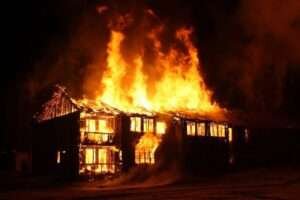
Fire safety education is an important part of creating a safer home, school, or community. Children can learn simple and age-appropriate safety habits, such as recognizing a fire alarm, staying away from flames, telling an adult about smoke, and knowing how to leave a building safely.
Fire blankets can also be included in basic fire-safety education. However, teaching children about a fire blanket should focus on recognition, prevention, and getting adult help, rather than expecting children to use firefighting equipment themselves. Fire blankets are designed for specific situations, and an adult should decide whether their use is appropriate during an emergency.
In Pakistan, fire-safety requirements vary according to the type and use of a building. The Building Code of Pakistan – Fire Safety Provisions 2016 contains requirements relating to fire detection, alarm systems, and other fire-protection measures. Pakistan Engineering Council continues to list these Fire Safety Provisions among its published building codes.
This guide explains how parents, teachers, and caregivers can introduce children to the concept of fire blankets in a simple and responsible way.
What Is a Fire Blanket?
A fire blanket is a specially manufactured fire-safety material designed for certain small fires. It works by covering an appropriate fire and restricting its access to oxygen.
Fire blankets are commonly associated with particular kitchen and domestic fire risks. Their suitability depends on the product, the type of fire, and the manufacturer’s instructions.
A fire blanket should not be treated as a universal solution for every fire.
When teaching children, the simplest explanation is:
“A fire blanket is safety equipment that adults may use for certain small fires.”
This wording helps children understand what the equipment is without encouraging them to approach a fire.
Why Should Children Learn About Fire Blankets?
Children do not need to become firefighters to benefit from fire-safety education.
Teaching them what a fire blanket looks like and what it is for can help them recognize important safety equipment around the home or school.
More importantly, fire-safety education can teach children to:
– Stay away from flames.
– Never play with fire.
– Tell an adult when they see smoke or flames.
– Listen when a fire alarm sounds.
– Leave a building when instructed.
– Never hide during a fire emergency.
– Never return to a burning building.
– Understand that firefighting equipment is generally for trained adults.
The goal is awareness rather than hands-on firefighting.
1. Start With Basic Fire Safety
Before explaining fire blankets, children should understand the basic idea of fire safety.
Parents and teachers can explain that fire can spread quickly and that smoke can also be dangerous.
Children should learn simple rules such as:
– Do not touch matches or lighters.
– Stay away from flames.
– Do not play near cooking equipment.
– Do not touch hot appliances.
– Tell an adult if something catches fire.
– Leave immediately when a fire alarm sounds.
– Follow adults during an evacuation.
These simple lessons provide a foundation for understanding why fire-safety equipment exists.
2. Show Children What a Fire Blanket Looks Like
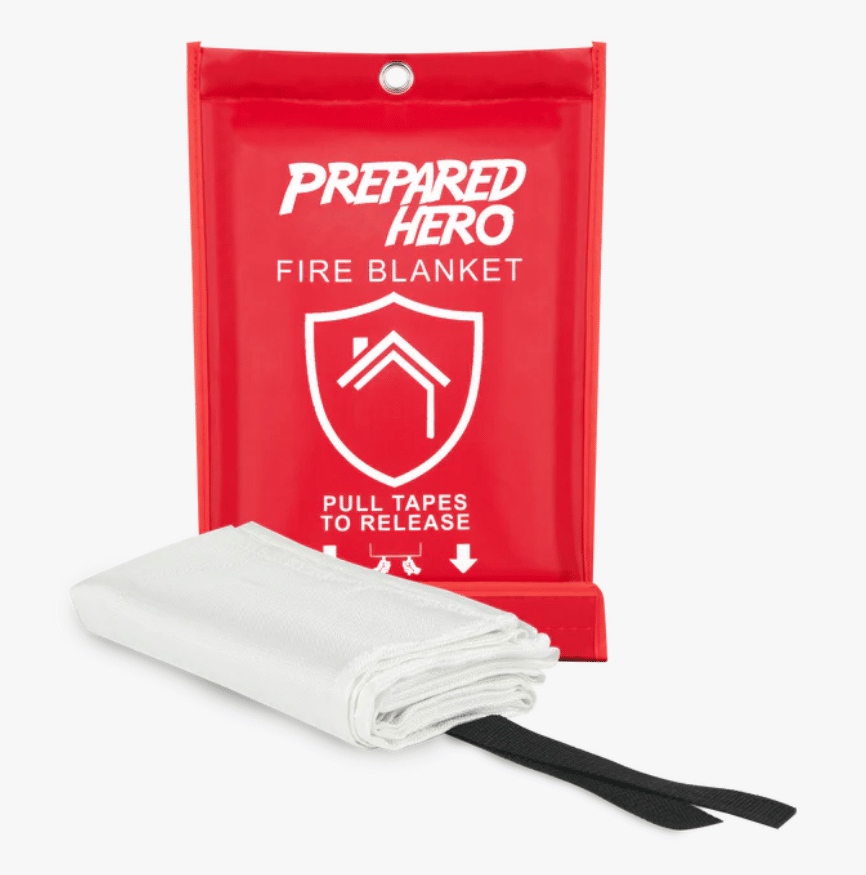
A fire blanket is generally stored in a protective container or pouch and may be clearly marked for emergency use.
An adult can show a child the location of the blanket without asking the child to remove or deploy it.
For example, a parent might explain:
“This is a fire blanket. It is emergency safety equipment. If there is a fire, you should tell an adult and move away.”
This approach allows children to recognize the equipment while reinforcing that they should not approach a fire.
3. Explain That Adults Handle Fire Emergencies
Children should not be expected to make decisions about whether a fire is small enough to handle.
During a real fire, conditions can change rapidly. Smoke can reduce visibility, heat can increase, and escape routes can become unsafe.
Therefore, children should have a simple rule:
See fire or smoke → tell an adult → move away → follow the evacuation plan.
This is more appropriate than teaching a child to approach a fire blanket and attempt to control a fire.
4. Explain the Purpose Without Demonstrating a Real Fire
Children can learn how a fire blanket works through a simple explanation rather than a practical fire demonstration.
An adult can explain that the blanket is intended to cover certain small fires and reduce the fire’s access to air.
There is no need to create a fire for a child to understand the concept.
Real fire demonstrations can introduce unnecessary hazards, particularly when children are involved.
Schools and families can instead use pictures, diagrams, approved educational materials, or supervised discussions.
5. Teach Children to Recognize a Fire Alarm
A fire blanket is only one part of fire safety.
Children should also learn what a fire alarm sounds or looks like in their environment.
A Fire alarm system in Pakistan can include equipment such as detection devices, manual call points, alarm notification devices, and control equipment, depending on the building and its requirements. Pakistan’s Building Code specifies fire-alarm requirements for various occupancies, including certain educational buildings.
For children, the lesson can remain simple:
“When you hear the fire alarm, stop what you are doing and follow the evacuation instructions.”
Children should not assume that an alarm is a drill unless an adult or responsible authority confirms it.
6. Teach Children Where to Go
Knowing where to go during an emergency is more important for a child than knowing how to operate firefighting equipment.
Parents and teachers can identify:
– Main exits
– Alternative exits
– Stairways
– Outdoor assembly areas
– Safe meeting points
Children should know that elevators may not be appropriate during certain fire emergencies and that they should follow the building’s evacuation instructions.
The Building Code of Pakistan contains provisions concerning means of egress and fire-safety arrangements.
7. Teach “Stop, Tell, Leave”
A simple three-step message can make fire-safety education easier for younger children.
Stop
Stop what you are doing when you notice a fire or hear the alarm.
Tell
Tell a nearby adult immediately.
Leave
Leave the building or affected area using the designated evacuation route.
This is easier for a child to remember than a long list of emergency instructions.
8. Children Should Not Practice With a Real Fire
Parents and teachers should not create a real fire so that children can practice using a fire blanket.
Children can learn the concept without exposure to flames, smoke, or heat.
Instead, educational activities can include:
– Identifying a fire blanket from a picture.
– Finding the designated location of safety equipment.
– Practicing evacuation routes.
– Learning the sound of an alarm.
– Drawing a fire-safety plan.
– Practicing how to alert an adult.
– Discussing what to do if they see smoke.
The purpose is to build safe habits, not firefighting skills.
9. Explain That Fire Blankets Have Limitations
Children should understand that a fire blanket cannot solve every fire problem.
Different fires require different forms of protection, and some fires should never be approached by an untrained person.
For example, a fire involving electrical equipment, gas, chemicals, or a rapidly spreading fire may require specialized emergency response.
The appropriate response for a child remains the same: alert an adult, move away, and evacuate when instructed.
10. Teach Children Never to Hide During a Fire
Children can sometimes become frightened during emergencies.
Parents should explain that hiding under furniture, inside cupboards, or in other concealed places can make it harder for adults and emergency responders to find them.
Instead, children should move toward a safe exit with an adult or follow the established evacuation procedure.
This lesson should be practiced calmly so that it becomes familiar rather than frightening.
11. Make the Lesson Age Appropriate
A five-year-old child and a teenager do not need exactly the same fire-safety lesson.
Younger Children
Focus on:
– Recognizing smoke.
– Recognizing the alarm sound.
– Telling an adult.
– Leaving safely.
– Never touching fire-related equipment.
Older Children
Older children can learn more about:
– Emergency exits.
– Fire-safety signs.
– Assembly points.
– Basic fire-prevention principles.
– Why smoke alarms matter.
– The purpose of different types of fire-safety equipment.
Even older children should not be expected to take unnecessary risks around an active fire.
12. Teach Kitchen Fire Awareness
Many households have fire risks in kitchens.
Children should understand that cooking equipment can become extremely hot and should not be treated as a toy.
Parents can teach children:
– Do not play in the kitchen while cooking is taking place.
– Do not touch hot cooking equipment.
– Do not attempt to deal with a cooking fire.
– Tell an adult immediately if smoke or flames appear.
– Move away when instructed.
A fire blanket may be available in some kitchens as part of an adult-managed fire-safety arrangement, but children should not be responsible for deciding when or how it should be used.
13. Keep Fire Blankets Accessible to Adults
Fire-safety equipment should be easy for responsible adults to identify and access.
At the same time, it should be positioned and maintained according to the manufacturer’s instructions.
Parents and building managers should make sure that equipment is not:
– Hidden behind storage.
– Blocked by furniture.
– Damaged.
– Difficult to identify.
– In an unsuitable location.
The purpose of teaching children about the equipment is recognition and safety awareness, not giving them responsibility for its operation.
14. Connect Fire Blankets With the Wider Fire-Safety System
A fire blanket should not be considered a complete fire-protection system.
A building may also require or benefit from:
– Smoke detectors
– Fire alarms
– Fire extinguishers
– Emergency lighting
– Fire doors
– Clear exits
– Evacuation plans
– Fire drills
– Staff training
The applicable requirements depend on the building and its occupancy.
Pakistan’s Building Code identifies fire alarm systems as required for certain occupancies, including new educational occupancies subject to stated provisions and exceptions.
This is particularly relevant to schools and other places where children spend significant amounts of time.
15. Make Fire Drills Calm and Educational
Fire drills give children an opportunity to practice evacuation without a real emergency.
A good drill should teach children:
– What the alarm means.
– Where to go.
– How to stay with their group.
– Where to assemble.
– How to listen to teachers or responsible adults.
Drills should be organized according to the school’s or building’s emergency plan.
Children should not be asked to practice extinguishing fires or handling fire blankets.
Pakistan’s Directorate General of Civil Defence provides fire-prevention and safety training courses, reflecting the role of organized education in fire preparedness.
16. Teach Children About Emergency Communication
Children should know how to communicate that there is a fire.
Depending on their age, they can learn to:
– Tell a parent.
– Tell a teacher.
– Alert another trusted adult.
– Follow the building’s emergency procedure.
– Know the appropriate emergency contact process taught by their caregivers.
The lesson should focus on getting adult assistance quickly rather than investigating the source of a fire.
17. Avoid Scaring Children
Fire safety education should be serious but not frightening.
Children do not need graphic descriptions of fire injuries or disasters to understand that fire is dangerous.
Use calm language:
“Fire can hurt people, so we move away and get an adult.”
This approach helps children remember the correct response without creating unnecessary fear.
18. Teach Children to Respect Fire-Safety Equipment
Children may naturally be curious about objects around the home.
Parents should explain that fire blankets, extinguishers, alarms, and other safety equipment are not toys.
Children should not:
– Pull equipment from its storage location unnecessarily.
– Tamper with alarms.
– Remove batteries from smoke alarms.
– Play with extinguishers.
– Open safety equipment without an adult’s direction.
Keeping equipment ready for an actual emergency is more important than allowing children to experiment with it.
19. Use Simple Fire-Safety Activities
Fire-safety education can be interactive without involving actual flames.
Activity: Find the Exit
Ask children to identify the safest exit from their room.
Activity: Hear the Alarm
Teach children what the building’s fire alarm sounds like.
Activity: Safety Equipment Hunt
With an adult, identify where smoke alarms, extinguishers, and fire blankets are located.
Activity: Family Meeting Point
Choose a safe outdoor meeting location.
Activity: Safety Drawing
Ask younger children to draw their home’s evacuation route.
These activities reinforce safety awareness without exposing children to fire.
20. Review the Lesson Regularly
Children learn through repetition.
A single conversation may not be enough.
Parents and teachers can review basic fire-safety rules periodically, particularly after:
– Moving to a new home.
– Changing schools.
– Renovating a building.
– Changing the evacuation plan.
– Installing new fire-safety equipment.
– Conducting a fire drill.
As children grow older, the information can become more detailed.
Fire Blanket Teaching Checklist for Parents
Parents can use the following checklist when discussing fire blankets:
– Explain what a fire blanket is.
– Explain that it is emergency safety equipment.
– Show children where it is located without creating a fire.
– Explain that children should not approach a fire.
– Teach children to tell an adult.
– Teach them to follow the evacuation plan.
– Explain the purpose of the fire alarm.
– Practice identifying exits.
– Establish an outdoor meeting point.
– Explain that safety equipment is not a toy.
– Review the lesson periodically.
Fire Blanket Education in Schools
Schools have additional responsibilities because many children may be present in one building at the same time.
A school’s fire-safety program can include:
– Fire alarm awareness.
– Evacuation drills.
– Clearly marked exits.
– Staff responsibilities.
– Assembly areas.
– Fire-safety equipment.
– Emergency communication.
– Age-appropriate safety education.
The Building Code of Pakistan includes provisions concerning fire alarm systems in educational occupancies, with specified exceptions for certain smaller buildings.
Schools should follow applicable requirements and their approved emergency procedures rather than creating informal firefighting activities for students.
Fire Alarm Systems and Children’s Safety
Early warning is an important part of protecting children during a building emergency.
A properly designed and maintained Fire alarm system in Pakistan can help alert occupants when a fire condition is detected. Depending on the building, a system can incorporate automatic detection, manual activation, audible or visual notification, and other safety functions.
Pakistan’s Building Code states that fire safety functions are to be installed in accordance with the applicable requirements and recognized standards, while fire alarm requirements vary according to occupancy.
For schools, offices, and other larger buildings, fire detection and alarm systems should be designed, installed, commissioned, and maintained by appropriately qualified professionals. Pakistan Engineering Council identifies fire detection, alarm, and suppression system work as a specific engineering category.
Why Adults Remain Responsible
Teaching children about fire blankets should never transfer responsibility for fire emergencies to them.
Adults and building managers are responsible for ensuring that:
– Fire-safety equipment is suitable.
– Equipment is maintained.
– Alarms are operational.
– Exits are accessible.
– Emergency plans are available.
– Children understand evacuation procedures.
– Staff know their responsibilities.
Children’s role is primarily to recognize danger, alert an adult, and evacuate safely.
Final Thoughts
Teaching kids about fire blankets should be part of a wider fire-safety education program. Children can learn what a fire blanket looks like, why it exists, and where safety equipment is located, but they should not be expected to approach an active fire or operate firefighting equipment.
The most useful lessons for children are simple: recognize the alarm, tell an adult, leave when instructed, stay away from fire, and never return to a burning building.
For homes, schools, and other buildings in Pakistan, fire blankets should be considered alongside smoke detection, alarms, extinguishers, emergency exits, evacuation procedures, and regular maintenance. Pakistan’s Building Code provides fire-safety provisions for different occupancies, while Civil Defence provides fire-prevention and safety training programs.
A Fire alarm system in Pakistan can provide an important early-warning layer in buildings where such systems are required or appropriate, but no individual piece of equipment replaces good fire prevention and evacuation planning.
For information about fire-safety equipment and related solutions in Pakistan, visit “Fire Safety Trading” (https://firesafetytrading.com.pk).
FAQs
1. Should children learn how to use a fire blanket?
Children can learn what a fire blanket is and where it is located, but they should not be expected to approach an active fire or use firefighting equipment. Their priority should be alerting an adult and moving to safety.
2. What should a child do if they see a fire?
A child should immediately tell a nearby adult, move away from the fire, and follow the building’s evacuation instructions. They should never try to investigate or fight the fire themselves.
3. Can a fire blanket replace a fire alarm?
No. A fire blanket and a fire alarm serve different purposes. A fire alarm provides warning when a fire condition is detected, while a fire blanket is intended for certain specific small-fire situations. Both are only parts of a broader fire-safety strategy.
4. Should schools teach students about fire blankets?
Schools can include fire blankets and other safety equipment in age-appropriate fire-safety education. The emphasis should be on recognizing equipment, understanding its purpose, and following evacuation procedures rather than having students handle active fires.
5. What other fire-safety lessons should children learn?
Children should learn how to recognize a fire alarm, identify exits, tell an adult about smoke or fire, follow evacuation instructions, stay away from flames, and go to the designated assembly point. Regular, calm fire drills can help reinforce these lessons.