Fire safety is an important responsibility for every family. Fires can start unexpectedly in kitchens, bedrooms, garages, or areas containing electrical appliances. Even a small incident can become dangerous if people do not receive an early warning or have a clear plan for leaving the building.
A fire extinguisher is one piece of equipment that may help control a small fire when the circumstances are safe and the person using it has appropriate training. However, an extinguisher cannot replace smoke alarms, safe household habits, or a well-planned escape route.
For families in Pakistan, understanding fire safety is particularly important because homes may contain gas appliances, electrical equipment, cooking facilities, and backup power systems. Knowing the purpose and limitations of fire extinguishers can help families make better decisions about protecting their homes.
This guide explains the main types of fire extinguishers, what families should consider before purchasing one, how to maintain safety equipment, and why early warning and evacuation planning are equally important.
1. Why Should Every Family Understand Fire Extinguishers?
A fire extinguisher is designed to release an extinguishing agent that can help control certain types of fires. Different models use different agents, and each model is intended for particular fire hazards.
For example, an extinguisher suitable for ordinary combustible materials may not be appropriate for every electrical or cooking-related fire. Choosing the wrong equipment can create additional risks instead of improving safety.
Families should understand that an extinguisher is not a guarantee against fire damage. Its usefulness depends on the fire type, the equipment’s condition, the surrounding conditions, and whether it is safe for a trained person to use it.
Before purchasing an extinguisher, consider the hazards present in the home. A professional supplier can help identify an appropriate model and explain its limitations.
The main goal is to prepare responsibly, not to encourage family members to fight fires themselves. If a fire is spreading, smoke is building up, or anyone feels unsafe, leaving the property and contacting emergency services should take priority.
2. Understanding the Different Types of Fire Extinguishers
Fire extinguishers are classified according to the fires they are designed to address. Understanding these categories can help families make more informed purchasing decisions.
Water-based extinguishers
Water-based extinguishers are generally intended for ordinary combustible materials, such as paper, wood, and some textiles. They are not suitable for every fire hazard, particularly situations involving energised electrical equipment or certain flammable liquids.
Families should never assume that water is a safe response to every fire.
Foam extinguishers
Some foam extinguishers are designed for particular fires involving ordinary combustible materials and flammable liquids. Their suitability depends on the specific product and its classification.
A qualified supplier should explain where a particular model may and may not be used.
Carbon dioxide extinguishers
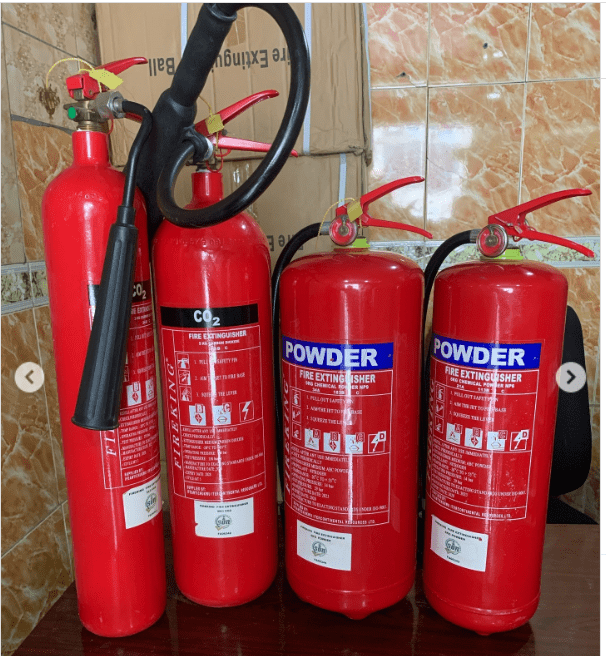
Carbon dioxide extinguishers are commonly associated with certain electrical equipment and flammable-liquid hazards. Their use requires appropriate training, and they may not be suitable for every household fire.
The product label and professional guidance should determine whether a model is appropriate for a particular location.
Dry chemical extinguishers
Some dry chemical extinguishers are designed to address multiple fire categories. A multipurpose model may be considered for certain household hazards, but families should verify its exact classification before buying.
The term “multipurpose” does not mean that the extinguisher is suitable for every possible fire.
Wet chemical extinguishers
Wet chemical extinguishers are designed for particular cooking-oil and cooking-fat fires, especially in commercial kitchen settings. They are not interchangeable with every other extinguisher type.
The important lesson is simple: select equipment according to the fire risks present, the product’s approved classification, and advice from a qualified professional.
3. How Can Families Choose the Right Extinguisher?
Choosing a fire extinguisher should begin with an assessment of the household’s needs. The cheapest option may not be appropriate if it cannot address the relevant hazards.
Before making a purchase, consider these factors:
Fire classification: Check which types of fires the extinguisher is designed to address.
Size and weight: The equipment should be suitable for its intended location and capable of being handled safely by the person responsible for it.
Product labelling: Look for clear information about the manufacturer, model, classification, operating limitations, and applicable approvals or testing standards.
Condition and shelf life: Check the product’s condition and any stated expiry or service requirements.
Maintenance support: Confirm that suitable servicing and replacement support is available.
Installation location: Consider where equipment should be kept so it remains accessible without obstructing an escape route.
For households considering a fire alarm system in Pakistan alongside extinguishers, it is helpful to think about the complete fire safety arrangement. Early warning, suitable equipment, safe exits, and family preparedness all have different roles.
4. Where Should Fire Extinguishers Be Kept?
The location of an extinguisher affects whether it can be accessed safely when needed. However, equipment should never be placed where someone would have to approach a fire or move through smoke to reach it.
A qualified professional can advise on suitable locations based on the household layout and potential hazards.
General considerations include:
– Keeping equipment accessible and clearly identifiable.
– Avoiding locations where furniture or stored items could block access.
– Following the manufacturer’s instructions for mounting and storage.
– Protecting the equipment from unsuitable environmental conditions.
– Ensuring that its placement does not obstruct doors, corridors, or escape routes.
Families should also make sure that children understand the purpose of the equipment and know not to play with it.
An extinguisher should be treated as safety equipment, not as a toy or an ordinary household object.
5. What Should Families Know About Fire Extinguisher Safety?
Having an extinguisher in the home does not mean that every family member should attempt to use it during an emergency.
Fire can spread quickly, and smoke may make conditions dangerous before flames become obvious. The wrong decision can delay evacuation and expose people to harm.
Families should understand these basic principles:
– Raise the alarm and warn others when it is safe to do so.
– Leave the building if there is a fire or conditions are becoming unsafe.
– Contact the appropriate emergency services from a safe location.
– Never enter a smoke-filled area to retrieve equipment.
– Do not attempt to fight a spreading or uncertain fire.
– Follow the building’s emergency plan and the instructions of emergency responders.
Only a person with appropriate training should consider using an extinguisher when the fire is very small, the equipment is suitable, conditions are safe, and a clear escape route is available. If any of these conditions is uncertain, evacuation is the safer priority.
The purpose of fire safety equipment is to support protection, not to put people in unnecessary danger.
6. Why Are Smoke Alarms and Fire Alarm Systems Important?
An extinguisher and an alarm serve different purposes. An extinguisher may help control a suitable small fire, while an alarm provides a warning that allows people to respond to danger.
Smoke alarms can alert occupants when smoke is detected. In larger residential buildings, a more comprehensive fire alarm system may be required depending on the building’s design, occupancy, and applicable regulations.
When evaluating a fire alarm system in Pakistan, homeowners and property managers should consider whether the system is suitable for the building, properly installed, and maintained according to the manufacturer’s guidance and applicable requirements.
A suitable arrangement may include smoke or heat detectors, audible warnings, manual alarm points, and other components selected for the property.
Families should understand what their alarm sounds like and what actions to take when it activates. Building residents should also become familiar with shared alarm arrangements and designated escape routes.
Remember that alarms do not replace prevention or evacuation planning. Their main value is providing an early warning so occupants can respond promptly.
7. Fire Extinguisher Maintenance: What Should You Check?
Fire extinguishers require appropriate maintenance throughout their service life. A unit that is damaged, incorrectly stored, or overdue for servicing may not perform as expected.
Families should follow the manufacturer’s instructions and arrange professional servicing when required.
Routine attention may include checking:
Accessibility: Make sure the extinguisher has not become blocked by furniture or stored items.
Physical condition: Look for obvious damage, corrosion, leakage, or other visible concerns.
Pressure indication: Where a pressure gauge is provided, check that its indication is within the manufacturer’s specified range.
Labels and instructions: Ensure that the product information remains readable.
Service information: Review the maintenance tag or service record and arrange professional attention when required.
Hose and components: Have damaged or questionable components assessed by a competent service provider.
Do not attempt repairs or modifications yourself. If an extinguisher appears damaged or unsuitable, arrange professional inspection or replacement.
The Directorate General of Civil Defence recommends regular servicing of fire extinguishers and testing of fire alarms and other safety systems. This reinforces the importance of maintaining equipment rather than simply purchasing it.
8. Common Fire Extinguisher Mistakes Families Should Avoid
Some mistakes arise because people assume that having an extinguisher is enough to make a home safe.
Buying without checking the fire classification
An extinguisher must be appropriate for the hazards it is intended to address. Product classification should be verified before purchase.
Ignoring maintenance
Equipment can deteriorate over time. Neglecting servicing may reduce its reliability.
Blocking access
An extinguisher is less useful if it is difficult to locate or reach safely.
Assuming every family member can use it
Children and other household members should not be expected to manage a fire emergency. Appropriate training and a clear evacuation plan are essential.
Delaying evacuation
People sometimes focus on protecting belongings or trying to control a fire. This can waste valuable time.
Forgetting smoke detection
An extinguisher does not provide an early warning. Suitable alarms and a household escape plan remain important.
Avoiding these mistakes helps families develop a more realistic understanding of what fire safety equipment can accomplish.
9. How Can Parents Teach Children About Fire Safety?
Children benefit from simple, clear instructions that are appropriate for their age. They should understand that fire extinguishers are not toys and that their responsibility during a fire is to get to safety.
Parents and caregivers can teach children to recognise the sound of the home’s smoke alarm, identify safe exits, and know the family’s outdoor meeting place.
Families should also explain why children must not play with matches, lighters, cooking equipment, or electrical outlets.
An emergency escape plan should identify available exits and an alternative route where possible. Practise the plan calmly and make sure children know not to return inside after leaving.
Children should not be expected to use firefighting equipment or handle dangerous situations independently. Adults should focus on prevention, supervision, and helping children evacuate safely.
10. Fire Safety Precautions for Pakistani Homes
Homes in Pakistan can have a variety of fire hazards, depending on their appliances, cooking arrangements, electrical systems, and backup power equipment.
Families can improve preparedness by following sensible preventive practices.
Electrical safety: Avoid overloading sockets and stop using damaged electrical equipment. Arrange repairs through qualified professionals.
Kitchen safety: Stay attentive while cooking and keep combustible materials away from heat sources.
Gas appliances: Follow the manufacturer’s instructions and arrange qualified assistance if an appliance or connection appears faulty.
Backup power equipment: Follow the equipment manufacturer’s safety requirements and obtain professional guidance on installation and maintenance.
Safe storage: Keep matches, lighters, and other potential ignition sources away from young children.
Clear exits: Keep corridors, doorways, and escape routes free from obstructions.
Emergency planning: Make sure family members know how to leave the home and where to meet outside.
These precautions do not eliminate every risk, but they can help reduce preventable hazards and support a safer household environment.
11. How Much Should a Family Spend on Fire Safety?
Fire safety budgets vary depending on the size of the property, the existing equipment, and the hazards present. There is no single package that is suitable for every home.
Instead of buying products simply because they are available, families should identify their needs and prioritise appropriate measures.
A practical plan may include suitable smoke alarms, an appropriately selected extinguisher where advisable, maintenance, and an emergency escape plan.
When comparing products, consider their classification, documentation, quality, servicing requirements, and expected service life. A lower purchase price may not provide good value if the equipment is unsuitable or difficult to maintain.
For apartment buildings and larger properties, owners or building managers should also review shared fire protection systems and applicable building requirements.
The objective is to make informed safety decisions rather than spend unnecessarily or rely on equipment that does not meet the property’s needs.
12. Build a Complete Family Fire Safety Plan
Fire extinguishers are most useful when they form part of a broader safety arrangement.
Families can begin by identifying common hazards and deciding how to reduce them. They should then check whether suitable smoke alarms are installed and maintained, establish clear escape routes, and agree on a meeting place outside.
Everyone should know how to raise the alarm, leave the building, and contact emergency services. Family members should understand that personal safety comes before possessions and that they must not re-enter a building after evacuating.
If the household is part of an apartment building or housing society, residents should learn the shared evacuation procedures and follow the building’s instructions during an emergency.
Review the plan when household circumstances change, such as after renovations or a change in sleeping arrangements.
Regular preparation makes it easier for family members to understand their roles and respond more calmly if an emergency occurs.
Conclusion
Fire extinguishers can be a useful part of household fire protection, but their effectiveness depends on selecting the appropriate type, maintaining the equipment, and understanding its limitations.
Families should not rely on an extinguisher alone. Safe electrical and cooking practices, suitable smoke detection, clear escape routes, and an emergency plan all contribute to a more complete approach to fire safety.
For households considering a fire alarm system in Pakistan, it is important to choose equipment suited to the property and ensure that it is installed and maintained appropriately.
Most importantly, everyone should understand that evacuation takes priority when a fire becomes dangerous. By combining prevention, early warning, responsible equipment maintenance, and family education, households can take meaningful steps towards protecting the people who matter most.
Frequently Asked Questions (FAQs)
1. Which fire extinguisher is best for a home?
The appropriate extinguisher depends on the potential fire hazards in the home. Check the product’s fire classification and seek advice from a qualified supplier rather than assuming one type is suitable for every situation.
2. Does every home in Pakistan need a fire extinguisher?
Requirements depend on the property’s type, applicable regulations, and specific circumstances. Families can seek advice from a qualified fire safety professional about appropriate equipment and should also consider smoke detection and an escape plan.
3. How often should a fire extinguisher be serviced?
Follow the manufacturer’s instructions, applicable standards, and any relevant local requirements. Have the equipment professionally serviced at the required intervals and arrange an assessment if it appears damaged or defective.
4. Can a fire extinguisher replace a smoke alarm?
No. An extinguisher and a smoke alarm serve different purposes. An extinguisher may help control a suitable small fire, while an alarm warns occupants of a potential fire so they can respond and evacuate.
5. What should a family do if a fire becomes dangerous?
Warn others if it is safe, leave the building using a safe exit, and contact emergency services from a safe location. Do not delay evacuation to collect possessions or attempt to control a spreading fire.