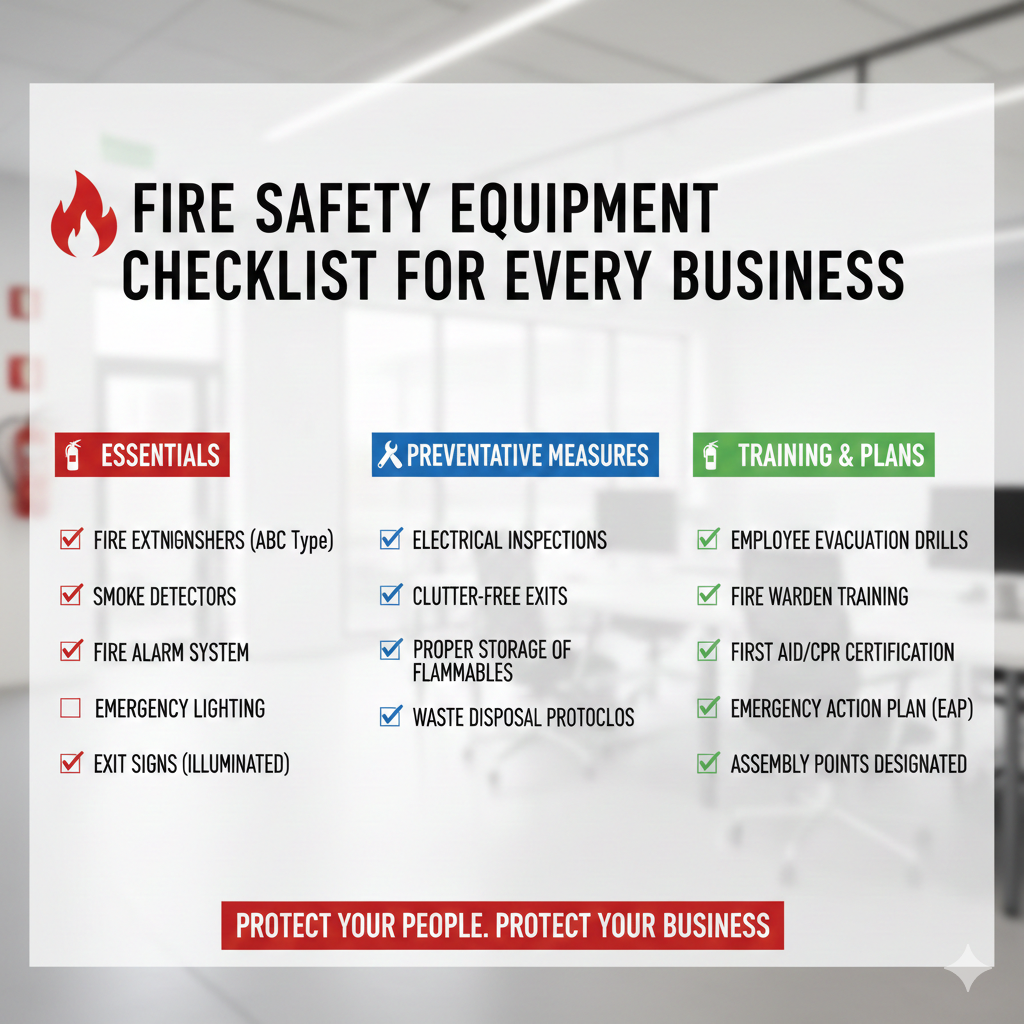
Ensuring the safety of your employees, customers, and assets should be a top priority for every business owner. Fire incidents can occur without warning, and the consequences can be devastating. One of the most effective ways to prevent major losses is by having proper fire safety equipment in place. This guide provides a detailed checklist of essential fire safety equipment for every business, helping you create a safer workplace and comply with local safety regulations.
Why Fire Safety Equipment is Crucial for Businesses
Fire safety equipment is more than just a legal requirement; it is a critical component of workplace safety. Fires can spread rapidly, causing damage to property, injuring employees, and sometimes even resulting in fatalities. Having the right equipment ensures that fire incidents are controlled quickly and efficiently, reducing the risk of severe damage. Additionally, well-maintained fire safety equipment demonstrates your commitment to safety, which can improve employee morale and enhance your business reputation.
Key Fire Safety Equipment Every Business Needs
-
Fire Extinguishers
Fire extinguishers are the first line of defense against small fires. Different types of extinguishers are suitable for different fire classes:-
Water extinguishers are ideal for ordinary combustibles like paper, wood, and cloth.
-
CO2 extinguishers are effective for electrical fires.
-
Foam extinguishers can handle flammable liquids such as oils and paints.
-
Dry powder extinguishers are versatile and can be used for various types of fires.
-
Every business should have multiple fire extinguishers placed in easily accessible areas. Regular checks and maintenance are crucial to ensure they function correctly in an emergency.
-
Fire Blankets
Fire blankets are essential for controlling small fires, especially in kitchens or areas with flammable liquids. They work by smothering the fire and cutting off the oxygen supply. Fire blankets are compact, easy to use, and must be placed in visible and accessible locations. -
Smoke and Heat Detectors
Early detection of fire is critical to preventing damage. Smoke detectors and heat detectors alert occupants before a fire spreads. Smoke detectors detect smoke particles in the air, while heat detectors respond to rapid temperature changes. Both types should be installed in key areas, including offices, storage rooms, and kitchens. Regular testing and battery replacement are necessary for optimal performance. -
Fire Alarm Systems
A fire alarm system ensures that everyone in the building is notified immediately in case of a fire. Modern systems can be connected to emergency services, allowing for quick response times. Fire alarms should be loud, clear, and tested regularly to confirm they work effectively. -
Emergency Exit Signs and Lighting
Clear exit signs and emergency lighting are essential for guiding people safely out of the building during a fire. In the chaos of a fire, visibility may be low, and smoke can obscure normal exit paths. Illuminated signs and backup emergency lights help prevent panic and ensure a smooth evacuation. -
Sprinkler Systems
Automatic sprinkler systems are highly effective in controlling large fires. They detect heat and release water to suppress flames before they spread. Businesses dealing with flammable materials or high-value equipment should strongly consider installing sprinkler systems, as they can significantly reduce property damage and save lives. -
Fire Hose Reels
Fire hose reels provide a continuous supply of water and are suitable for larger fires. They should be installed in areas where water access is possible and employees are trained to use them safely. Regular maintenance ensures that the hoses are ready when needed. -
First Aid Kits
While not a fire-fighting tool directly, first aid kits are an essential part of fire safety. Burns and injuries may occur during a fire, and having a well-stocked first aid kit allows immediate treatment, which can prevent complications before professional help arrives.
Fire Safety Equipment Maintenance and Training
Installing fire safety equipment is not enough; proper maintenance and employee training are equally important. Here’s how you can ensure your equipment remains effective:
-
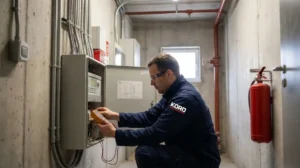
Regular Inspections: Check all equipment, including fire extinguishers, alarms, and sprinkler systems, at least once every six months. Look for signs of damage, corrosion, or expired components.
-
Testing Detectors and Alarms: Smoke detectors, heat detectors, and alarms should be tested monthly. Replace batteries as needed and ensure they are audible throughout the building.
-
Employee Training: Conduct regular fire drills and train staff on how to use fire extinguishers, fire blankets, and emergency exits. Practical knowledge ensures that employees respond quickly and efficiently in real emergencies.
-
Documentation: Keep detailed records of maintenance, inspections, and staff training. This documentation can crucial during safety audits and may be required by local fire authorities.
Creating a Fire Safety Plan
A fire safety plan complements your fire safety equipment checklist. This plan should include evacuation routes, assembly points, and designated personnel responsible for coordinating emergency response. Display the plan prominently and review it regularly to incorporate any changes in building layout or staffing.
Special Considerations for Different Business Types
Different businesses have unique fire risks. For example:
-
Restaurants and Kitchens: Higher risk of grease fires means fire blankets and Class K fire extinguishers are essential.
-
Offices: Electrical fires are more common, so CO2 extinguishers and smoke detectors are critical.
-
Warehouses: Large storage areas require multiple fire extinguishers, sprinkler systems, and fire hose reels.
-
Factories: High-risk equipment areas need heat detectors, specialized extinguishers, and a comprehensive fire safety plan.
Tailoring your fire safety equipment and strategies to your specific business type ensures maximum protection.
Legal Requirements for Fire Safety Equipment in Pakistan
In Pakistan, businesses must comply with the local fire safety regulations set by the provincial fire departments. These regulations often require:
-
Installation of fire extinguishers and alarms.
-
Clearly marked emergency exits.
-
Regular inspection and maintenance of fire safety equipment.
-
Employee fire safety training.
Compliance not only avoids fines but also ensures that your business has prepared for emergencies.
Conclusion
Fire safety is not an option; it is a responsibility every business must take seriously. Proper fire safety equipment, combined with regular maintenance, training, and a well-thought-out fire safety plan, can prevent disasters and save lives. By following this checklist, business owners can ensure a safer environment for employees, customers, and assets.
Investing in fire safety equipment is an investment in the continuity and reputation of your business. It has always better to prepared than to face the consequences of neglect. Regular reviews and updates of your fire safety measures keep your business compliant, secure, and ready for any emergency.
Also Read: