

Fire is one of the most dangerous threats in homes, offices, and industrial settings. Even a small spark can cause extensive damage if not controlled immediately. Fire extinguishers are essential safety tools that help prevent the spread of fire, protect lives, and minimize property loss. Understanding different types of fire extinguishers, their uses, and costs in Pakistan, especially in cities like Lahore and Karachi, is crucial for safety-conscious individuals and businesses.
What is a Fire Extinguisher?
A fire extinguisher is a portable device designed to suppress or extinguish small fires. It contains substances such as water, foam, dry chemical powder, carbon dioxide, or wet chemicals, which work to put out fire. Fire extinguishers are an integral part of fire safety equipment in homes, offices, factories, hospitals, and schools.
Using a fire extinguisher correctly can save lives and property, but choosing the right type according to the fire source is equally important.
Types of Fire Extinguishers and Their Uses
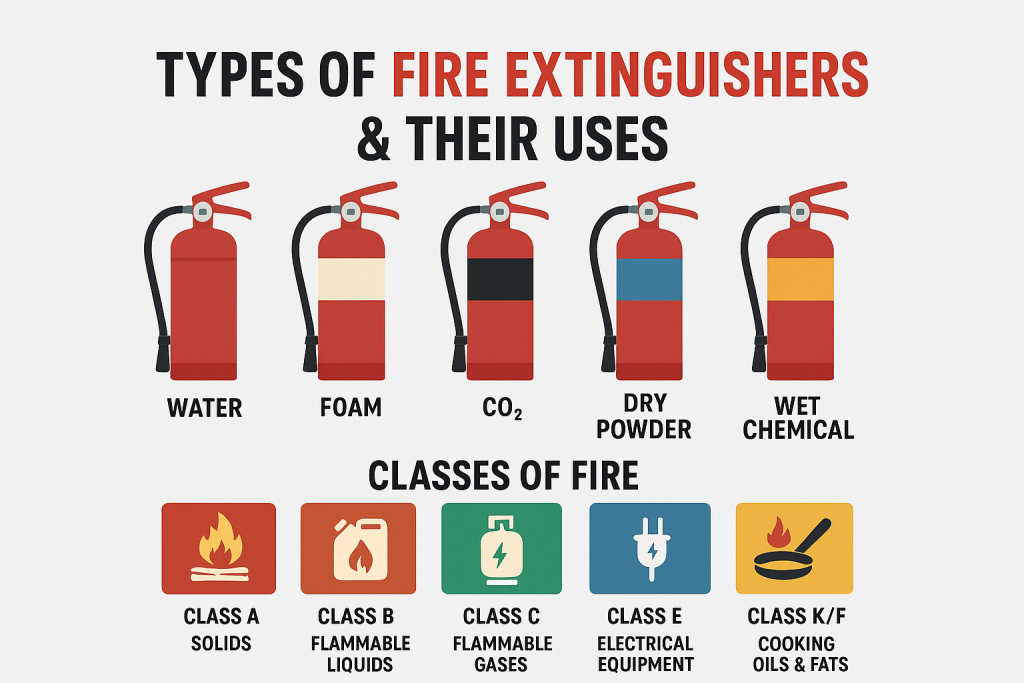
Fire extinguishers are classified based on the type of fire they can tackle. Understanding these categories helps in effective fire management. The main types include:
1. Water Fire Extinguishers
Water extinguishers are filled with water and are effective against Class A fires, which involve ordinary combustibles like wood, paper, cloth, and plastics. They work by cooling the burning material below its ignition point.
Uses:
-
Residential homes for furniture fires
-
Offices for paper or trash fires
Limitations:
Water extinguishers should never be used on electrical fires or flammable liquids, as this can cause electric shocks or spread the fire.
2. Foam Fire Extinguishers
Foam fire extinguishers contain a foam solution that creates a blanket over flammable liquids, cutting off oxygen and preventing re-ignition. They are effective against Class A and Class B fires.
Uses:
-
Petrol or diesel fires
-
Paint shop fires
-
Office fires with flammable liquids
Foam extinguishers are versatile and widely used in industrial and commercial settings.
3. Dry Chemical Powder Fire Extinguishers
These are among the most commonly used extinguishers. Dry chemical powders can put out Class A, B, and C fires. They work by interrupting the chemical reaction of the fire.
Uses:
-
Electrical fires
-
Flammable liquid fires
-
Kitchen and office fires
Dry chemical extinguishers are effective but leave powder residue, which may require cleaning after use.
4. Carbon Dioxide (CO2) Fire Extinguishers
CO2 extinguishers release carbon dioxide gas, which displaces oxygen and cools the fire. They are ideal for electrical fires and flammable liquids.
Uses:
-
Electrical panels and server rooms
-
Laboratories with chemical fires
CO2 extinguishers do not leave residue, making them suitable for sensitive equipment areas.
5. Wet Chemical Fire Extinguishers
These extinguishers are specifically designed for Class K fires, which involve cooking oils and fats. They release a chemical solution that reacts with the oil to form a non-flammable layer.
Uses:
-
Commercial kitchens
-
Restaurants
-
Cafeterias
Wet chemical extinguishers are a must-have in any area where deep-frying or heavy cooking is done.
How to Use a Fire Extinguisher: PASS Method
Using a fire extinguisher effectively requires proper technique. The widely recommended method is PASS:
-
P – Pull: Pull the safety pin from the handle.
-
A – Aim: Aim the nozzle at the base of the fire.
-
S – Squeeze: Squeeze the handle to release the extinguishing agent.
-
S – Sweep: Sweep the nozzle side to side until the fire is completely out.
It is important to stand at a safe distance from the fire, usually 6 to 8 feet, and approach cautiously as the fire reduces.
Choosing the Right Fire Extinguisher for Your Needs
Selecting the appropriate fire extinguisher depends on the environment and type of fire likely to occur. Here are some guidelines:
-
Homes: Water or dry chemical extinguishers
-
Offices: Dry chemical or CO2 extinguishers
-
Factories: Foam or dry chemical extinguishers
-
Kitchens: Wet chemical extinguishers
Regular inspection and maintenance of fire extinguishers are equally crucial. Expired or damaged extinguishers may fail during emergencies.
Fire Extinguisher Safety Tips
-
Place fire extinguishers in visible, easily accessible locations.
-
Train all family members or employees on proper usage.
-
Regularly check the pressure gauge and expiration date.
-
Replace or refill extinguishers after use.
-
Never attempt to extinguish a fire that is too large—evacuate and call emergency services.
Fire Extinguishers in Pakistan: Price in Lahore and Karachi
The cost of fire extinguishers in Pakistan varies depending on type, size, and brand. For reference:
-
Water Extinguisher (9 liters):
-
Price in Lahore: PKR 2,500 – 3,000
-
Price in Karachi: PKR 2,700 – 3,200
-
-
Foam Extinguisher (9 liters):
-
Price in Lahore: PKR 4,500 – 5,500
-
Price in Karachi: PKR 4,700 – 5,800
-
-
Dry Chemical Powder Extinguisher (4 kg):
-
Price in Lahore: PKR 3,000 – 4,500
-
Price in Karachi: PKR 3,200 – 4,700
-
-
CO2 Extinguisher (2 kg):
-
Price in Lahore: PKR 5,500 – 6,500
-
Price in Karachi: PKR 5,800 – 6,800
-
-
Wet Chemical Extinguisher (6 liters):
-
Price in Lahore: PKR 6,000 – 7,500
-
Price in Karachi: PKR 6,200 – 7,800
-
These prices can fluctuate based on the brand, quality, and retailer. Investing in a certified fire extinguisher ensures better reliability and safety.
Importance of Fire Extinguishers in Daily Life
Fire extinguishers are not just legal requirements for businesses—they are lifesaving devices. Fires can start unexpectedly from electrical faults, kitchen accidents, or flammable liquids. Having a ready and functional fire extinguisher significantly reduces risk and ensures quick response.
For families in Lahore or Karachi, keeping at least one fire extinguisher in the kitchen and one in the living area is recommended. Businesses should install multiple extinguishers at key locations such as entrances, production areas, and storage rooms.
Fire Extinguishers and Fire Safety Education
Knowledge about fire extinguishers is incomplete without understanding fire safety. Educating people on fire hazards, evacuation routes, and emergency contacts complements the role of fire extinguishers. Schools, offices, and industrial facilities in Pakistan increasingly conduct fire drills and training sessions to ensure preparedness.
Maintaining Fire Extinguishers
A fire extinguisher is only effective if it is in proper working condition. Maintenance tips include:
-
Checking the pressure gauge monthly
-
Inspecting the cylinder for dents, corrosion, or leaks
-
Ensuring the nozzle is clear of obstruction
-
Replacing extinguishers past their expiration date
-
Professional servicing every 12 months
Regular maintenance ensures that in case of an emergency, the fire extinguisher works perfectly.
Conclusion
Fire extinguishers are indispensable tools for preventing fire-related accidents and property damage. Understanding different types, proper usage, and maintenance is vital for homes, offices, and industrial environments. In Pakistan, cities like Lahore and Karachi have a wide range of options, and knowing the price in Lahore and price in Karachi can help buyers make informed decisions.
Investing in high-quality fire extinguishers and educating yourself and your team on fire safety practices can save lives and protect assets. Fire safety is not optional—it is a responsibility that everyone must take seriously.
Also Read:


