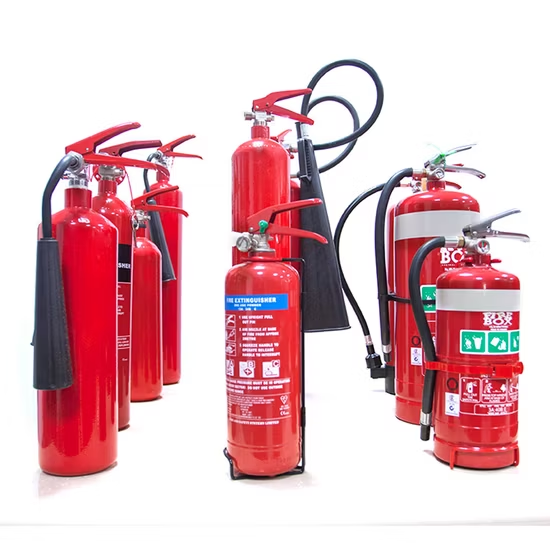
Fire extinguishers are essential safety tools for homes, offices, shops, factories, and commercial buildings in Pakistan. But choosing the right extinguisher can be confusing because each fire type requires a different solution. ABC, CO2, Water, and Foam extinguishers are the most commonly used options, and each one works in a unique way. Understanding the difference between them helps you select the correct extinguisher for daily use and emergency situations.
Understanding Fire Classes
Fire Safety Trading (Pvt)
ToggleBefore comparing extinguishers, it is important to know the different classes of fire:
Class A
Fires from solid materials like wood, paper, cloth, plastic.
Class B
Fires caused by liquids such as petrol, diesel, paints, thinner, grease.
Class C
Fires involving gases like LPG, methane, propane.
Electrical Fires (E-Class)
Fires from electrical panels, wiring, appliances.
Each extinguisher is designed for specific fire classes, which is why choosing the correct one matters.
ABC Fire Extinguisher
ABC extinguishers are the most popular option in Pakistan due to their multipurpose use.
What It Contains
Dry Chemical Powder (DCP), usually mono-ammonium phosphate.
How It Works
The dry powder smothers the fire by interrupting the chemical reaction and forming a protective layer on burning materials.
Best For
-
Class A fires: Wood, paper, plastic
-
Class B fires: Petrol, diesel, oil
-
Class C fires: Gas leaks, cylinder fires
-
Electrical fires (indirect use)
Advantages
-
Works on multiple fire types
-
Easy to operate
-
Affordable and widely available
-
Suitable for homes, shops, offices
Limitations
-
Leaves powder residue
-
Not ideal for sensitive electronic equipment
-
Indoor cleanup is required after use
CO2 Fire Extinguisher
CO2 extinguishers are commonly used in offices and areas with electrical equipment.
What It Contains
Compressed Carbon Dioxide gas.
How It Works
CO2 displaces oxygen around the fire and cools electrical components.
Best For
-
Electrical fires (panels, computers, servers)
-
Class B fires: Petrol, oils, chemicals
Advantages
-
Leaves no residue
-
Safe for electronic equipment
-
Effective for electrical short-circuits
-
No cleanup required
Limitations
-
Not effective on Class A fires
-
Limited range and discharge time
-
Should not be used in confined spaces due to oxygen displacement
Water Fire Extinguisher
Water extinguishers are the oldest and simplest type.
What It Contains
Pressurized water.
How It Works
Water cools the burning material, reducing heat and stopping fire spread.
Best For
-
Class A fires only
(wood, paper, cloth, furniture)
Advantages
-
Very effective on solid-material fires
-
Environmentally friendly
-
Low-cost option
Limitations
-
Never use on electrical fires
-
Dangerous on petrol or oil fires
-
Can damage equipment and electronics
-
Not suitable for kitchens
Foam Fire Extinguisher
Foam extinguishers are ideal for liquid fires and general commercial use.
What It Contains
Aqueous film-forming foam (AFFF).
How It Works
The foam creates a blanket over the burning liquid, stopping oxygen supply and preventing re-ignition.
Best For
-
Class B fires (fuel, oil, paints)
-
Class A fires (solid materials)
Advantages
-
Excellent for petrol and oil fires
-
Prevents re-ignition
-
Covers surfaces effectively
-
Commonly used in workshops, fuel stations, warehouses
Limitations
-
Not suitable for electrical fires
-
Leaves foam residue
-
Slightly more expensive than powder extinguishers
Side-by-Side Comparison
Fire Class Compatibility
| Extinguisher | A | B | C | Electrical |
|---|---|---|---|---|
| ABC Powder | ✔ | ✔ | ✔ | ✔ (indirect) |
| CO2 | ✖ | ✔ | ✖ | ✔ |
| Water | ✔ | ✖ | ✖ | ✖ |
| Foam | ✔ | ✔ | ✖ | ✖ |
Residue
-
ABC: Powder residue
-
CO2: No residue
-
Water: Clean but wet
-
Foam: Thick foam layer
Best Locations
-
ABC: Homes, schools, stores, restaurants
-
CO2: Offices, server rooms, IT equipment
-
Water: Warehouses, paper storage, furniture shops
-
Foam: Fuel stations, garages, paint shops, workshops
How to Choose the Right Extinguisher in Pakistan
Selecting the right extinguisher depends on your environment:
Homes
ABC extinguisher is the safest all-round choice.
Offices & IT Rooms
CO2 extinguisher protects electronics without damage.
Workshops & Industrial Areas
Foam or ABC extinguishers work best.
Fuel Stations & Chemical Storage
Foam extinguishers offer strong coverage for liquid fires.
Warehouses with Wood/Paper
Water or ABC extinguishers provide effective cooling.
Common Mistakes to Avoid
-
Using water on electrical or petrol fires
-
Placing extinguishers in hidden corners
-
Not checking pressure gauges regularly
-
Buying low-quality, non-certified extinguishers
-
Using CO2 in small rooms without ventilation
Conclusion
Understanding the difference between ABC, CO2, Water, and Foam extinguishers helps you make safer decisions. Each extinguisher is designed for a specific fire type, and using the wrong one can make the situation worse. For Pakistani homes, offices, and businesses, choosing the right extinguisher ensures better protection, quick response, and peace of mind.
If you know your fire risks and choose your extinguisher wisely, you improve safety for everyone around you.