Fire safety signage plays an important role in protecting people inside residential, commercial, industrial, and public buildings. These signs provide essential information about emergency exits, escape routes, fire equipment, warning areas, and safety procedures. During an emergency, clear and visible signs can help occupants understand where to go and which areas to avoid.
In Pakistan, fire safety signage is important in offices, factories, warehouses, hospitals, schools, shopping centres, hotels, restaurants, and apartment buildings. As buildings become larger and more complex, providing clear safety information becomes increasingly important.
However, choosing the right signs involves more than purchasing a few boards and placing them on walls. Buyers need to consider the building’s layout, occupancy, lighting conditions, environmental exposure, visibility, materials, and applicable safety requirements.
Fire safety signage also works alongside other protective measures. A properly planned Fire alarm system in Pakistan can alert occupants to potential fire conditions, while suitable signs help guide them toward designated exits and emergency equipment.
This buyer’s guide explains the different types of fire safety signs, important purchasing considerations, common mistakes, installation requirements, and maintenance practices.
1. Understand the Purpose of Fire Safety Signage
Before purchasing fire safety signs, it is important to understand what they are designed to communicate.
Fire safety signage provides visual instructions and warnings that help people recognize important safety information. Unlike general notices, these signs use standardized symbols, colours, and wording to communicate information quickly.
In an emergency, people may have limited time to read long instructions. Clear signs can help them identify important locations and understand the intended direction of movement.
Fire safety signs generally serve four main purposes:
Emergency identification: These signs identify emergency exits, escape routes, and other designated safety locations.
Fire equipment identification: They indicate the location of fire extinguishers, alarm call points, hose reels, and other approved equipment.
Warning information: They alert people to potential hazards or areas where additional caution is required.
Emergency instructions: They provide important information about evacuation procedures and other building safety arrangements.
The right signage should support the building’s overall fire safety plan rather than being selected without considering the location and its actual requirements.
2. Know the Different Types of Fire Safety Signs
Different signs communicate different types of information. Buyers should understand these categories before selecting products.
A. Emergency Exit Signs
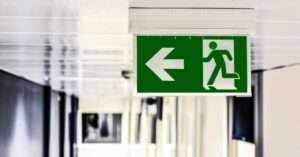
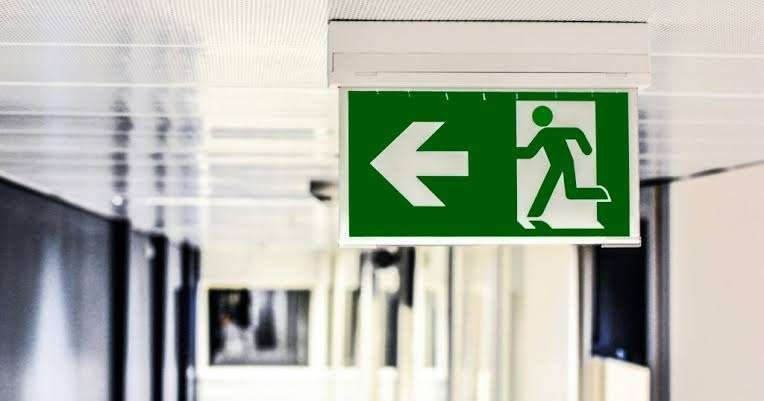
Emergency exit signs identify designated exits that occupants can use during an emergency.
They are commonly installed above doors or at other suitable locations where people need clear direction toward an escape route.
Important considerations include visibility, correct placement, lighting conditions, and consistency with the building’s evacuation plan.
B. Directional Exit Signs
Directional signs help people identify the route toward an emergency exit.
They may include arrows or other recognized symbols that indicate the intended direction of travel.
These signs are particularly useful in large buildings, long corridors, warehouses, shopping centres, and multi-storey properties.
C. Fire Equipment Signs
Fire equipment signs identify the locations of approved fire safety equipment.
Examples include signs for:
– Fire extinguishers.
– Fire hose reels.
– Fire alarm call points.
– Fire blankets.
– Fire hydrants.
– Other designated fire protection equipment.
These signs help occupants and trained personnel locate equipment without unnecessary confusion.
D. Warning Signs
Warning signs alert people to specific hazards or restricted areas.
Depending on the location, they may identify electrical hazards, flammable materials, restricted access, or other conditions requiring caution.
E. Fire Action Notices
Fire action notices provide information about what occupants should do when a fire is discovered or an alarm sounds.
They should use clear language and reflect the building’s approved emergency procedures.
3. Check the Signage Standards and Compliance Requirements
One of the most important purchasing considerations is whether the signs meet the requirements applicable to the building.
A sign may look professional and contain the correct general message, but that does not automatically mean it is suitable for every location.
Different projects may follow specific building regulations, fire safety provisions, workplace requirements, or internationally recognized signage standards.
Before purchasing, buyers should consider:
– Applicable local building and fire safety requirements.
– Recognized safety symbols.
– Required colours and shapes.
– Visibility and legibility.
– Language requirements.
– Product specifications.
– Installation and placement requirements.
For projects in Pakistan, buyers should consult the relevant building authorities, project specifications, and qualified fire safety professionals to determine the applicable requirements.
It is also important to distinguish between a manufacturer’s quality claim and independently verified compliance. Buyers should request technical information or supporting documentation where required.
Selecting signs based only on appearance or price may result in products that do not meet the project’s actual safety needs.
4. Choose the Right Signage Material
Fire safety signs are manufactured using different materials. The right option depends on where the sign will be installed and the conditions it will face.
PVC Signs
PVC signs are commonly used for general indoor applications. They are available in different thicknesses and finishes and can be suitable for many offices and commercial environments.
Buyers should check the product’s durability and suitability for the intended location.
Acrylic Signs
Acrylic signs can provide a clean appearance and are often used in professional indoor environments.
However, their suitability depends on the product specification, installation conditions, and applicable fire safety requirements.
Aluminium Signs
Aluminium signs are commonly selected for locations where a durable and rigid sign is required.
They may be appropriate for certain indoor and outdoor applications, depending on their finish and environmental resistance.
Photoluminescent Signs
Photoluminescent signs absorb light and can continue to glow for a period after normal lighting is lost.
They can be useful in locations where visibility may be affected by a power interruption.
However, their performance depends on product quality, exposure to sufficient light, installation conditions, and applicable requirements.
Reflective Signs
Reflective signs are designed to improve visibility when light falls on their surface.
Their suitability depends on the environment, viewing conditions, and product specification.
Important: Buyers should not assume that a particular material is automatically fire-resistant or suitable for every emergency application. Always review the manufacturer’s documentation and relevant test information.
5. Consider Visibility and Readability
A fire safety sign is useful only when people can recognize and understand it.
Signs that are too small, poorly positioned, faded, or difficult to read may not provide the information occupants need during an emergency.
Visibility is especially important in large buildings where occupants may be unfamiliar with the layout.
Before purchasing, consider the following factors:
Viewing distance: The sign should be appropriately sized for the distance from which people are expected to see it.
Lighting conditions: Consider whether the sign will be visible under normal and emergency lighting conditions.
Contrast: Symbols and wording should be easy to distinguish from the background.
Placement: Signs should be installed where they can be seen without being hidden by doors, furniture, equipment, or decorations.
Language: Instructions should be understandable to the people who use the building.
Consistency: Similar signs should use consistent symbols, wording, and visual presentation throughout the property.
A qualified fire safety professional can help determine suitable sign sizes and positions based on the building’s layout and applicable requirements.
6. Select Signage According to the Building Type
Not every building needs the same collection of fire safety signs. Requirements depend on the building’s purpose, size, occupancy, and fire risk assessment.
Residential Buildings
Apartment buildings and residential complexes may require emergency exit signs, directional signs, fire equipment identification, and clear evacuation instructions.
Common areas, corridors, staircases, and designated equipment locations should be considered during planning.
Commercial Offices
Offices need signage that helps employees and visitors identify emergency exits, escape routes, fire alarm call points, and relevant equipment.
Signs should be consistent across different floors and departments.
Factories and Warehouses
Industrial buildings may have large storage areas, machinery, restricted zones, and complex layouts.
Directional signs and equipment identification are particularly important where occupants may need additional guidance.
The selection should reflect the facility’s risk assessment and approved emergency arrangements.
Hospitals and Healthcare Facilities
Hospitals require careful planning because patients, visitors, and staff may have different mobility and evacuation needs.
Signs should support the building’s emergency arrangements and be easy to recognize in public and staff areas.
Schools and Educational Institutions
Schools need clear signage to support students, teachers, employees, and visitors.
The signs should be positioned consistently and supported by age-appropriate emergency awareness.
Hotels and Shopping Centres
These buildings may accommodate large numbers of people who are unfamiliar with the layout.
Visible exit signs, directional guidance, and equipment identification can help occupants understand where to go during an emergency.
7. Check the Signage Design and Symbol Quality
A good fire safety sign should communicate its message quickly.
Complicated designs, unnecessary decoration, unclear symbols, and excessive wording can make signs harder to understand.
Buyers should prioritize clarity rather than choosing signs only because they look attractive.
Important design considerations include:
– Recognized safety symbols.
– Appropriate colours and shapes.
– Clear lettering.
– Suitable contrast.
– Consistent visual presentation.
– Correct directional arrows.
– Durable printing or surface treatment.
Symbols should be selected according to recognized standards and the sign’s intended purpose.
For example, an emergency exit sign should communicate the location or direction of an approved escape route. A fire equipment sign should clearly identify the relevant equipment without creating confusion.
Before ordering large quantities, buyers may request a sample or product specification to review the design and print quality.
8. Ask About Durability and Environmental Conditions
Fire safety signs are often installed in areas with different environmental conditions.
An indoor office corridor may have relatively stable conditions, while a factory, warehouse, parking area, or outdoor location may experience dust, moisture, heat, sunlight, or frequent contact.
Choosing unsuitable materials may cause signs to fade, crack, peel, or become difficult to read.
Before purchasing, consider:
Temperature: Will the sign be exposed to unusually high or low temperatures?
Moisture: Could humidity, water, or cleaning activities affect the sign?
Sunlight: Will direct sunlight cause fading or reduce readability?
Dust and chemicals: Is the sign likely to be exposed to industrial dust or cleaning products?
Physical contact: Could people, equipment, or moving objects damage the sign?
Cleaning requirements: Can the sign be cleaned without damaging its surface or symbols?
Buyers should ask manufacturers or suppliers for information about durability, recommended applications, and maintenance requirements.
9. Make Sure Sign Placement Matches the Emergency Plan
Purchasing high-quality signage is only part of the process. Correct placement is equally important.
A sign may be technically suitable but ineffective if installed in the wrong location.
For example, a directional exit sign should correspond to the actual escape route. An equipment identification sign should be located where it clearly identifies the relevant equipment.
Incorrect arrows, inconsistent instructions, or signs pointing toward unavailable exits can create serious confusion.
Important placement considerations include:
– Emergency exit doors.
– Corridor intersections.
– Staircase entrances.
– Changes in escape route direction.
– Fire equipment locations.
– Designated restricted areas.
– Emergency instruction points.
The placement should be reviewed against the building’s approved fire safety and evacuation plans.
For large or complex buildings, professional assessment is particularly important. Signs should not be positioned based on guesswork or convenience.
10. Compare Suppliers Before Making a Purchase
Choosing a supplier is another important part of buying fire safety signage.
A low-priced product may appear attractive, but buyers should also consider quality, documentation, product range, technical support, and delivery arrangements.
A reliable supplier should be able to explain the product specifications and help buyers identify suitable options for their intended applications.
Before placing an order, consider asking:
1. What material is used to manufacture the sign?
2. Is the product suitable for indoor or outdoor use?
3. Are recognized safety symbols used?
4. Is technical documentation available?
5. Does the product have relevant test or certification information?
6. What are the available sizes?
7. How does the product perform under the intended lighting conditions?
8. What maintenance is recommended?
9. Can the supplier provide consistent products for multiple locations?
10. Are installation recommendations available?
For larger projects, buyers should compare quotations based on equivalent specifications rather than price alone.
A cheaper sign may not provide the durability, visibility, or documented performance required for a particular building.
11. Understand the Relationship Between Fire Signage and Alarm Systems
Fire safety signage and fire alarm systems perform different but complementary roles.
An alarm system provides warnings when potential fire conditions are detected. Signage provides visual guidance about exits, escape routes, equipment locations, and emergency instructions.
Both should support the same emergency plan.
For example, when an alarm activates, occupants may need to identify the nearest approved exit. Clear directional signs can help guide movement, while equipment signs help authorized and trained personnel identify relevant fire protection equipment.
A suitable Fire alarm system in Pakistan should be professionally designed according to the building’s size, occupancy, layout, and applicable requirements.
The system may include smoke detectors, heat detectors, manual call points, control panels, and audible or visual warning devices.
When planning a fire safety project, property owners should ensure that:
– Alarm locations are clearly identified where required.
– Emergency signs match the approved evacuation routes.
– Equipment signs correspond to the actual equipment installed.
– Instructions are consistent with the emergency plan.
– All systems are inspected and maintained appropriately.
Signage cannot replace alarm equipment, and an alarm system cannot replace clear evacuation guidance. Both are important parts of an effective fire safety arrangement.
12. Common Mistakes Buyers Should Avoid
Purchasing fire safety signage without proper planning can create unnecessary expenses and safety problems.
Some common mistakes include:
Choosing only the cheapest products: Low prices should not be the only deciding factor. Quality, visibility, durability, and suitability matter.
Ignoring technical requirements: Signs should meet the applicable requirements for their intended use.
Using incorrect symbols: Unclear or unfamiliar symbols may confuse occupants.
Selecting unsuitable materials: Indoor signs may not be appropriate for exposed outdoor or industrial environments.
Ignoring visibility: Small, faded, or poorly positioned signs may be difficult to recognize.
Using incorrect arrows: Directional signs must match the actual approved escape route.
Failing to consider language: Emergency instructions should be understandable to the building’s occupants.
Neglecting maintenance: Damaged, faded, dirty, or obstructed signs may lose their usefulness.
Avoiding these mistakes begins with assessing the building before purchasing products.
13. Maintenance and Replacement of Fire Safety Signs
Fire safety signage should be checked regularly to ensure it remains visible, understandable, and correctly positioned.
Over time, signs may become damaged due to cleaning, renovation work, environmental exposure, or ordinary wear.
Building managers should include signage in their regular safety inspection programme.
Inspections should check:
– Whether signs are visible from the intended viewing distance.
– Whether symbols and wording remain readable.
– Whether the sign is damaged or faded.
– Whether the sign is covered by furniture or equipment.
– Whether directional arrows remain accurate.
– Whether the sign matches the current evacuation plan.
– Whether replacement is necessary.
If a building is renovated or its layout changes, signage should be reviewed by qualified professionals. Old directions may no longer reflect the approved escape routes.
Photoluminescent and illuminated signs should also receive the checks recommended by their manufacturers and relevant standards.
Regular maintenance helps ensure that signs continue to provide useful information when occupants need it.
Fire Safety Signage Checklist for Buyers
Before finalizing a purchase, use the following checklist to review the main requirements.
– [ ] Identify the building’s fire safety signage requirements.
– [ ] Confirm applicable standards and local requirements.
– [ ] Select the correct sign categories.
– [ ] Choose suitable materials for the environment.
– [ ] Check visibility, size, and readability.
– [ ] Review symbols, wording, and directional arrows.
– [ ] Request technical specifications and supporting documents.
– [ ] Confirm that signs match the evacuation plan.
– [ ] Compare suppliers using equivalent product specifications.
– [ ] Plan for professional installation and regular inspections.
This checklist can help property owners, contractors, and facility managers make more informed purchasing decisions.
Conclusion
Fire safety signage is a relatively small part of a building’s overall safety investment, but it plays an important role in emergency communication. Clear signs can help occupants identify exits, follow designated escape routes, recognize fire equipment, and understand important safety instructions.
Choosing the right products requires careful attention to standards, materials, visibility, durability, building type, and correct placement. Buyers should avoid selecting signs based only on appearance or price and should seek
Frequently Asked Questions (FAQs)
1. What is the purpose of fire safety signage?
Fire safety signage provides visual information about emergency exits, escape routes, fire equipment, restricted areas, and safety instructions. It helps occupants understand important information during normal building use and emergencies.
2. What are the main types of fire safety signs?
Common types include emergency exit signs, directional exit signs, fire equipment signs, warning signs, and fire action notices. Each type communicates a different safety message.
3. Which material is best for fire safety signage?
There is no single material suitable for every location. PVC, acrylic, aluminium, photoluminescent, and reflective products may be appropriate depending on the environment, visibility requirements, durability needs, and applicable standards.
4. Where should fire safety signs be installed?
Signs should be placed at suitable locations such as emergency exits, corridors, staircase entrances, route intersections, and fire equipment locations. Their positions should match the building’s approved evacuation plan and relevant requirements.
5. Why should fire safety signage be maintained regularly?
Regular inspections help identify faded, damaged, dirty, obstructed, or outdated signs. Maintaining clear and accurate signage ensures that occupants can understand important safety information when they need it.