Fire safety is an essential responsibility for homeowners, business owners, building managers, and property administrators. Fires can occur in residential buildings, offices, schools, factories, shopping centres, hospitals, and other places where people live or work. While prevention is important, having suitable fire protection equipment is equally necessary.
However, purchasing fire safety equipment is only the first step. Equipment must remain in suitable working condition to provide reliable protection when an emergency occurs. Dust, environmental conditions, ageing components, physical damage, and neglected inspections can affect its performance. Without proper maintenance, even good-quality equipment may fail to operate as expected.
Fire equipment maintenance involves regular visual checks, professional inspections, testing, servicing, and appropriate record-keeping. These activities help identify problems and ensure that fire protection equipment remains suitable for its intended purpose.
For beginners in Pakistan, understanding the basics of fire equipment maintenance can make building safety easier to manage. This guide explains common types of fire safety equipment, the importance of maintenance, inspection responsibilities, professional servicing, and practical ways to develop a reliable maintenance plan.
What Is Fire Equipment Maintenance?
Fire equipment maintenance refers to the activities required to keep fire protection systems and devices in suitable working condition. It includes checking equipment for visible damage, arranging professional inspections, following manufacturer instructions, and addressing identified problems.
Different types of equipment have different maintenance requirements. A fire extinguisher, smoke detector, fire alarm system, emergency light, and sprinkler installation cannot all be inspected in exactly the same way.
Maintenance requirements depend on several factors, including:
– The type and design of the equipment.
– Manufacturer instructions.
– Building size and layout.
– Environmental conditions.
– Frequency of use.
– Applicable safety standards and local requirements.
– The recommendations of qualified service professionals.
The main purpose is to make sure equipment remains available and reliable rather than waiting until an emergency reveals a problem.
Why Is Fire Equipment Maintenance Important?
Fire safety equipment is designed to support early warning, emergency response, and the protection of people and property. If equipment is damaged, blocked, disconnected, or poorly maintained, its effectiveness may be reduced.
Regular maintenance offers several important benefits.
1. Supports Reliable Fire Protection
Fire protection equipment should be ready when it is needed. Routine inspections and professional servicing help identify faults that could affect performance.
For example, a damaged alarm component may affect the system’s ability to provide an alert. Similarly, an extinguisher that has been discharged or physically damaged may not be suitable for emergency use.
Maintenance helps identify these issues before an emergency occurs.
2. Helps Protect People
The primary purpose of fire safety is to protect human life. Early warning systems, emergency lighting, fire extinguishers, and other equipment support safer responses during emergencies.
Maintaining these systems helps reduce the possibility of preventable equipment failures.
3. Reduces Avoidable Property Damage
A fire can damage buildings, furniture, electrical installations, machinery, inventory, and personal belongings. Suitable fire protection equipment can contribute to early detection and an organized emergency response.
Although no maintenance programme can eliminate every fire risk, keeping equipment in good condition supports wider fire prevention efforts.
4. Supports Safety Responsibilities
Building owners and managers may have responsibilities under applicable fire safety rules, building requirements, insurance conditions, or workplace policies.
Maintaining equipment and keeping accurate service records can help demonstrate that reasonable attention has been given to fire protection.
Specific requirements can differ by building type and location, so property owners should seek guidance from relevant authorities and qualified fire safety professionals.
5. Helps Identify Problems Early
A regular maintenance programme makes it easier to identify visible damage, missing equipment, blocked access, warning indicators, and other concerns.
Early identification can allow problems to be assessed and corrected before they become more serious.
Common Types of Fire Safety Equipment That Need Maintenance
Different buildings require different fire protection arrangements. The following equipment is commonly found in residential, commercial, and industrial properties.
1. Fire Extinguishers
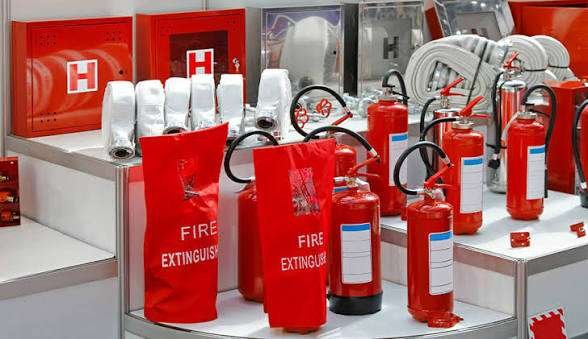
<AsyncImage query=”wall mounted portable fire extinguishers in commercial building safety station” aspectRatio=”16:9″ width=”100%”/>Fire extinguishers are portable devices designed for specific categories of fire. Different extinguisher types are suitable for different hazards, so selecting the correct equipment is important.
Maintenance considerations include:
– Checking that the extinguisher remains in its designated location.
– Confirming that access is not blocked.
– Looking for visible damage or signs of leakage.
– Checking whether the equipment appears to have been used or tampered with.
– Ensuring inspection and servicing records are maintained.
– Arranging professional servicing according to manufacturer guidance and applicable requirements.
Only trained and authorized personnel should carry out servicing or repairs. Building occupants should not attempt to dismantle or modify extinguishers.
2. Fire Alarm Systems
<AsyncImage query=”modern commercial building fire alarm control panel and wall mounted alarm call point” aspectRatio=”16:9″ width=”100%”/>A fire alarm system is an important part of building fire protection. It is designed to detect signs of fire or allow occupants to raise an alarm, depending on the system’s configuration.
A system may include smoke detectors, heat detectors, manual call points, sounders, control panels, and other connected components.
Maintenance may involve professional assessment of:
– Control panel condition and warning indicators.
– Detector condition and suitability.
– Alarm sounders and visual warning devices.
– Manual call points.
– Power supplies and backup arrangements.
– System connections and communication.
– Inspection and testing records.
A suitable fire alarm system in Pakistan should be selected according to the building’s layout, occupancy, risk level, and applicable requirements. Professional installation and scheduled servicing are essential for reliable performance.
3. Smoke Detectors
<AsyncImage query=”ceiling mounted smoke detector in modern residential room” aspectRatio=”16:9″ width=”100%”/>Smoke detectors provide early warning when smoke is detected. They are commonly used in homes, offices, corridors, and other suitable indoor areas.
Dust, ageing, unsuitable placement, and battery-related issues may affect detector performance.
Property owners should follow the manufacturer’s instructions for testing, cleaning, battery replacement, and replacement of ageing devices. Any persistent warning or fault indication should be assessed according to the manufacturer’s guidance.
4. Fire Sprinkler Systems
<AsyncImage query=”indoor ceiling fire sprinkler system installed in commercial building” aspectRatio=”16:9″ width=”100%”/>Fire sprinkler systems are designed to respond to heat and help control or suppress fires in protected areas. Their design includes multiple components, such as sprinkler heads, pipes, valves, water supplies, and control arrangements.
Maintenance should be handled by qualified specialists. Inspections may assess visible condition, access, signs of damage, and the condition of relevant system components.
Sprinkler heads should not be painted, covered, or used to support objects. Any suspected damage or obstruction should be reported to the responsible building manager or service professional.
5. Emergency Lighting
<AsyncImage query=”illuminated emergency exit lighting and emergency lighting fixture in office corridor” aspectRatio=”16:9″ width=”100%”/>Emergency lighting helps occupants see escape routes when normal lighting is interrupted. It is particularly important in corridors, stairways, large buildings, and other areas where people may need to evacuate.
Maintenance considerations include checking visible damage, ensuring lights are not obstructed, and arranging professional testing of backup power and operation according to the manufacturer’s instructions.
6. Fire Hose Reels and Hydrants
<AsyncImage query=”fire hose reel cabinet and fire hydrant installation in commercial building” aspectRatio=”16:9″ width=”100%”/>Fire hose reels and hydrants are part of certain building fire protection arrangements. Their availability and condition can be important for trained emergency responders and authorized personnel.
Maintenance should be completed by qualified professionals who understand the equipment and relevant requirements.
Building managers should make sure access is not blocked and that visible damage or missing components are reported promptly.
Basic Fire Equipment Inspection: What Beginners Should Know
People who are new to fire safety management may find inspection responsibilities confusing. It is important to understand the difference between a basic visual check and professional maintenance.
A visual check helps identify obvious concerns. It does not confirm that equipment is fully functional or replace specialist inspection and testing.
Beginners can learn to recognize common problems without attempting technical repairs.
Check Equipment Accessibility
Fire safety equipment should remain accessible. Boxes, furniture, stored materials, or other objects should not block extinguishers, alarm call points, emergency exits, or other safety devices.
Look for Visible Damage
Cracks, missing covers, corrosion, loose external parts, and other visible damage should be reported.
Do not attempt to repair damaged equipment unless you are appropriately qualified and authorized.
Observe Warning Indicators
Some fire protection systems display status information through control panels or indicator lights. Building managers should ensure that warning messages are reported and assessed by qualified service personnel.
Review Inspection Labels
Equipment may have labels or records showing previous inspections and servicing. Missing, unclear, or outdated records should be brought to the attention of the responsible manager.
Keep Escape Routes Clear
Fire equipment is only one part of building safety. Corridors, staircases, emergency exits, and evacuation routes must also remain accessible.
Professional Fire Equipment Servicing
Professional servicing is necessary because many fire protection systems contain technical components that require specialist knowledge, suitable equipment, and approved procedures.
A qualified service provider can assess whether equipment is operating according to its design and manufacturer requirements.
Professional maintenance may include:
– Assessing the physical condition of equipment.
– Testing suitable system functions.
– Identifying damaged or ageing components.
– Reviewing control panel information.
– Assessing backup power arrangements.
– Recommending appropriate repairs or replacements.
– Updating service documentation.
The exact work depends on the type of equipment and applicable requirements.
Property owners should choose service providers with relevant experience, qualifications, and knowledge of the systems installed at the property.
Creating a Fire Equipment Maintenance Schedule
A maintenance schedule helps building owners and managers organize inspections and avoid overlooking important equipment.
There is no single inspection interval that applies to every fire safety product. Requirements vary by equipment type, manufacturer instructions, applicable standards, and building conditions.
A useful schedule should identify the equipment, responsible person, required inspection type, service provider, and next due date.
Equipment| Maintenance focus
Fire extinguishers| Condition, accessibility, inspection and professional servicing
Fire alarm systems| Control panel, detectors, sounders, call points and professional testing
Smoke detectors| Condition, warning indicators and manufacturer-recommended checks
Sprinkler systems| Visible condition, access and specialist inspection
Emergency lighting| Physical condition and professional operational testing
Fire hose reels| Accessibility, visible condition and professional servicing
The schedule should be reviewed whenever equipment is added, replaced, relocated, or affected by building changes.
Fire Equipment Maintenance in Pakistan
Fire safety needs vary across Pakistan because buildings, weather conditions, occupancy patterns, and local requirements are different.
Residential properties, shopping centres, schools, hospitals, offices, warehouses, and industrial facilities may require different fire protection arrangements.
Several factors deserve attention when planning maintenance.
1. Environmental Conditions
Dust, humidity, heat, and other environmental conditions can affect certain types of equipment. Buildings located in areas with challenging environmental conditions may require additional attention based on professional recommendations.
Equipment should be installed and maintained according to the manufacturer’s environmental suitability guidance.
2. Building Type and Occupancy
A small residential property has different requirements from a hospital or industrial facility. The number of occupants, building layout, available escape routes, and potential hazards should influence the maintenance programme.
Larger or higher-risk buildings may require more detailed inspection arrangements.
3. Qualified Service Providers
Building owners should work with professionals who understand the installed equipment and applicable safety requirements.
Before selecting a service provider, consider their technical experience, relevant qualifications, service documentation, and ability to support the specific equipment.
4. Accurate Documentation
Maintenance records help property managers understand the history of their fire protection systems.
Records should identify the equipment, inspection date, findings, service provider, recommended actions, and completion of corrective work.
5. Awareness and Staff Training
Employees and building occupants should understand the purpose of fire safety equipment and know how to report visible problems.
Staff should also receive appropriate emergency awareness and evacuation training. Technical servicing should remain the responsibility of qualified personnel.
Common Fire Equipment Maintenance Mistakes
Some maintenance problems occur because equipment is overlooked or responsibilities are unclear.
Avoiding the following mistakes can improve the reliability of a fire safety programme.
Ignoring Visible Damage
Damaged equipment should not be treated as suitable simply because it remains in its usual location. Any visible concern should be reported and assessed.
Blocking Fire Safety Equipment
Placing furniture, cartons, or other materials in front of extinguishers and alarm devices can delay access during an emergency.
Delaying Professional Servicing
Waiting until equipment shows an obvious fault can increase the possibility of an unexpected problem. Follow the required maintenance schedule instead.
Choosing Service Providers Only by Price
Low-cost servicing may not provide the level of technical assessment required. Quality, competence, and appropriate documentation should be considered when selecting a provider.
Forgetting Backup Power Arrangements
Some fire alarm systems and emergency lighting arrangements depend on backup power. These components should be included in professional maintenance planning.
Failing to Keep Records
Without clear records, it can be difficult to confirm when equipment was last inspected or which problems remain unresolved.
The Importance of Maintenance Records
Accurate documentation is an important part of fire safety management. It creates a history of inspections, servicing, repairs, and recommendations.
A maintenance record should generally include:
– Equipment name and location.
– Identification number, where applicable.
– Date of inspection or service.
– Name of the responsible person or service provider.
– Condition and findings.
– Problems identified.
– Recommended corrective action.
– Date when corrective work was completed.
These records can help building managers plan future work and identify repeated problems.
Digital records may also be useful for larger properties because they make it easier to organize maintenance information across multiple floors or buildings.
How to Build a Strong Fire Safety Culture
Fire equipment maintenance is more effective when everyone in a building understands their role.
Building owners and managers should make fire safety part of routine property management rather than treating it as an occasional responsibility.
A positive fire safety culture can include:
1. Assigning clear responsibility for equipment inspections.
2. Providing basic fire safety awareness to employees and occupants.
3. Reporting damaged or inaccessible equipment promptly.
4. Arranging professional servicing on schedule.
5. Keeping emergency exits and evacuation routes clear.
6. Conducting suitable evacuation drills.
7. Reviewing the maintenance programme after building changes.
These practices help create a more organized approach to fire prevention and emergency preparedness.
Choosing the Right Fire Safety Equipment
Maintenance begins with selecting equipment that is appropriate for the property. Installing unsuitable products can create problems even when maintenance is performed regularly.
Before choosing fire safety equipment, consider the following:
– The type and size of the building.
– The number of people using the property.
– Potential fire hazards.
– Building layout and escape routes.
– Compatibility between system components.
– Manufacturer specifications.
– Relevant safety requirements.
– Availability of professional installation and servicing.
For example, fire alarm requirements for a small house may differ significantly from those for a multi-storey commercial building.
A professional assessment can help identify suitable equipment and avoid unnecessary purchases.
Conclusion
Fire equipment maintenance is an essential part of protecting homes, workplaces, and public buildings. Purchasing fire safety products is not enough; equipment must also be inspected, professionally serviced, and maintained according to its intended purpose.
Beginners should understand the difference between simple visual checks and technical maintenance. They can help by keeping equipment accessible, reporting visible damage, reviewing inspection records, and ensuring that professional servicing is arranged when required.
For property owners in Pakistan, a planned maintenance programme can improve awareness, support reliable fire protection, and help meet applicable safety responsibilities.
Whether a building uses extinguishers, smoke detectors, emergency lighting, sprinklers, or a fire alarm system in Pakistan, every component should receive suitable attention. Consistent maintenance, qualified professionals, accurate records, and staff awareness all contribute to a safer environment.
Frequently Asked Questions (FAQs)
1. What is fire equipment mai