Fire safety is an essential responsibility for every business, regardless of its size, industry, or number of employees. Offices, retail shops, restaurants, warehouses, factories, hotels, schools, and commercial buildings all face potential fire risks. Electrical faults, cooking equipment, heating appliances, combustible materials, and poor housekeeping can create conditions that allow a fire to start or spread.
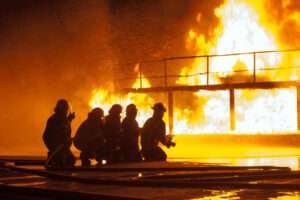
A workplace fire can have serious consequences. Employees, customers, contractors, and visitors may be placed in danger. Buildings, equipment, stock, records, and other business assets can also be damaged. Even when a fire is brought under control quickly, business operations may be interrupted, resulting in financial losses and reduced customer confidence.
The good news is that many workplace fire risks can be reduced through awareness, regular maintenance, suitable equipment, and clear emergency procedures.
In Pakistan, businesses should understand the fire-safety requirements relevant to their premises. A properly selected fire alarm system in Pakistan can support early warning, but alarms alone cannot prevent every fire. Businesses also need a wider safety programme that focuses on identifying hazards, reducing risks, training employees, and preparing for emergencies.
This article explains why fire prevention matters and shares practical ways businesses can create safer workplaces.
1. Understand Why Fire Prevention Matters
Fire prevention means taking reasonable steps to reduce the possibility of a fire starting and limit the risks associated with one.
It is more effective to identify workplace hazards before an incident occurs than to depend entirely on emergency response arrangements. Prevention also helps businesses establish a safety culture in which employees understand their responsibilities.
Every business has different risks. An office may have electrical equipment, paper records, and charging devices. A restaurant may have cooking equipment and ventilation systems. A warehouse may store large quantities of packaging and other combustible stock. A factory may use machinery, electrical installations, and materials that require special handling.
A suitable fire-prevention plan should consider:
– The type of work performed on the premises.
– The equipment and materials used.
– The number of employees and visitors.
– The building’s layout and available exits.
– The condition of electrical installations.
– Existing fire detection and protection arrangements.
– The needs of people who may require assistance during evacuation.
Understanding these factors helps management make sensible decisions about workplace safety.
2. Identify Common Workplace Fire Hazards
Businesses should regularly review their premises to identify conditions that could increase fire risk. The review should cover offices, storage areas, production spaces, kitchens, corridors, electrical rooms, and other relevant locations.
Common workplace fire hazards include:
Electrical problems: Damaged wiring, faulty equipment, poorly maintained electrical installations, and overloaded connections can create fire risks.
Cooking equipment: Restaurants, cafeterias, and workplace kitchens need appropriate procedures for cooking equipment and related appliances.
Heating appliances: Portable heaters and other heat-producing equipment require suitable placement, maintenance, and supervision.
Combustible materials: Paper, cardboard, packaging, fabrics, and other materials can contribute to fire spread if they are stored carelessly.
Poor housekeeping: Accumulated waste, cluttered storage spaces, and blocked access routes can make an emergency more difficult to manage.
Equipment faults: Machinery and workplace appliances should be maintained according to manufacturer instructions and professional recommendations.
Businesses should not wait for an accident before reviewing these risks. Regular inspections can help identify maintenance concerns and encourage timely corrective action.
3. Keep Electrical Installations and Equipment Maintained
Electrical safety is a major part of workplace fire prevention. Offices and commercial premises often depend on computers, printers, lighting, air-conditioning systems, machinery, and other electrical equipment.
Poor maintenance can increase the possibility of electrical faults. Businesses should arrange inspections by qualified electricians and address reported problems promptly.
Employees should be encouraged to report damaged cables, unusual equipment behaviour, and other electrical concerns to the responsible person.
Useful workplace practices include:
– Using electrical equipment according to manufacturer instructions.
– Avoiding overloaded outlets and unsuitable connections.
– Arranging professional inspection when faults are suspected.
– Keeping electrical equipment in suitable condition.
– Ensuring that maintenance work is handled by qualified personnel.
– Following workplace procedures for equipment shutdown and reporting.
Businesses should also maintain appropriate records of inspections and repairs. This makes it easier for management to monitor recurring issues and plan future maintenance.
Electrical safety should never be treated as a responsibility belonging only to technical staff. Every employee should understand how to report a potential hazard.
4. Maintain Clean and Organised Workspaces
Good housekeeping is a simple but important part of fire prevention. A clean and organised workplace makes hazards easier to identify and helps employees move safely through the building.
Waste materials should be managed responsibly. Packaging, paper, and other combustible materials should not be allowed to accumulate unnecessarily.
Storage arrangements should be suitable for the materials being kept. Businesses should follow product safety information and relevant professional guidance when storing materials that may present additional hazards.
Workplace managers should pay attention to:
– Storage rooms and stock areas.
– Waste collection points.
– Corridors and stairways.
– Areas around electrical equipment.
– Kitchens and staff facilities.
– Emergency exits and access routes.
Emergency exits must remain accessible. Boxes, furniture, equipment, and other objects should never be allowed to obstruct escape routes.
An organised workplace supports everyday efficiency while making emergency arrangements easier to follow.
5. Install Suitable Fire Detection and Alarm Systems
Early warning is an important element of workplace fire safety. Employees and visitors need to know when a fire-related emergency occurs so they can follow the building’s evacuation procedures.
Fire detection and alarm arrangements should be appropriate for the building’s size, layout, occupancy, and activities.
Depending on the premises, a suitable system may include smoke detectors, heat detectors, manual alarm points, audible warning devices, and a control panel. The exact arrangement should be determined by qualified professionals and applicable requirements.
A fire alarm system in Pakistan can help businesses provide timely warnings when a fire is detected within a protected area. However, an alarm is only effective when it is suitable for the premises, correctly installed, maintained, and understood by occupants.
Businesses should:
– Obtain professional advice before selecting equipment.
– Arrange installation by competent personnel.
– Ensure warning signals can be heard or otherwise recognised.
– Follow manufacturer instructions for inspection and testing.
– Keep maintenance records.
– Make sure employees know what to do when an alarm activates.
An alarm should never be treated as a substitute for prevention, safe building design, or evacuation planning.
6. Provide Appropriate Fire Protection Equipment
Different workplaces may require different types of fire protection equipment. The choice depends on the building, its activities, potential hazards, and applicable safety requirements.
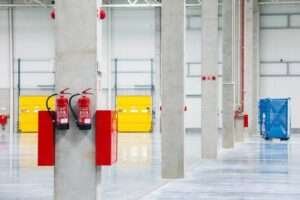
Equipment may include fire extinguishers, hydrants, sprinklers, hose reels, and other professionally selected systems.
Businesses should not purchase equipment simply because it is inexpensive or widely available. Incorrect equipment may not be suitable for the hazards present at a particular workplace.
Management should seek professional advice about equipment selection, placement, installation, and maintenance.
Employees should also understand that they must not attempt to deal with a fire beyond their training or workplace procedures. Their priority during an emergency should be to raise the alarm, follow instructions, and evacuate safely.
Only appropriately trained and authorised personnel should undertake duties assigned to them under the organisation’s emergency arrangements.
7. Prepare a Clear Workplace Fire Safety Plan
A written fire safety plan helps employees understand how the business intends to prevent fires and respond to emergencies.
The plan should reflect the actual building and workplace activities. A small shop may need a simpler arrangement than a large factory or multi-storey commercial building, but every workplace should have clear emergency procedures.
A workplace fire safety plan should address:
– Potential fire hazards.
– Responsibilities of management and employees.
– Fire detection and warning arrangements.
– Emergency contact information.
– Evacuation routes and exits.
– Assembly locations.
– Arrangements for visitors and contractors.
– Assistance for people with additional evacuation needs.
– Procedures for reporting incidents.
– Equipment inspection and maintenance responsibilities.
The plan should be accessible to relevant employees and reviewed when the building layout, workforce, or business activities change.
For larger premises, management may need support from fire-safety consultants and relevant authorities to ensure that the arrangements are suitable.
8. Train Employees in Fire Prevention
Employees play an important role in maintaining workplace safety. Even a well-equipped building can face difficulties if its occupants do not understand the emergency procedures.
Fire-safety awareness should be included in staff induction and refreshed periodically.
Training can help employees understand:
– Common workplace fire hazards.
– How to report unsafe conditions.
– What an alarm signal means.
– Where emergency exits are located.
– Where to assemble after evacuation.
– How to contact the responsible emergency personnel.
– Why escape routes must remain clear.
– How to assist visitors within their assigned responsibilities.
Training should be relevant to the workplace rather than relying on general information alone.
The Directorate General of Civil Defence in Pakistan provides fire-prevention and safety training through its training institutions. Businesses can explore suitable training opportunities for staff and designated safety personnel.
Employees should never be encouraged to take unnecessary risks during a fire. Evacuation and personal safety must remain the priority.
9. Conduct Fire Drills and Review Emergency Procedures
A written plan is useful, but employees also need to understand how it works in practice.
Fire drills allow organisations to review whether warning arrangements, evacuation routes, communication procedures, and assembly arrangements are effective.
Drills should be planned responsibly and conducted in accordance with applicable requirements and professional guidance.
After each drill, management can review:
– Whether employees recognised the warning.
– Whether evacuation routes were accessible.
– Whether visitors were included in the arrangements.
– Whether people understood where to assemble.
– Whether communication procedures worked.
– Whether any problems need corrective action.
The purpose of a drill is not to create panic or competition. It is to help occupants become familiar with the emergency plan.
Businesses should document relevant findings and make improvements where necessary.
10. Protect Customers, Visitors, and Contractors
Fire prevention is not only about protecting employees. Many businesses receive customers, delivery workers, contractors, suppliers, and other visitors who may be unfamiliar with the building.
A visitor may not know where the nearest exit is or what the alarm sounds like. Businesses should therefore make emergency information understandable and accessible.
Useful measures include:
– Displaying clear emergency exit signs.
– Keeping corridors and stairways unobstructed.
– Providing understandable visitor instructions.
– Ensuring reception and security staff know the emergency procedures.
– Including contractors in relevant safety briefings.
– Considering people who may need assistance during evacuation.
Restaurants, shopping centres, hotels, hospitals, educational institutions, and public-facing offices should pay particular attention to visitor safety.
The building’s emergency arrangements should account for people who may be present temporarily and may not know the premises.
11. Carry Out Regular Fire Safety Inspections
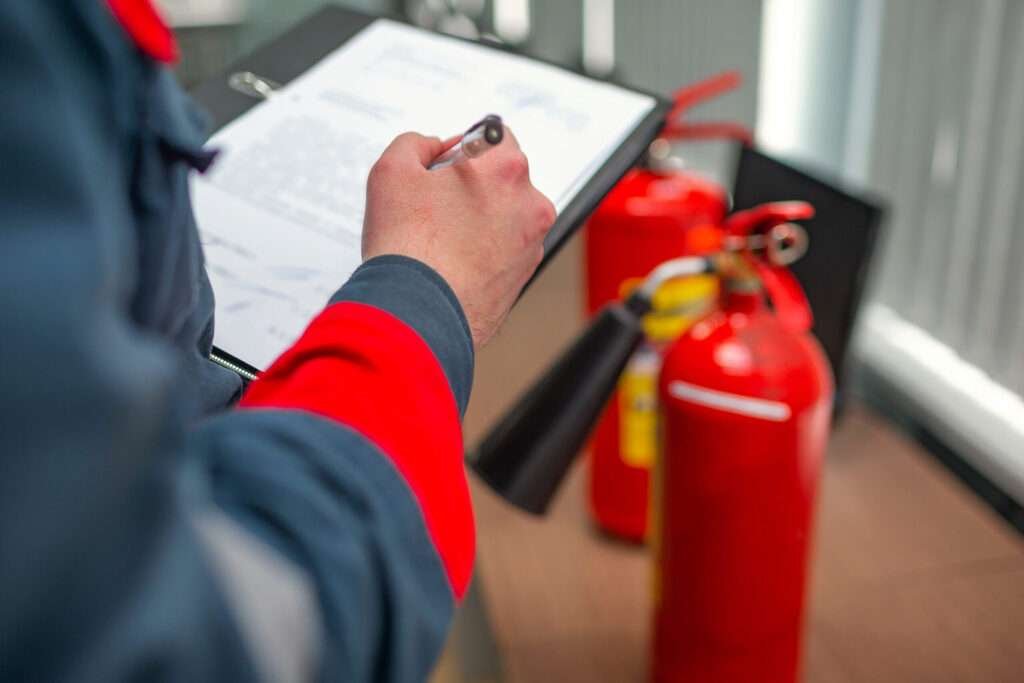
Fire safety should be reviewed throughout the year. A one-time inspection cannot guarantee that equipment and emergency arrangements will remain suitable as business operations change.
Regular inspections help management identify maintenance concerns and confirm that safety measures remain in place.
A review may cover:
Alarm systems: Check that the system is maintained and tested according to professional and manufacturer guidance.
Fire protection equipment: Confirm that equipment is present, accessible, and maintained by competent personnel.
Escape routes: Ensure that exits, corridors, and stairways remain clear.
Safety signs: Check that relevant signs remain visible and understandable.
Electrical installations: Arrange professional checks where required and address reported faults.
Emergency plans: Confirm that contact details, responsibilities, and evacuation arrangements remain current.
Staff awareness: Review whether employees understand their duties and know how to respond to warnings.
Businesses should maintain suitable inspection and maintenance records. These records can support future reviews and demonstrate that safety responsibilities are being managed.
12. Understand Fire Safety Requirements in Pakistan
Businesses in Pakistan should identify the fire-safety rules and building requirements that apply to their premises.
The Pakistan Engineering Council lists the Building Code of Pakistan Fire Safety Provisions 2016 among its published building codes and policy documents. The provisions address fire prevention, life safety, and fire protection in buildings.
Punjab Civil Defence identifies several fire-safety measures considered during inspections of industrial premises, commercial properties, and high-rise buildings. These include:
– Fire detection and alarm systems.
– Firefighting arrangements.
– Fire safety plans.
– Emergency fire control rooms.
– Emergency exits and evacuation plans.
– Ventilation and air-conditioning systems.
Requirements can vary according to the type of premises, building design, occupancy, and relevant local rules. Businesses should not assume that the same arrangements apply to every workplace.
Owners and managers should consult the relevant local authority, qualified fire-safety professionals, and applicable building regulations before making decisions about compliance.
Keeping safety arrangements in good condition is not simply a paperwork exercise. It helps protect the people who work in and visit the premises.
13. The Financial and Operational Benefits of Fire Prevention
Fire prevention is often viewed as an expense, but it can help businesses avoid much larger costs associated with an emergency.
A serious fire may damage buildings, machinery, furniture, inventory, computers, and business records. It may also interrupt production, delay deliveries, affect customer relationships, and create additional recovery expenses.
Smaller businesses can be particularly vulnerable because they may have limited financial resources and fewer alternative facilities.
A well-managed fire-prevention programme can support business continuity by helping organisations:
– Reduce avoidable workplace hazards.
– Protect employees and visitors.
– Maintain essential equipment.
– Reduce the likelihood of major operational disruption.
– Improve employee confidence.
– Support responsible business management.
– Prepare for emergencies more effectively.
Fire prevention cannot remove every risk, but it can make a business better prepared to manage foreseeable hazards.
14. Common Fire Prevention Mistakes Businesses Should Avoid
Some businesses have safety equipment but fail to maintain a complete prevention programme.
Common mistakes include:
Ignoring small hazards: Minor electrical or housekeeping concerns should be reported and addressed rather than repeatedly overlooked.
Blocking emergency exits: Storage and workplace equipment should never obstruct escape routes.
Neglecting maintenance: Alarms and other safety equipment require appropriate inspection and servicing.
Providing little staff awareness: Employees need to understand workplace hazards and emergency procedures.
Using unsuitable equipment: Fire protection equipment should be selected according to the actual risks and professional recommendations.
Failing to update plans: Changes to the building, workforce, or business activities may require changes to emergency arrangements.
Relying entirely on emergency services: External responders are essential, but businesses must also take responsibility for prevention and preparedness.
Avoiding these mistakes helps create a safer and more organised workplace.
15. Build a Long-Term Fire Prevention Culture
Fire prevention should become part of everyday business management rather than an activity that takes place only before an inspection.
Managers should encourage employees to report hazards, participate in training, follow safety procedures, and take workplace inspections seriously.
A responsible safety culture also requires management commitment. Employees should have access to appropriate information, suitable equipment, and clear reporting arrangements.
Businesses can improve their approach by reviewing safety procedures after changes to the workplace, keeping maintenance records, and seeking professional advice when necessary.
A suitable fire alarm system, maintained protection equipment, clear evacuation routes, and trained staff all contribute to a stronger safety programme.
Conclusion
Every business needs fire prevention measures because workplace fires can threaten lives, damage property, and interrupt essential operations. Offices, shops, restaurants, factories, warehouses, and other commercial premises may face different hazards, but all benefit from identifying risks and maintaining suitable safety arrangements.
Businesses in Pakistan should focus on electrical safety, good housekeeping, appropriate fire detection, suitable protection equipment, staff awareness, regular inspections, and clear evacuation plans. A properly selected fire alarm system in Pakistan can provide an important warning function, but it should always be part of a wider fire-safety programme.
Fire prevention is a shared responsibility. When management and employees work together, they can create safer workplaces and improve their ability to respond to emergencies.
Frequently Asked Questions (FAQs)
1. Why is fire prevention important for every business?
Fire prevention helps protect employees, customers, visitors, buildings, equipment, and stock. It can reduce avoidable hazards, limit operational disruption, and support a safer working environment.
2. What are the most common causes of