Fire safety equipment plays an important role in protecting people, buildings, and business operations. Fire extinguishers, fire alarm systems, smoke detectors, emergency lighting, fire pumps, sprinklers, and other protective devices are designed to support early warning and emergency response. However, simply installing this equipment does not guarantee that it will work correctly when needed.
Like other essential building systems, fire protection equipment requires regular inspection, testing, servicing, and maintenance. Over time, components may become damaged, batteries may lose capacity, pressure may change, and dust or other environmental conditions may affect performance. Without proper attention, these problems can remain unnoticed until an emergency occurs.
In Pakistan, the Building Code of Pakistan – Fire Safety Provisions 2016 addresses fire protection, life safety, and the maintenance of relevant safety features. It also highlights the importance of maintaining records of inspections, testing, and maintenance where required.
Understanding how fire equipment maintenance works can help homeowners, business operators, facility managers, and building owners make informed safety decisions.
This article explains ten important things everyone should know about maintaining fire safety equipment, including the role of a fire alarm system in Pakistan and why a planned maintenance programme matters.
1. Fire Equipment Maintenance Is Essential for Safety
Fire safety equipment is intended to support people during an emergency. However, equipment that has not been maintained may fail to provide the protection expected of it.
For example, a fire alarm may develop a fault, an extinguisher may be damaged, or an emergency light may not operate during a power interruption. Such issues can reduce the effectiveness of a building’s overall fire protection arrangements.
Maintenance helps identify problems before they become more serious.
A suitable maintenance programme should cover the equipment installed in a building, taking into account its design, usage, environment, manufacturer instructions, and applicable requirements.
Regular maintenance can help:
– Identify damaged or defective equipment.
– Confirm that important components remain operational.
– Reduce avoidable equipment failures.
– Support compliance with applicable safety requirements.
– Improve emergency preparedness.
– Maintain records for inspections and audits.
Maintenance is not simply a technical responsibility. Building owners, managers, and other responsible people should ensure that necessary checks and repairs are arranged.
2. Understand the Different Types of Fire Safety Equipment
Before planning maintenance, it is important to understand what equipment a building contains and what each system is designed to do.
Fire alarm systems
A fire alarm system detects specified fire-related conditions through suitable devices and warns occupants through audible, visual, or other approved notification methods.
Its components may include a control panel, detectors, manual call points, alarm sounders, visual indicators, wiring, power supplies, and monitoring equipment.
Each component must function as part of the overall system.
Fire extinguishers
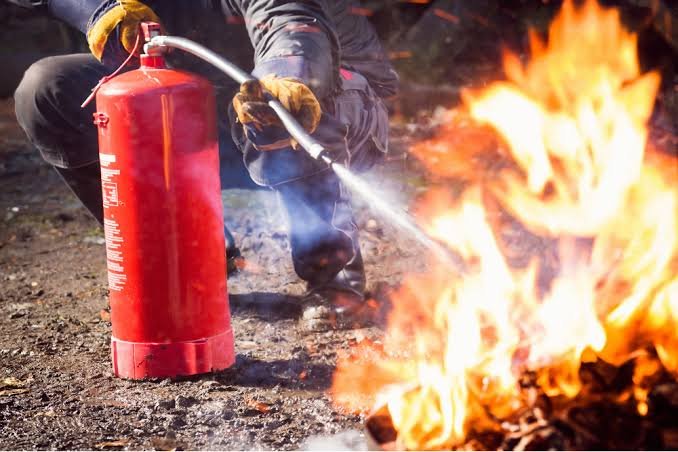
Portable fire extinguishers are intended for specific types of fires. Their suitability depends on the hazards present and the extinguisher’s classification.
Maintenance can include checking the physical condition, accessibility, operating instructions, pressure indication where applicable, and other requirements specified by the manufacturer and relevant standards.
Fire suppression systems
Fixed suppression systems may protect buildings, industrial processes, or specific hazards. Depending on their design, they may use water or other approved extinguishing agents.
Their maintenance needs vary according to the system type and applicable requirements.
Emergency lighting and exit signs
Emergency lighting helps occupants identify routes when normal lighting is unavailable. Exit signs help identify designated escape routes.
These systems should be checked according to their design and applicable requirements to confirm that they remain functional and visible.
Understanding the equipment in a building makes it easier to assign responsibilities and arrange appropriate servicing.
3. Inspect Fire Extinguishers Regularly
Fire extinguishers are commonly found in offices, shops, factories, educational facilities, warehouses, and other buildings.
Because they may remain unused for long periods, it is easy to overlook their condition. However, an extinguisher that is inaccessible, damaged, or incorrectly maintained may not be dependable during an emergency.
Routine visual checks should be performed by appropriately assigned personnel according to the relevant procedures. These checks may identify issues such as:
– Missing or unreadable operating instructions.
– Visible corrosion or physical damage.
– A damaged hose or nozzle.
– An obstructed location.
– Missing safety components.
– A pressure indicator outside its acceptable range, where fitted.
– Signs that servicing is overdue.
The required checks depend on the extinguisher type and applicable standards.
A visual check does not replace professional maintenance or other required examinations. Extinguishers may need servicing, internal examination, or pressure testing at intervals specified by the applicable requirements.
Damaged equipment should be assessed by a qualified service provider. Staff should not attempt to dismantle or repair a pressurized extinguisher themselves.
Keeping extinguishers accessible and properly maintained is an important part of a building’s fire safety arrangements.
4. Maintain Your Fire Alarm System Properly
A fire alarm system is a key component of fire detection and warning where such a system is required or installed.
Its performance depends on more than the control panel. Detectors, notification devices, manual call points, power supplies, wiring, and other components must operate correctly as a coordinated system.
When considering a fire alarm system in Pakistan, building owners should understand that the appropriate inspection and maintenance programme depends on the system design, applicable standards, and requirements of the relevant authority.
Important maintenance considerations include:
Control panel condition: The panel should be checked for fault indications and other abnormal conditions according to the manufacturer’s instructions.
Detection devices: Detectors should be inspected and tested using approved methods suitable for the device type.
Manual call points: Their condition, accessibility, and operation should be checked according to the maintenance plan.
Alarm notification devices: Sounders, visual indicators, and other notification equipment should be tested as required.
Power supplies: Batteries and other power arrangements should receive the required inspections and tests.
System records: Faults, tests, repairs, and maintenance activities should be documented where required.
Maintenance should be carried out by suitably trained or qualified personnel using procedures appropriate for the system.
A system should not be permanently disabled because of repeated unwanted alarms. The underlying cause should be investigated and corrected.
5. Follow Manufacturer Instructions and Applicable Standards
Not all fire safety equipment is identical. Different models, technologies, and system designs can have different maintenance requirements.
For this reason, general advice should not replace the manufacturer’s instructions or the standards applicable to the specific installation.
The Building Code of Pakistan – Fire Safety Provisions 2016 addresses installation, testing, inspection, and maintenance of relevant fire protection features. It also refers to approved standards where applicable.
A maintenance programme should identify:
– The correct maintenance procedure for each item.
– The required inspection and testing intervals.
– The qualifications needed to perform particular tasks.
– The parts or consumables that may require replacement.
– The records that must be retained.
– The process for correcting defects.
Building owners should confirm which requirements apply to their premises rather than assuming that the same schedule is suitable for every system.
For example, the maintenance needs of a small office may differ from those of a hospital, factory, high-rise building, or industrial facility.
Following the correct procedures helps protect equipment performance and reduces the risk of inappropriate maintenance.
6. Create a Planned Maintenance Schedule
A planned maintenance schedule helps ensure that fire protection equipment receives attention at appropriate intervals.
Without a written plan, inspections may be delayed, responsibilities may be unclear, and important faults may remain unresolved.
A maintenance schedule should list the equipment, its location, the responsible person or service provider, the required checks, and the relevant due dates.
It can also record whether a task has been completed and whether any corrective action remains outstanding.
For example, a building manager may maintain separate records for fire alarms, extinguishers, emergency lighting, fire pumps, and fixed suppression systems.
The actual frequency of inspections and testing should be determined by the applicable requirements, manufacturer instructions, system design, and professional advice.
A schedule is especially useful in larger buildings where equipment is distributed across multiple floors, departments, or operational areas.
Digital records or organized paper logs can both be useful, provided the information remains accessible and protected against loss.
The aim is to make maintenance systematic rather than dependent on memory.
7. Use Qualified Professionals for Technical Maintenance
Some basic visual checks can be assigned to trained building staff. However, technical servicing and testing should be carried out by people with the appropriate training, competence, and authorization.
Fire alarm systems, fire pumps, sprinklers, electrical equipment, and fixed suppression systems can contain complex components. Incorrect maintenance may create new faults or affect the performance of the system.
Qualified professionals can help with tasks such as:
– Diagnosing system faults.
– Testing equipment using approved procedures.
– Repairing or replacing defective components.
– Checking system performance after maintenance.
– Assessing whether changes have affected the original design.
– Providing service reports and recommendations.
Building owners should verify that a service provider has the relevant expertise for the equipment being maintained.
Maintenance work should also be coordinated with building management so that any temporary interruption to a protection system is understood and managed appropriately.
If a system must be taken out of service, the responsible people should follow the applicable impairment procedures and arrange appropriate temporary safety measures.
8. Keep Detailed Maintenance Records
Maintenance records help building owners understand the condition of their fire protection equipment over time.
They can also help identify recurring problems, confirm that planned tasks have been completed, and support inspections by relevant authorities.
A useful maintenance record may include:
– The equipment name and identification number.
– Its location within the building.
– The inspection or test date.
– The work performed.
– The results and any faults identified.
– Repairs or replacement parts.
– The name of the responsible technician or service provider.
– Recommendations and follow-up actions.
– The date of the next required service, where applicable.
Records should be clear, accurate, and easy to retrieve.
The Building Code of Pakistan – Fire Safety Provisions 2016 includes provisions concerning the retention of records for maintenance, inspection, and testing of fire protection systems and other relevant equipment where required.
Building owners should follow the record-retention requirements that apply to their premises.
Records are not a substitute for proper maintenance, but they provide evidence that the work has been planned and documented.
9. Never Ignore Equipment Faults or Warning Signs
A small fault can indicate that a safety system needs attention.
Examples include repeated fire alarm trouble signals, damaged cables, visible corrosion, leaking components, blocked detectors, missing extinguisher parts, or emergency lighting that does not operate as expected.
These issues should be reported and assessed promptly.
If a fire alarm repeatedly activates without an apparent fire, the cause may involve unsuitable environmental conditions, contamination, equipment faults, or another problem. The correct response is to investigate the cause rather than permanently disable the system.
Similarly, if an extinguisher is damaged or overdue for required servicing, responsible personnel should arrange an assessment and ensure that suitable protection remains available.
Where a protection system is impaired, building management should follow the applicable procedures, inform relevant responsible people, and arrange corrective action.
Employees and occupants should not attempt technical repairs unless they are appropriately trained and authorized.
Prompt attention to faults helps prevent small maintenance issues from developing into larger safety concerns.
10. Review the Entire Fire Safety Plan, Not Just the Equipment
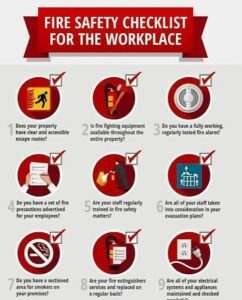
Fire equipment maintenance is most effective when it forms part of a broader fire safety plan.
Even properly maintained equipment cannot compensate for blocked exits, poor housekeeping, a lack of staff training, or an unclear emergency procedure.
Building owners and managers should review how different safety measures work together.
A complete review may consider:
– Fire prevention practices.
– Detection and alarm coverage.
– Suitable firefighting and suppression equipment.
– Accessible escape routes.
– Emergency lighting and signage.
– Staff awareness and training.
– Evacuation plans and drills where required.
– Maintenance responsibilities.
– Emergency contacts and communication procedures.
The building’s needs may change after renovation, a change in occupancy, new equipment installation, or a significant alteration to its layout.
Such changes should prompt a review of relevant fire protection arrangements and applicable requirements.
In Pakistan, owners and operators should consult the Building Code of Pakistan – Fire Safety Provisions 2016 and the relevant local authority to determine the requirements applicable to their building.
A joined-up approach helps ensure that equipment maintenance supports the wider goal of protecting people and property.
Fire Equipment Maintenance in Pakistan: What Building Owners Should Consider
Buildings across Pakistan vary significantly in size, age, construction, and use. An office, shopping centre, school, factory, hospital, and residential tower may each have different fire protection needs.
Building owners should first identify the equipment installed on their premises and establish which maintenance requirements apply.
They should then arrange suitable inspections, testing, servicing, and recordkeeping.
Where a fire alarm system is installed, its maintenance programme should be based on the system design, manufacturer instructions, relevant standards, and applicable requirements. The same principle applies to extinguishers, emergency lighting, pumps, sprinklers, and other fire protection equipment.
Owners should also ensure that identified faults are corrected and that staff understand how to report problems.
A reliable maintenance programme is not necessarily the one with the most complicated paperwork. It is the one that consistently addresses the actual equipment, meets applicable requirements, and ensures that defects receive appropriate attention.
Common Fire Equipment Maintenance Mistakes
Some mistakes can reduce the effectiveness of a maintenance programme.
Waiting until equipment fails: Preventive maintenance aims to identify issues before equipment becomes unreliable.
Using unqualified technicians: Incorrect servicing can affect the performance of complex systems.
Ignoring manufacturer instructions: Different devices may require different procedures.
Failing to document work: Missing records make it harder to track completed maintenance and outstanding faults.
Blocking equipment: Extinguishers, alarm call points, and other safety devices must remain accessible.
Leaving faults unresolved: Identifying a problem is only the first step; corrective action must follow.
Assuming installation is enough: Equipment needs ongoing attention throughout its service life.
Avoiding these mistakes can help building managers maintain a more organized and dependable fire safety programme.
Conclusion
Fire equipment maintenance is an essential part of protecting people, buildings, and business operations. Extinguishers, alarm systems, detectors, suppression equipment, and emergency lighting all need appropriate attention to remain dependable.
The ten key points are straightforward: understand the equipment, inspect it regularly, follow manufacturer instructions, maintain a written schedule, use qualified professionals, document the work, respond to faults, and review the wider emergency plan.
A properly maintained fire alarm system in Pakistan can contribute to early warning when a fire-related condition is detected. Its effectiveness, however, depends on appropriate design, installation, testing, and maintenance, together with other suitable fire protection measures.
Building owners and operators should consult the applicable requirements, including the Building Code of Pakistan – Fire Safety Provisions 2016, and seek professional advice where necessary.
Most importantly, fire safety maintenance should be treated as an ongoing responsibility rather than a one-time task. Regular attention today can help reduce avoidable risks tomorrow.
Frequently Asked Questions
1. Why is fire equipment maintenance important?
Fire equipment maintenance helps identify faults, confirm that equipment remains in suitable condition, and support reliable operation during an emergency. It is also important for meeting applicable safety requirements.
2. How often should fire safety equipment be maintained?
The required frequency depends on the equipment type, manufacturer instructions, system design, applicable standards, and local requirements. Building owners should establish a written schedule based on these factors.
3. Who should maintain a fire alarm system?
Routine checks may be assigned to trained personnel where appropriate, but technical inspection, testing, repairs, and servicing should be performed by suitably qualified or authorized professionals.
4. What should be included in fire equipment maintenance records?
Records may include equipment identification, location, inspection dates, test results, faults, repairs, technician details, recommendations, and follow-up actions. Owners should follow the recordkeeping requirements applicable to their premises.
5. What should I do if fire safety equipment has a fault?
Report the issue promptly to the responsible building manager or safety representative. Arrange assessment and corrective action by qualified personnel, and follow applicable procedures if the equipment or system must temporarily be taken out of service.