Restaurants bring people together to enjoy food, celebrate special occasions, and spend time with family and friends. Behind every successful restaurant, however, there is a busy working environment where cooking equipment, electrical appliances, gas supplies, ventilation systems, and combustible materials may create fire hazards.
A small fire can disrupt restaurant operations, damage expensive equipment, threaten employees and customers, and cause long-term financial losses. In a crowded restaurant, smoke and confusion can also make evacuation more difficult if staff members are not prepared.
Restaurant fire safety is therefore an essential part of responsible business management. It involves identifying hazards, maintaining equipment, training employees, keeping escape routes clear, and installing appropriate fire protection systems.
In Pakistan, the Building Code of Pakistan – Fire Safety Provisions 2016 provides a framework for fire prevention, life safety, and building fire protection. Restaurant owners should consider applicable building requirements and local authority regulations when planning their safety arrangements.
A fire alarm system in Pakistan can provide an important layer of protection by warning occupants when a fire-related condition is detected. However, an alarm alone cannot prevent every fire. Effective protection requires a combination of prevention, early detection, emergency planning, and regular maintenance.
This guide explains the main restaurant fire hazards and the practical steps businesses can take to create a safer environment.
Why Is Restaurant Fire Safety Important?
Restaurants often operate with several potential fire hazards in close proximity. Cooking appliances generate heat, oils and fats can ignite, electrical equipment runs for extended periods, and ventilation systems may collect grease.
Restaurants may also have crowded dining areas, storage rooms, staff facilities, and restricted service corridors. If a fire occurs, these conditions can complicate evacuation.
A well-organized fire safety plan helps businesses:
– Reduce avoidable fire hazards.
– Protect employees, customers, and visitors.
– Improve emergency response.
– Limit damage to buildings and equipment.
– Reduce interruptions to business operations.
– Support compliance with applicable fire safety requirements.
– Build customer confidence in the restaurant.
Fire safety should not be treated as a task that only matters during inspections. It should be part of everyday restaurant management.
1. Identify Common Restaurant Fire Hazards
The first step toward improving safety is understanding where fires may start.
Cooking equipment
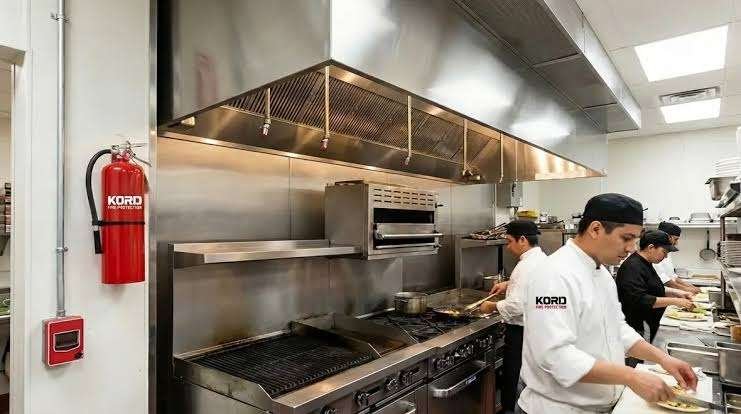
Stoves, grills, ovens, fryers, and other commercial cooking appliances operate at high temperatures. Poor maintenance, unattended cooking, and unsafe operating practices can increase fire risks.
Staff should follow equipment instructions and established kitchen procedures. Cooking stations should remain organized, and employees should know how to report equipment problems.
Grease accumulation
Cooking produces grease that can collect on filters, hoods, ducts, and surrounding surfaces. If grease is allowed to accumulate, it can become a significant fire hazard.
Commercial kitchen extraction systems should be cleaned and maintained according to their design, usage, manufacturer recommendations, and applicable requirements.
Electrical equipment
Refrigerators, freezers, exhaust fans, food processors, lighting, and other appliances place demands on a restaurant’s electrical system.
Damaged cables, loose connections, unsuitable extension leads, and poorly maintained equipment can create hazards. Electrical problems should be assessed by qualified professionals.
Gas installations
Some restaurants use gas-powered cooking equipment. Damaged connections, faulty appliances, and improperly maintained gas systems can create serious safety concerns.
Gas equipment should be installed and maintained by qualified personnel. Staff should know the restaurant’s emergency procedures for suspected gas leaks and must not attempt repairs themselves.
Storage areas
Cardboard boxes, paper packaging, cleaning materials, cooking oils, and other combustible products may be stored near operational areas.
Storage should be organized so that combustible materials remain away from heat sources and do not obstruct exits, electrical panels, or firefighting equipment.
2. Develop Safe Kitchen Operating Procedures
A busy kitchen requires clear procedures that employees can follow even during peak service hours.
Restaurant managers should establish rules for starting, operating, cleaning, and shutting down cooking equipment. Staff should understand their responsibilities and know whom to contact when equipment appears damaged or unsafe.
Useful practices include:
– Following manufacturers’ operating instructions.
– Avoiding unnecessary combustible items near cooking appliances.
– Keeping workstations clean and organized.
– Reporting unusual smells, sounds, or excessive heating.
– Ensuring equipment is used only by trained staff.
– Following approved shutdown procedures at the end of a shift.
Employees should never be pressured to continue using equipment that appears unsafe simply to avoid delaying orders.
Written procedures help create consistency, especially when restaurants employ temporary workers or experience frequent staff changes.
3. Maintain Kitchen Ventilation and Exhaust Systems
Ventilation systems help remove cooking fumes, heat, and airborne grease. However, grease can accumulate inside filters and exhaust ducts if the system is not maintained properly.
Restaurant owners should establish a cleaning and inspection schedule suitable for their cooking operations. Heavy-use kitchens may need more frequent attention than kitchens with limited cooking activity.
Maintenance should include appropriate checks of extraction hoods, filters, ducts, fans, and related components.
Where required, commercial cooking equipment should be protected by a suitable fixed fire-suppression system designed for the specific installation. Such systems must be selected, installed, and maintained by qualified professionals.
The National Fire Protection Association’s NFPA 96 standard addresses ventilation control and fire protection for commercial cooking operations. It can serve as a technical reference where applicable, alongside Pakistani requirements and the decisions of relevant authorities.
A clean ventilation system supports better kitchen hygiene while helping reduce avoidable fire hazards.
4. Understand the Role of Fire Detection and Alarm Systems
Early warning is a critical part of restaurant fire protection.
A fire alarm system is designed to detect specified fire-related conditions and alert occupants. Depending on the system, detection devices may respond to smoke, heat, or other approved indicators.
An appropriate system may help staff and customers recognize a developing emergency sooner than they otherwise would.
When evaluating a fire alarm system in Pakistan, restaurant owners should consider the building layout, kitchen environment, dining areas, occupancy, and applicable safety requirements.
Important considerations include:
– Suitable detection: Devices must be appropriate for the environment in which they are installed.
– Alarm audibility: Occupants should be able to recognize the warning in relevant areas.
– System design: Device placement should be based on a suitable professional assessment.
– Reliable power: The system should have the power arrangements required by its design and applicable standards.
– Professional installation: Complex systems should be installed and commissioned by qualified personnel.
– Routine maintenance: Testing and servicing should follow manufacturer instructions and applicable requirements.
Kitchen conditions require particular attention. Steam, cooking fumes, and heat can affect the suitability of detection devices. Equipment should therefore be selected according to the actual environment rather than installed without considering local conditions.
An alarm is only one part of a complete fire protection strategy. It does not replace safe cooking practices, appropriate suppression equipment, or evacuation planning.
5. Keep Appropriate Firefighting Equipment Available
Restaurants should assess which fire protection equipment is suitable for their particular hazards.
Different fires require different responses. For example, cooking oil and fat fires present different challenges from fires involving ordinary combustible materials or energized electrical equipment.
Portable fire extinguishers must be selected according to the hazards present, the relevant standards, and local requirements.
Employees should know where firefighting equipment is located and understand its purpose. However, they should never be expected to fight a fire when doing so would put them or others at risk.
Commercial kitchens may require a fixed suppression system for designated cooking equipment and associated ventilation components, depending on the installation and applicable requirements.
All equipment should be accessible, clearly identified where necessary, and maintained according to the manufacturer’s instructions.
Restaurant owners should seek professional advice rather than assuming that one extinguisher type or one protection arrangement is suitable for every situation.
6. Keep Emergency Exits Clear
A restaurant may have excellent detection equipment, but customers and employees still need safe routes out of the building.
Tables, chairs, delivery boxes, decorative items, and stored supplies should not obstruct exits or escape routes.
Managers should regularly check that:
– Exit doors are accessible.
– Escape routes remain free of unnecessary obstacles.
– Exit signs are visible where required.
– Emergency lighting is provided and maintained where required.
– Doors and exit arrangements comply with applicable requirements.
– Customers can move toward safety without unnecessary confusion.
Restaurants located inside shopping centres, hotels, office buildings, or multi-storey commercial properties may share escape routes or other building-wide systems. In such cases, restaurant management should coordinate its emergency arrangements with the building’s responsible management.
Exit arrangements must be appropriate for the building’s size, layout, occupancy, and applicable regulations.
7. Train Restaurant Employees in Fire Safety
Employees are often the first people to notice a potential hazard. Training helps them recognize warning signs and respond according to established procedures.
Fire safety training should cover the restaurant’s actual layout and equipment rather than relying entirely on general information.
Training topics may include:
– Recognizing common fire hazards.
– Reporting damaged electrical or cooking equipment.
– Understanding the alarm signal.
– Knowing the nearest safe exits.
– Assisting customers during evacuation.
– Identifying the designated assembly point.
– Understanding when emergency services must be contacted.
– Knowing why unsafe firefighting attempts should be avoided.
New employees should receive basic safety orientation before undertaking tasks that expose them to relevant hazards. Refresher training should be provided when procedures, equipment, or workplace conditions change.
Managers should also make sure that staff understand who is responsible for coordinating evacuation and communicating with emergency responders.
8. Prepare an Emergency Response Plan
A restaurant emergency plan should explain what employees are expected to do when an alarm sounds or a fire is discovered.
The plan should reflect the building layout, the number of occupants, staff responsibilities, and the restaurant’s operating hours.
A practical plan should identify:
Emergency notification: How staff will raise the alarm and contact the appropriate emergency services.
Evacuation routes: Which exits occupants should use and which routes are suitable for different areas.
Staff responsibilities: Who will coordinate the response and help direct customers toward safety.
Assembly point: Where occupants should gather after leaving the building.
Accountability: How staff members can confirm who has safely evacuated, without delaying their own escape.
Emergency contacts: Which local emergency services and building management contacts should be notified.
The plan should also address situations in which the restaurant is crowded or operating with a reduced staff team.
Employees should never be instructed to delay evacuation to protect stock, collect belongings, or complete closing duties.
9. Maintain Electrical and Gas Systems
Electrical and gas installations deserve particular attention in restaurants because they support essential daily operations.
Electrical inspections and repairs should be carried out by qualified professionals. Managers should arrange appropriate maintenance and respond promptly to recurring faults, damaged cables, unusual heating, or repeated circuit interruptions.
Gas-powered equipment should also receive appropriate inspection and servicing.
Staff should know the approved emergency procedure for suspected gas leaks. They should avoid flames and other ignition sources, move away from the affected area when necessary, and follow emergency instructions. Any action involving gas controls should be performed only when it is safe and consistent with the established procedure.
Restaurant operators should never rely on makeshift repairs or continue operating equipment that qualified personnel have identified as unsafe.
10. Establish a Regular Inspection and Maintenance Schedule
Fire protection equipment cannot be considered reliable simply because it was installed correctly.
Over time, alarms may develop faults, extinguishers may become inaccessible, ventilation systems may collect grease, and emergency lights may stop functioning.
A written maintenance schedule helps restaurant management track inspections and identify problems before they are overlooked.
The schedule should cover relevant systems and equipment, including:
– Fire detection and alarm systems.
– Fire suppression equipment.
– Portable extinguishers.
– Kitchen extraction systems.
– Electrical installations.
– Emergency lighting and exit signage.
– Exit doors and escape routes.
– Gas installations, where present.
The inspection frequency should follow the manufacturer’s instructions, system design, applicable codes, and recommendations from qualified professionals.
Keep records of inspections, identified faults, repairs, and staff training. Records can help managers track recurring issues and demonstrate that safety responsibilities are being addressed.
11. Understand Fire Safety Requirements in Pakistan
Restaurant owners should check the regulations that apply to their specific premises.
The Building Code of Pakistan – Fire Safety Provisions 2016, published through Pakistan’s building-safety framework, addresses fire prevention, life safety, and fire protection for buildings. Its application depends on the relevant provisions, building circumstances, and the requirements enforced by the authority having jurisdiction.
Additional provincial, municipal, building-control, and licensing requirements may apply.
The requirements for a small takeaway restaurant may differ from those for a large restaurant in a multi-storey commercial building. Occupancy, building height, cooking operations, escape arrangements, and existing fire protection measures can all affect the assessment.
Restaurant operators should consult the relevant local authority and qualified fire-safety professionals to determine which requirements apply. They should not assume that installing a single alarm or purchasing extinguishers automatically makes a premises compliant.
12. Avoid Common Restaurant Fire Safety Mistakes
Some safety problems develop because staff become accustomed to everyday shortcuts.
Common mistakes include:
Ignoring warning signs: Damaged equipment, unusual smells, and repeated electrical faults should be reported and assessed.
Neglecting grease cleaning: Grease accumulation can increase the severity of a kitchen fire.
Blocking escape routes: Temporary storage can become a serious obstacle during an emergency.
Disabling alarms: Repeated unwanted alarms should be investigated and corrected rather than ignored or permanently disabled.
Using unsuitable firefighting equipment: Equipment must match the hazards present and be maintained appropriately.
Skipping employee training: Staff need to know how to recognize an emergency and evacuate safely.
Forgetting maintenance records: Without records, inspections and repairs may be missed or repeated problems overlooked.
Restaurant managers should address these issues through clear responsibilities, routine checks, and a workplace culture that takes safety seriously.
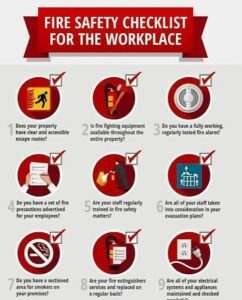
13. Create a Restaurant Fire Safety Checklist
A simple checklist can help management review the restaurant’s general safety arrangements.
– [ ] Cooking equipment is operated and maintained appropriately.
– [ ] Kitchen hoods, filters, and exhaust systems receive scheduled cleaning.
– [ ] Electrical and gas equipment is checked by qualified personnel as appropriate.
– [ ] Suitable fire detection and alarm equipment is installed where required.
– [ ] Fire suppression systems are provided where required for the cooking operation.
– [ ] Portable extinguishers are suitable, accessible, and maintained.
– [ ] Exit routes and doors remain unobstructed.
– [ ] Emergency signs and lighting are maintained where required.
– [ ] Employees understand alarm signals and evacuation procedures.
– [ ] An emergency assembly point has been identified.
– [ ] Emergency contacts are available to responsible staff.
– [ ] Inspection, maintenance, and training records are kept.
This checklist is a starting point, not a substitute for a professional fire-risk assessment or compliance inspection.
Conclusion
Restaurant fire safety requires ongoing attention to the hazards associated with cooking, electrical equipment, gas installations, ventilation, storage, and public occupancy.
Restaurant owners and managers can reduce preventable risks by maintaining equipment, keeping work areas organized, training employees, protecting escape routes, and preparing a clear emergency response plan.
A suitable fire alarm system in Pakistan can contribute to early warning, helping employees and customers recognize a potential emergency. Its effectiveness depends on appropriate design, installation, testing, and maintenance, together with other fire protection measures.
The most important principle is that safety should be part of everyday restaurant operations. Regular checks, responsible management, and well-trained employees help protect people while supporting business continuity.
A safer restaurant is not simply one with fire equipment on its premises. It is one where hazards are addressed, emergency arrangements are understood, and safety responsibilities are taken seriously.
Frequently Asked Questions
1. Why is fire safety important in restaurants?
Restaurants use cooking appliances, electrical equipment, and sometimes gas installations that can create fire hazards. Fire safety measures help protect employees and customers, reduce property damage, and support safe evacuation during an emergency.
2. What fire safety equipment does a restaurant need?
The appropriate equipment depends on the restaurant’s size, layout, cooking operations, and applicable regulations. It may include fire detection and alarm systems, portable extinguishers, kitchen suppr