Fire safety is an important part of protecting homes, offices, factories, shops, schools, and other buildings in Pakistan. A fire can start because of an electrical fault, a cooking accident, overheated equipment, or the unsafe storage of combustible materials. Knowing how to prevent fires and prepare for emergencies can help protect people and property.
However, many people have incorrect ideas about fire extinguishers. Some believe that every extinguisher works on every type of fire. Others think that keeping a fire extinguisher nearby is enough to make a building safe. These misunderstandings can lead to poor preparation and unsafe decisions during an emergency.
The truth is that different extinguishers contain different agents and are designed for specific fire hazards. Water, foam, dry chemical powder, carbon dioxide, and wet chemical extinguishers all have different applications. Specialised extinguishers are also available for certain industrial hazards.
A Fire alarm system in Pakistan can provide an important early warning, while correctly selected extinguishers can help trained people respond to certain small fires when conditions are safe. Neither measure replaces evacuation planning, fire prevention, or professional emergency assistance.
This article explores the biggest myths about fire extinguisher types, explains what people should understand about common extinguishing agents, and shares practical information for homes and workplaces across Pakistan.
Why Understanding Fire Extinguishers Matters
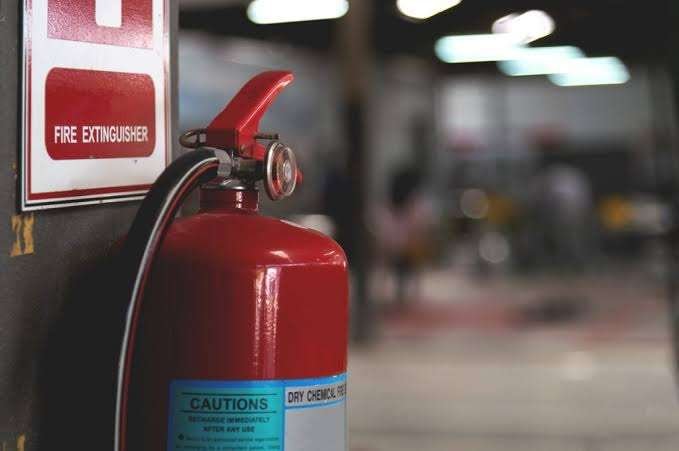
A fire extinguisher is a portable device that releases an agent designed to control or extinguish certain types of fires. The agent may cool burning material, separate it from oxygen, interrupt the combustion process, or work through a combination of these effects.
The correct choice depends on the materials that may burn, the size and nature of the hazard, the surrounding equipment, and the extinguisher’s approved rating.
For example, a fire involving ordinary materials such as paper or wood presents different challenges from a fire involving cooking oil, flammable liquids, or electrical equipment. An extinguisher that is appropriate for one situation may be ineffective or dangerous in another.
Understanding these differences helps property owners select suitable equipment and avoid relying on assumptions during an emergency.
Myth 1: Every Fire Extinguisher Works on Every Fire
This is one of the most common fire safety misconceptions.
Although many extinguishers look similar, their contents and intended applications can be very different. Using an unsuitable extinguisher may fail to control a fire or make the situation more dangerous.
For example, ordinary water extinguishers are generally designed for fires involving materials such as paper, wood, and cloth. They should not be used on energised electrical equipment or burning cooking oil because water can introduce additional hazards.
Similarly, an extinguisher suitable for certain flammable-liquid fires may not be suitable for combustible metals or specialised industrial chemicals.
The fact: Always check the extinguisher’s label, fire classification, and manufacturer instructions. Do not select equipment based only on its colour or size.
Myth 2: Water Extinguishers Are the Best Choice for All Situations
Water extinguishers are useful for certain ordinary combustible-material fires because water cools the burning material. However, they are not suitable for every hazard.
Fires involving paper, cardboard, wood, and some textiles may be appropriate applications for water-based equipment, depending on the extinguisher’s rating.
The problem arises when people assume that water is a universal solution. Applying water to energised electrical equipment can create an electric shock hazard. Applying water incorrectly to burning cooking oil can spread the burning material and make the fire worse.
Water-based equipment may also have limitations in environments containing flammable liquids or other materials that react dangerously with water.
The fact: Water extinguishers have a specific purpose. Their suitability should be assessed according to the potential fire hazards and the product’s approved rating.
Myth 3: Foam Extinguishers Are Suitable for Every Liquid Fire
Foam extinguishers are commonly used for certain fires involving flammable liquids and may also be suitable for ordinary combustible materials, depending on the product.
Foam can help cover the burning surface and reduce contact between the fuel and the surrounding air. This can help suppress flames and reduce the chance of re-ignition in suitable situations.
However, not every liquid fire can be treated in the same way. The chemical properties of the fuel, the extinguisher’s formulation, and the environment all matter.
Some liquids may react with water-based agents, and electrical equipment introduces additional concerns. Certain specialised applications may require equipment specifically approved for the hazard.
The fact: Foam extinguishers are not universally suitable for every liquid or every workplace. Check the product label and obtain professional advice when selecting equipment for fuel storage, workshops, industrial processes, or other specialised locations.
Myth 4: Dry Chemical Powder Extinguishers Can Solve Every Fire Problem
Dry chemical powder extinguishers are widely used because some models can address several common fire hazards. Depending on the rating, a multipurpose powder extinguisher may be suitable for fires involving ordinary combustibles, flammable liquids, and certain gas or electrical hazards.
This versatility makes them useful in many commercial and industrial settings. However, it does not mean that every powder extinguisher is suitable for every fire.
Different powder formulations have different applications. Fires involving combustible metals, for example, may require a specialised Class D extinguisher designed for the particular metal involved. Ordinary multipurpose powder should not be assumed suitable.
Powder residue can also contaminate machinery, electronic equipment, and surrounding materials. In some workplaces, this may create additional cleaning and equipment recovery costs.
The fact: Check the exact extinguisher rating and the type of powder used. A broad label such as “dry powder” is not enough to confirm suitability for a particular hazard.
Myth 5: Carbon Dioxide Extinguishers Are Only for Electrical Fires
Carbon dioxide, commonly called CO₂, is often associated with electrical equipment because it does not leave the powder residue associated with dry chemical extinguishers.
CO₂ extinguishers may be suitable for certain fires involving energised electrical equipment and flammable liquids, depending on the product’s rating. They are often considered in locations where residue could damage sensitive equipment.
However, CO₂ extinguishers have limitations. They may be less effective on deep-seated fires involving materials such as paper, wood, or fabric because those materials can remain hot and reignite after the gas disperses.
CO₂ also presents an asphyxiation risk in confined or poorly ventilated spaces. The discharged gas and cold equipment can create additional hazards if handled incorrectly.
The fact: CO₂ extinguishers have several applications, but they are not appropriate for every fire. Selection should account for the hazard, environment, and manufacturer’s guidance.
Myth 6: Cooking Oil Fires Can Be Treated Like Ordinary Fires
Commercial kitchens, restaurants, catering businesses, and some workplace kitchens may use large quantities of cooking oil and fat. These fires require particular care because burning cooking oil can reach high temperatures and react dangerously when unsuitable agents are applied.
A wet chemical extinguisher is specifically designed for certain cooking-oil and fat fires. Its agent helps cool the burning material and form a surface layer that reduces the chance of re-ignition.
People should not assume that a general-purpose extinguisher is automatically suitable for a deep-fat fryer or other cooking appliance. The correct equipment depends on the kitchen’s setup and the extinguisher’s approval.
Throwing water onto burning cooking oil can cause a dangerous spread of burning oil. People should also avoid moving a burning pan or attempting improvised solutions.
The fact: Commercial kitchens should have suitable protection for their cooking hazards, and staff should receive appropriate training. If a fire is not immediately manageable or escape is uncertain, evacuate and contact emergency services.
Myth 7: The Colour of an Extinguisher Tells You Everything
Colour can help people identify firefighting equipment, but it is not a reliable substitute for reading the label.
Extinguisher colours and label conventions may vary by country, manufacturer, and applicable standard. In many settings, the cylinder is red, while additional markings identify the agent or application. Other systems may use colour-coded labels or bands.
Relying only on colour can be misleading, particularly when people encounter unfamiliar equipment or products manufactured to different standards.
The label should identify the type of extinguisher, the fire classes it is approved for, the manufacturer’s information, and other relevant details.
The fact: Read the instructions and classification markings. Businesses should also make sure employees can identify the equipment installed at their workplace.
Myth 8: A Large Extinguisher Is Always Better
A larger extinguisher may contain more extinguishing agent, but size alone does not determine whether it is suitable.
The extinguisher must match the fire hazard and be manageable for the intended user. A unit that is too heavy for an employee to handle safely may be less useful during an emergency.
Placement is also important. Equipment should be accessible without requiring people to move through a dangerous area. Larger industrial extinguishers may be suitable for certain higher-risk locations, while smaller units may be appropriate in other areas.
A proper assessment should consider the likely fire type, potential fire size, building layout, user capabilities, and applicable requirements.
The fact: Choose equipment based on the risk assessment and approved ratings, not size alone. The largest available extinguisher is not automatically the best choice.
Myth 9: Buying an Extinguisher Means Fire Safety Is Complete
A fire extinguisher is only one part of an effective fire safety plan.
Buildings may also need suitable fire detection, alarm systems, emergency lighting, exit signs, fire doors, suppression systems, and clear evacuation arrangements, depending on their use and applicable regulations.
An extinguisher cannot warn everyone in a large building that a fire has started. It also cannot guarantee a safe escape if exits are blocked or people do not know where to go.
A suitable Fire alarm system in Pakistan can help provide an early warning and support a coordinated response. The design should suit the building’s size, occupancy, hazards, and relevant requirements. Installation, inspection, testing, and maintenance are important to ensure that the system remains dependable.
The fact: Fire extinguishers, alarms, safe escape routes, employee training, and prevention measures should work together as part of a complete fire safety plan.
Myth 10: Fire Extinguishers Do Not Need Regular Maintenance
Another common misunderstanding is that an extinguisher can remain on the wall indefinitely as long as it has not been used.
Over time, equipment can develop faults, lose pressure, suffer physical damage, or become difficult to operate. Labels may become unreadable, and access may be blocked by stock or furniture.
Maintenance requirements depend on the extinguisher type, manufacturer instructions, applicable standards, and local regulations. Regular visual checks can identify obvious problems, but they do not replace the required servicing by a qualified provider.
Businesses should keep appropriate records of inspections, servicing, repairs, and replacement. Damaged or unsuitable equipment should be addressed promptly.
The fact: Fire extinguishers need ongoing inspection and maintenance. A unit that looks acceptable from a distance should not automatically be assumed ready for use.
Myth 11: Anyone Can Safely Fight a Small Fire
Even a small fire can develop quickly, and smoke may contain dangerous gases. People should never assume that they can safely control a fire simply because they have an extinguisher nearby.
Only people who have received appropriate training should consider using an extinguisher, and only when the fire is limited, the equipment is suitable, and a safe escape route remains available.
The alarm should be raised and others warned. Emergency services should be contacted according to the building’s emergency procedure. If smoke spreads, the fire grows, or the exit becomes unsafe, occupants should evacuate immediately.
No one should delay evacuation to retrieve belongings or attempt to save equipment.
The fact: Personal safety comes first. Fire extinguishers are intended for limited fires and are not a reason to take unnecessary risks.
How to Choose the Right Fire Extinguisher in Pakistan
Selecting suitable equipment begins with understanding the risks at the location. A home, office, school, factory, warehouse, restaurant, and workshop may each require a different combination of fire protection measures.
Before choosing equipment, consider the following:
1. Identify likely fire hazards. Consider electrical equipment, cooking appliances, ordinary combustible materials, flammable liquids, gases, and specialised industrial substances.
2. Check the extinguisher rating. Select equipment approved for the specific hazards present.
3. Consider the environment. Temperature, ventilation, sensitive equipment, and available space can influence the choice.
4. Check product information. Review the manufacturer’s instructions, approval markings, servicing requirements, and relevant documentation.
5. Plan placement and access. Equipment should be easy to identify and reach safely.
6. Arrange training and maintenance. Users should understand the equipment’s limitations, and the extinguisher should remain properly maintained.
In Pakistan, the Building Code of Pakistan Fire Safety Provisions 2016 includes requirements relating to portable extinguishers, their selection, and labeling. Building owners and businesses should consult the applicable code and local authorities to determine what is required for their specific premises.
For general information about fire protection equipment and related safety systems, visit “FireSafetyTrading.com.pk” (https://firesafetytrading.com.pk/).
Conclusion
Misunderstandings about fire extinguishers can create a false sense of security. Water, foam, dry chemical powder, carbon dioxide, wet chemical, and specialised extinguishers all have different uses and limitations.
The safest approach is to identify likely fire hazards, select equipment with the correct rating, maintain it properly, and train people to respond appropriately. Fire extinguishers should form part of a broader plan that includes fire prevention, early warning, evacuation procedures, and professional assistance.
For homes and workplaces in Pakistan, understanding these differences is a practical step towards better fire safety. The right equipment matters, but knowing its limitations and prioritising human safety matter just as much.
Frequently Asked Questions (FAQs)
1. What are the main types of fire extinguishers?
Common types include water, foam, dry chemical powder, carbon dioxide (CO₂), and wet chemical extinguishers. Specialised units are also available for hazards such as combustible metals. Each type has specific applications, so the label and rating should always be checked.
2. Can one fire extinguisher be used for every type of fire?
No. Extinguishers are designed for specific fire hazards. Using the wrong type may be ineffective or dangerous. The correct selection depends on the burning material, the surrounding risks, and the extinguisher’s approved rating.
3. Which fire extinguisher is suitable for electrical equipment?
Certain CO₂ and dry chemical extinguishers are rated for particular electrical hazards. The correct choice depends on the equipment, the fire risk, and the product’s label. People should follow their emergency procedure and avoid attempting to fight an unsafe fire.
4. Why is a fire alarm system important alongside extinguishers?
An alarm provides warning that a fire may have occurred, helping occupants begin evacuation and follow emergency procedures. An extinguisher may help control a limited fire when conditions are safe, but it cannot replace early warning or a complete fire safety plan.
5. How often should fire extinguishers be inspected in Pakistan?
Inspection and servicing schedules depend on the applicable regulations, standards, extinguisher type, and manufacturer’s instructions. Businesses should arrange the required checks with qualified service providers and maintain records of inspections, servicing, and repairs.