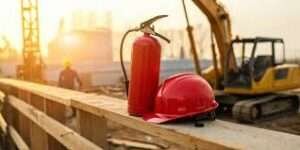
Construction projects are an important part of growing communities. New houses, apartment buildings, schools, offices, shopping centres, and roads help improve infrastructure and create opportunities. However, construction sites can also present fire hazards that workers, contractors, nearby residents, and families should understand.
During construction, buildings may contain temporary electrical connections, fuel-powered machinery, packaging materials, timber, paints, solvents, and other combustible items. Hot work, such as welding or cutting, can introduce ignition sources. Incomplete walls, unfinished staircases, and changing access routes may also make emergency response more difficult.
These risks do not mean that every construction site is unsafe. They mean that effective planning, supervision, fire prevention, and emergency arrangements are essential throughout the project.
Families living near construction work can play a role by understanding potential hazards, keeping children away from restricted areas, and knowing what to do if smoke or fire is noticed. Contractors and site managers, meanwhile, must take responsibility for protecting workers and the surrounding community.
A suitable fire alarm system in Pakistan can help provide early warning when required for a building or project. However, alarms are only one part of a complete fire safety plan. Safe electrical work, proper storage, clear escape routes, suitable firefighting equipment, and worker training are equally important.
This guide explains construction-site fire safety in straightforward language and highlights the practical steps that families and construction professionals should understand.
1. Why Construction-Site Fire Safety Matters
A construction site changes as work progresses. Materials are delivered, temporary structures are installed, electrical systems are modified, and new areas become accessible. These changing conditions can create hazards that require regular review.
Fire safety is important because an incident may affect more than the immediate work area. Smoke can travel beyond a site boundary, and a fire may threaten neighbouring buildings, parked vehicles, pedestrians, and workers.
Common construction-site concerns include:
– Temporary electrical installations and damaged cables.
– Combustible materials such as timber, cardboard, and packaging.
– Paints, coatings, adhesives, and other products requiring careful storage.
– Welding, cutting, and other hot-work activities.
– Fuel and equipment used for construction operations.
– Temporary heating and lighting equipment.
– Incomplete escape routes or unfinished stairways.
– Limited access for emergency vehicles.
Construction managers should identify these hazards before work begins and review them whenever site conditions change. Families should understand that a construction site is a controlled work area, not a suitable place for children to play or explore.
2. Understand Common Fire Hazards
Recognising potential hazards is an important first step in fire prevention. Different construction activities create different risks, so safety arrangements should be tailored to the project.
Electrical hazards
Construction projects often require temporary power supplies, lighting, tools, and machinery. Damaged cables, unsuitable connections, overloaded equipment, and poor maintenance can increase fire and electric-shock risks.
Electrical work should be carried out by qualified personnel using appropriate equipment and procedures. Site managers should arrange inspections, ensure damaged equipment is reported, and prevent unauthorised access to electrical installations.
Families should never touch cables, electrical boxes, or equipment found near a construction boundary. If something appears damaged or unsafe, they should keep away and notify the responsible site manager or appropriate authority.
Combustible construction materials
Timber, cardboard, plastic packaging, insulation, fabrics, and other materials may contribute to fire spread if they are stored or managed poorly.
Construction teams should maintain good housekeeping, remove waste regularly, and store materials in designated locations. Storage should not block exits, access roads, firefighting equipment, or emergency routes.
Paints, solvents, and other products
Some construction products may be flammable or release hazardous vapours. Their labels and safety data sheets explain important handling and storage precautions.
Contractors should follow product instructions, use appropriate storage arrangements, and restrict access to authorised workers. Materials should not be left scattered around the site or stored near unsuitable heat sources.
Hot-work activities
Welding, cutting, and certain other activities can generate heat, sparks, or hot particles. These tasks require appropriate controls, trained workers, and supervision.
Construction management should establish suitable procedures for hot work, including assessing the surrounding area, managing combustible materials, and following any required monitoring arrangements.
Children and members of the public must stay away from work zones where these activities are taking place.
3. Keep Children Away From Construction Sites
Children may be curious about cranes, machinery, unfinished buildings, and construction materials. However, construction sites contain hazards that may not be obvious to a young visitor.
Families should explain that fences, barriers, warning signs, and locked gates mark restricted areas for a reason.
Parents and caregivers should teach children to:
– Never enter an unfinished building or construction site.
– Never climb site fences, scaffolding, ladders, or stored materials.
– Stay away from machinery, electrical equipment, and fuel storage areas.
– Never touch unfamiliar containers, cables, or construction products.
– Avoid playing near temporary site entrances or vehicle routes.
– Tell a trusted adult if they notice smoke, fire, or a damaged site barrier.
Adults should not rely on warning signs alone. Contractors should secure the site boundary appropriately, while families should supervise children near active construction areas.
If a child finds an opening in a fence or a damaged barrier, the child should stay away and tell an adult rather than attempting to close or repair it.
4. Use Fire Alarm Systems and Warning Methods Appropriately
Early warning can help workers recognise an emergency and follow the site’s evacuation procedures. The type of alarm or warning arrangement needed depends on the project, the building’s stage of construction, the risks, and applicable requirements.
A suitable fire alarm system in Pakistan may include automatic detection devices, manual call points, audible warning devices, visual signals, and a control panel. Some construction environments may also require temporary or supplementary warning methods appropriate to the conditions.
The system should be designed or selected by competent professionals.
Make sure workers recognise the alarm
Workers need to know what the warning sounds or signals mean, which routes to use, and where to assemble. New workers and contractors should receive an introduction to the site’s emergency arrangements before starting work.
Consider changing site conditions
A construction project may have incomplete walls, temporary partitions, or changing work areas. Site management should review whether existing warning arrangements remain suitable as the building develops.
Maintain and test equipment
Where a fire alarm system is installed, inspections and testing should follow the manufacturer’s instructions and applicable standards. Defects should be documented and corrected promptly.
If a system is temporarily unavailable, management should follow an approved impairment procedure and establish appropriate interim safety measures. Workers should never disable warning equipment without authorisation.
A warning system is effective only when people can recognise the signal and respond quickly and safely.
5. Keep Escape Routes and Access Roads Clear
An emergency plan cannot work properly if people cannot leave the site or emergency responders cannot reach it.
Construction materials, waste, tools, temporary cables, and equipment should not obstruct designated escape routes. Stairs, corridors, gates, and exits should remain usable according to the project’s safety arrangements.
Site managers should regularly check that:
– Escape routes are identified and communicated to workers.
– Temporary stairs and walkways are suitable for their intended use.
– Exits and gates are not obstructed.
– Emergency signs remain visible.
– Workers know the designated assembly point.
– Fire service access routes remain clear.
– Changes in the site layout are reflected in the emergency plan.
Where a building is occupied during construction or renovation, required means of escape and fire protection must be maintained according to applicable requirements.
Families should also avoid parking vehicles in a way that blocks site entrances or emergency access routes. Keeping these areas clear can support emergency responders if an incident occurs.
6. Store Materials and Waste Safely
Good housekeeping reduces avoidable hazards and helps workers move around the site safely.
Construction waste can accumulate quickly, especially during demolition, packaging removal, and finishing work. If combustible waste is allowed to build up, it may increase the amount of material available to burn and interfere with evacuation.
Site management should establish a routine for waste collection and safe storage.
Useful practices include:
– Removing cardboard, timber offcuts, and other waste regularly.
– Keeping materials in designated storage areas.
– Following product instructions for flammable or hazardous substances.
– Keeping electrical panels and firefighting equipment accessible.
– Preventing materials from blocking stairs, doors, or walkways.
– Separating incompatible products according to professional guidance.
– Ensuring waste collection does not create hazards for the public.
Storage arrangements should be reviewed whenever the type or quantity of materials changes.
7. Maintain Firefighting Equipment
Depending on the project’s size, stage, hazards, and applicable requirements, construction sites may need portable extinguishers, hose systems, hydrants, or other fire protection equipment.
Equipment must be suitable for the hazards present and kept in designated, accessible locations.
Fire extinguishers
Different extinguishers are intended for different types of fires. The appropriate selection should be determined through a competent assessment of the site’s risks.
Equipment should be inspected and maintained according to its type and the applicable requirements. Workers should know where it is located and understand the emergency procedure.
Only people with appropriate training should consider using an extinguisher, and only when it is safe to do so under the site’s emergency plan. Workers should evacuate rather than attempt to control a fire that is spreading or creating dangerous smoke.
Fixed protection systems
Some larger or partially completed buildings may have standpipes, fire pumps, or other systems installed as construction progresses. Where these systems are required or provided, they should be maintained in the condition needed for their intended use.
Site managers should ensure that inspection responsibilities are clear and that faults are reported and corrected.
8. Train Workers and Practise Emergency Procedures
Workers should not have to guess what to do when a fire alarm sounds. Every site needs clear emergency instructions that reflect its layout and activities.
Training should explain how to report an emergency, recognise warning signals, leave the work area, and reach the assembly point.
It should also cover how to notify emergency services and who is responsible for coordinating the evacuation.
Construction projects frequently involve subcontractors, delivery drivers, temporary workers, and visitors. Everyone who may be exposed to site hazards should receive suitable safety information.
Fire drills can help test whether workers understand the procedures. After a drill, supervisors should review any problems, such as unclear instructions, obstructed routes, or difficulties accounting for workers.
Training and drills should be repeated when site conditions change significantly or when new workers need instruction.
9. Develop a Construction-Site Fire Emergency Plan
A written fire emergency plan helps organise responsibilities before an incident occurs. It should be appropriate for the site’s size, activities, layout, and changing construction stages.
The plan should identify:
– Who is responsible for raising the alarm.
– How workers and visitors will be warned.
– Who coordinates evacuation.
– Which escape routes and exits should be used.
– Where people should assemble.
– Who contacts emergency services.
– How workers and visitors are accounted for.
– How emergency responders are directed to the incident.
– Who authorises re-entry after the site is declared safe.
The plan should be reviewed when access routes change, new floors become available, temporary structures are altered, or different activities introduce new hazards.
A named emergency coordinator and trained backup personnel can help ensure that responsibilities remain covered across shifts and work schedules.
10. What Families Should Do if a Fire Starts Nearby
Families living close to construction projects should know how to respond if they see smoke, flames, or another immediate danger.
The safest approach is to avoid investigating the incident or approaching the construction site.
If a fire is visible:
1. Move away from the site and any immediate danger.
2. Warn nearby family members or others who may be at risk, if it is safe to do so.
3. Contact the local fire and emergency service.
4. Follow instructions from emergency responders.
5. Keep roads, gates, and access routes clear.
6. Do not return to a restricted area until authorities say it is safe.
Smoke may affect neighbouring homes or public areas depending on wind and the location of the fire. Follow official instructions about moving away or sheltering indoors.
Children should know how to alert a trusted adult and should never be sent to investigate or report a fire from close range.
11. Protect Neighbouring Homes and Businesses
Construction companies should consider how site activities could affect the surrounding community. Appropriate boundaries, controlled access, responsible storage, and emergency planning help reduce risks beyond the worksite.
Families can also take reasonable precautions without entering the site or handling construction equipment.
For example, residents can keep their own escape routes clear, ensure household smoke alarms are maintained where installed, and know how to contact emergency services. They should report visible damage to site fencing or other obvious safety concerns to the responsible contractor or relevant local authority.
Where construction is taking place beside occupied buildings, contractors should assess the interaction between the project and neighbouring properties. Any required precautions should be based on the site-specific risk assessment and applicable regulations.
Good communication between site management and nearby residents can also help people understand changes to access, work schedules, and emergency arrangements.
12. Fire Safety Requirements in Pakistan
Construction projects in Pakistan should consider the Building Code of Pakistan – Fire Safety Provisions 2016, developed by the Pakistan Engineering Council in collaboration with the National Disaster Management Authority. The code includes provisions relating to construction, repair, improvement, and demolition activities, including fire protection planning and escape facilities for workers. <Cite refs={[“turn868301search24″,”turn868301search0”]} />
The requirements that apply to a particular project may depend on the building, occupancy, construction stage, relevant notifications, and the authority responsible for enforcement. Project owners and contractors should confirm their obligations with qualified fire-safety professionals and the relevant authorities.
A fire safety plan should be updated as construction progresses. The site should not depend solely on the arrangements intended for the completed building if temporary conditions create different hazards.
When selecting a fire alarm system in Pakistan, project managers should consider the project’s current needs, expected changes, equipment suitability, installation quality, testing, and ongoing support.
The goal is to provide appropriate protection throughout the construction process, not just after the building is finished.
13. A Practical Construction-Site Fire Safety Checklist
Site managers can use the following checklist as a starting point for routine reviews:
– [ ] A site-specific fire prevention and emergency plan is available.
– [ ] Workers and contractors understand alarm signals and evacuation procedures.
– [ ] Fire alarm or other warning arrangements are suitable for current site conditions.
– [ ] Required firefighting equipment is accessible and maintained.
– [ ] Escape routes and emergency exits are kept clear.
– [ ] Emergency access roads and entrances remain unobstructed.
– [ ] Electrical installations and equipment receive appropriate inspections.
– [ ] Hot-work activities are managed under suitable procedures.
– [ ] Combustible waste is removed regularly.
– [ ] Flammable and hazardous products are stored appropriately.
– [ ] Site boundaries prevent unauthorised access.
– [ ] Children and members of the public are kept away from restricted areas.
– [ ] Workers receive safety induction and suitable refresher training.
– [ ] Emergency drills and inspections are documented.
– [ ] The fire safety plan is reviewed when site conditions change.
This checklist is a general guide, not a substitute for a professional risk assessment, site inspection, or review of applicable legal requirements.
Conclusion
Fire safety for construction sites is a shared concern for contractors, workers, project owners, families, and the wider community. Temporary electrical systems, combustible materials, hot work, and changing escape routes can introduce hazards that require continuous attention.
Families can contribute by keeping children away from construction areas, recognising warning signs, and knowing how to respond if a fire occurs nearby. Construction professionals must provide secure site boundaries, suitable warning systems, maintained equipment, clear escape routes, worker training, and a practical emergency plan.
For construction projects in Pakistan, the applicable Building Code of Pakistan fire-safety provisions and guidance from qualified professionals should inform the site’s arrangements. A suitable fire alarm or warning system is important where required, but it must be supported by effective prevention and emergency procedures.
The most important lesson is simple: construction-site fire safety should be considered throughout every stage of a project. Planning ahead helps protect workers, neighbouring families, property, and the wider community.
Frequently Asked Questions
1. Why is fire safety important at construction sites?
Construction sites may contain temporary electrical installations, combustible materials, flammable products, and hot-work activities. Effective prevention and emergency planning help protect workers, visitors, neighbouring properties,