Textile mills are an important part of Pakistan’s economy. They manufacture yarn, fabric, garments, and other products that support local businesses and international trade. However, textile production involves materials and processes that can create significant fire risks if safety precautions are overlooked.
Cotton, fabric rolls, yarn, packaging, and other combustible materials can allow a fire to spread quickly. Machinery, electrical installations, heating equipment, and accumulated textile dust may introduce additional hazards. A fire can threaten workers, damage expensive equipment, interrupt production, and affect the surrounding community.
This is why textile mill fire safety deserves careful attention. Although the title mentions home safety, textile mill protection is primarily an industrial responsibility. Homeowners who live near industrial premises can also benefit from understanding fire risks, recognising emergency warnings, and knowing how to respond safely.
A reliable Fire alarm system in Pakistan can help industrial facilities provide early warning, but alarms alone are not enough. Effective protection also requires suitable fire prevention measures, clear escape routes, trained workers, maintained equipment, and regular safety assessments.
This guide explains the major fire risks in textile mills and the practical steps businesses can take to improve safety.
1. Why Is Fire Safety Important in Textile Mills?
Textile mills often contain large quantities of combustible materials. Raw cotton, yarn, finished fabrics, cardboard packaging, and other stored products may burn if exposed to an ignition source.
Production areas may also contain machinery that operates for long periods. Electrical faults, overheating equipment, friction, and inadequate maintenance can increase the likelihood of a fire.
The consequences can extend beyond property damage. Workers may be exposed to smoke, evacuation routes may become difficult to use, and nearby businesses or residential areas may also be affected.
A comprehensive fire safety programme helps mills:
– Identify and reduce fire hazards.
– Detect potential fires at an early stage.
– Alert workers across large production areas.
– Maintain safe evacuation routes.
– Protect equipment, inventory, and buildings.
– Improve employee awareness and emergency preparedness.
– Support compliance with applicable safety requirements.
For textile manufacturers, fire safety should be part of daily operations rather than something considered only during inspections.
2. Common Causes of Fires in Textile Mills
Understanding the main risks allows management to introduce suitable preventive measures.
Electrical faults
Textile machinery, motors, lighting, ventilation systems, and other electrical equipment may operate throughout a production shift. Damaged wiring, loose connections, overloaded circuits, and neglected electrical components can create ignition risks.
Qualified electrical professionals should inspect installations, investigate faults, and carry out repairs. Workers should report damaged cables or unusual equipment behaviour rather than attempting unauthorised repairs.
Accumulated textile dust and lint
Cotton processing and other textile operations can generate dust and lint. Depending on their composition and conditions, fine combustible particles may create fire or explosion hazards.
The U.S. Occupational Safety and Health Administration identifies certain textile materials and combustible dusts as potential industrial fire and explosion hazards. Its guidance highlights the importance of appropriate dust control, equipment maintenance, and housekeeping.
Textile mills should use suitable cleaning and dust-control arrangements designed for their operations. Cleaning methods should avoid unnecessarily dispersing fine particles into the air.
Overheated machinery
Continuous operation can place stress on motors, bearings, belts, and other moving parts. Poor maintenance or abnormal friction may create heat that increases fire risk.
Preventive maintenance schedules, appropriate monitoring, and prompt investigation of unusual noise, temperature, or vibration can help identify developing problems.
Unsafe storage
Large quantities of fabric, yarn, packaging, and raw materials should be stored in organised areas. Poorly managed storage can obstruct access routes and increase the amount of combustible material near potential ignition sources.
Storage plans should account for fire protection arrangements, emergency access, and applicable requirements.
Hot work and maintenance activities
Welding, cutting, grinding, and similar work can introduce sparks or heat. Textile facilities should use approved procedures for such activities, including risk assessment, suitable authorisation, and controls established by competent personnel.
3. The Role of a Fire Alarm System in Textile Mills
A fire alarm system detects signs of a possible fire and alerts people so they can respond according to the emergency plan.
In a textile mill, the alarm system must be appropriate for the building’s size, production processes, environmental conditions, and occupancy.
A system may include smoke detectors, heat detectors, manual call points, audible sounders, visual warning devices, and a central control panel. The exact combination should be selected through a competent fire safety assessment.
Early warning
Early detection can give workers additional time to recognise the danger and leave the affected area. This is especially important in large production buildings where a fire may not be immediately visible from every workstation.
Warning throughout the premises
A large mill may include spinning rooms, weaving areas, warehouses, offices, and separate production sections. Alarm coverage should be designed so that people in the intended areas receive an effective warning.
Manual alarm activation
Manual call points allow someone who discovers a suspected fire to raise the alarm. Their placement, identification, accessibility, and operation should follow the approved system design and relevant requirements.
Central monitoring
Where a control panel is used, it can indicate the location or zone associated with a signal and may report faults. This information can help responsible staff understand the system’s status.
Backup power
Alarm systems may require backup power so that warning capability is maintained during a power interruption. The required arrangement depends on the equipment and applicable standards.
When considering a Fire alarm system in Pakistan, textile mill operators should seek professional advice about the premises’ risks rather than selecting equipment based solely on cost.
4. Choosing Suitable Fire Detection Equipment
Not all detectors are suitable for every industrial environment. Textile dust, airflow, humidity, temperature, and normal production activities can influence equipment selection and performance.
Smoke detectors
Smoke detectors respond to smoke particles. They may be suitable for many areas, but their type and placement must account for the environment and the possibility of nuisance alarms.
Heat detectors
Heat detectors respond to specified temperature conditions or temperature changes, depending on their design. They may be appropriate in some areas where environmental conditions make particular types of smoke detection unsuitable.
Manual call points
Manual call points provide a way for people to raise the alarm when they identify a suspected emergency. Workers should know their purpose and the procedure for reporting a fire.
Audible and visual warning devices
Production machinery can make it difficult to hear an alarm. A professional assessment should determine whether audible warnings are sufficient or whether visual notification devices are also needed.
Professional system design
Detector selection, positioning, connections, and system testing should be handled according to the applicable design and installation requirements. The installation should be documented, and workers responsible for emergency response should understand how the system operates.
5. Fire Prevention and Good Housekeeping
Detection is important, but preventing fires from starting is equally valuable.
Keep work areas clean
Lint, dust, waste fabric, and packaging should be managed through an established housekeeping programme. Cleaning should take place at suitable intervals, with attention to locations where dust may accumulate.
Maintain machinery
Equipment should receive maintenance according to manufacturer recommendations and the mill’s maintenance programme. Defects should be recorded and addressed by qualified personnel.
Manage electrical equipment responsibly
Avoid unauthorised modifications, unsafe connections, and the continued use of damaged equipment. Electrical installations should be suitable for their environment and inspected by competent professionals.
Organise storage areas
Keep materials organised and maintain the access required for workers, emergency responders, and fire protection equipment. Do not allow stock or waste to obstruct exits, corridors, or access to safety equipment.
Control ignition sources
Smoking, hot work, and other potential ignition sources should be managed through clear workplace rules and suitable controls.
These preventive measures should be reviewed regularly to ensure they remain effective as production processes and storage arrangements change.
6. Firefighting Equipment and Protection Measures
A textile mill may require several types of fire protection equipment depending on its risks, size, building design, and applicable regulations.
Possible measures include portable fire extinguishers, hydrants, hose systems, sprinklers, and other fixed suppression systems. Equipment should be selected and installed by competent professionals.
Fire extinguishers
The type, quantity, and placement of extinguishers should match the identified fire risks and relevant requirements. Workers should receive appropriate training, but they must never delay evacuation or attempt to tackle a fire beyond their training and safe conditions.
Sprinkler systems
Where required or recommended by the building’s risk assessment, an appropriately designed sprinkler system may help control or suppress a developing fire. Its design and maintenance should be handled by qualified specialists.
Hydrants and water supplies
Large facilities may require suitable firefighting water supplies and access for emergency responders. The arrangements should be evaluated against the building’s design and applicable requirements.
Inspection and maintenance
Fire protection equipment must remain accessible and serviceable. Inspection records should be maintained, and faults should be corrected promptly.
No single piece of equipment can protect a textile mill on its own. Detection, prevention, suppression, evacuation, and emergency response need to work together.
7. Creating an Effective Emergency Evacuation Plan
A clear evacuation plan helps workers respond in an organised manner when an alarm sounds.
Identify escape routes
Every occupied area should have clearly identified routes to safety, in accordance with the building’s design and applicable requirements. Routes should remain unobstructed during all shifts.
Display clear signs
Emergency exit signs and other safety information should be visible and maintained. Emergency lighting may also be necessary to support evacuation if normal lighting fails.
Establish assembly points
Workers should know where to assemble after leaving the building. Assembly points should be selected to keep people away from immediate hazards and avoid obstructing emergency vehicles.
Account for workers
Supervisors or designated staff should follow the mill’s procedures for checking attendance and identifying anyone who may be missing. Emergency responders should receive relevant information promptly.
Consider all shifts
Textile mills may operate during the day, evening, or night. Evacuation arrangements should account for staffing levels, visitors, contractors, and workers who may need additional assistance.
If a fire alarm sounds, workers should follow the emergency plan, leave by a safe route, and avoid returning to the building until authorised by emergency responders.
8. Training Workers and Conducting Fire Drills
Fire safety training helps workers understand hazards, recognise alarms, and respond appropriately.
Training should cover the meaning of alarm signals, how to report a suspected fire, the designated escape routes, assembly points, and individual responsibilities.
Fire drills provide an opportunity to practise these procedures. They can also reveal problems such as blocked exits, unclear instructions, or difficulties communicating across noisy production areas.
After each drill, management should review the results, record any weaknesses, and arrange corrective action. Drills should be planned so they do not create unnecessary risks for workers or disrupt critical operations without proper coordination.
New employees, contractors, and temporary workers should receive appropriate safety information before undertaking their assigned activities.
9. Fire Safety Requirements in Pakistan
Fire safety requirements in Pakistan may vary according to the province, local authority, building classification, occupancy, and nature of the industrial operation.
Punjab Civil Defence lists fire detection and alarm systems, firefighting arrangements, fire safety plans, emergency control rooms, and evacuation arrangements among the measures inspected in relevant industrial, commercial, and high-rise premises. “https://civildefence.punjab.gov.pk/inspection_of_fire_safety_measures” (https://civildefence.punjab.gov.pk/inspection_of_fire_safety_measures)
Sindh’s factory and workplace legislation also contains provisions relating to fire alarms, firefighting equipment, and building safety. The exact requirements that apply should be verified against the current law and the facility’s circumstances. “https://www.sindhlaws.gov.pk/setup/publications_SindhCode/PUB-NEW-23-000118.pdf” (https://www.sindhlaws.gov.pk/setup/publications_SindhCode/PUB-NEW-23-000118.pdf)
Textile mill owners should consult the relevant provincial labour department, Civil Defence authority, building-control body, and qualified fire safety professionals. They should confirm which inspections, approvals, training arrangements, and maintenance records are required.
A professional assessment can also help determine whether an existing Fire alarm system in Pakistan is suitable for the particular premises and whether its design needs to be upgraded.
10. How Homeowners Can Stay Safer Near Textile Mills
People living near industrial premises cannot control the mill’s safety arrangements, but they can take sensible steps to prepare for an emergency.
Learn the local emergency contact numbers and pay attention to official instructions if an incident occurs nearby. Keep family members informed about possible evacuation routes and identify a meeting place away from the affected industrial site.
If smoke or an official warning indicates danger, move away from the affected area and follow directions from emergency responders. Do not enter the industrial premises, approach a fire to investigate, or obstruct emergency vehicles.
At home, maintain working smoke alarms where appropriate, keep exits clear, and make sure everyone understands how to leave the house during an emergency.
If you notice a serious fire hazard at a nearby facility, report it to the appropriate authority rather than approaching machinery, electrical installations, or hazardous areas yourself.
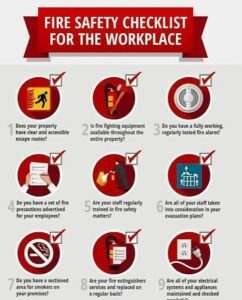
11. Developing a Textile Mill Fire Safety Checklist
A checklist can help management review key safety arrangements and assign responsibility for improvements.
– Potential fire hazards have been identified and assessed.
– Textile lint and waste are managed through suitable housekeeping.
– Electrical equipment and machinery receive appropriate maintenance.
– Fire detection and alarm equipment is suitable for the premises.
– Alarm coverage and warning devices are checked according to the required schedule.
– Firefighting equipment is accessible and maintained.
– Exit routes remain clear and appropriately marked.
– Emergency plans and assembly points are documented.
– Workers receive suitable training.
– Fire drills are conducted and reviewed.
– Contractors understand relevant safety procedures.
– Inspection and maintenance records are available.
– Identified defects are assigned to responsible personnel and corrected promptly.
This checklist is a starting point, not a substitute for a formal risk assessment or inspection. The final arrangements should reflect the mill’s actual processes, building design, and applicable regulations.
Conclusion
Textile mill fire safety is essential for protecting workers, buildings, equipment, and surrounding communities. Combustible materials, accumulated lint, electrical faults, and machinery-related hazards make prevention and preparedness particularly important in textile production environments.
A reliable fire alarm system can provide early warning, but it must be supported by suitable detection equipment, routine maintenance, good housekeeping, firefighting provisions, worker training, and a clear evacuation plan.
For textile businesses researching a Fire alarm system in Pakistan, professional assessment is the best starting point. The appropriate solution depends on the building, production processes, fire risks, and applicable requirements.
Fire Safety Trading’s website, “https://firesafetytrading.com.pk/” (https://firesafetytrading.com.pk/), can be consulted for relevant fire safety information and enquiries about available solutions. Ultimately, consistent safety practices and timely corrective action help build a safer working environment.
Frequently Asked Questions (FAQs)
1. Why is fire safety important in textile mills?
Textile mills store and process combustible materials such as cotton, yarn, fabric, and packaging. Machinery and electrical installations can introduce ignition risks, so fire prevention, early warning, and safe evacuation arrangements are essential.
2. Which fire alarm system is suitable for a textile mill?
The appropriate system depends on the mill’s size, layout, production processes, environmental conditions, and applicable requirements. A qualified fire safety professional should assess detector types, alarm coverage, notification devices, and control equipment before a system is selected.
3. Can textile dust create a fire hazard?
Yes. Certain combustible dusts and textile materials can create fire or explosion hazards under specific conditions. Appropriate dust control, housekeeping, equipment maintenance, and professional risk assessment help manage these risks.
4. How often should textile mill fire safety equipment be inspected?
Inspection and testing frequency depends on the equipment, manufacturer’s instructions, applicable regulations, and the facility’s risk assessment. Mills should maintain documented schedules and arrange additional checks whenever faults, changes, or safety concerns arise.
5. What should workers do when a fire alarm sounds?
Workers should follow the established evacuation procedure, leave through a safe route, and proceed to the designated assembly point. They should not return for belongings or re-enter the building until emergency responders confirm it is safe.