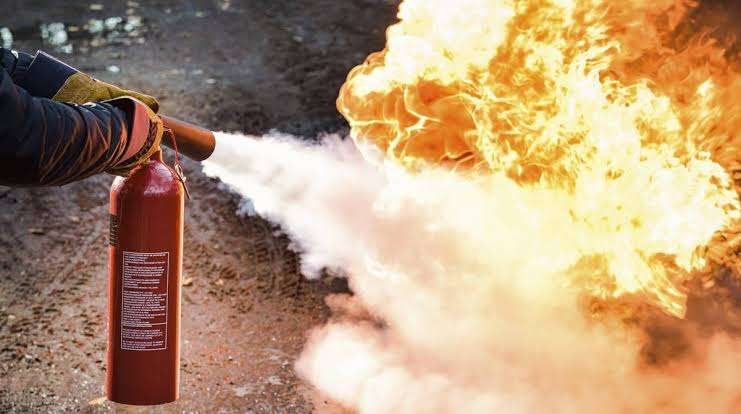
Fire emergencies can happen in offices, factories, schools, hospitals, shopping centres, warehouses, restaurants, and residential buildings. A fire may begin because of an electrical fault, damaged equipment, unsafe storage, or a lack of proper maintenance. If people are unprepared, a small incident can quickly become a serious threat to lives and property.
One of the most effective ways to improve preparedness is through a fire safety audit. This process examines a building’s fire risks, safety equipment, alarm systems, emergency exits, evacuation procedures, and staff awareness. It helps building owners and managers identify problems before an emergency occurs and take corrective action.
In Pakistan, fire safety audits are particularly important for buildings with many occupants, complex layouts, or equipment that may increase fire risks. Authorities and safety professionals continue to emphasise the importance of functioning alarms, accessible exits, maintained firefighting equipment, and clear emergency plans.
For organisations considering a Fire alarm system in Pakistan, a fire safety audit can help determine whether the existing system is suitable for the building and whether other safety measures need improvement.
This article explains how fire safety audits work, why they matter, what they examine, and how organisations can use their findings to create safer environments.
1. What Is a Fire Safety Audit?
A fire safety audit is a systematic assessment of a building’s fire prevention measures, protective equipment, and emergency arrangements. Its purpose is to identify hazards, evaluate existing precautions, and recommend improvements.
An audit is more comprehensive than simply checking whether fire extinguishers are present. It examines how different safety measures work together to protect occupants.
For example, an auditor may review whether a building has appropriate fire detection equipment, whether alarms operate correctly, whether exit routes remain clear, and whether employees understand the evacuation procedure.
A typical audit may include:
– Identifying potential fire hazards.
– Reviewing fire detection and alarm systems.
– Checking firefighting equipment and maintenance records.
– Assessing emergency exits and evacuation routes.
– Reviewing emergency lighting and safety signage.
– Examining staff training and fire drill records.
– Reviewing emergency response plans.
– Preparing recommendations for correcting identified deficiencies.
The final report helps management understand which safety measures are working, which require attention, and which improvements should receive priority.
2. Why Are Fire Safety Audits Important?
Fire safety equipment cannot provide reliable protection simply because it has been installed. It must be suitable for the building, properly maintained, and supported by effective emergency procedures.
A fire safety audit helps organisations identify weaknesses in their arrangements before those weaknesses contribute to an emergency.
Identifying hidden hazards
Some fire hazards are not immediately obvious. Damaged electrical connections, poorly maintained equipment, blocked corridors, or unsuitable storage arrangements may go unnoticed during normal daily operations.
An audit provides a structured opportunity to examine these issues and arrange appropriate corrective action.
Improving emergency preparedness
An audit evaluates whether people can recognise a warning, understand their responsibilities, and leave the building safely. It can reveal gaps in evacuation planning and staff training.
Protecting lives
Working alarms, clear exits, suitable safety equipment, and well-practised procedures can help people respond more quickly when a fire occurs.
Reducing disruption
A serious fire can interrupt business operations, damage equipment, affect employees, and create financial difficulties. Preventive action may reduce some of these risks, although no audit can guarantee that a fire will never occur.
Supporting compliance
Depending on the building and location, specific fire safety requirements may apply. An audit can help management identify areas that need attention and prepare relevant documentation for review by the appropriate authority.
3. How Fire Safety Audits Save Lives During Emergencies
The main value of a fire safety audit is that it can identify problems before an emergency puts occupants at risk.
By checking early-warning systems
A fire alarm system alerts occupants when detectors identify conditions associated with a possible fire. During an audit, the system’s condition, coverage, operation, power arrangements, and maintenance records may be reviewed.
If an alarm fails to operate or does not provide suitable warning throughout the intended areas, the problem can be investigated and corrected.
By identifying blocked escape routes
A clear exit route is essential during evacuation. Stored materials, furniture, locked doors, and poorly arranged corridors can delay people trying to leave a building.
An audit helps identify these obstructions and encourages management to maintain safe, accessible routes.
By improving evacuation planning
People need to know where to go when an alarm sounds. An audit can reveal whether evacuation plans are understandable, exits are appropriately identified, and assembly points have been established.
By checking staff readiness
Even good equipment cannot replace proper training. Auditors may review whether employees know how to raise the alarm, guide occupants, report emergencies, and follow the building’s evacuation plan.
By identifying equipment defects
Fire extinguishers, hydrants, sprinklers, emergency lighting, and other safety equipment require suitable inspection and maintenance. An audit can identify missing equipment, visible damage, expired service arrangements, or incomplete maintenance records.
These findings allow management to address deficiencies before the equipment is needed.
4. The Role of Fire Alarm Systems in a Safety Audit
A fire alarm system is an important part of many building fire protection plans. However, its suitability depends on the building’s layout, occupancy, risks, and applicable requirements.
When evaluating a Fire alarm system in Pakistan, organisations should consider more than whether the alarm makes a sound.
Detector coverage
An audit may assess whether the installed detectors are appropriate for the rooms and risks they are intended to protect. Smoke detectors and heat detectors serve different purposes, so their selection and placement should follow the system design and relevant guidance.
Alarm audibility and visibility
The warning must reach the people it is intended to alert. Auditors may consider whether alarm sounders and visual notification devices provide suitable coverage in occupied areas, including spaces where people may have difficulty hearing an audible warning.
Control panel condition
Where a control panel is installed, its indicators, displayed faults, connected devices, and documented maintenance history may be reviewed.
Power supply and backup
The audit may examine whether the system has the required power arrangements and backup facilities. This is important in locations where power interruptions may occur.
Manual call points
Manual call points allow people to activate the alarm when they discover a suspected fire. Their condition, accessibility, identification, and operation may be checked as part of the assessment.
Testing and maintenance records
Documentation helps demonstrate whether the system has received the inspections, testing, and servicing required by the applicable standards and manufacturer.
Any technical testing should be conducted by competent personnel using appropriate procedures. Faults should be documented and corrected promptly.
5. Which Areas Are Examined During a Fire Safety Audit?
The exact scope depends on the building’s purpose, size, occupancy, and risks. However, several areas are commonly important.
Electrical installations
Auditors may identify visible damage, unsafe equipment arrangements, overloaded outlets, or incomplete inspection records. Qualified electrical personnel should investigate technical issues and carry out necessary repairs.
Fire detection and alarm equipment
The condition, coverage, testing arrangements, and maintenance history of alarms and detectors are reviewed where applicable.
Firefighting equipment
Auditors consider whether appropriate equipment is available for the building’s risks, accessible, properly maintained, and supported by suitable records.
Emergency exits and staircases
Exit routes should remain clear and usable. Doors, stairs, signage, and other escape provisions may be assessed against applicable requirements.
Emergency lighting
If normal lighting fails during a power interruption or fire-related incident, emergency lighting can help occupants identify routes to safety. The audit may review its condition and testing records.
Storage and housekeeping
Combustible materials, waste, and other stored items should be managed appropriately. Auditors may identify storage arrangements that increase fire risks or obstruct escape routes.
Staff training and documentation
Emergency plans, drill records, staff responsibilities, inspection reports, and maintenance documents help show whether the organisation is prepared to respond.
6. How Does a Fire Safety Audit Work?
A structured audit generally follows several stages. The exact process varies according to the premises and the audit’s purpose.
Step 1: Review the building and its activities
The auditor gathers information about the building, the number of occupants, the nature of the work, and the activities that may introduce fire hazards.
Step 2: Inspect the premises
Relevant areas are examined to identify hazards, assess existing precautions, and note any visible deficiencies.
Step 3: Review safety equipment
Fire detection systems, alarms, emergency lighting, firefighting equipment, and other relevant measures are reviewed according to the audit scope.
Step 4: Examine emergency procedures
The auditor considers evacuation plans, assembly arrangements, staff responsibilities, emergency contacts, and available training records.
Step 5: Record findings
Identified problems are documented with enough detail for management to understand what needs attention.
Step 6: Recommend corrective actions
The report identifies improvements and helps management prioritise them according to the seriousness of the risk and the applicable requirements.
Step 7: Follow up
Management should assign responsibility for corrective actions, establish realistic deadlines, and verify that problems have been resolved. A report alone does not improve safety unless its recommendations are implemented.
7. How Often Should a Fire Safety Audit Be Conducted?
There is no single audit schedule that is suitable for every building. The required frequency depends on applicable regulations, the building’s risks, the type of operations, and the condition of its safety systems.
Organisations should follow the inspection requirements of the relevant authority and arrange professional audits at appropriate intervals.
An additional audit or risk review may be necessary when:
– The building undergoes major renovation.
– New machinery or equipment is introduced.
– The building’s purpose or occupancy changes.
– A fire, near miss, or significant safety concern occurs.
– Repeated defects are found during routine inspections.
– New legal requirements or safety instructions become applicable.
Routine checks should continue between formal audits. A building should not wait for its next scheduled audit to correct a serious hazard.
8. Fire Safety Audits in Pakistan: Rules and Responsibilities
In Pakistan, applicable fire safety requirements can depend on the province, local authority, building type, occupancy, and nature of the premises. Owners and managers should verify which requirements apply to their particular property.
Punjab Civil Defence identifies several fire safety measures for inspection in relevant industrial, commercial, and high-rise premises. These include fire detection and alarm systems, firefighting arrangements, fire safety plans, emergency fire control rooms, emergency exits, evacuation plans, and ventilation systems. Non-compliance may result in legal action under the rules cited by the department. <Cite refs={[“turn685931search0”]} />
The federal Ministry of Maritime Affairs also announced fire safety audits across institutions under its administrative control in August 2026. The announced reviews included alarms, smoke detectors, firefighting equipment, electrical installations, emergency exits, evacuation arrangements, staff training, and maintenance records. <Cite refs={[“turn685931search2”]} />
These examples demonstrate the importance of systematic inspections and documented corrective action. They do not mean that identical rules automatically apply to every property.
The Building Code of Pakistan—Fire Safety Provisions 2016 is another relevant national reference. Organisations should consult the appropriate building-control authority, fire service, or qualified fire safety professional to determine which provisions and approvals apply to their premises.
9. Common Problems Found During Fire Safety Audits
Many safety weaknesses develop gradually when equipment is neglected or responsibilities are unclear.
Poorly maintained alarms
An alarm may be installed but still have faults, damaged components, or overdue servicing. Testing and maintenance records help identify these problems.
Blocked exits
Storage, furniture, or equipment may gradually reduce the available space along escape routes. Regular inspections should ensure that exits remain clear.
Missing or outdated evacuation plans
A plan may no longer reflect the building after renovations or changes in room use. Emergency information should be reviewed and updated when necessary.
Incomplete maintenance records
Without records, management may struggle to confirm when equipment was tested, serviced, or repaired. A clear record-keeping process helps prevent missed tasks.
Insufficient staff awareness
Employees may be unfamiliar with the alarm signal or unsure of their responsibilities. Appropriate training and evacuation drills can help address these gaps.
Ignored audit recommendations
One of the most important mistakes is failing to act on identified problems. Management should assign responsibility for every corrective action and confirm completion rather than treating the report as a paperwork exercise.
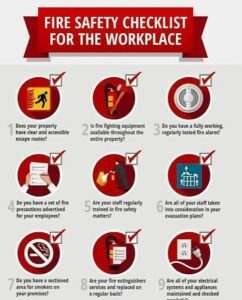
10. Creating an Effective Fire Safety Audit Checklist
A checklist helps managers review important areas consistently. It should be adapted to the building and should not replace a professional inspection where one is required.
A practical checklist can include:
– Fire hazards and electrical safety concerns have been identified.
– Alarm and detection equipment is suitable for the building.
– Required equipment has been inspected and maintained.
– Emergency exits and corridors remain unobstructed.
– Exit signs and emergency lighting are in suitable condition.
– Evacuation plans are current and accessible.
– Staff understand their emergency responsibilities.
– Fire drills are documented and reviewed.
– Maintenance and inspection records are available.
– Previous audit findings have been addressed.
– New building changes have been assessed for their effect on fire safety.
– Serious defects have been escalated and corrected promptly.
For each finding, record the location, the problem, its risk level, the action required, the person responsible, and the target completion date.
This makes the audit report a practical management tool instead of a document that is filed away and forgotten.
11. Choosing Professional Fire Safety Support
Some organisations have internal staff responsible for routine safety checks, but specialist equipment and complex buildings may require qualified external support.
A professional can help assess the premises, review the suitability of the alarm system, identify gaps in emergency arrangements, and recommend corrective measures. They can also explain which documentation and inspections may be required by the relevant authority.
When selecting a provider, consider its experience, technical competence, understanding of applicable requirements, and ability to provide clear inspection reports. Ask how defects will be documented and how follow-up work can be verified.
Organisations researching a Fire alarm system in Pakistan can visit “Fire Safety Trading” (https://firesafetytrading.com.pk/) to explore relevant fire safety information and enquire about available products or solutions. Any equipment should be selected according to a building’s actual needs and applicable requirements.
Conclusion
Fire safety audits play an important role in protecting people because they help identify hazards and weaknesses before an emergency occurs. By reviewing alarms, detectors, firefighting equipment, exit routes, emergency lighting, staff training, and maintenance records, organisations can improve their overall preparedness.
However, the audit itself is only the first step. Its recommendations must be prioritised, assigned to responsible people, completed, and checked. Regular inspections, suitable equipment, staff awareness, and well-practised evacuation procedures are all essential parts of an effective safety programme.
For organisations looking for a Fire alarm system in Pakistan, an audit can help clarify what protection is needed and whether existing equipment is functioning as intended. Investing in prevention and preparation is a practical way to support safer workplaces, educational institutions, commercial buildings, and public facilities throughout Pakistan.
Frequently Asked Questions (FAQs)
1. What is the main purpose of a fire safety audit?
The main purpose is to identify fire hazards, assess the condition of safety equipment, review evacuation procedures, and recommend improvements. It helps organisations address weaknesses before they contribute to a serious emergency.
2. How does a fire safety audit help save lives?
An audit can identify faulty alarms, blocked exits, missing safety equipment, and gaps in emergency training. Correcting these issues can improve early warning and help occupants evacuate more safely during a fire.
3. What equipment is checked during a fire safety audit?
Depending on the building and audit scope, equipment may include fire alarms, smoke and heat detectors, extinguishers, hydrants, sprinklers, emergency lighting, and safety signage. Inspection and maintenance records may also be reviewed.
4. How often should a fire safety audit be carried out in Pakistan?
The appropriate frequency depends on the building’s risks and the requirements of the relevant authority. Organisations should follow applicable regulations, conduct routine checks, and arrange additional assessments after significant changes, incidents, or repeated safety defects.
5. Is a fire alarm system enough to keep a building safe?
No. A fire alarm system provides warning, but effective fire safety also requires appropriate exits, evacuation plans, maintained equipment, staff training, and regular inspections. All these measures should work together as part of a complete safety programme.