Home fire safety is not just about owning a fire extinguisher or installing a smoke alarm. It is a complete approach that combines fire prevention, early detection, warning systems, safe escape routes, regular maintenance, and family preparedness.
Every home has different risks. Kitchens contain cooking appliances and electrical equipment. Bedrooms may contain electrical devices and charging equipment. Garages and storage areas can contain combustible materials. In Pakistan, some households also rely on gas appliances, generators, UPS systems, and other equipment that requires careful maintenance.
Understanding how home fire safety actually works can help families identify risks before they become emergencies.
The Building Code of Pakistan Fire Safety Provisions 2016 addresses important principles such as means of egress, fire alarm systems, fire protection, inspection, testing, and maintenance.
For homeowners researching a fire alarm system in Pakistan, it is important to understand that an alarm is only one part of a wider safety system.
What Is Home Fire Safety?
Home fire safety means taking reasonable measures to prevent fires, detect them early, alert occupants, and help everyone leave safely if an emergency occurs.
A complete approach generally involves five connected areas:
1. Prevention – reducing common fire hazards.
2. Detection – identifying smoke or fire as early as possible.
3. Notification – alerting people that action may be required.
4. Evacuation – providing clear and accessible ways out.
5. Preparedness – making sure family members understand what to do.
These elements work together.
For example, safe electrical practices may reduce the chance of a fire starting. A smoke alarm can provide an early warning if smoke is detected. A clear exit route can help occupants leave the building. A family evacuation plan can reduce confusion during an emergency.
No single device can replace the entire system.
Why Home Fire Safety Matters in Pakistan
Fire safety is relevant to every household, regardless of the size or type of property.
Homes in Pakistan may have a combination of electrical appliances, cooking equipment, gas appliances, backup power systems, and other sources of heat or energy. Poor maintenance or unsafe use of any of these can increase risk.
Fire prevention therefore begins with understanding the equipment already present in the home.
Common areas to review include:
– Kitchen appliances
– Electrical sockets and wiring
– Gas appliances
– Backup power equipment
– Heating equipment
– Charging devices
– Storage areas
– Garages
– Stairways and exits
Rescue 1122’s Community Safety Program includes fire-safety education, emergency preparedness, evacuation drills, and training for citizens and students. This reflects the importance of preparing for emergencies before they happen.
How Does Fire Prevention Work?
The first stage of home fire safety is preventing unsafe conditions from developing.
Prevention is often less complicated than people think. It can involve keeping appliances maintained, avoiding damaged electrical equipment, keeping combustible materials away from heat sources, and addressing hazards promptly.
Electrical Safety
Electrical equipment is an important part of modern homes.
Families should pay attention to warning signs such as:
– Damaged power cords
– Broken plugs
– Loose electrical connections
– Unusual heat
– Burning smells
– Repeated circuit problems
– Visible damage to appliances
Electrical repairs should be handled by appropriately qualified professionals.
Using damaged equipment because it still appears to work can create unnecessary risk.
Kitchen Safety
Cooking areas deserve particular attention because they contain heat, electrical appliances, and sometimes gas.
Keep cooking areas organized and avoid placing unnecessary combustible materials close to hot appliances.
Kitchen appliances should be maintained according to their manufacturer’s instructions.
Children should not be expected to operate potentially hazardous cooking equipment or investigate a kitchen emergency.
Gas Safety
Where gas appliances are used, appropriate installation and maintenance are important.
If a family suspects a gas-related problem, occupants should move away from the suspected hazard and seek help from responsible adults and appropriate professionals or emergency services rather than attempting an unsafe repair.
Gas equipment should be inspected and maintained by qualified personnel when necessary.
How Does Fire Detection Work?
Fire detection is the second major part of home fire safety.
A detection device is designed to identify signs of a fire, such as smoke, and provide a warning.
For many homes, smoke alarms are an important form of early warning.
The advantage is straightforward: a person may not immediately notice a developing fire, especially when they are sleeping or located in another part of the home.
An alarm can draw attention to the possible emergency sooner.
Smoke Alarms
Smoke alarms are relatively simple devices, but they require proper installation and maintenance.
Homeowners should:
– Follow the manufacturer’s installation instructions.
– Use the appropriate power source.
– Test alarms according to the manufacturer’s guidance.
– Pay attention to warning signals.
– Replace batteries or devices as recommended.
– Replace damaged or outdated alarms.
A smoke alarm should never be treated as a device that can simply be installed and forgotten.
How Does a Fire Alarm System in Pakistan Work?
A fire alarm system in Pakistan can refer to different types of installations depending on the building.
A small home may use standalone smoke alarms, while a larger building may have a comprehensive fire alarm system containing multiple detection and notification components.
A more complex system can include:
– Automatic fire detectors
– Manual alarm points
– Alarm control equipment
– Audible or visual notification devices
– Backup power
– Monitoring arrangements
– Connections to other fire-protection systems
The exact design depends on the property’s size, occupancy, layout, applicable requirements, and risk profile.
The Building Code of Pakistan Fire Safety Provisions 2016 includes requirements concerning fire alarm systems, including provisions related to testing, servicing, maintenance, and system impairment.
Pakistan Engineering Council also identifies installation, commissioning, and maintenance of fire detection, alarm, and suppression systems as a specialized engineering area.
This means complex systems should be handled by appropriately qualified professionals rather than through informal repairs.
Why Early Warning Matters
Early warning gives occupants an opportunity to follow their evacuation plan.
This is particularly important in homes where bedrooms are located away from the kitchen or other areas where a fire might begin.
An alarm should not be viewed as an invitation to investigate a dangerous situation.
Its purpose is to provide notification so people can respond appropriately.
If a situation appears unsafe, occupants should leave the building and seek professional emergency assistance.
How Do Safe Escape Routes Work?
Detection alone is not enough.
People also need a safe way to leave.
The Building Code defines a means of egress as a continuous and unobstructed route from a building to a public way. It identifies exit access, the exit itself, and exit discharge as parts of this process.
For a household, this principle can be simplified into a few questions:
– Can everyone reach an exit?
– Are hallways clear?
– Are doors accessible?
– Does everyone know where to go?
– Is there an alternative route where appropriate?
– Does everyone know the outdoor meeting point?
Furniture, boxes, bicycles, stored belongings, and other objects should not unnecessarily obstruct escape routes.
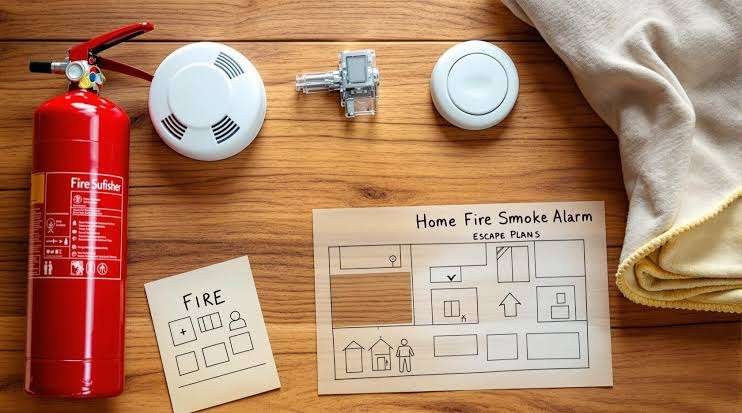
Create a Family Evacuation Plan
Every household should have a simple evacuation plan.
The plan should be easy for children and adults to understand.
It can include:
Primary Exit
Identify the normal safe route out of the home.
Alternative Exit
Where appropriate, identify another route that can be used if the primary route is unavailable.
Meeting Point
Choose a safe location outside the building where family members can gather.
Emergency Contact
Make sure responsible adults know how to contact emergency services.
Assistance
Consider whether young children, older family members, or anyone with mobility limitations may require additional assistance.
Rescue 1122 provides safety education and evacuation-drill training through its Community Safety Program, including programs for schools and citizens.
Practice Makes Emergency Plans Easier to Follow
A plan is more useful when family members understand it before an emergency occurs.
Families can calmly review:
– Alarm sounds
– Exit routes
– Outdoor meeting location
– Emergency contacts
– Important safety rules
Children should be taught to take alarms seriously and follow adult instructions.
They should not be expected to fight a fire, investigate smoke, or retrieve belongings.
What Role Does Fire Protection Equipment Play?
Fire-safety equipment can provide an additional layer of protection, but the correct equipment depends on the property and hazards.
Depending on the building, fire-safety equipment may include:
– Smoke alarms
– Fire alarm systems
– Suitable fire extinguishers
– Fire blankets
– Emergency lighting
– Fire doors
– Automatic suppression systems
Not every home requires every type of equipment.
Equipment should be selected according to the property’s actual requirements.
For specialized systems, professional assessment and maintenance are particularly important.
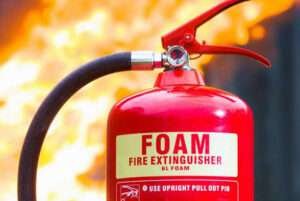
Fire Extinguishers Are Not a Complete Fire-Safety Plan
Some people believe that having an extinguisher means their home is protected.
That is not the case.
An extinguisher is only one component of a broader fire-safety strategy.
Occupants should never put themselves in danger attempting to control a fire. If a fire is spreading or the situation is unsafe, leaving the building and contacting emergency services should take priority.
Children should not be expected to use firefighting equipment.
Why Maintenance Matters
A fire-safety system is only useful when its components remain functional.
Maintenance can include:
– Testing smoke alarms
– Replacing batteries when required
– Inspecting electrical equipment
– Maintaining gas appliances
– Checking fire-safety equipment
– Keeping exits clear
– Servicing specialized alarm systems
– Replacing damaged equipment
The Building Code includes provisions concerning the inspection, testing, servicing, and maintenance of fire-protection systems.
For complex fire alarm installations, qualified professionals should conduct required inspection and servicing.
What Is the Role of a Fire Alarm System During an Emergency?
A fire alarm system can perform several important functions depending on its design.
It can detect a possible fire, activate an alarm, and notify occupants that an emergency may exist.
In more complex buildings, the system may also interact with other safety systems.
The Building Code recognizes automatic detection and manual fire alarm initiation as methods that can activate an alarm system where applicable.
The most important point for occupants is simple: when an alarm indicates a potential emergency, people should follow the building’s approved safety procedures and evacuate when instructed.
Home Fire Safety During Power Outages
Power outages can introduce additional challenges.
Homes may use generators, UPS systems, rechargeable devices, candles, or other temporary sources of power.
These situations require additional caution.
Families should ensure that electrical and backup-power equipment is installed and maintained appropriately.
Children should not handle generators, electrical panels, wiring, or other potentially hazardous equipment.
Backup equipment should be operated according to manufacturer instructions and applicable safety requirements.
Fire Safety and Children
Children should receive age-appropriate fire-safety education.
Important lessons include:
– Never play with matches or lighters.
– Never investigate smoke or fire.
– Take alarm sounds seriously.
– Follow evacuation instructions.
– Leave belongings behind during an emergency.
– Tell an adult if they notice a potential hazard.
– Go to the family’s designated meeting place.
Rescue 1122 specifically includes students in its safety-education initiatives and provides training related to fire safety and emergency evacuation.
Common Home Fire-Safety Mistakes
Several mistakes can weaken a household’s safety plan.
Ignoring Damaged Equipment
A damaged electrical appliance or power cord should not be ignored.
Blocking Exits
Storing belongings in hallways or near doors can interfere with evacuation.
Disabling Alarms
Repeated nuisance alarms should be investigated rather than simply disabling the device.
Forgetting Maintenance
Fire alarms and other safety equipment need regular attention.
Relying on One Device
A smoke alarm cannot replace prevention, evacuation planning, and emergency preparedness.
Not Teaching Children
Everyone in the household should understand basic emergency procedures.
When Should You Seek Professional Help?
Some fire-safety tasks should be handled by trained professionals.
Professional assistance may be appropriate for:
– Electrical repairs
– Gas-system work
– Fire alarm installation
– Fire alarm system maintenance
– Fire detection design
– Building fire-safety assessments
– Specialized suppression systems
– Major building alterations
Pakistan Engineering Council lists fire detection, alarm, and suppression systems under specialized engineering work involving installation, commissioning, and maintenance.
Homeowners should therefore avoid improvised repairs to specialized safety systems.
Home Fire Safety Checklist
A simple checklist can help families review their safety arrangements.
Fire Prevention
– Keep combustible materials away from heat.
– Maintain cooking equipment.
– Inspect electrical appliances.
– Address damaged wiring or equipment professionally.
– Maintain gas appliances appropriately.
– Keep storage areas organized.
Detection
– Install suitable smoke alarms.
– Test alarms according to manufacturer instructions.
– Replace batteries as recommended.
– Replace damaged or outdated alarms.
Evacuation
– Keep exits accessible.
– Identify primary and alternative routes.
– Choose an outdoor meeting point.
– Make sure children understand the plan.
– Consider the needs of family members who require assistance.
Preparedness
– Keep emergency contacts available.
– Teach children basic fire-safety rules.
– Review the evacuation plan periodically.
– Arrange professional inspection for specialized systems.
How to Build a Better Fire-Safety Routine
Home fire safety does not have to be complicated.
Start by walking through the home with a responsible adult and looking for obvious hazards.
Ask:
Can everyone hear an alarm?
If not, the household may need to review its detection arrangements.
Can everyone reach an exit?
If not, remove unnecessary obstructions.
Does everyone know where to meet outside?
If not, establish a clear meeting point.
Are important appliances and systems maintained?
If not, arrange appropriate professional assistance.
Does everyone understand what to do during an emergency?
If not, review the family plan.
These simple questions can reveal areas where safety can be improved.
Emergency Response in Pakistan
Preparedness should also include knowing which emergency service is available in your area.
Punjab’s Rescue 1122 provides professional emergency services including fire and rescue response. Its official website lists 1122 as the emergency number.
Other areas of Pakistan may have different emergency arrangements, so households should become familiar with the relevant local emergency services.
During an emergency, people should prioritize getting to a safe location and following instructions from emergency personnel.
Final Thoughts
Home fire safety works as a system rather than as one product.
Prevention reduces hazards. Smoke alarms and other detection equipment can provide early warning. Alarm systems can notify occupants. Clear exits support evacuation. Family planning helps reduce confusion. Professional inspection and maintenance help keep specialized equipment functional.
For anyone researching a fire alarm system in Pakistan, the most important consideration is not simply buying an alarm. It is understanding how detection fits into the complete safety plan of the property.
The Building Code of Pakistan Fire Safety Provisions 2016 provides important requirements concerning fire alarms, means of egress, maintenance, and other fire-protection measures. Meanwhile, Rescue 1122 promotes community preparedness, fire prevention, safety education, and evacuation training.
A safer home begins with simple habits: maintain equipment, keep exits clear, take alarms seriously, teach children appropriate safety behavior, and seek professional help for specialized systems.
Fire safety is most effective when preparation starts before an emergency happens.
Frequently Asked Questions
1. How does home fire safety actually work?
Home fire safety combines prevention, early detection, warning, evacuation, and preparedness. Smoke alarms and fire alarm systems provide warning, while clear exits and a family evacuation plan help occupants reach safety.
2. Is a fire alarm system in Pakistan necessary for every home?
The appropriate fire-detection arrangement depends on the building, its layout, occupancy, and applicable requirements. A simple residence may use suitable smoke alarms, while larger or more complex properties may require more comprehensive systems.
3. How often should home smoke alarms be checked?
Smoke alarms should be tested and maintained according to their manufacturer’s instructions. Batteries and devices should be replaced when recommended, and damaged or malfunctioning equipment should be addressed promptly.
4. What should a family do when a home fire alarm sounds?
Everyone should treat the warning seriously and follow the household evacuation plan. People should leave through a safe exit, go to the designated meeting point, and seek emergency assistance when appropriate. Children should not investigate the source of the alarm.
5. Why is professional maintenance important for fire alarm systems?
Complex fire alarm systems contain multiple components that need appropriate inspection, testing, servicing, and maintenance. Pakistan Engineering Council identifies installation, commissioning, and maintenance of fire detection, alarm, and suppression systems as specialized engineering work.