Fire safety begins with early awareness. In a home, a fire can develop when people are asleep, busy in another room, or unaware that something has gone wrong. A smoke detector provides an important layer of protection by detecting smoke and giving occupants an early warning.
For families in Pakistan, smoke detection should be considered part of a broader home fire-safety plan. A detector does not prevent every fire, and it cannot replace safe electrical practices, careful cooking, proper appliance maintenance, or an evacuation plan. However, early warning can give people more time to recognize a dangerous situation and leave safely.
The Building Code of Pakistan Fire Safety Provisions 2016 recognizes the importance of occupant notification. It states that fire alarm systems should be provided where necessary in buildings where a fire itself may not provide adequate warning to occupants. The same code also addresses safe means of egress and illumination of escape routes.
This makes smoke detection an important subject for homeowners, landlords, and families who want to improve their overall fire preparedness.
What Is a Smoke Detector?
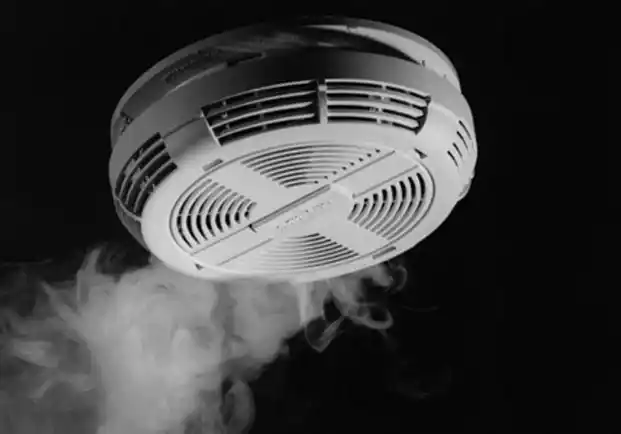
A smoke detector is a device designed to sense smoke and provide a warning, usually through an audible alarm.
Its basic purpose is simple: detect a potential fire condition early and alert people inside the building.
Smoke detectors are generally smaller than the larger fire alarm systems found in commercial buildings. In a home, they can provide localized warning, while a more comprehensive fire alarm system may connect multiple detectors, alarm devices, control panels, and other components.
The exact type of detector and its placement should be selected according to the building, room layout, manufacturer’s instructions, and applicable safety requirements.
Why Smoke Detectors Matter at Home
A home can contain many potential sources of heat and ignition, including cooking appliances, electrical equipment, heaters, chargers, and other household devices.
A problem may develop when nobody is watching.
For example, occupants may be:
– Sleeping
– Working in another room
– Watching television
– Outside the house
– Busy with household activities
A smoke detector provides an additional warning layer that can draw attention to smoke before occupants would otherwise notice it.
This is particularly important at night. People may not immediately notice smoke while sleeping, so an audible warning can be an important part of household preparedness.
Smoke Detectors and Fire Alarm Systems
The terms “smoke detector” and “fire alarm system” are sometimes used interchangeably, but they are not always the same thing.
A standalone smoke detector is generally designed to detect smoke and produce a local alarm.
A larger fire alarm system may include:
– Multiple smoke detectors
– Heat detectors
– Manual alarm devices
– Alarm notification appliances
– A fire alarm control panel
– Monitoring or signaling equipment
– Other fire protection components
The appropriate arrangement depends on the type and size of the property.
For people researching a Fire alarm system in Pakistan, it is important to understand that household smoke detection is one part of the larger field of fire detection and life safety.
Pakistan Engineering Council identifies fire detection, alarm, and suppression systems as a specialized engineering area covering installation, commissioning, and maintenance.
Where Should Smoke Detectors Be Considered?
Every home has a different layout, so there is no single arrangement that works for every property.
In general, homeowners should consider smoke detection in areas where occupants need early warning, particularly near sleeping areas and on relevant levels of a home.
The final placement should follow the detector manufacturer’s instructions and applicable local requirements.
When reviewing a home, consider:
– Bedrooms and sleeping areas
– Hallways near bedrooms
– Living areas
– Different floors
– Areas connecting sleeping spaces to exits
Special consideration may be needed for rooms where normal household activities can produce smoke or steam, because inappropriate placement can contribute to unwanted alarms.
The Importance of Early Warning
A smoke detector does not put out a fire. Its main role is warning.
That distinction is important.
A detector should be viewed as part of a layered approach:
Prevention → Detection → Warning → Evacuation → Emergency Response
Each stage has a different purpose.
Prevention reduces the chance of a fire starting. Detection identifies a potential problem. Warning alerts occupants. Evacuation moves people away from danger. Emergency responders manage the incident.
Rescue 1122’s Community Safety Program similarly emphasizes preparedness, prevention, fire safety education, and emergency response as parts of developing safer communities.
Smoke Detectors Are Especially Important at Night
Nighttime creates a particular fire-safety challenge.
People may be asleep and less likely to notice unusual smells, sounds, or changes in their surroundings. A functioning smoke detector can provide an audible warning that attracts attention.
For this reason, households should not assume that daytime awareness is enough.
A good home fire-safety plan should consider what happens if a fire is discovered while family members are sleeping.
Families can discuss:
– Which exits can be used
– Where everyone should go after leaving
– Where to meet outside
– How to contact emergency services
– How adults will assist younger family members
The goal is preparation rather than panic.
How to Maintain a Smoke Detector
Installing a detector is only the beginning.
Like other safety equipment, smoke detectors need attention over time.
Homeowners should:
– Follow the manufacturer’s maintenance instructions.
– Keep the device free from excessive dust or obstruction.
– Check the alarm according to manufacturer guidance.
– Pay attention to warning signals indicating a problem.
– Replace batteries or power components as specified.
– Replace the detector when the manufacturer recommends doing so.
– Avoid painting over the detector or covering its openings.
If a detector repeatedly produces unwanted alarms, the cause should be investigated rather than simply leaving the device disabled.
A detector that has been disconnected or ignored cannot provide the intended warning.
Battery-Powered and Connected Detectors
Homes can use different types of smoke-detection arrangements.
Some detectors operate primarily from batteries, while others can be connected to a building’s electrical supply and may have backup power.
Some modern systems can also connect multiple devices so that an alarm condition can be communicated to more than one location.
The right choice depends on the property and the applicable requirements.
Homeowners should select products from reputable sources and follow the manufacturer’s installation and maintenance instructions.
Why Detector Placement Matters
Installing a detector does not automatically guarantee effective protection.
Placement can influence how quickly smoke reaches the sensing device.
For example, a detector hidden behind furniture, covered by an object, or placed in an unsuitable location may not perform as intended.
Homeowners should therefore avoid improvising installation locations.
When a home has unusual architecture, multiple levels, high ceilings, extensions, or other complex features, professional advice can help determine an appropriate detection arrangement.
Avoiding Unwanted Alarms
Smoke detectors should be installed where they can provide useful warning without being constantly exposed to normal household conditions that may produce unnecessary alarms.
Cooking areas are an obvious example.
Steam, cooking smoke, dust, and other particles can sometimes activate detection devices depending on their design and location.
This does not mean detectors should simply be removed when unwanted alarms occur.
Instead, the location and cause should be reviewed, and the device should be relocated or replaced only in accordance with appropriate guidance.
The objective is to achieve a balance between reliable detection and reasonable resistance to nuisance alarms.
Smoke Detectors and Electrical Safety
Many home fire-safety discussions focus on detection, but prevention remains equally important.
Electrical equipment should be used and maintained responsibly.
Families should pay attention to:
– Damaged cables
– Overloaded outlets
– Poor-quality electrical accessories
– Improper connections
– Signs of overheating
– Unusual burning smells
– Damaged chargers or appliances
Older homes may also have electrical installations that deserve professional assessment.
A smoke detector provides warning, but it does not remove the underlying hazard.
Kitchen Safety and Smoke Detection
Kitchens require special consideration because cooking naturally produces heat and sometimes smoke.
This can make detector placement particularly important.
Homeowners should follow the manufacturer’s guidance and applicable standards when determining where detection devices should be installed in relation to cooking areas.
Kitchen fire safety should also include:
– Careful attention while cooking
– Keeping combustible materials away from heat sources
– Maintaining appliances properly
– Avoiding unsafe electrical arrangements
– Keeping the cooking area organized
The broader goal is to reduce the chance of a fire while maintaining effective warning.
Smoke Detectors in Multi-Story Homes
A multi-story house presents different evacuation considerations from a single-level home.
A family may need to understand:
– Which exits are available from each level
– Where detection devices are located
– Which route leads toward a safe outdoor location
– Where family members should meet
– How children and people needing assistance will be supported
The Building Code of Pakistan addresses means of egress and emphasizes that escape routes should be clearly arranged or marked toward a place of safety.
For larger or more complex properties, a professional fire-safety assessment may be appropriate.
Smoke Detectors for Rental Properties
Landlords and property managers also have an important role in maintaining fire safety.
A rental property should not simply be handed over with a detector installed and then forgotten.
Property managers should understand:
– What detection equipment is installed
– Whether it is maintained
– Whether batteries or other power sources require attention
– Whether renovations have affected detector locations
– Whether the property’s occupancy or layout has changed
Tenants should also know where detectors are located and report suspected faults to the responsible property manager.
The exact legal obligations can vary according to jurisdiction and property type, so landlords should check the requirements applicable to their location.
Smoke Detection in Apartments
Apartment buildings create additional considerations because residents share common areas and may have limited control over building-wide systems.
Individual apartments may have their own detection devices, while the wider building may have a more comprehensive fire alarm arrangement.
Residents should understand:
– Their apartment’s evacuation arrangements
– Building alarm signals
– Available exits
– Assembly arrangements
– Building management’s emergency procedures
Building-wide fire protection systems should be professionally maintained.
What Families Should Do When an Alarm Sounds
A smoke alarm should be treated seriously.
If an alarm sounds and there is an indication of fire or smoke, occupants should prioritize getting to a safe location and contacting the appropriate emergency service rather than delaying to investigate unnecessarily.
Families should have an evacuation plan that everyone understands.
The plan can include:
1. Recognizing the alarm.
2. Leaving through a safe available route.
3. Helping younger children or people who need assistance.
4. Moving to the agreed outdoor meeting point.
5. Calling emergency services from a safe location.
6. Following instructions from emergency responders.
In Punjab, Rescue 1122 is the emergency service and lists 1122 as its emergency number.
People should never put themselves at unnecessary risk by attempting to retrieve belongings during an emergency.
The Role of Fire Safety Education
Technology works best when people understand it.
A smoke detector can sound an alarm, but household members still need to know what the alarm means.
Families can discuss fire safety in simple, age-appropriate language and make sure everyone knows:
– What the alarm sounds like
– Where the exits are
– Where to meet outside
– Who to contact during an emergency
– Why alarms should never be ignored
Rescue 1122’s community safety initiatives include fire-safety education and emergency evacuation training for schools and communities.
This reflects an important principle: fire safety involves both equipment and people.
Common Smoke Detector Mistakes
Installing One Detector and Assuming the Job Is Done
A single detector may not provide adequate coverage for every home layout.
Ignoring Maintenance
A detector that is not maintained according to its instructions may not perform as expected.
Removing a Detector Because of Nuisance Alarms
Repeated unwanted alarms should be investigated rather than simply disabling the device.
Blocking the Detector
Furniture, decorations, or other objects should not interfere with the detector’s sensing openings.
Forgetting About Home Renovations
Room additions, changes to sleeping arrangements, and alterations to the home’s layout may affect the appropriate detection arrangement.
Treating an Alarm as a Minor Inconvenience
An alarm deserves attention. Families should establish clear procedures before an emergency happens.
Smoke Detectors as Part of a Complete Fire Safety Plan
Smoke detectors are valuable, but no single product can make a home completely fire-safe.
A comprehensive household approach can include:
– Smoke detection
– Safe electrical practices
– Responsible cooking
– Proper appliance maintenance
– Clear exits
– An evacuation plan
– Regular family discussions
– Appropriate firefighting equipment
– Professional inspections where needed
For larger residential buildings, additional systems may be required based on building design, occupancy, and applicable regulations.
The Building Code states that fire protection systems and safeguards should be designed, installed, and approved according to applicable codes and standards.
Fire Safety in Pakistani Homes
Pakistan has a wide variety of residential buildings, from traditional houses to modern apartments and multi-story homes. Construction methods, electrical installations, household appliances, and occupancy patterns can differ significantly.
This means fire safety should be approached according to the actual property rather than through a one-size-fits-all checklist.
Rescue 1122’s work in Punjab includes professional fire response, community safety, fire prevention, and public safety education.
Homeowners can support these broader safety efforts by taking basic precautions, maintaining detection equipment, keeping escape routes usable, and making sure family members understand what to do during an emergency.
Final Thoughts
Smoke detectors are a simple but important part of home fire safety. Their greatest value is early warning. When a detector identifies smoke and produces an alarm, it can alert occupants to a potential danger that they may not otherwise notice immediately.
However, detection should never be viewed in isolation.
A safer home combines smoke detection with prevention, clear escape arrangements, responsible electrical and cooking practices, equipment maintenance, and family preparedness.
For anyone researching a Fire alarm system in Pakistan, the most important lesson is that fire protection is a complete system of measures rather than a single device. Smoke detectors can provide an essential warning layer, while larger or more complex properties may require professionally designed fire detection and alarm systems.
The best time to think about fire safety is before an emergency occurs. A properly maintained detector, a clear evacuation plan, and a family that understands what to do can make a meaningful difference when every moment matters.
FAQs
1. Why does every home need a smoke detector?
Smoke detectors provide an early warning when smoke is detected. This can be particularly important when occupants are asleep or located in another part of the house.
2. Is a smoke detector the same as a fire alarm system?
Not necessarily. A standalone smoke detector generally provides local warning, while a fire alarm system can connect multiple detection and notification components. The appropriate system depends on the building and applicable requirements.
3. Where should smoke detectors be installed in a home?
Placement depends on the home’s design and applicable guidance. Detection should generally be considered around sleeping areas and on relevant levels, with installation following the manufacturer’s instructions and applicable safety requirements.
4. How should a smoke detector be maintained?
Homeowners should follow the manufacturer’s instructions, keep the detector unobstructed, check it as recommended, maintain its power source, and replace the unit when required.
5. What should a family do when a smoke alarm sounds?
Treat the alarm seriously, leave using a safe available route, move to the agreed safe meeting location, and contact the appropriate emergency service from a safe place. In Punjab, Rescue 1122 lists 1122 as its emergency number.