
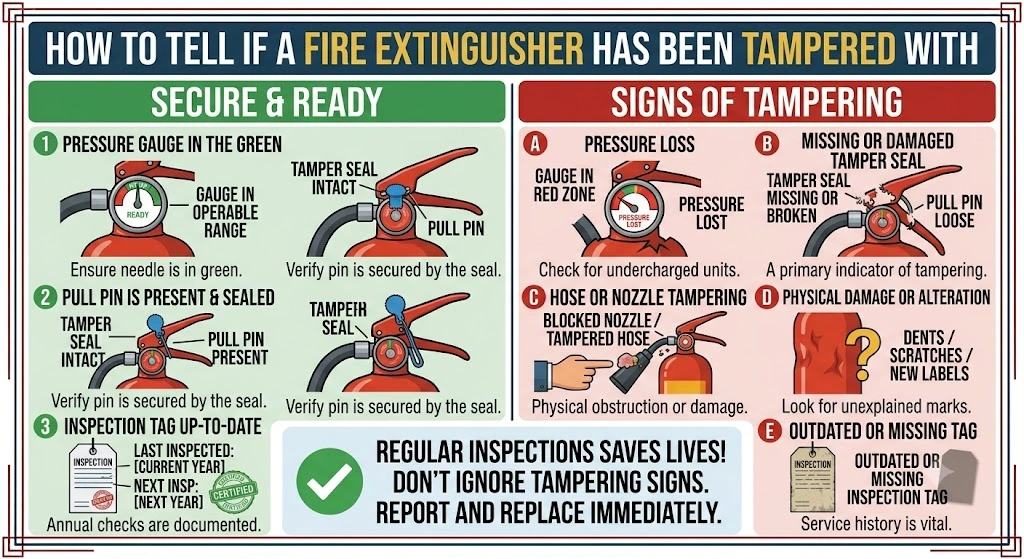
A fire extinguisher sitting quietly in the corner of your shop, office, or home looks trustworthy. But looks can be misleading. Many extinguishers that appear fine on the outside are actually empty, expired, or damaged on the inside, and the only way to know for sure is to check them properly. This is especially true in a busy city like Karachi, where extinguishers in warehouses, factories, restaurants, and residential buildings often go unchecked for months, sometimes years.
Knowing how to spot a tampered or compromised fire extinguisher can be the difference between putting out a small fire safely and watching a minor accident turn into a disaster. In this guide, we will walk you through the exact signs to look for, why extinguishers get tampered with or lose pressure in the first place, and what to do once you find a problem.
Why Fire Extinguisher Tampering Matters
Fire Safety Trading (Pvt)
ToggleFire extinguishers are pressurised safety devices, which means their reliability depends entirely on their internal condition staying untouched between services. Tampering, in this context, does not always mean someone deliberately misused the unit. It can also include accidental knocks, children playing with the pin, workers testing the lever out of curiosity, or a partial discharge that nobody reported. Whatever the cause, once the seal is broken or the pressure has dropped, the extinguisher can no longer be trusted to work when a real fire breaks out.
In commercial buildings across Karachi, this issue is more common than people realise. Extinguishers get moved during renovations, bumped by forklifts in warehouses, or left in humid storerooms where rust sets in quietly. A quick monthly glance can catch most of these problems before they become dangerous.
Key Signs a Fire Extinguisher Has Been Tampered With
1. Broken or Missing Tamper Seal
Every fire extinguisher leaves the factory or service centre with a small plastic tag or wire looped through the safety pin. This is the tamper seal. Its only job is to show whether the pin has ever been pulled. If the seal is snapped, twisted, or completely missing, treat the extinguisher as used or compromised, even if it still looks full.
2. Missing or Loose Safety Pin
The pin sits through the lever to stop it from being pressed by accident. A missing pin, a bent pin, or one that wiggles loosely instead of sitting snug is a strong sign that someone has pulled it out at some point, whether on purpose or by accident.
3. Pressure Gauge Needle Outside the Green Zone
Most dry chemical and ABC extinguishers have a small round gauge on top. The needle should sit firmly in the green area. If it has drifted into the red zone on either side, the unit is either under-pressurised or over-pressurised, and it will not discharge properly during an emergency. CO2 cylinders do not have this gauge, so they need to be weighed instead.
4. The Cylinder Feels Lighter Than It Should
Every extinguisher has its filled weight stamped or printed on the body. Pick it up and compare how it feels to a known full unit of the same size. A noticeably lighter cylinder usually means some or all of the extinguishing agent has already leaked out, even if the gauge still shows a reading.
5. Powder Residue, Staining, or Wetness Near the Nozzle
A ring of white or yellow powder around the nozzle, dried residue on the hose, or a damp patch near the base of the cylinder are all classic signs of a partial discharge. Someone may have pressed the lever briefly just to see what would happen, which is enough to ruin the extinguisher’s readiness.
6. Dents, Rust, or Corrosion on the Body
Physical damage does not always mean tampering, but it does mean the extinguisher’s structural integrity is in question. A dented or heavily rusted cylinder can fail under pressure, and it should be pulled from service and inspected by a professional immediately.
7. Cracked or Blocked Hose and Nozzle
Even if the cylinder itself is fine, a cracked hose or a nozzle clogged with dried powder, dust, or insects will stop the agent from reaching the fire. Give the nozzle a visual check every month and make sure nothing is lodged inside it.
8. Faded, Torn, or Missing Instruction Label
The label carries the usage instructions and the extinguisher class rating. If it has been peeled off, scribbled on, or is too faded to read, anyone trying to use the extinguisher in a panic will not know how. This alone is a reason to have the unit relabelled or replaced.
9. Missing or Outdated Inspection Tag
A proper inspection tag records the last date a technician checked the extinguisher, along with initials or a technician ID. If this tag is missing, blank, or shows a date long past due, there is no way to confirm the unit is still reliable, regardless of how it looks.
What to Do if You Spot Any of These Signs
Do not attempt to use, refill, or repressurise a suspicious extinguisher on your own. Instead:
- Take the unit out of service immediately and mark it clearly so nobody relies on it.
- Replace it temporarily with a spare extinguisher if one is available on site.
- Contact a certified fire safety company to inspect, refill, or replace it.
- Keep a written or digital log of the issue and the date it was reported.
Trying to top up the pressure yourself or forcing a broken pin back into place will not fix the underlying problem and can be dangerous. These units are pressurised safety equipment, and only trained technicians with the right tools should service them.
Fire Extinguisher Refilling in Karachi
If your inspection turns up a tampered, discharged, or low-pressure extinguisher anywhere in Karachi, the safest next step is professional refilling rather than replacement of the whole unit, since most steel and aluminium cylinders can be safely refilled several times before they reach the end of their service life. A proper refill includes emptying and cleaning the cylinder, replacing the extinguishing agent with the correct type and quantity, pressure testing, fitting a new tamper seal and pin, and issuing a fresh inspection tag with the service date.
Fire Safety Trading offers fire extinguisher refilling in Karachi for homes, offices, factories, warehouses, and retail outlets, covering ABC dry powder, CO2, foam, and water-based extinguishers. Technicians work on site or collect units for servicing, so operations are not disrupted for long, and every refilled extinguisher is returned with proper documentation for compliance and insurance purposes.
Regular refilling and inspection is not just about passing a fire safety audit. It is what actually keeps a small kitchen fire, an electrical short circuit, or a warehouse spark from turning into a major loss. Given how quickly a fire can spread in a crowded commercial space, having extinguishers that are genuinely ready to work is one of the simplest and most affordable safety investments a business or household in Karachi can make.
How Often Should You Check for Tampering
A basic visual check should be done once a month by anyone on site, whether that is a shop owner, office manager, or building caretaker. This only takes a couple of minutes per extinguisher and covers the seal, pin, gauge, and general condition. A full professional inspection and service, including refilling where needed, should happen at least once a year, or sooner if the unit is stored in a humid, dusty, or high-traffic area, which is common across many parts of Karachi.
Final Thoughts
A fire extinguisher is only useful if it actually works the moment it is needed. Tampering, accidental discharge, and slow pressure loss can all leave a unit looking normal on the outside while being completely unreliable on the inside. Make monthly visual checks a habit, watch for the warning signs covered above, and get any suspicious extinguisher professionally refilled or replaced right away. A small amount of attention now can prevent a much bigger loss later.
Frequently Asked Questions
1. How can I tell if my fire extinguisher has been tampered with?
Check the tamper seal and safety pin first. If the seal is broken or the pin is missing or loose, the extinguisher has likely been used or interfered with and should be inspected before you rely on it.
2. Is it safe to use a fire extinguisher with a broken seal?
No. A broken seal means the pin may have been pulled at some point, which often causes a pressure drop. The extinguisher should be taken out of service and checked by a professional before it is trusted in an emergency.
3. What does it mean if the pressure gauge needle is in the red zone?
It means the extinguisher is either under-pressurised or over-pressurised and will not discharge correctly. It needs to be serviced or refilled right away.
4. Can a tampered fire extinguisher be refilled instead of replaced?
In most cases, yes. Steel and aluminium cylinders can usually be cleaned, refilled, pressure tested, and resealed by a certified technician, which is often more cost effective than buying a brand new unit.
5. How often should fire extinguishers be checked for tampering in Karachi?
A basic visual check should be done monthly, with a full professional inspection and service at least once a year. Units kept in humid, dusty, or high-traffic areas may need more frequent checks.
6. What are the most common signs of a compromised fire extinguisher?
A broken tamper seal, missing or bent pin, gauge needle outside the green zone, a lighter than normal cylinder, powder residue near the nozzle, and visible rust or dents are the most common warning signs.
7. Does a fire extinguisher still work if the pin is missing but the gauge shows green?
Not reliably. A missing pin means the safety lock is gone, so the extinguisher could discharge accidentally, and it should still be treated as compromised and serviced immediately.
8. Who should I contact for fire extinguisher refilling in Karachi?
A licensed fire safety company that offers on-site or workshop refilling, pressure testing, and a fresh inspection tag after the service, so the unit is properly documented and ready for use again.
9. Can rust or corrosion on the cylinder make a fire extinguisher unsafe?
Yes. Rust and corrosion weaken the metal body of the cylinder, which is a pressurised container, and can cause it to fail or leak under pressure. Damaged units should be pulled from service and assessed by a technician.
10. What should I do if I find a tampered fire extinguisher at my workplace?
Remove it from service immediately, replace it temporarily with a working unit if possible, and arrange professional inspection or refilling as soon as you can. Record the issue and the date it was found for your safety records.