How Often Should Fire Extinguishers Be Serviced?

Fire safety is not a luxury, it is a legal and moral obligation. Whether you manage a factory in Karachi, run a restaurant in Lahore, or own an apartment building in Islamabad, having properly maintained fire extinguishers can mean the difference between a minor incident and a catastrophic loss of life or property. But owning a fire extinguisher is only half the battle. The other half is ensuring it is regularly serviced and ready to work when it matters most.
Many people in Pakistan purchase fire extinguishers and forget about them for years. This is a dangerous mistake. Like any safety equipment, fire extinguishers have a limited shelf life and require routine inspections, maintenance, and sometimes full replacement. In this comprehensive guide, we will explain exactly how often fire extinguishers should be serviced, why it matters, what different types of servicing involve, and how Pakistan’s fire safety landscape makes regular servicing even more critical.

Why Fire Extinguisher Servicing Is Critical

A fire extinguisher that fails to discharge during an emergency is worse than having no extinguisher at all — it creates a false sense of security. Over time, internal pressure can drop, chemical agents can degrade, seals can crack, and nozzles can clog. Without regular servicing, these problems go undetected until it is too late.

In Pakistan, the risk is even higher due to several environmental factors:

  • Extreme heat in cities like Karachi and Multan accelerates internal pressure loss
  • Dust and humidity in industrial zones can corrode extinguisher bodies
  • Power outages and load shedding increase fire risk from generators and electrical faults
  • Many buildings, especially older commercial structures, have outdated fire safety systems

According to fire safety experts and international standards such as BS 5306 and NFPA 10, fire extinguishers must undergo multiple levels of inspection at defined intervals. Let us walk through each one in detail.

The Different Levels of Fire Extinguisher Servicing

1. Monthly Visual Inspection

Every fire extinguisher — whether in a home, office, warehouse, or factory — should be visually inspected every month. This is something a trained employee or building manager can do without professional help. The monthly check should include:

  • Confirm the extinguisher is in its designated, clearly marked location
  • Check that it is visible and accessible — not blocked by furniture or equipment
  • Inspect the pressure gauge to confirm the needle is in the green zone
  • Look for visible damage such as dents, rust, or corrosion on the body
  • Ensure the safety pin and tamper seal are intact and undisturbed
  • Check that the operating instructions on the label are still legible

Monthly checks take only a few minutes but can reveal critical issues early. If any problem is found during a monthly inspection, the unit should be taken out of service immediately and replaced or professionally inspected.

2. Annual Professional Servicing

This is the most important and legally required interval for fire extinguisher maintenance in most countries, including Pakistan’s industrial and commercial sector. Every 12 months, a qualified fire safety technician must perform a thorough inspection that includes everything in the monthly check, plus:

  • Testing the discharge mechanism to ensure it operates correctly
  • Checking internal components including the valve, siphon tube, and hose
  • Weighing CO2 extinguishers to ensure adequate charge remains
  • Verifying that the extinguishing agent is still chemically effective
  • Recording the inspection date on the service label attached to the unit
  • Replacing any damaged, worn, or expired parts as needed

For businesses and commercial properties in Pakistan, annual servicing is not optional — it is a requirement for insurance coverage and compliance with local fire authority regulations. Failure to maintain service records can result in fines, insurance claim denial, or legal liability in the event of a fire.

3. Five-Year Extended Service (Overhaul)

Every five years, most fire extinguishers require a more comprehensive overhaul. This process typically involves:

  • Complete discharge of the extinguishing agent
  • Internal inspection of the cylinder for corrosion, pitting, or structural damage
  • Replacement of all O-rings, seals, and gaskets
  • Refilling with fresh extinguishing agent to manufacturer specification
  • Recharging to the correct operational pressure
  • Full pressure testing before returning the unit to service

For dry chemical powder (DCP) extinguishers — the most common type of fire extinguishers in Pakistan — this five-year service is especially important because the powder can compact and cake inside the cylinder, making it impossible to discharge properly during a fire.

4. Hydrostatic Testing (Every 5–12 Years)

Hydrostatic testing involves pressurizing the extinguisher cylinder to 1.5–2 times its rated pressure to check for structural weaknesses, leaks, or metal fatigue. This test is mandatory under international standards and should be performed by a certified testing facility. The frequency depends on the extinguisher type:

  • Stored-pressure water and foam extinguishers: every 5 years
  • CO2 extinguishers: every 5 years
  • DCP stored pressure extinguishers: every 12 years
  • Cartridge operated extinguishers: per manufacturer guidelines


Any extinguisher that fails hydrostatic testing must be permanently decommissioned. A cylinder that fails under pressure can rupture explosively, posing serious danger to anyone nearby.

Servicing by Fire Extinguisher Type What Pakistan Businesses Need to Know

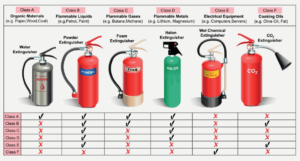
Not all fire extinguishers follow the same servicing schedule. The type of extinguisher determines both the frequency and nature of maintenance required. Here is a breakdown of the most common types of fire extinguishers in Pakistan and their servicing requirements:


DCP (Dry Chemical Powder) Fire Extinguishers

DCP units are by far the most widely used fire extinguishers in Pakistan — found in offices, factories, hotels, and homes across Karachi, Lahore, Rawalpindi, and beyond. They are effective on Class A, B, and C fires and on electrical equipment.

Servicing requirements: Monthly visual check, annual professional inspection, five year internal overhaul with powder replacement, and 12 year hydrostatic test.

CO2 (Carbon Dioxide) Fire Extinguishers

CO2 extinguishers are ideal for electrical fires — especially important in data centres, server rooms, and control panels. They leave no residue and are safe for sensitive electronic equipment.

Servicing requirements: Monthly visual check, annual weighing (loss of more than 10% of charge requires refilling), annual professional inspection, and five year hydrostatic test.

Foam (AFFF) Fire Extinguishers

Foam extinguishers are used for flammable liquid fires (Class B) and are common in petrol stations, industrial facilities, and commercial kitchens. Pakistan’s growing fuel and petrochemical sector makes these extinguishers increasingly important.

Servicing requirements: Monthly visual check, annual professional service including foam concentrate inspection, and five year internal examination.

Wet Chemical Fire Extinguishers

These are designed specifically for cooking oil fires (Class F) and are essential in commercial kitchens across Pakistan’s restaurant, hospitality, and food processing industries.

Servicing requirements: Monthly visual check, annual professional service including wet chemical agent check, and five year overhaul.

Automatic Fire Extinguishers

Automatic fire extinguishers are increasingly used in server rooms, electrical panels, and generator enclosures across Pakistan. They activate without human intervention when a fire is detected.

Servicing requirements: As per manufacturer specifications, typically every 6 to 12 months, with electronic trigger components tested annually.

Signs Your Fire Extinguisher Needs Immediate Servicing

Do not wait for your annual servicing date if you notice any of the following warning signs:

  • The pressure gauge needle is in the red zone — either over or under pressurized
  • The safety pin is missing or the tamper seal is broken
  • Visible rust, corrosion, or physical dents on the cylinder body
  • The nozzle or hose is cracked, blocked, leaking, or physically damaged
  • The label is missing or the operating instructions have become unreadable
  • The extinguisher has been used — even partially — it must be refilled immediately
  • The unit was exposed to extreme temperatures, fire, or physical impact
  • The extinguisher has not been inspected by a professional in over 12 months

Any extinguisher showing these signs should be removed from service immediately and replaced or sent for professional inspection. Never assume a fire extinguisher is operational just because it looks acceptable on the outside.

Fire Extinguisher Servicing and Pakistani Law

Pakistan’s National Fire Protection Code and building regulations in major provinces require that commercial and industrial buildings maintain functional fire safety equipment. Local fire brigade authorities in cities like Karachi (Karachi Metropolitan Corporation), Lahore (Lahore Development Authority), and Islamabad (Capital Development Authority) conduct periodic inspections and can issue notices to non compliant buildings.

Key legal obligations for Pakistani businesses:

  • All commercial buildings must have adequate fire extinguishers based on floor area and occupancy type
  • Fire extinguishers must be inspected and maintained per recognized national and international standards
  • Service records must be documented and available for inspection by fire authorities
  • Buildings that fail fire safety audits can be sealed or have their NOCs (No Objection Certificates) revoked
  • Insurance companies increasingly require valid fire safety maintenance certificates

Pakistan has seen numerous devastating fire incidents in textile factories, shopping malls, and residential buildings that could have been prevented or minimized with properly maintained fire suppression equipment. Regulatory compliance is not bureaucracy — it is protection.

How to Create a Fire Extinguisher Maintenance Schedule

Establishing a systematic maintenance schedule ensures your fire extinguishers are always ready. Here is a practical framework for Pakistani businesses and property managers:

Monthly

  • Full visual inspection as described in this guide
  • Record results in a maintenance log book
  • Report any issues immediately to management or the building safety officer

Annually

  • Book professional servicing with a certified fire safety company
  • Ensure all units are covered — including portable and wheeled extinguishers
  • Update service labels and maintain documented inspection records

Every Five Years

  • Schedule extended internal overhaul with a licensed technician
  • Replace extinguishing agents as required by type and condition
  • Consider upgrading older units to newer, more efficient models

Immediately When Required

  • After any use — even partial — arrange immediate refill and professional inspection
  • After any visible damage, impact, or extreme environmental exposure
  • When relocating to a new premises or after major renovation work

The Cost of Neglecting Fire Extinguisher Servicing

Some business owners resist regular servicing because of the perceived expense. But the true cost of neglect is infinitely higher:

  • Annual fire extinguisher servicing costs a small fraction of the cost of fire damage to property and inventory
  • A single fire incident in a Pakistani factory can result in losses of millions of rupees
  • Business interruption due to fire can last weeks or months, compounding financial losses
  • Human lives lost in preventable fires cannot be measured in monetary terms
  • Insurance claims can be denied if equipment is found unmaintained at the time of a fire

Fire extinguisher servicing is not an expense — it is an investment in safety, legal compliance, and peace of mind. A properly maintained fleet of fire extinguishers costs very little compared to the protection they provide.

Choosing the Right Fire Extinguisher for Your Needs in Pakistan

Before you can maintain your fire extinguishers properly, you need the right ones for your specific environment. Different locations in Pakistan require different types:

  • Homes and apartments: DCP or CO2 extinguishers for general household fires
  • Offices and commercial buildings: CO2 for electrical areas, DCP for general spaces
  • Restaurants and commercial kitchens: Wet chemical extinguishers for cooking oil fires
  • Factories and warehouses: DCP or foam depending on materials stored on site
  • Server rooms and data centres: CO2 or clean agent (Halotron) extinguishers
  • Petrol stations and fuel storage: Foam or DCP extinguishers
  • Hospitals and healthcare: CO2 or water mist in patient and sensitive equipment areas

If you are unsure which fire extinguisher is right for your premises, consult a certified fire safety professional. Companies like Fire Safety Trading (Pvt) Ltd supply a full range of certified fire extinguishers in Pakistan from trusted international brands including NAFFCO one of the world’s leading fire safety manufacturers along with reliable and affordable China origin models that offer excellent value across all budget levels.

Quick Reference: Fire Extinguisher Servicing Schedule

Here is a simple summary of the recommended servicing intervals for fire extinguishers:

  • Every month: Visual inspection (owner or trained staff responsibility)
  • Every year: Full professional inspection and service by a certified technician
  • Every 5 years: Extended internal overhaul with agent replacement
  • Every 5–12 years: Hydrostatic pressure testing depending on extinguisher type
  • Immediately after use: Refill and professional inspection before returning to service
  • Immediately if damaged or showing warning signs: Remove and have professionally assessed

Conclusion

Fire extinguishers are your first and most immediate line of defence against fire. But they can only perform their vital function if they are properly maintained on a consistent schedule. In Pakistan, where fire risk is high and fire safety regulations are increasingly being enforced by authorities and insurance providers alike, regular servicing of fire extinguishers is not just good practice — it is essential for the protection of lives, assets, and business continuity.

Whether you own a single DCP extinguisher in a small office in Rawalpindi, CO2 units in a data centre in Lahore, or a full fleet of NAFFCO extinguishers in a large manufacturing facility in Karachi, commit to a proper maintenance schedule. Monthly visual checks, annual professional inspections, five year overhauls, and periodic hydrostatic testing will ensure your fire extinguishers perform reliably when every second counts.

For businesses and individuals across Pakistan looking for high quality, certified fire extinguishers in Pakistan along with professional refilling, testing, and maintenance services, Fire Safety Trading (Pvt) Ltd is a trusted partner in comprehensive fire safety. Your safety is too important to leave to chance — get your fire extinguishers serviced today and stay protected tomorrow.

Fire Safety for High Rise Buildings in Pakistan

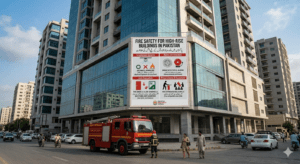
Pakistan is rapidly urbanising. Cities like Karachi, Lahore, Islamabad, and Rawalpindi are witnessing an unprecedented surge in high-rise construction from residential towers and commercial plazas to mixed-use developments and industrial complexes. While this vertical growth symbolises economic progress, it also brings with it a critical and often neglected responsibility: fire safety.
In recent years, Pakistan has witnessed several devastating fire incidents in multi-storey buildings that have resulted in loss of lives, injuries, and massive financial damage. The Karachi garment factory fire, the Lahore plaza fire, and numerous other incidents have exposed serious gaps in fire safety planning, enforcement, and the availability of proper fire fighting equipment in high-rise buildings across the country.

This article explores the importance of fire safety in high-rise buildings in Pakistan, the essential fire fighting equipment required, applicable regulations, and best practices that building owners, developers, and safety managers must follow to protect lives and property.

Why Fire Safety is Critical for High-Rise Buildings in Pakistan

High-rise buildings present unique fire safety challenges that are fundamentally different from low-rise structures. The higher the building, the more complex the fire suppression and evacuation challenges become. In Pakistan, these challenges are further compounded by several factors:

  • Dense population: Many high-rise residential buildings in cities like Karachi and Lahore house hundreds of families, making safe evacuation especially critical.
  • Aging infrastructure: Older buildings across major cities were not designed with modern fire safety codes in mind.
  • Insufficient fire brigade resources: Fire departments in many Pakistani cities lack the equipment, manpower, and training to effectively tackle high-rise fires.
  • Limited public awareness: Residents and building management often lack training in fire prevention and emergency evacuation procedures.
  • Weak enforcement: Building codes and fire safety regulations exist in Pakistan but enforcement remains inconsistent.

Given these realities, it is not enough to simply install fire safety systems at the time of construction. Buildings require a comprehensive fire safety strategy one that includes the right fire fighting equipment, regular maintenance, staff training, and compliance with national safety standards.

Understanding Pakistan’s Fire Safety Regulations

Fire safety in Pakistan is governed by a combination of national building codes, local authority regulations, and provincial bylaws. The key regulatory frameworks relevant to high-rise buildings include:

Pakistan Building Code (PBC)

The Pakistan Building Code provides guidelines for fire-resistant construction, compartmentation, means of egress, and the installation of fire protection systems. High-rise buildings above a certain height threshold are required to have sprinkler systems, fire alarm systems, fire exits, emergency lighting, and appropriate fire fighting equipment on every floor.

Provincial Building Bylaws

Provinces like Punjab and Sindh have their own building bylaws administered by development authorities such as LDA (Lahore Development Authority), KDA (Karachi Development Authority), and CDA (Capital Development Authority in Islamabad). These bylaws specify fire safety standards that must be met before a completion certificate is issued.

NFPA Standards

Many fire safety consultants and engineers in Pakistan also reference the National Fire Protection Association (NFPA) standards particularly NFPA 1 (Fire Code), NFPA 13 (Sprinkler Systems), and NFPA 72 (Fire Alarm Systems) as international benchmarks for designing fire safety systems in high-rise buildings.

Essential Fire Fighting Equipment for High-Rise Buildings in Pakistan

Equipping a high-rise building with the right fire fighting equipment is the cornerstone of any effective fire safety strategy. Below is a detailed look at the essential fire fighting equipment that every high-rise building in Pakistan must have:

1. Fire Extinguishers

Fire extinguishers are the first line of defence against a small fire before it escalates. For high-rise buildings, different types of extinguishers are required depending on the fire risk of each area:

  • DCP (Dry Chemical Powder) Extinguishers: Suitable for Class A, B, and C fires. Widely used in offices, corridors, and car parks.
  • CO2 Extinguishers: Ideal for electrical rooms, server rooms, and areas with sensitive electronic equipment.
  • Foam (AFFF) Extinguishers: Best for liquid fuel fires — used in generator rooms and fuel storage areas.
  • Wet Chemical Extinguishers: Essential for commercial kitchens and cooking areas within high-rise buildings.
  • Halotron Extinguishers: Clean agent extinguishers for server rooms and areas where residue damage must be avoided.

For a wide selection of certified fire extinguishers suitable for high-rise buildings in Pakistan, visit Fire Safety Trading’s fire fighting equipment page, which stocks NAFFCO, China, and automatic fire extinguisher ranges to meet every building’s specific needs.

2. Fire Suppression Systems

A fire suppression system is an engineered system designed to automatically detect and control or extinguish a fire. For high-rise buildings, the following suppression systems are commonly used:

  • FM200 Fire Suppression System: A gas-based clean agent system widely used for server rooms, data centres, and control rooms within high-rise buildings. It suppresses fire without causing water damage or leaving residue.
  • NOVEC 1230 System: Another advanced clean agent suppression solution that is environmentally friendly and highly effective for sensitive equipment areas.
  • Water Mist Fire Suppression: Uses fine water droplets to suppress fires with minimal water usage ideal for hotel rooms, corridors, and residential floors.
  • CO2 Suppression Systems: Used for confined spaces such as generator rooms and electrical switch rooms.
  • Kitchen Fire Suppression Systems: Specifically designed for commercial kitchens a must-have for high-rise buildings with restaurants or food courts.

3. Fire Sprinkler Systems

A sprinkler system is one of the most effective passive fire protection tools in a high-rise building. In Pakistan, most new high-rise buildings are required by code to install automatic fire sprinkler systems throughout the building. Sprinklers activate automatically when heat is detected, spraying water directly onto the fire to suppress it before it spreads. This buys critical time for occupants to evacuate and for firefighters to arrive.

4. Fire Alarm Systems

A reliable fire alarm system is non-negotiable in any high-rise building. Modern fire alarm systems for high-rise buildings in Pakistan include:

  • Addressable Fire Alarm Systems: Allow pinpoint identification of the exact detector or device that has activated essential in large multi-floor buildings.
  • Conventional Fire Alarm Systems: Cost-effective for smaller buildings or individual floors.
  • Smoke Detectors: Optical and ionisation detectors that detect the early signs of fire.
  • Heat Detectors: Trigger when temperatures rise above a threshold — ideal for dusty or steamy environments like kitchens.
  • Manual Call Points: Allow occupants to manually trigger the alarm when they detect a fire.
  • Sounders and Beacons: Audible and visual alarms to alert all occupants on every floor.

5. Fire Hydrant Systems

A fire hydrant system provides a pressurised water supply that firefighters can tap into during an emergency. High-rise buildings in Pakistan must have a wet riser system a permanently charged pipe running the full height of the building with landing valves on each floor. The system includes fire hose reels, fire hydrant valves, fire fighting nozzles, and fire cabinets strategically placed throughout the building. Fire fighting pumps are integral to this system, maintaining the water pressure required on upper floors.

6. Fire Fighting Pumps

In high-rise buildings, gravity alone cannot provide sufficient water pressure on upper floors. Dedicated fire fighting pumps including electric jockey pumps, diesel-driven main pumps, and electric standby pumps — ensure the entire hydrant and sprinkler network maintains adequate pressure at all times. Common configurations include EDJ (Electric-Diesel-Jockey) and EEJ (Electric-Electric-Jockey) pump sets.

7. Fire Exit Doors

Fire-rated exit doors are a vital passive fire protection measure. These doors are designed to withstand fire and smoke for a specified period, allowing safe evacuation and limiting the spread of fire. High-rise buildings in Pakistan must have properly rated fire exit doors at stairwell entrances, lobby areas, and at the exit from each floor.

8. Emergency Exit Lighting & Signage

During a fire emergency, power failures are common. Emergency exit lights and illuminated fire safety signs are essential to guide occupants safely towards exits in low visibility conditions. These must be battery-backed and positioned at all exit routes throughout the building.

9. Breathing Apparatus & Fire Safety Suits

For building fire wardens, security staff, and the fire brigade, having access to self-contained breathing apparatus (SCBA) and fire safety suits can mean the difference between life and death when entering smoke-filled environments. Buildings with dedicated fire response teams should maintain these as part of their fire fighting equipment inventory.

Fire Safety Planning for High-Rise Buildings: Key Considerations

Purchasing and installing fire fighting equipment is only one piece of the puzzle. Effective fire safety in high-rise buildings requires holistic planning:

Fire Risk Assessment

A professional fire risk assessment identifies potential fire hazards within the building, evaluates the risk to occupants, and recommends measures to reduce that risk. In Pakistan, fire risk assessments are increasingly being required by insurance companies and corporate tenants. Leading fire safety companies like Fire Safety Trading (Pvt) Ltd provide comprehensive fire risk assessment services tailored to the local regulatory environment.

Compartmentation and Fire-Resistant Construction

High-rise buildings should be designed with fire compartmentation the division of the building into separate fire compartments using fire-rated walls, floors, and doors. This limits the spread of fire and smoke, giving occupants more time to evacuate and reducing overall fire damage.

Evacuation Planning

Every high-rise building must have a detailed and practiced fire evacuation plan. This includes clearly marked evacuation routes on every floor, designated assembly points, appointed fire wardens, and regular fire drills. In Pakistan, many buildings lack practiced evacuation protocols an oversight that can cost lives in a real emergency.

Regular Maintenance and Inspection

Fire fighting equipment is only effective if it is properly maintained. All fire extinguishers must be refilled and inspected annually. Fire alarm systems, sprinkler systems, and suppression systems require regular testing and servicing. Fire hose reels, hydrant valves, and pumps must be routinely tested to ensure they operate correctly under pressure. Neglecting maintenance is one of the most common fire safety failures in Pakistani buildings.

Common Fire Safety Failures in Pakistani High-Rise Buildings

Understanding common failures helps building managers and owners avoid repeating the same costly mistakes. The most frequently observed fire safety failures in Pakistani high-rise buildings include:

  • Blocked or locked fire exits: Exit doors are chained or blocked with stored goods, making evacuation impossible.
  • Expired or empty fire extinguishers: Extinguishers that have not been maintained for years, rendering them useless in an emergency.
  • Non-functional fire alarms: Alarm systems that have been disabled due to false alarms, or simply left unmaintained.
  • Absence of sprinkler systems: Many older buildings have no sprinkler coverage whatsoever.
  • Illegal modifications: Renovation works that pierce fire compartment walls, creating easy pathways for fire and smoke to spread between floors.
  • Overloaded electrical circuits: A leading cause of fire in residential and commercial high rise buildings across Pakistan.
  • Inadequate firefighter access: Narrow service roads or blocked fire vehicle access routes that prevent fire brigades from reaching the building.

The Role of Fire Safety Companies in Pakistan

Given the complexity of fire safety requirements for high rise buildings, building owners and developers in Pakistan increasingly rely on specialist fire safety companies for supply, installation, testing, and maintenance of fire fighting equipment and systems.

Companies like Fire Safety Trading (Pvt) Ltd are leading providers of complete fire fighting equipment solutions in Pakistan. Their product range covers everything a high rise building requires from fire extinguishers, fire suppression systems, fire alarm systems, fire sprinkler systems, fire fighting pumps, fire hydrant systems, and fire exit doors, to personal fire safety equipment like breathing apparatus and fire safety suits.

In addition to supplying internationally certified products from reputed brands such as NAFFCO, Honeywell (GENT), COFEM Spain, and C-TEC, they also provide critical services including fire alarm installation, fire extinguisher refilling and testing, fire suppression testing, fire risk assessment, and HSE/fire audits all essential for maintaining a compliant and safe high-rise building.

Fire Safety Tips for High-Rise Building Residents in Pakistan

While building management and owners carry primary responsibility for fire safety, residents also have a critical role to play. Here are essential fire safety tips for residents of high-rise buildings in Pakistan:

  • Know your evacuation route: Familiarise yourself with the nearest fire exits on your floor. Do not rely on lifts during a fire emergency always use fire stairs.
  • Never prop open fire doors: Fire doors designed to stay closed. Propping them open allows fire and smoke to spread rapidly.
  • Do not overload electrical sockets: Overloaded circuits are a primary cause of building fires in Pakistan. Use surge protectors and avoid daisy-chaining extension cords.
  • Report fire hazards immediately: If you notice blocked exits, broken smoke detectors, or other fire hazards, report them to building management promptly.
  • Participate in fire drills: Regular fire drills save lives. Take them seriously and encourage your neighbours to do the same.
  • Keep flammable materials away from heat sources: Curtains, furniture, and other combustibles should be kept well away from stoves, heaters, and electrical equipment.
  • Never re-enter a burning building: Once you have evacuated, do not re-enter under any circumstances. Smoke inhalation is the leading cause of fire-related deaths.

Future of Fire Safety in Pakistan’s High-Rise Sector

Pakistan’s fire safety landscape is gradually improving. Growing awareness among developers, stricter scrutiny by development authorities, and increased demand from multinational tenants and insurance companies are all pushing the industry toward better standards. Smart fire safety systems including intelligent addressable alarm panels, IoT connected sprinkler monitoring, and remote fire safety management platforms are beginning to make their way into premium high-rise developments in Karachi, Lahore, and Islamabad.

However, significant gaps remain. Thousands of existing high-rise buildings across Pakistan still do not meet basic fire safety standards. Retrofitting older buildings with adequate fire fighting equipment and systems is both a legal obligation and a moral one. Authorities must intensify enforcement, and building owners must invest proactively not reactively after a tragedy has already occurred.

The cost of installing proper fire fighting equipment in a high-rise building is a fraction of the financial, legal, and human cost of a major fire. The question is not whether Pakistan can afford to invest in fire safety, it is whether it can afford not to.

Conclusion

Fire safety in high-rise buildings is a complex, multi-layered challenge that demands serious attention across Pakistan. From the installation of the right fire fighting equipment fire extinguishers, suppression systems, alarm systems, sprinklers, hydrant systems, and fire pumps to comprehensive fire risk assessments, regular maintenance, staff training, and practiced evacuation procedures, every element of a fire safety strategy plays a vital role in protecting lives.

Building owners, developers, facility managers, and government authorities in Pakistan must work together to raise fire safety standards across the country’s growing high-rise sector. Investing in quality, certified fire fighting equipment from reputed suppliers, and ensuring that equipment is properly installed, maintained, and regularly tested, has the foundation upon which all other fire safety measures rest.

For all your fire fighting equipment needs in Pakistan from fire extinguishers and suppression systems to fire alarm systems and fire hydrant equipment visit https://firesafetytrading.com.pk/fire-fighting/ and get in touch with Pakistan’s trusted fire safety experts.