Fire Extinguisher Maintenance Checklist – Tips & Services

Fire extinguishers are one of the most important safety tools in homes, schools, offices, factories, and commercial buildings. But many people forget that extinguishers also need regular maintenance to work properly during an emergency. A fire extinguisher that is expired, damaged, or leaking pressure becomes useless when you need it the most.
A proper fire extinguisher maintenance routine not only protects your property but also helps save lives. In Pakistan, companies like Fire Safety Trading provide professional inspection and servicing to ensure every extinguisher is ready to perform. This article explains the complete maintenance checklist, essential tips, and the services you should look for from a certified fire safety company.

Why Fire Extinguisher Maintenance Is Important

Fire extinguishers look simple, but they are pressure-based devices that can lose effectiveness over time. Regular maintenance is necessary because:

  • Pressure inside the extinguisher can drop.

  • Internal parts can get damaged or corroded.

  • Powder or chemical can settle at the bottom.

  • Nozzle or hose can get blocked.

  • The extinguisher can expire without being noticed.

A well-maintained fire extinguisher works instantly, while a neglected one might fail. That is why workplaces are legally required to inspect extinguishers, and even homes should follow a maintenance schedule for safety.

Monthly Maintenance Checklist

Every month, a simple visual inspection helps identify issues early. Anyone at home or workplace can do this without technical skills.

1. Check Accessibility

The fire extinguisher should be easily reachable. Make sure:

  • It is not blocked by furniture, boxes, or vehicles.

  • It is mounted at a visible and correct height.

  • The signage for the extinguisher is visible.

2. Inspect the Pressure Gauge

Look at the gauge needle.

  • If it is in the green zone, pressure is normal.

  • If it is in yellow or red, servicing is required immediately.

Low pressure means the extinguisher won’t discharge properly.

3. Examine for Physical Damage

Look closely for dents, rust, cracks, or leakage. Even small damage can make the extinguisher unsafe.

4. Ensure Safety Pin & Seal Are Intact

The safety pin prevents accidental discharge.
If the pin is missing or the seal is broken, it means someone may have used the extinguisher.

5. Check the Hose and Nozzle

Make sure the hose is flexible, not cracked, and not blocked. Dust buildup in the nozzle can stop the chemical from flowing.

6. Confirm the Expiry Date

Most extinguishers expire within 3 to 5 years. After expiry, the contents can become ineffective.

Annual Maintenance Checklist

Annual maintenance should always be done by trained and certified fire safety technicians. This ensures your fire extinguisher meets safety standards.

1. Full Physical Inspection

A technician checks the extinguisher from top to bottom, including internal components, weight, O-rings, and valve condition.

2. Chemical Refill or Replacement

Dry powder, foam, CO₂, and water extinguishers require periodic refilling or replacement. Refilling should only be done by certified companies using approved chemicals.

3. Pressure Testing

This is also known as hydrostatic testing. It ensures the extinguisher can safely handle pressure without bursting.

4. Cleaning and Lubrication

Dust, grease, or corrosion is cleaned, and moving parts are lubricated to ensure smooth operation.

5. Labeling and Documentation

After servicing, the extinguisher receives:

  • A maintenance tag

  • Date of service

  • Next service due date

  • Technician’s signature

This documentation is required for inspections, audits, and insurance compliance.

When Should You Replace a Fire Extinguisher?

Not every extinguisher can be repaired. Replace the extinguisher if:

  • It is expired.

  • The cylinder is cracked or heavily rusted.

  • The handle or valve is broken.

  • It fails hydrostatic pressure testing.

  • Chemicals have leaked.

Simply refilling an expired or damaged extinguisher is dangerous. Replacement is the safest option.

Tips to Keep Your Fire Extinguishers Reliable

You can extend the life of your fire extinguishers with some basic care:

Always place extinguishers in clean, dry, and cool areas. Pakistani humidity and heat can hurt pressure levels.
Teach family members, employees, and security staff how to use extinguishers.
For powder extinguishers, gently shake them every 3–4 months to prevent chemical settling.
Avoid handling the extinguisher roughly, as dents can compromise pressure.
Conduct fire drills and safety inspections regularly.

These small steps ensure extinguishers remain fully functional throughout the year.

Professional Fire Extinguisher Services You Should Consider

A reliable fire safety company should offer the following services:

Fire Extinguisher Inspection

Detailed checking of pressure, condition, and expiry.

Refilling & Recharge Service

Certified refilling for dry chemical, CO₂, foam, and water extinguishers.

Hydrostatic Pressure Testing

Ensures cylinders are safe for long-term use.

Fire Safety Training

Training sessions for office staff, factory workers, and school teams.

Fire Extinguisher Replacement

Providing new extinguishers that meet international standards.

Companies like Fire Safety Trading in Pakistan specialize in complete extinguisher maintenance, safety audits, and emergency readiness solutions for schools, hospitals, industries, warehouses, and commercial sites.

Why Regular Maintenance Matters for Businesses

With strict safety regulations in Pakistan, companies must maintain fire extinguishers for:

  • Compliance with local safety laws

  • Protection during insurance audits

  • Avoiding penalties and legal issues

  • Ensuring worker and customer safety

Maintained extinguishers protect your investment and reduce the risk of major fire losses.

Final Thoughts

Fire extinguisher maintenance is not optional it is essential for safety. A working extinguisher can stop a small fire from turning into a major disaster. Following a proper monthly and annual maintenance checklist ensures every extinguisher is ready to perform when needed.

For homes and businesses in Pakistan, professional servicing from certified companies like Fire Safety Trading provides complete peace of mind. With regular inspection, timely refilling, and safe placement, your fire extinguisher becomes a reliable first line of defense against emergencies.

Fire Safety Solutions for Schools & Hospitals – ASad Fire Safety

Fire safety in schools and hospitals is a critical responsibility that goes beyond mere compliance with regulations. These institutions host some of the most vulnerable populations, including children, elderly patients, and medical staff, which makes having robust fire safety measures essential. Without proper precautions, a fire can quickly escalate, endangering lives and causing significant property damage. ASad Fire Safety specializes in providing tailored solutions that ensure maximum protection for schools and hospitals, combining modern equipment, professional training, and preventive strategies.
Schools, in particular, face unique challenges when it comes to fire safety. Large numbers of students and staff are concentrated in classrooms, corridors, laboratories, and recreational areas. Children may panic during emergencies, making organized evacuation plans and trained staff crucial. Additionally, school laboratories, kitchens, and science rooms often house chemicals, electrical equipment, and other potential fire hazards, increasing the importance of early detection and rapid response systems. Implementing a comprehensive fire safety plan ensures that students, teachers, and other staff members are protected, and that the risk of injury or property damage is minimized.

Hospitals also present a complex fire safety scenario. Many patients are immobile or dependent on medical devices, making safe evacuation more difficult. Medical equipment, including high-power devices and oxygen tanks, adds to the risk of electrical fires. Hospitals operate around the clock, which means fire safety systems must be reliable at all times. Fire safety solutions in hospitals require careful planning to protect patients, staff, and critical infrastructure while ensuring compliance with local and international safety standards.

One of the most effective ways to safeguard schools and hospitals is the proper installation and maintenance of fire extinguishers. ASad Fire Safety offers a variety of extinguishers, including water, foam, dry chemical, CO₂, and wet chemical types. These are strategically placed in classrooms, laboratories, kitchens, patient wards, and corridors. Regular maintenance ensures that extinguishers remain functional and ready for immediate use, giving staff the tools they need to act quickly in the event of a fire.

In addition to extinguishers, fire detection and alarm systems are essential for early warning. Smoke detectors can alert staff and students before a fire spreads, while heat detectors are particularly useful in areas with high dust or steam, such as kitchens and laboratories. Integrated alarm systems connect to central control rooms, ensuring that emergencies are communicated immediately and evacuation can begin without delay. Sprinkler systems complement these measures by automatically activating when high temperatures are detected. Sprinklers are suitable for large halls, patient wards, and libraries, and can use water or foam depending on the type of fire hazard.

Emergency evacuation planning is another crucial aspect of fire safety. Clear exit routes, safe assembly points, and well-marked directional signs ensure that everyone can evacuate efficiently. Conducting regular fire drills for students, hospital staff, and teachers helps familiarize them with procedures, reducing panic during real emergencies. Fireproof storage solutions further enhance safety by protecting important school records, patient files, flammable chemicals, and medical supplies from damage in case of a fire.

Staff training and awareness programs play an equally important role. ASad Fire Safety provides hands-on training for teachers, hospital personnel, and administrative staff. This includes learning how to use different types of fire extinguishers, understanding emergency response protocols, and knowing how to coordinate evacuations. Regular refresher courses ensure that staff remain updated on the latest safety practices and can act confidently under pressure.

The benefits of implementing fire safety solutions in schools and hospitals extend beyond immediate protection. Effective fire safety systems protect lives, minimize property damage, and provide peace of mind for parents, administrators, and hospital management. These measures also help institutions comply with local laws and safety regulations, and may even reduce insurance premiums. In short, investing in fire safety is not only a moral obligation but also a practical strategy for long-term risk management.

ASad Fire Safety provides end-to-end solutions, starting from risk assessment to the design and installation of fire safety systems. Every institution receives a customized safety plan based on its unique layout, population, and potential hazards. Continuous support, including regular inspections, equipment refills, and staff training, ensures that schools and hospitals remain protected at all times. With ASad Fire Safety’s expertise, educational and healthcare institutions can confidently safeguard lives, property, and reputation.

In conclusion, fire safety solutions for schools and hospitals are essential to ensure the safety of children, patients, and staff. Properly installed fire extinguishers, advanced detection systems, sprinklers, evacuation plans, signage, fireproof storage, and staff training together create a robust defense against fire emergencies. ASad Fire Safety’s comprehensive approach ensures that your institution is not only compliant with regulations but also fully prepared to handle any fire-related situation. Investing in fire safety today can save countless lives tomorrow and provide a secure environment for learning, healing, and work.

Fire Extinguisher Replacement & Upgrades ASad Fire Safety

Fire extinguishers are critical safety devices for homes, offices, factories, and vehicles. However, like any safety equipment, they are not meant to last forever. Over time, fire extinguishers can lose their effectiveness due to wear, corrosion, or outdated technology. ASad Fire Safety offers expert guidance on replacement and upgrades to ensure your fire safety measures remain reliable and compliant with local standards.
Why Replace Fire Extinguishers?

Fire extinguishers may need replacement for several reasons:

  1. Expired Lifespan
    Most extinguishers have a lifespan of 5–15 years, depending on the type and manufacturer. Using an old extinguisher can be dangerous, as it may fail during an emergency.

  2. Damage or Corrosion
    Extinguishers exposed to moisture, chemicals, or rough handling may suffer corrosion, dents, or leaks. These issues can compromise their functionality.

  3. Empty or Partially Used
    Even partial use reduces the pressure and extinguishing capability. It is crucial to recharge or replace after every use.

  4. Outdated Technology
    Modern fire extinguishers are lighter, more efficient, and environmentally friendly. Older models may use harmful chemicals or lack multi-class capability.

  5. Regulatory Compliance
    Offices and factories must comply with fire safety regulations. Non-compliant or outdated extinguishers can lead to penalties and safety risks.

Signs Your Fire Extinguisher Needs Replacement

  • Pressure gauge shows low or red zone
  • Expiration date is reached or passed
  • Physical damage such as dents, rust, or leaks
  • Missing or damaged safety pins or seals
  • Extinguisher fails inspection during routine checks

Upgrading Fire Extinguishers

Upgrading your fire safety equipment can significantly improve protection. ASad Fire Safety recommends the following upgrade options:

1. Switch to Multi-Class Extinguishers

  • Modern extinguishers can handle Class A, B, and C fires (solids, flammable liquids, and gases) in a single device.
  • This reduces the need for multiple extinguishers in the same location.

2. Eco-Friendly Models

  • Newer extinguishers use clean agents or CO₂ instead of halons, which are harmful to the environment.
  • These are especially suitable for offices, data centers, and hospitals.

3. Lightweight & Portable Designs

  • Advanced materials reduce the weight of extinguishers without compromising performance.
  • Easier to handle in emergencies, suitable for homes and vehicles.

4. Rechargeable Units

  • Instead of replacing after every use, rechargeable extinguishers can be refilled and reused multiple times.
  • This is cost-effective for businesses and industrial setups.

5. Enhanced Visibility & Labeling

  • Modern models feature bright labels, reflective tags, and easy-to-read instructions.
  • Improves safety in low-light or emergency conditions.

Fire Extinguisher Replacement Procedure – ASad Fire Safety

  1. Inspection & Assessment
    A professional checks the extinguisher for pressure, corrosion, and expiry.

  2. Choosing the Right Replacement
    Depending on fire risk, location, and type of fire, ASad Fire Safety recommends the most suitable model.

  3. Installation & Mounting
    Fire extinguishers are installed at easily accessible points, following safety guidelines and building codes.

  4. Training & Orientation
    Staff or family members are trained on proper operation using the PASS technique:

    • Pull the pin
    • Aim at the base of the fire
    • Squeeze the handle
    • Sweep from side to side

  5. Regular Maintenance & Checks
    Routine inspections are scheduled to ensure long-term reliability.

Pricing of Fire Extinguishers in Pakistan

Replacement and upgrade costs vary based on type, capacity, and features:

Type Capacity Price Range (PKR) Suitable For
Water 6–9 liters 1,500 – 3,500 Home, office, classrooms
Foam 6–9 liters 3,500 – 7,000 Class A & B fires, kitchens
CO₂ 2–5 kg 5,000 – 12,000 Electrical fires, server rooms
Dry Powder 2–6 kg 4,000 – 10,000 Class A, B, C fires, industrial
Wet Chemical 3–6 liters 6,000 – 12,000 Cooking oils, commercial kitchens


Benefits of Upgrading with ASad Fire Safety

  • Access to latest fire safety technology
  • Certified and ISO-approved extinguishers
  • Expert guidance for home, office, and industrial setups
  • Cost-effective solutions with rechargeable and multi-class models
  • Complete support, including installation, training, and maintenance

Fire safety is only effective when equipment is functional and up-to-date. Replacing old extinguishers and upgrading to modern, efficient models can save lives, protect property, and ensure compliance with fire safety standards.

With ASad Fire Safety, you get expert advice, high-quality extinguishers, and full training to keep your home, office, or industrial facility safe. Don’t wait for a fire to test your equipment – inspect, replace, and upgrade today.


Portable Fire Extinguishers – Types, Price, and Uses

Portable fire extinguishers are the first line of defense against small fires at homes, offices, factories, and vehicles. They are compact, easy to use, and can prevent a fire from spreading before it becomes uncontrollable. Understanding the types, pricing, and proper usage of portable fire extinguishers is crucial for safety and compliance with fire safety regulations.

What is a Portable Fire Extinguisher?

A portable fire extinguisher is a handheld device designed to put out small fires by discharging an extinguishing agent such as water, foam, powder, or gas. They are not meant to replace a full fire suppression system but are ideal for tackling fires in the early stages.

Key benefits include:

  • Immediate response to small fires.

  • Easy to operate with minimal training.

  • Can save lives and reduce property damage.

Types of Portable Fire Extinguishers

Different types of fires require different extinguishing agents. Selecting the right type ensures maximum effectiveness.

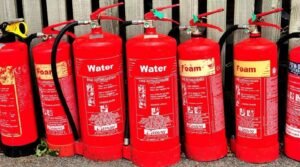
1. Water Fire Extinguishers

  • Best For: Class A fires (ordinary combustibles like wood, paper, cloth).

  • Not For: Electrical fires or flammable liquids.

  • How it Works: Water cools the burning material, reducing heat and extinguishing the fire.

  • Price Range in Pakistan: PKR 1,500 – 3,500 (6-9 liters capacity).

2. Foam Fire Extinguishers

  • Best For: Class A and B fires (flammable liquids like petrol, oils).

  • How it Works: Foam forms a barrier between the fuel and the oxygen, smothering the fire.

  • Price Range: PKR 3,500 – 7,000.

3. Carbon Dioxide (CO₂) Fire Extinguishers

  • Best For: Electrical fires and flammable liquids.

  • How it Works: CO₂ displaces oxygen around the fire and cools it.

  • Price Range: PKR 5,000 – 12,000 (2-5 kg).

  • Note: Leaves no residue, making it ideal for offices with electronics.

4. Dry Powder Fire Extinguishers

  • Best For: Class A, B, and C fires (solids, liquids, and gases).

  • How it Works: Powder interrupts the chemical reaction of the fire.

  • Price Range: PKR 4,000 – 10,000.

  • Caution: Can create dust and reduce visibility when used indoors.

5. Wet Chemical Fire Extinguishers

  • Best For: Class F fires (cooking oils and fats).

  • How it Works: Reacts with oils to form a soapy layer, cooling and smothering the fire.

  • Price Range: PKR 6,000 – 12,000.

Uses of Portable Fire Extinguishers

Portable fire extinguishers are versatile and can be used in multiple environments:

1. Home Safety

  • Kitchen fires from cooking oils.

  • Electrical fires from appliances.

  • Fires caused by candles, heaters, or flammable liquids.

2. Office and Commercial Buildings

  • Electrical fires from computers, servers, and wiring.

  • Fires in laboratories, storage rooms, and cafeterias.

3. Factories and Workshops

  • Fires from chemicals, paints, and flammable materials.

  • Machinery overheating or sparking combustible materials.

4. Vehicles

  • Car engine fires, fuel leaks, and battery sparks.

  • Portable extinguishers for buses, trucks, and construction vehicles.

How to Use a Portable Fire Extinguisher

The PASS technique is widely recommended for operating fire extinguishers:

  1. P – Pull the safety pin.

  2. A – Aim the nozzle at the base of the fire.

  3. S – Squeeze the handle to release the extinguishing agent.

  4. S – Sweep the nozzle from side to side until the fire is fully out.

Important Tips:

  • Always maintain a safe distance from the fire.

  • Never turn your back on a fire until it is completely extinguished.

  • If the fire spreads or cannot be controlled, evacuate immediately and call emergency services.

Maintenance and Inspection

A portable fire extinguisher is only effective if it is well-maintained:

  • Check pressure gauges regularly.

  • Inspect for leaks, corrosion, or damage.

  • Ensure accessibility and clear visibility.

  • Recharge or replace after use, even partially.

  • Perform a professional inspection at least once a year.

Cost Considerations in Pakistan

Prices vary based on type, capacity, and brand:

Type Capacity Price Range (PKR)
Water 6-9 liters 1,500 – 3,500
Foam 6-9 liters 3,500 – 7,000
CO₂ 2-5 kg 5,000 – 12,000
Dry Powder 2-6 kg 4,000 – 10,000
Wet Chemical 3-6 liters 6,000 – 12,000

Tip: Invest in certified brands like Firetech, PyroPak, or local ISO-certified extinguishers for reliability.

Portable fire extinguishers are an essential safety tool for every home, office, factory, and vehicle. Selecting the correct type, understanding its usage, and maintaining it properly can save lives and reduce property damage in case of a fire. In Pakistan, affordable and certified extinguishers are widely available, making fire safety both practical and accessible.

Invest in a quality extinguisher today, ensure your family, employees, or property are protected, and train yourself in proper usage. Remember, early action can prevent disaster.