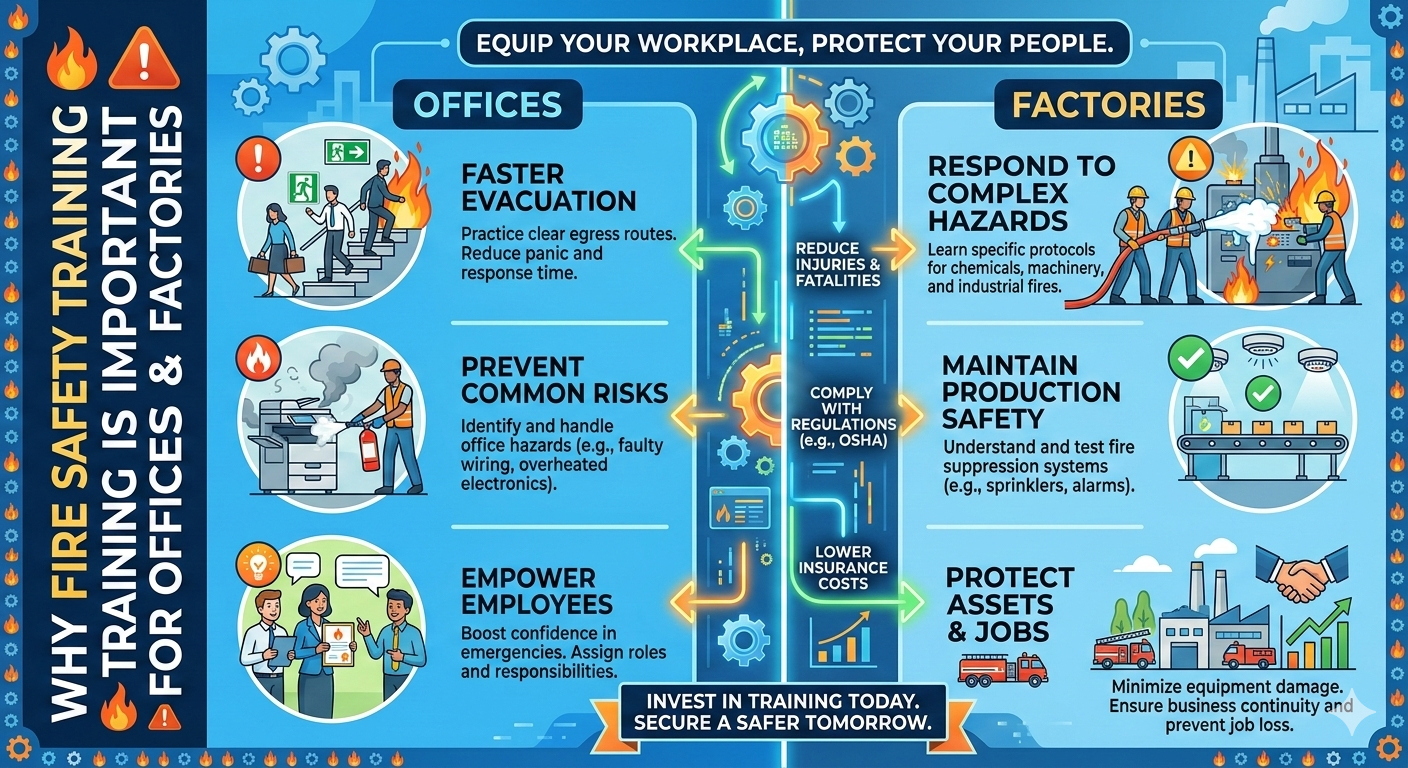
Fire is one of the most serious risks for any workplace. Whether it is a corporate office in a big city or a manufacturing unit in an industrial area, the danger of fire is always present. In Pakistan, where many buildings still lack proper safety systems, the importance of Fire Safety Training becomes even greater.
Many business owners invest in furniture, machinery, and technology, but they ignore the most important asset of their company, which is human life. A single fire incident can destroy property, stop business operations, and cause permanent damage to a company’s reputation. Proper Fire Safety Training ensures that employees know how to prevent fires, how to respond during emergencies, and how to protect themselves and others.
This article explains in detail why Fire Safety Training is essential for offices and factories, especially in the Pakistani business environment.
Understanding Fire Risks in Offices and Factories
Offices and factories have different types of fire risks, but both are equally dangerous.
In offices, common fire hazards include overloaded electrical sockets, faulty wiring, air conditioners, computers, printers, and kitchen areas. Paper files and wooden furniture can easily catch fire and help flames spread quickly.
Factories face even higher risks. There are heavy machines, chemical storage, gas cylinders, welding activities, flammable liquids, and high voltage equipment. A small spark in such an environment can turn into a massive fire within minutes.
Without Fire Safety Training, employees may not recognize these hazards. They may ignore warning signs such as burning smells, sparks, or overheating equipment. Training helps staff identify risks before they turn into disasters.
Protecting Human Lives
The first and most important reason for Fire Safety Training is to protect lives. In many fire incidents, people get injured not only because of flames but due to panic, smoke inhalation, and lack of knowledge.
When employees are trained, they know:
How to remain calm during an emergency
How to use fire extinguishers correctly
How to follow evacuation routes
How to assist others safely
Smoke spreads faster than fire and can cause suffocation within minutes. Training teaches employees the importance of staying low, covering their nose, and moving towards emergency exits quickly.
In factories, where the workforce is large, organized evacuation is critical. Without training, chaos can occur, leading to stampedes and serious injuries. Fire Safety Training creates discipline and structured response during emergencies.
Reducing Property Damage
Fire can destroy years of investment in a few hours. Offices lose important documents, IT equipment, and customer data. Factories lose raw materials, finished goods, and expensive machinery.
When employees are trained in Fire Safety Training programs, they can often control small fires before they become uncontrollable. Using the right type of fire extinguisher at the right time can save millions of rupees.
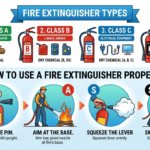
For example, using a water extinguisher on an electrical fire can make the situation worse. Training teaches the difference between Class A, B, C, and electrical fires and the correct extinguishing method for each type.
Businesses that invest in training often experience less severe damage because their staff acts quickly and effectively.
Ensuring Legal Compliance
Government authorities and local safety departments in Pakistan require businesses to follow fire safety standards. Many insurance companies also demand proof of Fire Safety Training before issuing policies.
If a fire occurs and it is found that the company did not provide proper training, legal action can be taken. The business owner may face fines, penalties, or even closure of operations.
Regular Fire Safety Training ensures compliance with local regulations and demonstrates that the company takes safety seriously. It also improves the company’s credibility when dealing with clients and international partners.
Improving Employee Confidence and Morale
Employees feel safer when they know their employer cares about their well being. Fire Safety Training builds confidence among staff members.
When workers understand emergency procedures, they feel prepared rather than helpless. This confidence improves overall morale and productivity.
In factories, especially where workers handle risky materials, training reduces fear and uncertainty. In offices, staff members feel secure knowing there are clear emergency plans in place.
A safe workplace creates a positive working environment and reduces employee turnover.
Preventing Business Interruptions
After a fire incident, businesses often remain closed for weeks or months. Production stops, customers shift to competitors, and financial losses increase.
Fire Safety Training reduces the chances of major incidents. Even if a fire occurs, trained employees can control it early and minimize downtime.
Continuity of operations is critical for factories that supply goods to local and international markets. Delays in production can lead to contract cancellations and loss of trust.
For offices providing services such as IT, banking, or consultancy, data loss due to fire can damage long term client relationships. Training, combined with proper safety equipment, ensures business continuity.
Creating a Culture of Safety
Fire Safety Training is not just a one time activity. It helps create a safety culture within the organization.
When management regularly conducts drills and refresher sessions, employees understand that safety is a priority. They become more alert and responsible.
In factories, workers start reporting faulty wiring, gas leaks, or blocked exits. In offices, employees avoid overloading sockets and follow safe electrical practices.
A strong safety culture reduces not only fire risks but also other workplace accidents.
The Role of Fire Drills
Theory alone is not enough. Practical fire drills are an important part of Fire Safety Training.
During drills, employees practice evacuation procedures in real time. They learn how long it takes to exit the building and identify possible obstacles.
Drills help management find weaknesses in emergency planning. For example, they may discover that some exits are blocked or alarm systems are not loud enough.
Regular drills ensure that everyone knows their role during an emergency, from security guards to department managers.
Importance of Proper Fire Safety Equipment
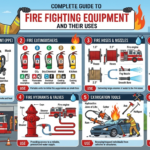
Training must be supported by the right equipment. Fire extinguishers, smoke detectors, fire alarms, hose reels, and emergency lights are essential in offices and factories.
Businesses should invest in high quality equipment and ensure regular maintenance. Reliable suppliers provide certified products that meet safety standards. Companies looking for complete solutions can explore professional fire protection systems and equipment from trusted providers such as https://firesafetytrading.com.pk/fire-safety-equipment/
Having equipment without training is useless. Employees must know how to operate fire extinguishers, where alarms are located, and how to shut down machinery safely.
Fire Risks in Pakistani Industrial Areas
Many industrial zones in Pakistan have closely built factories. A fire in one unit can quickly spread to neighboring buildings.
Poor wiring, illegal electrical connections, and lack of maintenance increase fire hazards. In some areas, fire brigade response time may be slow due to traffic or limited resources.
This makes Fire Safety Training even more critical. When employees can respond immediately, they reduce dependency on external help and prevent large scale disasters.
Special Considerations for Chemical and Textile Factories
Chemical factories handle flammable and hazardous substances. A small mistake can cause explosions and toxic smoke release.
Textile factories often store large quantities of fabric, which is highly flammable. Short circuits in sewing machines or boilers can ignite massive fires.
In such industries, Fire Safety Training must include:
Understanding chemical reactions
Safe storage of flammable materials
Proper ventilation systems
Emergency shutdown procedures
Training in these sectors should be detailed and industry specific.
Fire Safety in Corporate Offices
Corporate offices may look safer compared to factories, but they are not risk free.
Air conditioning systems, server rooms, and pantry areas are common sources of fire. Server rooms in particular require special fire suppression systems because water cannot be used on electrical equipment.
Fire Safety Training in offices should include:
Safe use of electrical devices
Emergency evacuation planning
Handling small kitchen fires
Protecting sensitive documents and data
Office staff should also know how to assist visitors during emergencies.
The Financial Benefits of Fire Safety Training
Some business owners see Fire Safety Training as an expense. In reality, it is a cost saving investment.
Insurance companies may offer lower premiums to businesses that demonstrate proper safety measures. Reduced accident rates also mean fewer compensation claims and medical expenses.
Preventing even one major fire incident can save millions in reconstruction costs, legal fees, and lost revenue.
Long term financial stability depends on risk management, and fire safety is a major part of that strategy.
Responsibility of Management
Top management must take responsibility for implementing Fire Safety Training. It should not be left only to the HR department.
Leaders must allocate budget, hire professional trainers, and ensure regular audits of safety systems.
When management actively participates in training sessions and drills, employees take the process seriously.
Safety policies should be clearly documented and communicated to all staff members.
Training for New Employees
Every new employee should receive Fire Safety Training as part of their orientation.
Many accidents happen because new workers are unaware of emergency procedures. Introducing safety training from the first day ensures that everyone follows the same standards.
Refresher courses should also be conducted annually to update employees about new risks and technologies.
The Role of Technology in Fire Safety
Modern fire safety systems include automatic alarms, heat sensors, and sprinkler systems. Smart monitoring tools can detect temperature changes and send alerts instantly.
However, technology alone cannot prevent disasters. Human response is always required.
Fire Safety Training ensures that employees understand how these systems work and what actions to take when alarms are triggered.
Integration of technology and training provides maximum protection.
Building Trust with Clients and Partners
Businesses that prioritize Fire Safety Training send a strong message to clients and investors.
International companies often conduct audits before partnering with local suppliers. They check safety standards and employee training records.
Having proper training programs increases chances of securing large contracts, especially in export industries.
It also enhances brand reputation in the competitive market.
Conclusion
Fire incidents can destroy lives, property, and business reputation within minutes. Offices and factories in Pakistan face unique challenges due to infrastructure issues and high industrial density.
Fire Safety Training is not optional. It is a necessity for every organization, regardless of size or industry.
By investing in proper training, conducting regular drills, installing quality equipment, and creating a culture of safety, businesses can protect their employees and secure their future.
A safe workplace is a productive workplace. Companies that take fire safety seriously not only save money but also demonstrate responsibility towards their workers and society.
In today’s competitive environment, no organization can afford to ignore Fire Safety Training. It is a powerful step towards sustainable growth, operational stability, and long term success.
Also Read:


