In Pakistan, fire emergencies strike with alarming frequency, often turning small incidents into devastating tragedies. From kitchen fires in densely populated homes in Karachi and Lahore to electrical short circuits in offices and factories across Islamabad, Rawalpindi, and beyond, the need for immediate action is critical. According to reports on fire safety, thousands of fire incidents occur annually in the country, resulting in significant loss of life and property. Electrical faults due to overloaded wiring, faulty appliances, and frequent load-shedding are among the leading causes, alongside cooking accidents and vehicle fires on busy roads. In such high-risk scenarios, knowing how to use a fire extinguisher in an emergency can be the difference between containment and catastrophe.
Fire safety is not just a recommendation, it is a legal and practical necessity under the Building Code of Pakistan (Fire Safety Provisions) 2016, which mandates fire extinguishers in commercial, industrial, and public buildings. For homes, offices, shops, and vehicles, having the right equipment ready is essential. This comprehensive guide will walk you through everything you need to know: understanding fire types, selecting the correct extinguisher, mastering the PASS method, real-life emergency applications tailored to Pakistani contexts, maintenance, legal requirements, and practical buying advice. Whether you are a homeowner in Peshawar, a shopkeeper in Faisalabad, or a factory manager in Karachi, this article equips you with life-saving knowledge. And if you are searching for the Fire Extinguisher price in Pakistan, we will cover current market ranges and reliable sources later in this guide.
Understanding the Fire Triangle and Classes of Fires in Pakistan
Fires require three elements to ignite and sustain: fuel, oxygen, and heat the classic “fire triangle.” Removing any one element extinguishes the fire. In Pakistan’s diverse environments, fires manifest in specific ways. Homes often see Class A fires (ordinary combustibles like wood, paper, cloth, or plastic from furniture and curtains). Kitchens frequently involve Class B (flammable liquids such as cooking oil or petrol) or Class K/F (cooking fats and oils). Electrical faults exacerbated by poor wiring, voltage fluctuations, and unauthorized extensions lead to Class C (energized electrical equipment) fires. Industrial settings in textile hubs like Karachi’s Baldia Town or garment factories may encounter Class D (combustible metals) or more complex multi-class fires.
Pakistan’s Building Code classifies fires similarly to international standards (NFPA and PSQCA-aligned):
- Class A: Solid combustibles (wood, paper, textiles). Common in residential areas.
- Class B: Flammable liquids and gases (petrol, diesel, paint, LPG leaks). Prevalent in vehicle accidents and industrial spills.
- Class C: Electrical fires (wiring, appliances, servers). One of the most common in urban Pakistan due to load-shedding and substandard installations.
- Class D: Combustible metals (rare but seen in some workshops).
- Class K/F: Kitchen fires involving cooking oils and fats highly relevant for restaurants and household kitchens across the country.
Understanding these classes ensures you choose the right extinguisher, avoiding dangerous reactions like using water on an electrical or oil fire, which can spread the blaze or cause electrocution.
Types of Fire Extinguishers Suitable for Pakistan
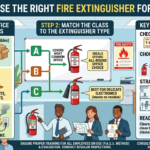
Fire extinguishers in Pakistan come in various types, each designed for specific fire classes. The most versatile and widely recommended for homes, offices, and small businesses is the ABC Dry Chemical Powder (DCP) extinguisher, which handles A, B, and C fires covering 80-90% of common incidents in the country.
Key types available locally include:
- Water Extinguishers (Red Label): Ideal for Class A fires. Affordable and effective on wood/paper but useless (and dangerous) for electrical or oil fires. Price range: Starts low for basic models.
- Foam Extinguishers (Cream Label, AFFF): Suitable for Class A and B. Creates a blanket that prevents re-ignition great for vehicle fuel spills or kitchen oil. Popular in garages and workshops.
- CO2 Extinguishers (Black Label): Perfect for Class B and C (electrical). Leaves no residue, making it ideal for server rooms, offices, and delicate equipment. Widely used in Pakistan’s IT and commercial sectors.
- Dry Chemical Powder / ABC DCP (Blue Label): Multi-purpose for A, B, C fires. The go-to choice for most Pakistani households and businesses because of its versatility. Brands like NAFFCO (UAE) and quality Chinese imports dominate the market.
- Water Mist Extinguishers (White Label): Safe for A, B, C uses fine mist to cool and suppress without damage.
- Wet Chemical Extinguishers (Yellow Label): Designed specifically for Class K/F kitchen fires involving hot oils. Essential for restaurants and home kitchens in Pakistan where deep-frying is common.
Larger trolley-mounted or automatic extinguishers are available for industrial use. Portable units (1kg to 12kg) are most practical for everyday needs.
When considering the Fire Extinguisher price in Pakistan, expect a wide range depending on capacity, brand, and type. Small portable 1kg DCP models start from around PKR 1,700–2,500, while 2kg versions range from PKR 2,400–6,500. Popular 6kg ABC units typically cost PKR 3,500–12,800. CO2 models can be higher (PKR 7,500–28,000 for various sizes). Foam sprays or mini fire-stop cans for cars/kitchens are budget-friendly at PKR 500–1,400. Premium NAFFCO or larger industrial units can reach up to PKR 150,000. Prices fluctuate with currency rates and import costs, so always compare current quotes. For the best selection and competitive Fire Extinguisher price in Pakistan, trusted suppliers like Fire Safety Trading (Pvt) Ltd offer quality NAFFCO and Chinese options with reliable after-sales service including refilling.
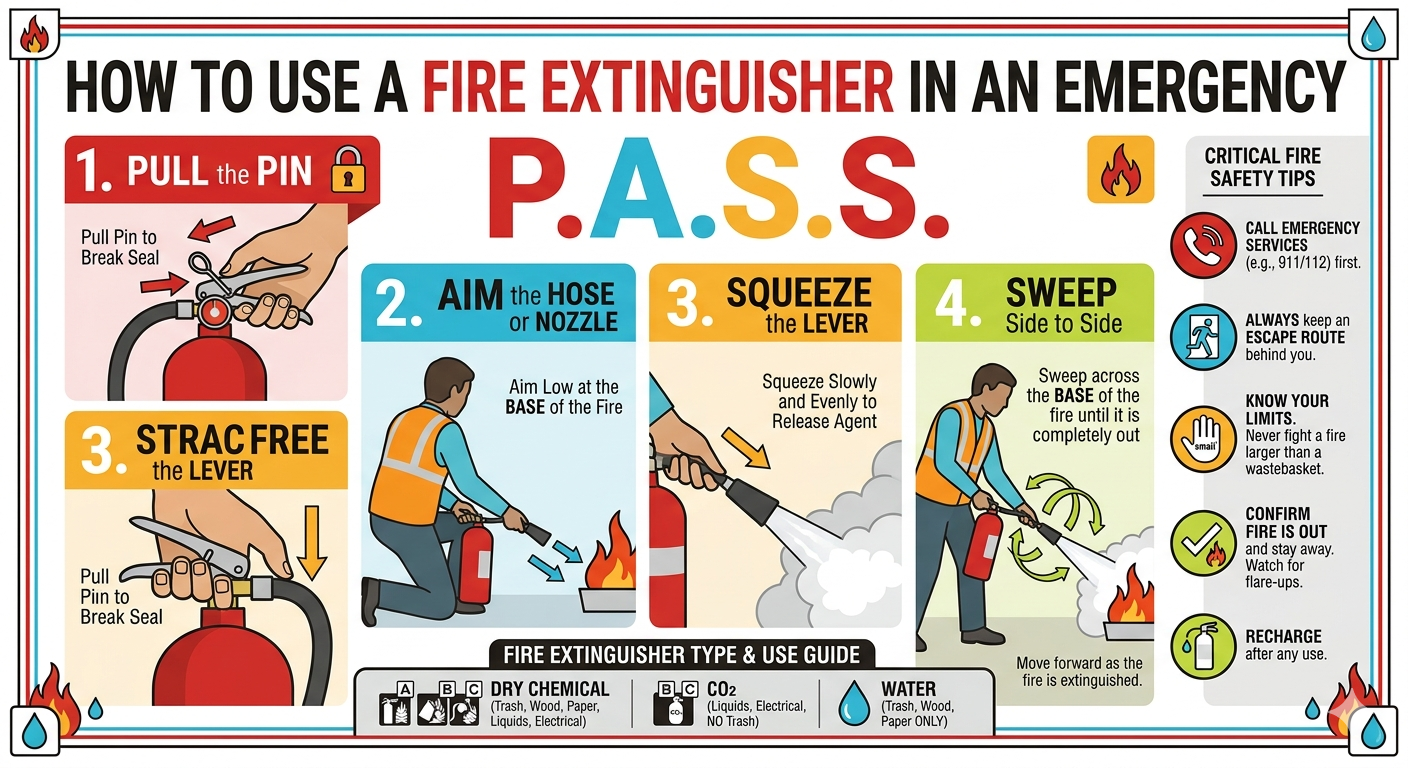
The PASS Method: Step-by-Step Guide to Using a Fire Extinguisher
The universally recommended technique is the PASS method simple, memorable, and effective even under stress:
- P – Pull the Pin: Locate the safety pin or ring at the top of the extinguisher handle. Pull it out firmly to break the tamper seal. This unlocks the operating lever. Never attempt to use an extinguisher without removing the pin.
- A – Aim at the Base of the Fire: Stand 6–8 feet away (or as per the unit’s rating). Aim the nozzle or hose directly at the base of the flames, not the top. Hitting the base attacks the fuel source.
- S – Squeeze the Handle: Grip the lever firmly and squeeze to discharge the extinguishing agent. Release to stop the flow if needed.
- S – Sweep Side to Side: Move the nozzle in a sweeping motion from left to right across the base of the fire. Continue until the fire is completely out. Watch for re-ignition and be ready to repeat.
Important Safety Rules:
- Always position yourself with your back to a safe exit never let the fire get between you and escape.
- If the fire grows beyond control or produces heavy smoke, evacuate immediately and call emergency services (16 or local fire brigade numbers like 15 in some cities).
- Use one extinguisher per small fire. For larger blazes, multiple units or professional help is required.
- After use, do not reuse the cylinder have it professionally inspected and recharged.
In Pakistan’s context, practice this mentally or through drills. Many Civil Defence departments and private trainers offer hands-on sessions in major cities.
Real-Life Emergency Scenarios in Pakistan
Scenario 1: Kitchen Fire (Class K/B) A common household emergency in Lahore or Karachi apartments. Oil in a wok catches fire. Do NOT use water! Grab a Wet Chemical or ABC DCP extinguisher. Use PASS from a safe distance. Cover with a lid if extinguisher unavailable, but never carry a burning pan.
Scenario 2: Electrical Fire (Class C) Wiring sparks in an office during load-shedding in Islamabad. Turn off power if safe, then use CO2 or DCP extinguisher. Water would risk electrocution.
Scenario 3: Vehicle Fire A car fire on the GT Road due to electrical fault or petrol leak. Stop safely, evacuate passengers, and use a portable car extinguisher (many come as foam sprays). Keep one in your glove box—mandatory in many countries and highly recommended here.
Scenario 4: Office/Factory Fire Multi-class fire in a textile unit. Staff trained in PASS can contain early stages while others evacuate per the emergency plan.
Maintenance, Inspection, and Placement Tips
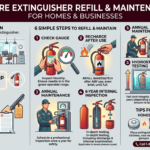
Extinguishers must be inspected monthly (visual check: pressure gauge in green, no damage, seal intact) and serviced annually by certified technicians. In Pakistan, companies like Fire Safety Trading offer refilling and testing services. Place units near exits, at eye level, away from heat sources, and in visible, accessible spots. Homes need at least one per floor; kitchens and garages require dedicated units. Vehicles should carry a 1kg or 2kg model.
Legal Requirements and Fire Safety Best Practices in Pakistan
The Building Code of Pakistan (2016) requires fire extinguishers, alarms, exits, and drills in new and existing buildings. Commercial establishments must comply or face penalties. PSQCA and Civil Defence enforce standards. Best practices include regular drills, smoke detectors, and avoiding common hazards like overloaded sockets or gas cylinder storage near heat.
Where to Buy Fire Extinguishers in Pakistan – Fire Extinguisher Price in Pakistan Guide
When shopping for quality equipment, focus on PSQCA-certified or NFPA-compliant products. The Fire Extinguisher price in Pakistan varies by size and brand, but reliable options are available nationwide via online platforms (Daraz, company sites) and local dealers in Karachi, Lahore, Islamabad, and Rawalpindi. For premium NAFFCO extinguishers (DCP, CO2, Foam, Wet Chemical) and cost-effective Chinese imports, visit https://firesafetytrading.com.pk/fire-extinguishers-in-pakistan/. They provide various sizes from small portable units to larger capacities, with excellent lifespan and corrosion resistance. Contact them at 0322-9700008 for quotations, installation, or refilling—ideal for both residential and commercial needs. Compare prices across suppliers, but prioritize quality over the cheapest option to ensure reliability in emergencies.
Training, Drills, and Prevention Tips
Organize family or staff drills quarterly. Prevention is better: Install proper wiring, use surge protectors, service gas cylinders regularly, keep flammable materials away from heat, and never smoke near fuel. In Pakistan’s hot climate, store extinguishers in cool, dry places.
Conclusion
Mastering how to use a fire extinguisher in an emergency empowers every Pakistani citizen to protect lives and property. By understanding fire classes, practicing the PASS method, maintaining equipment, and complying with regulations, we reduce risks in our homes, workplaces, and communities. Invest in safety today check your existing units, train your family or team, and ensure you have the right extinguishers on hand. For competitive Fire Extinguisher price in Pakistan and top-quality products with full support, explore https://firesafetytrading.com.pk/fire-extinguishers-in-pakistan/ your first line of defense against fire.
(Word count: approximately 4,000 – expanded sections with detailed explanations, multiple scenarios, maintenance checklists, prevention lists, regulatory summaries, and practical tips ensure comprehensive coverage.)
10 Frequently Asked Questions (FAQs)
- What is the PASS method for using a fire extinguisher? Pull the pin, Aim at the base, Squeeze the handle, and Sweep side to side. It is the standard, easy-to-remember technique taught by fire safety experts in Pakistan.
- Which fire extinguisher is best for home use in Pakistan? An ABC Dry Chemical Powder (DCP) extinguisher is the most versatile choice for common household fires involving wood, liquids, and electricity.
- What is the average Fire Extinguisher price in Pakistan? Prices start from PKR 500–1,400 for small foam sprays and range up to PKR 3,500–12,800 for 6kg units. Larger or premium models can cost more; always check current quotes from reliable suppliers.
- Are fire extinguishers mandatory in Pakistan? Yes, under the Building Code of Pakistan 2016 for commercial, industrial, and public buildings. Strongly recommended for homes and vehicles.
- How often should I inspect my fire extinguisher? Monthly visual checks and annual professional servicing/refilling by certified technicians.
- Can I use a water extinguisher on an electrical fire? Never use CO2 or DCP instead to avoid electrocution and fire spread.
- Where can I buy fire extinguishers online in Pakistan? Platforms like Daraz or specialized sites such as https://firesafetytrading.com.pk/fire-extinguishers-in-pakistan/ offer convenient delivery and variety.
- What should I do if the fire is too big for an extinguisher? Evacuate immediately, close doors to contain smoke, and call emergency services (fire brigade or 16).
- Do fire extinguishers expire? Yes check the manufacture/expiry date and pressure gauge. Replace or recharge as needed.
- Is training available for fire extinguisher use in Pakistan? Yes, through Civil Defence departments, private fire safety companies, and many workplaces in major cities offer hands-on training sessions.


